The Shift from Passenger Robotaxis to Autonomous Cargo
While consumer-facing robotaxis from Waymo and Cruise frequently dominate headline news, the most rapid commercialization of Level 4 autonomous driving technology is quietly happening in the freight and delivery sector. Autonomous delivery vehicles (ADVs) bypass the most complex variable in the self-driving equation: human passengers. By eliminating the need for a human safety cell, climate control for riders, and passenger-facing liability, engineering teams can optimize purely for cargo volume, sensor placement, and route efficiency.
The transition from retrofitted passenger cars to purpose-built autonomous cargo pods and middle-mile box trucks represents a massive leap in hardware specialization. In 2024, the industry is moving beyond pilot programs into scaled, revenue-generating deployments. This deep dive tracks the current state of autonomous delivery fleets, analyzing the sensor suites, edge computing architectures, and commercial deployment strategies defining the sector today.
The Technology Stack: Sensor Fusion and Edge Compute
Multi-Modal Sensor Suites
Unlike passenger vehicles where sensors must be hidden behind windshields and bumpers for aesthetic reasons, ADVs utilize exposed, 360-degree sensor masts. The current industry standard relies on a triad of perception hardware:
- LiDAR: High-resolution, long-range units (such as the Hesai Pandar128 or Ouster OS1) provide dense 3D point clouds essential for detecting low-reflectivity obstacles like curbs, debris, and pedestrians in low-light conditions.
- Cameras: HDR camera arrays operating at 60fps to read semantic data—traffic lights, stop signs, and construction zone hand signals.
- Radar: 4D imaging radar to penetrate fog, heavy rain, and snow, providing redundant velocity and distance tracking for fast-moving cross-traffic.
Edge Computing and Thermal Management
Processing terabytes of sensor data daily requires immense edge computing power. Most modern ADVs utilize the NVIDIA DRIVE Orin platform, delivering over 200 TOPS (Tera Operations Per Second) of AI performance. However, this compute density generates significant heat. Purpose-built pods like the Nuro R3 integrate advanced liquid-cooling loops that double as thermal management systems for the cargo bay, allowing the same system to keep groceries refrigerated while keeping the AI compute stack at optimal operating temperatures.
2024 Autonomous Delivery Vehicle Fleet Tracker
The following table outlines the primary commercial and pilot-stage autonomous delivery platforms currently operating or testing on public roads in North America.
| Company | Vehicle Platform | Class / Type | Payload Capacity | Top Speed | Primary Sensor Suite | Deployment Status |
|---|---|---|---|---|---|---|
| Nuro | R3 Pod | Low-Speed Last-Mile | 500 lbs / 12 cu ft | 45 mph | 360° LiDAR, Cameras, Radar | Commercial (Kroger, FedEx) |
| Gatik | Isuzu NRR EV / B-Box | Middle-Mile Box Truck | 10,000 lbs | 50 mph | Multi-modal LiDAR, Radar | Commercial (Walmart, Loblaws) |
| Waymo Via | Zeekr M-Vision | Step-In Delivery Van | TBD (Est. 1,000 lbs) | 50 mph | Waymo 6th Gen HD Suite | Pilot / Testing |
| Zoox | Zoox Cargo (Modified) | Bi-Directional Pod | TBD | 75 mph | Proprietary LiDAR/Camera | Limited Pilot |
Fleet Deployment Profiles and Commercial Operations
Nuro R3: The Purpose-Built Last-Mile Pod
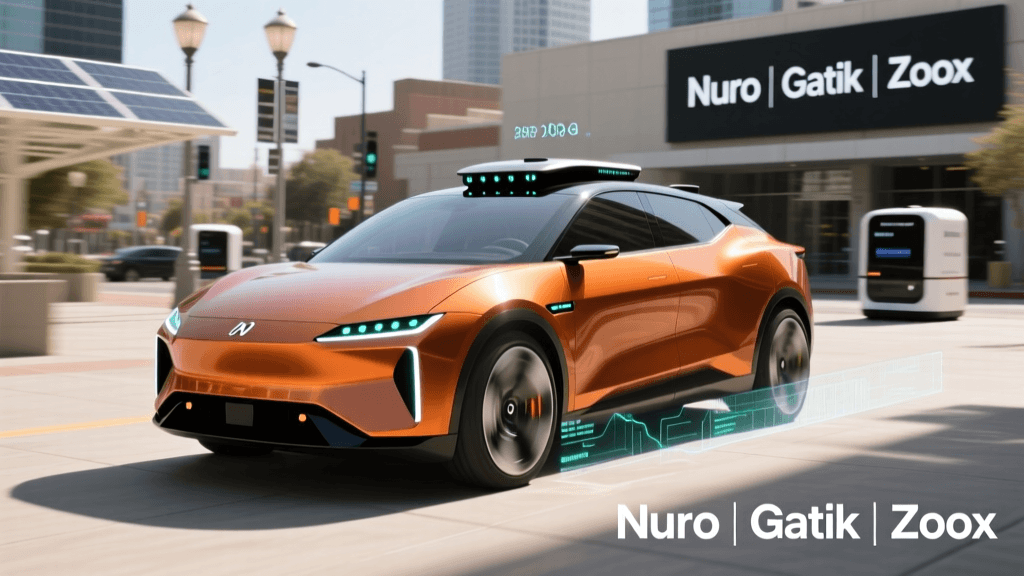
Nuro has cemented its position as the leader in neighborhood, last-mile delivery. The R3 is their third-generation vehicle, designed from the ground up without a steering wheel, pedals, or mirrors. This design was made possible by a landmark NHTSA exemption that allowed Nuro to deploy vehicles lacking traditional human controls. The R3 features modular cargo inserts, allowing it to switch between ambient grocery delivery, heated food transport, and secure parcel lockers. Nuro's commercial partnerships with Kroger and FedEx have transitioned from controlled pilots to daily, scaled operations in markets like Houston and the San Francisco Bay Area.
Gatik: Dominating the Middle-Mile B2B Freight
While Nuro focuses on the final mile to the consumer's driveway, Gatik has captured the highly lucrative 'middle-mile' market. Gatik operates a fleet of autonomous light-duty box trucks, primarily based on the Isuzu NRR EV chassis. These vehicles run fixed, repeatable routes between dark stores, micro-fulfillment centers, and retail storefronts. Because these routes are heavily optimized and often avoid dense pedestrian zones, Gatik has been able to remove the safety driver from the cab in specific Texas and Arkansas corridors, servicing massive retail clients like Walmart and Loblaws. Their focus on B2B freight eliminates the customer-facing friction of last-mile handoffs.
Waymo Via and the Zeekr Partnership
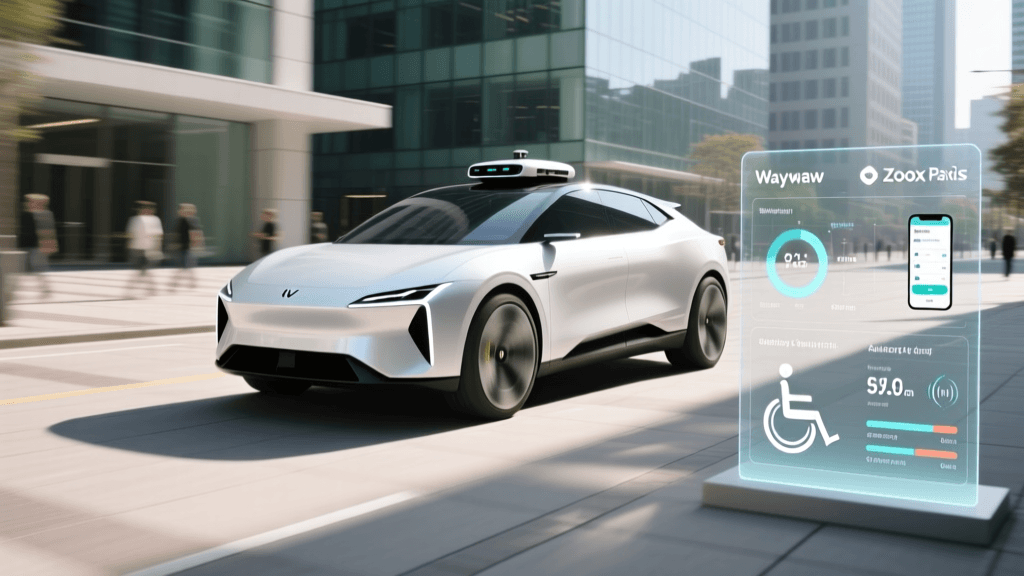
Waymo Via has taken a unique approach by partnering with Geely's Zeekr brand to develop a custom, purpose-built delivery van. Unlike the pod-style vehicles, the Zeekr M-Vision is designed with a low step-in height and wide sliding doors, optimizing for human warehouse workers and couriers to rapidly load and unload parcels. Waymo Via is currently integrating its 6th-generation HD Driver suite into these vehicles, aiming to offer a flexible platform that can handle both long-haul regional trucking and dense urban parcel delivery.
Teleoperations and 5G Latency Requirements
No autonomous fleet operates entirely without human oversight. The industry relies on teleoperations—remote assistance where human operators can validate the AI's proposed path or manually guide a vehicle through an unmapped construction zone. The technological deep dive here lies in the network requirements. Reliable teleoperations demand a 5G connection with latency strictly under 20 milliseconds to prevent motion sickness in the remote operator and ensure real-time vehicle response.
Companies are currently optimizing their 'remote-to-vehicle' ratios. Early pilot programs required a 1:1 or 1:5 ratio. Today, advanced edge-compute and predictive AI routing have pushed this ratio closer to 1:20, meaning a single remote operator can oversee twenty autonomous delivery pods simultaneously, drastically reducing the operational expenditure (OpEx) of the fleet.
Regulatory Framework and Federal Guidelines
The deployment of ADVs is governed by a patchwork of state and federal regulations. While the U.S. Department of Transportation's AV Hub provides overarching safety and innovation guidelines, actual deployment permits are issued at the state and municipal levels. States like Texas, Arizona, and California have established the most permissive frameworks for commercial autonomous freight, allowing companies to bypass the commercial driver's license (CDL) requirements for vehicles operating strictly within geofenced, low-speed, or fixed-route parameters.
Furthermore, the Intelligent Transportation Systems (ITS) Joint Program Office is actively researching Vehicle-to-Everything (V2X) communication. Future ADVs will not only rely on onboard sensors but will communicate directly with smart traffic lights and digital curb infrastructure to secure loading zones before they arrive.
Actionable Advice for Logistics and Fleet Operators
For logistics managers and fleet operators looking to integrate autonomous delivery into their supply chain, preparation must begin well before the vehicles arrive. Consider the following actionable steps:
- Implement Digital Curb Management: Autonomous pods cannot double-park or negotiate with human drivers for curb space. Operators must integrate with digital curb APIs (like CurbIQ or Replica) to reserve geofenced loading zones that the ADV's GPS and LiDAR can identify and lock onto for secure unloading.
- Upgrade Docking Infrastructure: For middle-mile box trucks like Gatik's fleet, retrofitting loading docks with automated alignment guides and high-speed charging pads ensures that the autonomous vehicle can dock, discharge its cargo via automated conveyors, and recharge without human intervention.
- API Integration for Real-Time Telemetry: Ensure your warehouse management system (WMS) can ingest real-time telemetry via REST APIs. ADVs generate massive amounts of data regarding route friction, temperature fluctuations in the cargo bay, and ETA variance. Ingesting this data allows for dynamic rerouting of human-driven backup fleets if an autonomous pod encounters an impassable obstacle.
The autonomous delivery sector has moved past the proof-of-concept phase. With purpose-built hardware, advanced sensor fusion, and stabilizing regulatory frameworks, 2024 marks the year autonomous cargo pods and middle-mile trucks become a permanent, scalable fixture of the global supply chain.