The Shift From Personal Auto Insurance To Commercial Fleet Coverage
The promise of robotaxis extends far beyond the convenience of hands-free mobility; it fundamentally rewrites the economic model of personal transportation. For decades, the cost of operating a vehicle has been heavily burdened by personal auto insurance. In the United States, the average driver pays over $2,000 annually for car insurance, a cost driven by human error, which accounts for roughly 94% of all traffic collisions. When you remove the human driver, you remove the primary risk factor, but you do not eliminate the need for insurance. Instead, the financial responsibility shifts entirely from the consumer to the fleet operator and the Original Equipment Manufacturer (OEM).
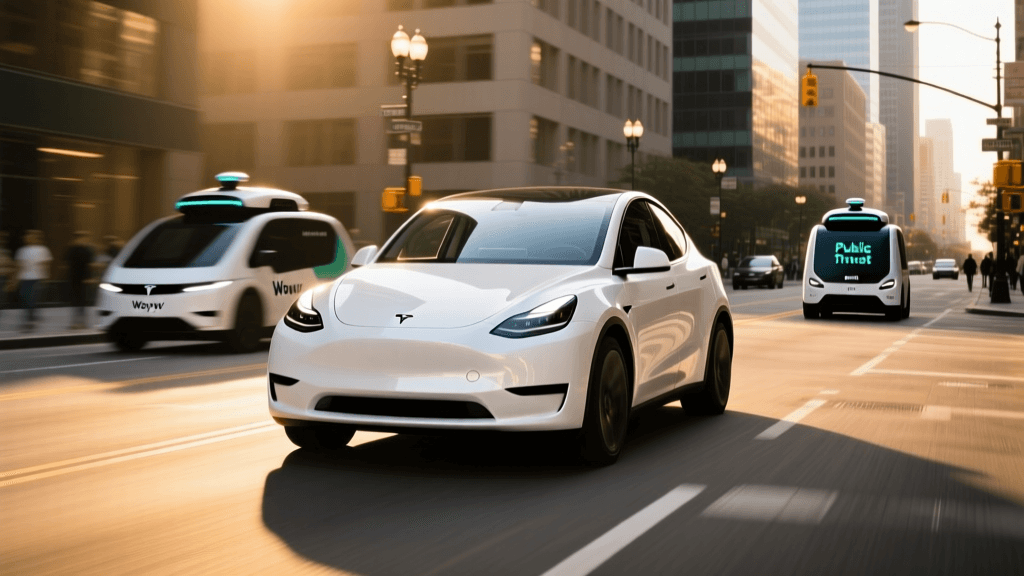
From a cost and value breakdown perspective, this shift is monumental. When a passenger hails a Waymo One or a Cruise robotaxi, they are not required to provide proof of insurance, nor are they liable for the vehicle's operational risks. The fleet operator absorbs the commercial auto liability, physical damage, and product liability costs. However, this does not mean insurance costs disappear; they are simply baked into the per-mile cost of the ride. Understanding how these commercial autonomous vehicle (AV) policies are underwritten, priced, and applied is critical for consumers evaluating the true value of robotaxi services, and for fleet managers looking to scale autonomous operations profitably.
Determining Liability: Product Fault vs. Operational Negligence
In a traditional rideshare scenario involving Uber or Lyft, liability is often a complex web of personal driver policies and commercial rideshare endorsements. In a Level 4 robotaxi, the legal framework is much cleaner but financially heavier for the operator. When an Automated Driving System (ADS) is engaged, the software and hardware suite are legally considered the 'driver.' Therefore, if a robotaxi fails to stop at a red light and causes a collision, the liability falls squarely on the entity operating or manufacturing the vehicle.
Liability in the robotaxi space is generally divided into two categories: operational liability and product liability. Operational liability covers scenarios where the fleet manager fails to maintain the vehicle properly, such as deploying a robotaxi with degraded tires or failing to update critical safety software. Product liability, on the other hand, falls on the OEM or tech company (like Waymo, Zoox, or Tesla) if the ADS fails due to a software bug, sensor blindness, or algorithmic error. According to the NHTSA Standing General Order, manufacturers and operators are mandated to report specific crashes involving ADS and Level 2 ADAS systems. This federal crash data is increasingly being used by commercial insurers to assess the safety records of specific AV fleets, directly influencing their premium rates.
Cost Breakdown: Human Rideshare vs. Robotaxi Insurance
To understand the value proposition of robotaxis, we must compare the insurance and liability cost structures of human-driven rideshares against autonomous fleets. The table below illustrates how costs are distributed and where the financial burdens lie.
| Cost Factor | Human Rideshare (Uber/Lyft) | Robotaxi Fleet (Waymo/Cruise) |
|---|---|---|
| Primary Liability Holder | Driver (Personal/Commercial Policy) | Fleet Operator / OEM |
| Insurance Cost Per Mile | ~$0.04 - $0.06 | ~$0.08 - $0.15 (Estimated) |
| Collision Repair Costs | Standard Auto Body Repair | High (Requires Sensor Recalibration) |
| Cybersecurity Coverage | Not Required | Mandatory & Expensive |
| Downtime Costs | Driver uses backup car | Fleet loses revenue per disabled unit |
As the data suggests, while robotaxis eliminate the human error variable, their insurance costs per mile are currently higher than human-driven rideshares. This is primarily due to the exorbitant cost of hardware replacement and the nascent state of AV underwriting. Insurers are currently pricing in a 'technology premium' because the long-term actuarial data for Level 4 fleets is still being established.
The Hidden Costs: Sensor Calibration and Hardware Vulnerability
One of the most significant factors driving up robotaxi insurance premiums is the cost of physical damage claims. In a standard vehicle, a minor fender bender might cost $500 to repair. In a robotaxi equipped with LiDAR arrays, radar modules, and high-definition cameras, that same minor collision can result in a $10,000 repair bill. Insurers recognize that even low-speed impacts can knock advanced sensors out of alignment by mere millimeters, rendering the ADS unsafe.
Consequently, comprehensive and collision coverage for robotaxis requires specialized clauses for 'sensor recalibration and software validation.' Every time a robotaxi sustains physical damage, it must undergo rigorous diagnostic testing before returning to the fleet. Insurers factor in not just the cost of the replacement parts, but the cost of the engineering hours required to certify the vehicle's safety post-repair. Furthermore, the Insurance Information Institute notes that as vehicles become more autonomous, the shift toward product liability means insurers must also account for potential class-action lawsuits stemming from software failures, adding a layer of legal defense costs to the fleet's premium.
How Geofencing and ODD Mitigate Underwriting Risks
Insurance underwriters rely heavily on the concept of the Operational Design Domain (ODD). Robotaxi companies like Waymo and Cruise do not operate everywhere; they rely on HD mapping and strict geofencing. They limit their vehicles to specific urban corridors where they have mapped every lane, curb, and traffic light. From an insurance perspective, geofencing is a massive risk mitigation tool.
By restricting the ODD, fleet operators can prove to insurers that their vehicles will not encounter unpredictable rural roads, unmapped construction zones, or extreme weather conditions that exceed the sensor suite's capabilities. Insurers reward this predictability. A robotaxi fleet operating strictly within a well-mapped, geofenced 50-square-mile zone in Phoenix, Arizona, will secure vastly different liability terms than a fleet attempting to navigate the unpredictable, snow-covered streets of Boston. This targeted operational strategy is how AV companies negotiate lower commercial liability caps and secure the massive insurance policies required to operate legally on public roads.
Cybersecurity: The New Frontier of AV Liability
Traditional auto insurance does not cover the risk of a vehicle being hacked. Robotaxi insurance, however, must include robust cybersecurity liability coverage. A fleet of 1,000 connected, autonomous vehicles represents a massive attack surface for malicious actors. If a hacker were to breach a fleet management system, they could theoretically disable vehicles, alter routing algorithms, or steal passenger data.
Cyber liability policies for robotaxi operators cover third-party damages, ransomware extortion, and regulatory fines related to data breaches. Because the ADS relies on constant over-the-air (OTA) updates and V2X (vehicle-to-everything) communication, the cybersecurity insurance premium is a fixed, non-negotiable line item in the fleet's operating costs. As the U.S. Department of Transportation continues to refine federal guidelines for AV safety, cybersecurity validation is becoming a prerequisite for deployment, further cementing its role in the overall cost structure of robotaxi operations.
Actionable Advice for Riders and Future Fleet Buyers
Whether you are a daily consumer of robotaxi services or an entrepreneur looking to invest in autonomous fleet management, understanding the insurance landscape is vital for maximizing value and minimizing risk.
For Robotaxi Riders:
- Review Your Personal Injury Protection (PIP): While the robotaxi operator holds liability for the vehicle and third-party damages, your personal health insurance or PIP coverage is still your first line of defense for medical expenses if you are injured as a passenger. Always verify your health coverage limits before relying solely on the operator's terms of service.
- Understand the Terms of Service (ToS): When you download the Waymo or Cruise app, you agree to a ToS that outlines liability limits. Read the sections on 'Passenger Conduct' and 'Liability Waivers.' If you interfere with the vehicle's interior sensors or attempt to grab the steering wheel (in vehicles equipped with manual overrides), you may void the operator's liability coverage and assume personal financial responsibility for the crash.
For Future Fleet Operators and Investors:
- Explore Captive Insurance Models: As AV fleets scale, relying solely on the traditional commercial insurance market may become cost-prohibitive. Large fleet operators should investigate forming a 'captive insurance company'—a subsidiary created to provide insurance to its non-insurance parent company. This allows fleets to retain underwriting profits and tailor coverage specifically to AV sensor recalibration and software downtime.
- Invest in Telematics and Data Sharing: Insurers offer the best rates to operators who can prove their safety margins. Implementing real-time telematics dashboards that track disengagement rates, harsh braking events, and sensor health allows you to negotiate usage-based or pay-per-mile insurance policies, ensuring you only pay premiums when the vehicles are actively generating revenue.
Conclusion
The transition to robotaxis represents a monumental shift in how we finance and assign liability for mobility. While consumers are entirely freed from the burden of personal auto insurance premiums, fleet operators and OEMs are taking on complex, high-value commercial policies driven by hardware vulnerability, software liability, and cybersecurity risks. As actuarial data matures and sensor costs decrease, the per-mile insurance cost of robotaxis will inevitably drop, unlocking the true economic value of autonomous transportation.