The Achilles Heel of Autonomous Fleets: Weather
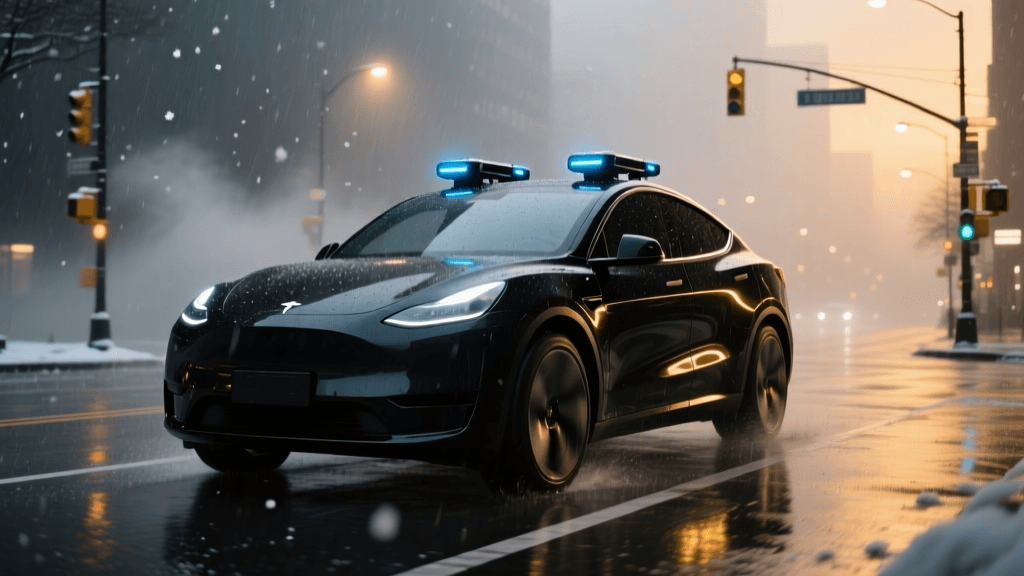
Autonomous vehicles (AVs) have successfully conquered the sun-drenched, grid-locked streets of Phoenix and the mapped corridors of San Francisco. However, as robotaxi companies like Waymo, Cruise, and Zoox eye aggressive expansion into the Midwest and Northeast, they face an uncompromising adversary: Mother Nature. Weather remains the single most significant bottleneck in achieving true, ubiquitous Level 4 and Level 5 autonomy. According to the Federal Highway Administration (FHWA), nearly 24% of all weather-related vehicle crashes occur during rainfall, with snow, sleet, and fog drastically reducing visibility and road traction. For a robotaxi fleet, these conditions do not just increase accident risks; they trigger cascading service failures, remote assistance bottlenecks, and massive revenue losses due to fleet grounding.
From an industry outlook perspective, the ability to operate reliably in adverse weather will separate the permanent market leaders from the regional novelties. Understanding how precipitation and temperature fluctuations degrade AV sensor suites is critical for fleet managers, investors, and consumers anticipating the next generation of smart mobility.
How Precipitation Degrades AV Sensor Suites
To understand service reliability limits, we must examine the physics governing the primary sensor modalities used in modern robotaxis: LiDAR, cameras, and radar.
LiDAR and the Scattering Problem
Light Detection and Ranging (LiDAR) is the backbone of most Level 4 robotaxi mapping and object detection systems. However, LiDAR operates by firing laser pulses and measuring their reflection. In heavy rain or snow, water droplets and ice crystals cause 'Mie scattering,' where the laser pulses bounce off the precipitation rather than the intended target. This creates 'ghost objects' or point-cloud noise, forcing the AV's perception algorithm to work overtime to filter out the weather. While newer 1550nm wavelength LiDARs (like those used in advanced Luminar systems) penetrate fog and rain better than the legacy 905nm sensors, they are not immune to heavy downpours or wet snow accumulation on the sensor housing.
Cameras: Contrast Loss and Lens Occlusion
Camera systems, which rely on visible light and high dynamic range (HDR) imaging, suffer immensely in low-contrast environments. Fog and heavy snow effectively erase the horizon line and obscure lane markings. Furthermore, physical occlusion is a massive hurdle. A single layer of dirty road slush splashed onto a camera lens can blind the system entirely. While companies employ hydrophobic coatings and high-pressure air or fluid cleaning nozzles, freezing temperatures can render these cleaning mechanisms useless, leading to immediate service degradation.
Radar: The Unsung, Low-Resolution Hero
Radio Detection and Ranging (Radar) easily penetrates rain, fog, and snow, making it highly reliable for detecting the speed and distance of large objects in bad weather. However, traditional 3D radar lacks the angular resolution to classify objects accurately (e.g., distinguishing a stopped fire truck from an overhead metal bridge). This limitation forces the AV to rely on sensor fusion, where the failure of LiDAR and cameras leaves the system without the semantic context needed to navigate complex urban environments safely.
Current Fleet Reliability: Operational Design Domains
The SAE International J3016 standard defines the Operational Design Domain (ODD) as the specific conditions under which a driving automation system is designed to function. Weather is a primary boundary of the ODD. Below is a reliability analysis of current major fleet approaches to adverse weather.
| Fleet / Technology | Primary Sensor Approach | Rain Tolerance | Snow / Fog Tolerance | Failure Fallback Protocol |
|---|---|---|---|---|
| Waymo (6th Gen Driver) | Heavy Sensor Fusion (LiDAR, Radar, Vision) | High (Moderate to Heavy Rain) | Low to Moderate (Light Snow/Fog) | Minimal Risk Condition (Pull over safely) |
| Cruise (Origin / Gen 3) | 360-Degree LiDAR & Vision Fusion | Moderate (Sensor occlusion risks) | Low (Fleet grounding common) | Remote Assistance / Pull over |
| Tesla (FSD v12 Vision-Only) | Camera Vision + Neural Nets | Low (Lens occlusion, glare) | Very Low (Contrast loss) | System Disengagement / Handover |
| Zoox (Purpose-Built AV) | Redundant Sensor Clusters | High (Advanced cleaning systems) | Moderate (Testing in colder climates) | Redundant compute / Safe stop |
Waymo has historically maintained the most conservative and reliable ODD management. When its 6th Generation Driver system detects sensor degradation beyond its safety thresholds, the vehicle executes a Minimal Risk Condition (MRC), safely pulling to the curb. While this ensures passenger safety, it severely impacts service reliability and rider trust if the vehicle aborts a trip mid-route during a sudden squall.
Conversely, Tesla’s vision-only approach for its Full Self-Driving (FSD) software faces severe limitations in weather. Without LiDAR or radar to provide ground-truth depth data in heavy rain or whiteout conditions, the neural network must guess based on degraded visual inputs. The National Highway Traffic Safety Administration (NHTSA) continues to monitor how these varying sensor philosophies perform in real-world edge cases, emphasizing that true autonomy requires overcoming these environmental blind spots.
The Future Outlook: Overcoming the Elements
The industry is not standing still. The next three to five years will see the deployment of technologies specifically engineered to shatter current weather limitations.
4D Imaging Radar
The integration of 4D imaging radar (from suppliers like Arbe and Continental) is poised to revolutionize bad-weather autonomy. Unlike traditional radar, 4D radar measures elevation alongside range, azimuth, and velocity, generating a dense point cloud that rivals low-resolution LiDAR. Crucially, it does this while penetrating heavy rain, fog, and snow. By fusing 4D radar data with camera inputs, AVs will maintain a robust understanding of their environment even when LiDAR is blinded by precipitation.
Synthetic Weather Training via Digital Twins
Collecting real-world training data in blizzards or torrential hurricanes is dangerous and inefficient. To bridge this gap, companies are turning to synthetic data generation. Platforms like NVIDIA Omniverse and DRIVE Sim allow engineers to create photorealistic digital twins of cities and simulate extreme weather physics. By training perception models on millions of miles of synthetic snow and fog, neural networks are learning to 'see through' weather noise and predict the hidden trajectories of pedestrians and vehicles long before they become visible to the naked eye.
V2X Infrastructure and Micro-Weather Mapping
Future robotaxi fleets will not rely solely on onboard sensors. Vehicle-to-Everything (V2X) communication will allow AVs to receive real-time micro-weather updates from smart city infrastructure and other connected vehicles. If a traffic camera at an intersection detects black ice or localized fog, it can broadcast a warning to approaching robotaxis, allowing them to adjust their ODD parameters and driving dynamics proactively.
Actionable Advice for Riders and Fleet Operators
As we transition toward all-weather autonomous fleets, stakeholders must adapt their expectations and operational strategies.
For Robotaxi Riders
- Anticipate Route Aborts: In moderate to heavy rain, expect your robotaxi to take more conservative routes, avoiding unprotected left turns or poorly drained intersections. If the rain intensifies suddenly, the vehicle may pull over. Always allow an extra 15-20 minutes for your trip during inclement weather.
- Understand the Fallback: Familiarize yourself with the in-cabin UI. If the screen indicates 'Sensor Degradation' or 'Seeking Safe Stop,' remain calm. The vehicle is executing its safety protocols. Use the in-app support to request a human-driven rideshare transfer if the AV grounds itself.
For Fleet Managers and Operators
- Invest in Automated Depot Cleaning: Manual sensor wiping is unscalable. Invest in depot-based automated washing systems utilizing deionized water and specialized air-knives to ensure every vehicle leaves the hub with pristine optics.
- Dynamic ODD Geofencing: Utilize fleet management software to dynamically shrink operational geofences in real-time based on local weather radar. Restrict AVs to well-mapped, high-traction arterial roads during storms, and reserve complex residential routing for clear-weather days.
- Thermal Management Upgrades: Ensure sensor housings are equipped with active thermal heating elements to prevent ice crystallization on LiDAR domes and camera lenses, a critical requirement for expanding into northern markets like Chicago, Detroit, or Toronto.
The dream of a truly autonomous, on-demand transportation network will only be fully realized when the technology proves it is as resilient as a seasoned human driver in the dead of winter. Until 4D radar and synthetic training mature, weather will remain the ultimate stress test for the robotaxi industry.