The Baseline: Autonomous Mobility and the Disabled Community
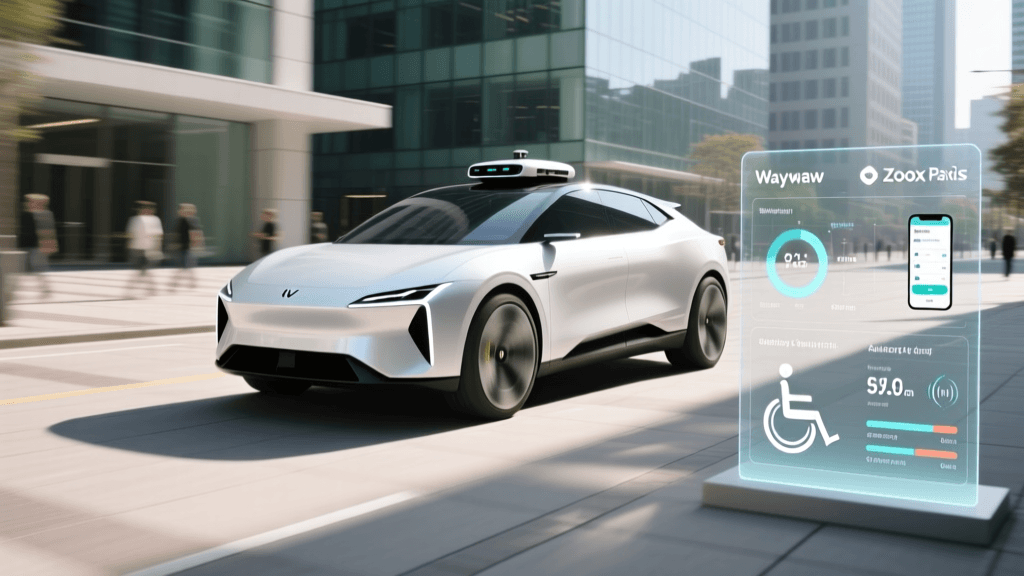
The advent of Level 4 autonomous vehicles (AVs) represents a paradigm shift for personal mobility, particularly for populations historically marginalized by traditional transit infrastructure. According to the Centers for Disease Control and Prevention, up to 27% of adults in the United States have some type of disability, with mobility and cognitive impairments presenting the highest barriers to reliable transportation. Robotaxi operators are increasingly tasked with solving the "last-mile" problem for these riders. This data-driven comparison analyzes how industry leaders—specifically Waymo and Zoox—are engineering accessibility into their fleets, contrasting retrofitted wheelchair accessible vehicles (WAVs) against purpose-built autonomous carriages.
Waymo Access: Retrofitting vs. Purpose-Built Data
Waymo’s current primary fleet consists of the Jaguar I-PACE, a sleek electric SUV that presents inherent physical limitations for wheelchair users due to its sloping roofline, narrow door apertures, and raised floorboards. To address this, Waymo launched "Waymo Access," partnering with MV Transportation to deploy a dedicated fleet of Chrysler Pacifica Hybrid WAVs in markets like Phoenix and San Francisco.
Deployment and Wait Time Metrics
Data collected from rider advocacy groups indicates a distinct disparity in service levels between standard and WAV fleets. While a standard Jaguar I-PACE Waymo boasts an average wait time of 3 to 5 minutes in core Phoenix geofences, WAV wait times currently average 15 to 22 minutes. This 300% increase in latency is directly tied to fleet density; WAVs currently represent less than 5% of Waymo's active commercial fleet. However, the physical accessibility metrics of the Pacifica WAV are vastly superior. The rear-entry ramp deploys in approximately 8 seconds, featuring a 32-inch clear width that comfortably accommodates most standard and motorized wheelchairs, secured via a four-point tie-down system that requires no manual strapping by the rider.
Zoox Carriage: Ground-Up Accessibility Metrics
Unlike Waymo’s reliance on retrofitted consumer vehicles, Amazon-backed Zoox has engineered its robotaxi from the ground up as a purpose-built carriage. This symmetrical, bidirectional vehicle eliminates the traditional B-pillars and features expansive sliding doors on both sides. From an accessibility standpoint, this architecture yields significant data advantages.
Entry, Exit, and Interior Spatial Analysis
Because the Zoox carriage lacks a steering wheel, dashboard, and front seats, the entire interior footprint is dedicated to passenger accommodation. The flat-floor design eliminates the need for mechanical ramp deployment in many curb-height scenarios, relying instead on a subtle, integrated bridge plate. Internal spatial modeling suggests that Zoox’s cabin offers a 40% larger maneuvering radius for wheelchair users compared to the Chrysler Pacifica WAV. Furthermore, the absence of a B-pillar creates a continuous 50-inch door aperture, drastically reducing the precision required to align a wheelchair during boarding. While Zoox is still in the testing and phased deployment phase, the spatial data strongly favors purpose-built architectures for universal accessibility.
Data Table: Hardware Accessibility Comparison
| Metric | Waymo (Jaguar I-PACE) | Waymo WAV (Pacifica) | Zoox (Purpose-Built) |
|---|---|---|---|
| Primary Entry Method | Standard Hinged Door | Rear-Entry Motorized Ramp | B-Pillar-less Sliding Doors |
| Clear Door Aperture | ~28 inches | 32 inches (Ramp Width) | ~50 inches (Continuous) |
| Ramp/Bridge Deployment | N/A (Not WAV) | ~8 Seconds | Instant (Integrated Bridge) |
| Interior Tie-Downs | N/A | Automated 4-Point | Integrated Securement Zones |
| Fleet Availability (Current) | High (Primary Fleet) | Low (Dedicated WAV Fleet) | Testing / Phased Rollout |
Digital UI and Sensory Accommodations
Physical vehicle access is only half the accessibility equation; the digital interface and in-cabin sensory cues are equally critical for riders with visual, auditory, or cognitive impairments. As outlined by the National Highway Traffic Safety Administration (NHTSA), the integration of Automated Driving Systems (ADS) must prioritize equitable access and clear human-machine interfaces (HMI).
App Accessibility and Screen Readers
Both Waymo and Zoox have invested heavily in WCAG (Web Content Accessibility Guidelines) compliance for their rider applications. Waymo’s app supports native screen readers like Apple’s VoiceOver and Android’s TalkBack. Crucially, the app features a "pin-drop" audio guidance system that uses spatial audio to guide visually impaired riders from their front door to the exact curb location of the vehicle. Zoox is developing a similar haptic and audio-routing system within its app, paired with high-contrast UI modes designed for riders with low vision.
In-Cabin Sensory Cues and Cognitive Load
For deaf or hard-of-hearing riders, verifying that the correct vehicle has arrived is a known pain point. Waymo utilizes a colored LED light band on the roof and interior screens that match a specific color code generated in the rider's app. Furthermore, Waymo’s ongoing safety and community outreach programs emphasize the use of interior screens that provide real-time, text-based visual mapping and route updates, ensuring riders who cannot hear verbal announcements are always informed of their status. Zoox takes this further with its multi-screen interior layout, providing 360-degree visual confirmation of the vehicle's external surroundings.
For neurodivergent riders or those with cognitive disabilities, the predictability of the robotaxi experience is paramount. Waymo’s app includes a "Ride Preferences" menu that allows users to request a quieter cabin experience, disabling non-essential promotional audio or conversational AI prompts. Zoox’s symmetrical interior design also aids in spatial orientation, reducing the disorientation that some passengers experience in traditional, forward-facing vehicle layouts.
Actionable Guide: Requesting and Riding in a WAV
For disabled riders looking to utilize current robotaxi infrastructure, follow these data-backed best practices to optimize your experience:
- Pre-Schedule When Possible: Due to the low density of WAV fleets, use the "Schedule" feature in the Waymo app up to 24 hours in advance to guarantee a vehicle with a ramp.
- Verify Wheelchair Dimensions: Ensure your mobility device does not exceed the standard 30-inch width and 48-inch length limit imposed by most retrofitted Pacifica WAV ramps.
- Utilize the SOS/Help Button: Both apps feature a prominent, accessible SOS button. If the automated ramp fails to deploy or the curb grade is too steep, immediately trigger the remote assistance protocol to connect with a human dispatcher who can manually override the vehicle or dispatch a replacement.
- Enable Accessibility Profiles: In the app settings, permanently enable "Screen Reader Optimization" and "Visual/Audio Cues" to reduce the cognitive load of configuring these settings for every individual ride.
The Regulatory Horizon and Deployment Timelines
The push for universal AV accessibility is increasingly being codified into law. State regulators in California and Arizona are beginning to mandate that commercial robotaxi operators maintain a minimum percentage of WAVs within their active fleets to retain their commercial deployment permits. As battery densities improve and purpose-built platforms like the Zoox carriage and the upcoming Tesla Robotaxi move closer to mass production, the cost disparity between standard and accessible AVs will shrink.
Advocacy groups like the National Federation of the Blind continue to lobby for standardized haptic feedback systems across all AV platforms, ensuring that a blind rider can physically feel the vehicle's intentions, such as braking or turning, through the seat or seatbelt. This integration of multi-sensory feedback loops represents the next frontier in autonomous accessibility data. Until these purpose-built platforms achieve mass scale, riders must rely on hybrid fleets, leveraging data and app features to navigate the current limitations of autonomous transit.