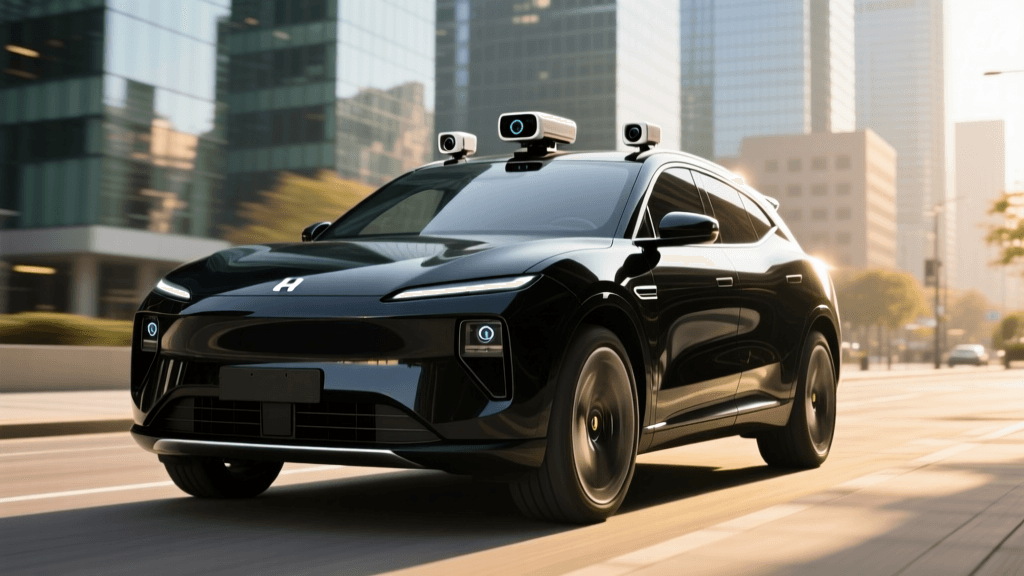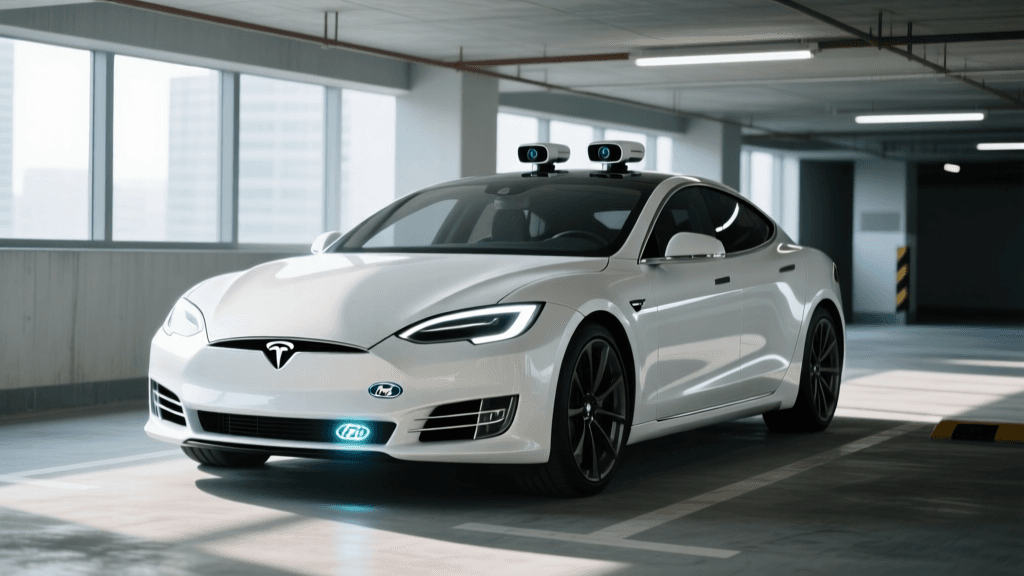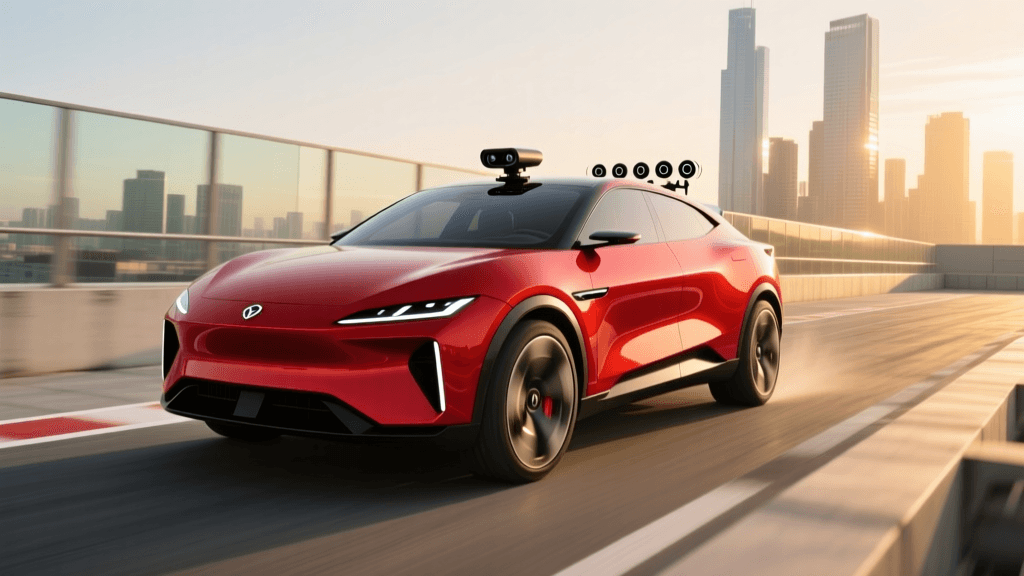
The OTA Revolution in Advanced Driver Assistance Systems
Over-the-air (OTA) software updates have fundamentally transformed the automotive industry, shifting the paradigm from static hardware to dynamic, evolving platforms. Nowhere is this more evident than in Advanced Driver Assistance Systems (ADAS). In the past, if an automaker wanted to improve Automatic Emergency Braking (AEB) sensitivity or refine Lane Centering Assist, the vehicle had to be physically taken to a dealership for an ECU flash. Today, Wi-Fi and cellular connectivity allow neural network weights, sensor fusion algorithms, and driver monitoring parameters to be updated overnight while the car sits in your driveway.
However, not all OTA ADAS strategies are created equal. Some automakers treat OTA updates as a mechanism for radical, bleeding-edge feature expansion, while others use them for meticulous, safety-first refinements. To understand how this technology impacts the modern driver, we are putting two of the most prominent systems in a head-to-head product showdown: Tesla's Full Self-Driving (FSD) capability versus Ford's BlueCruise. This guide will break down their OTA methodologies, update frequencies, costs, and how you can manage these updates for the safest driving experience.
The Contenders: Pure Vision vs. Sensor Fusion
Before diving into the software delivery mechanisms, it is vital to understand the hardware architectures these OTA updates are optimizing. Tesla's FSD relies on a 'Tesla Vision' pure-camera approach. Without LiDAR or radar, Tesla's OTA updates primarily consist of massive neural network training adjustments, tweaking how the car's vision algorithms interpret depth, velocity, and object classification based on billions of miles of fleet data.
Conversely, Ford's BlueCruise utilizes a robust sensor fusion approach, combining high-definition cameras, radar, and in select premium applications, LiDAR. Ford's OTA updates do not just tweak software; they often recalibrate how these disparate hardware sensors cross-reference data to build a 3D map of the vehicle's surroundings. According to the Insurance Institute for Highway Safety (IIHS), the underlying sensor architecture heavily dictates how an ADAS system behaves post-update, making the OTA strategy critical to long-term safety and reliability.
Head-to-Head: Update Frequency and Methodology
Tesla FSD: The Agile, High-Frequency Approach
Tesla operates its ADAS software development much like a Silicon Valley tech company. FSD updates are pushed out frequently, sometimes on a weekly or bi-weekly basis for users in the early access or beta programs. Tesla utilizes a unique 'Shadow Mode' methodology. Before an OTA update fully activates a new ADAS behavior, the software runs silently in the background during your daily commutes. It compares what the new algorithm would have done against your actual human inputs. Once Tesla's servers aggregate enough shadow mode data to prove the new algorithm is safer, an OTA update is pushed to activate it globally.
Ford BlueCruise: The Measured, Mapped Approach
Ford takes a vastly different, conservative approach to OTA ADAS updates. BlueCruise updates are generally rolled out on a quarterly or bi-annual basis. Rather than relying on real-time neural net training on public roads, Ford focuses on expanding its 'Hands-Free Blue Zones'—pre-mapped stretches of divided highways where hands-free driving is permitted. When Ford pushes an OTA update, it is usually to add thousands of new miles of mapped highways, refine the infrared driver-facing camera's eye-tracking accuracy, or issue a targeted recall fix for specific AEB edge cases. This methodology aligns closely with the safety frameworks outlined by the National Highway Traffic Safety Administration (NHTSA), prioritizing predictable system behavior over rapid iteration.
Feature Expansions vs. System Refinements
When you wake up to an ADAS OTA notification, what can you actually expect? With Tesla FSD, an update might completely overhaul the user interface, introduce a new visualization for the instrument cluster, or drastically alter the aggressiveness of the Auto Lane Change feature. Tesla's OTA updates are highly visible and often change the fundamental 'feel' of the car's driving dynamics. However, this rapid iteration can sometimes introduce new bugs, requiring subsequent 'hotfix' OTA updates to stabilize the system.
Ford BlueCruise OTA updates are rarely noticeable in terms of driving dynamics. Instead, they are highly focused on system stability and geographic expansion. A major BlueCruise OTA update might seamlessly add 20,000 new miles of compatible hands-free highways without the driver ever realizing the software changed. Ford's philosophy is that ADAS should feel like a reliable appliance, not a beta-testing environment.
The Economics of OTA ADAS Updates
The financial models behind these OTA improvements are just as divergent as their engineering philosophies. Tesla charges a premium for the privilege of continuous FSD OTA improvements. Users can purchase FSD outright for $8,000 or subscribe for $99 per month. This high cost funds the massive server farms required to train the vision neural networks that power the OTA updates.
Ford, on the other hand, typically includes a one-year to three-year trial of BlueCruise with the purchase of a new equipped vehicle. After the trial, maintaining access to the OTA-updated BlueCruise network costs roughly $75 per year or $20 per month. For drivers who primarily want hands-free highway cruising and reliable AEB without the bleeding-edge city-street automation, Ford's pricing structure offers a significantly higher return on investment.
Comparison Table: Tesla FSD vs. Ford BlueCruise OTA
| Feature | Tesla FSD (OTA) | Ford BlueCruise (OTA) |
|---|---|---|
| Sensor Architecture | Pure Vision (Cameras only) | Sensor Fusion (Cameras, Radar, LiDAR) |
| Update Frequency | High (Weekly/Monthly for Beta) | Low/Medium (Quarterly/Bi-Annually) |
| Primary OTA Focus | Neural net weights, city-street navigation, UI | Blue Zone map expansion, driver monitoring |
| Hands-Free Capability | Requires steering wheel torque (No hands-free) | True Hands-Free in mapped Blue Zones |
| Driver Monitoring | Steering wheel torque sensor / Cabin camera | Infrared Driver-Facing Camera (Standard) |
| Update Cost Model | $8,000 upfront or $99/month | ~$75/year after initial free trial |
| AEB OTA Adjustments | Frequent sensitivity tweaks via vision models | Rare, highly tested radar-fusion adjustments |
Actionable Guide: Managing Your ADAS OTA Updates
Whether you are driving a Tesla, a Ford, or any other modern EV with ADAS capabilities, properly managing your OTA updates is crucial for vehicle health and safety. Follow these practical steps to ensure a flawless update process:
- Secure a Stable Wi-Fi Connection: ADAS updates, particularly those containing new neural network models or high-definition maps, can be massive (often exceeding 4GB). Relying on the vehicle's cellular connection can result in interrupted downloads. Always connect your vehicle to a strong 2.4GHz or 5GHz home Wi-Fi network before initiating the download.
- Monitor Battery and Thermal States: OTA updates require the vehicle's computers to remain active, which draws power from the 12V accessory battery and the high-voltage pack. Ensure your main battery is above 20%. Furthermore, avoid scheduling updates during extreme cold or heat if parked outside; the vehicle's thermal management system may interrupt the software flash process to protect the battery.
- Never Drive During Installation: While downloading can happen while driving, the installation phase requires the vehicle to be parked. The car will disable the drivetrain, power steering, and ADAS sensors during the flash. Attempting to shift into drive during an installation can corrupt the ADAS ECU.
- Read the Release Notes Carefully: This is the most critical safety step. OTA updates can change following distances, AEB intervention thresholds, and lane-keep aggressiveness. According to research highlighted by the U.S. Department of Transportation, driver complacency after software updates is a known risk factor. Always take the first 20 miles of driving post-update with heightened awareness to relearn the vehicle's new behavioral quirks.
- Recalibrate After Major Updates: If an OTA update specifically mentions camera or sensor recalibration, ensure you drive on well-lit roads with clear lane markings for at least 30 minutes to allow the system to re-index its spatial awareness.
Safety and Regulatory Perspectives on OTA ADAS
The regulatory landscape surrounding OTA ADAS updates is rapidly evolving. The NHTSA now treats certain software flaws as safety recalls, meaning automakers can issue an OTA update to fix a critical AEB or Lane Keep Assist bug without ever asking you to visit a service center. This is a massive win for consumer convenience and fleet-wide safety compliance.
However, safety advocates warn against the 'gamification' of ADAS via OTA. When automakers push frequent updates that unlock new, experimental features, it can lead to over-reliance and automation complacency. The IIHS continuously tests vehicles post-OTA update to ensure that new software versions do not degrade baseline safety features like pedestrian detection or crash avoidance. As a consumer, it is your responsibility to treat every OTA update as a new vehicle handover, requiring you to re-establish your mental model of what the car can and cannot do.
Conclusion: Which OTA ADAS System Wins?
The showdown between Tesla FSD and Ford BlueCruise OTA updates ultimately comes down to your personal risk tolerance and driving needs. If you are an early adopter who wants access to the absolute cutting edge of machine learning, and you do not mind acting as a data-gathering node for a rapidly evolving neural network, Tesla's high-frequency OTA strategy is unmatched. You are paying a premium for a system that literally learns and changes every month.
However, if you prioritize predictability, true hands-free highway relaxation, and a system that behaves like a mature, rigorously tested safety appliance, Ford BlueCruise is the clear victor. Ford's measured OTA approach ensures that when an update arrives, it expands your hands-free map without fundamentally altering the safe, sensor-fused driving dynamics you have come to trust. In the realm of ADAS, sometimes the best software update is the one that simply makes the car safer, without changing the way it feels to drive.