The Core ADAS Sensor Types Explained
The automotive industry is undergoing a seismic shift from mechanical engineering to software-defined mobility. At the heart of this revolution are Advanced Driver Assistance Systems (ADAS), which serve as the foundational building blocks for autonomous driving. To navigate complex traffic, unpredictable pedestrians, and adverse weather, modern electric vehicles (EVs) rely on a sophisticated suite of sensors. However, not all sensors are created equal. Understanding how cameras, radar, LiDAR, and ultrasonic sensors work—and where the industry is heading—is critical for tech-savvy car buyers and EV enthusiasts looking to future-proof their next vehicle purchase.
Cameras: The Visual Cortex
Cameras are the most human-like sensors in the ADAS arsenal. Utilizing high-resolution CMOS image sensors (often 8-megapixel or higher in modern EVs), they capture color, contrast, and texture. This makes them indispensable for reading traffic lights, recognizing stop signs, and detecting lane markings. Stereo camera setups can also estimate depth by comparing images from two slightly offset lenses, mimicking human binocular vision.
However, cameras have distinct limitations. They are highly susceptible to environmental blinding, such as direct sun glare, heavy fog, snow, and pitch-black darkness. To compensate, automakers are increasingly relying on advanced neural networks to interpret 2D images into 3D spatial awareness, a technique heavily championed by Tesla's 'Pure Vision' approach. Yet, most industry experts agree that cameras alone cannot provide the redundant depth mapping required for fail-safe Level 3+ autonomy.
Radar: The All-Weather Workhorse
Radio Detection and Ranging (Radar) has been a staple in automotive safety for decades, primarily powering Adaptive Cruise Control (ACC). Operating typically in the 77GHz frequency band, radar emits radio waves that bounce off objects, calculating distance and relative velocity via the Doppler effect. Radar's greatest strength is its resilience; it cuts through rain, fog, snow, and darkness with ease, making it a highly reliable all-weather sensor.
Historically, radar suffered from poor spatial resolution, struggling to differentiate between a stationary vehicle and an overhead highway sign. However, the advent of 4D Imaging Radar is fundamentally changing this narrative, allowing the sensor to map elevation and create dense point clouds that rival early-generation LiDAR systems.
LiDAR: The 3D Mapping Powerhouse
Light Detection and Ranging (LiDAR) is widely considered the holy grail for high-level autonomous driving. By firing millions of laser pulses per second (typically at 905nm or 1550nm wavelengths) and measuring the time-of-flight for the reflections, LiDAR generates a hyper-accurate, real-time 3D point cloud of the vehicle's surroundings. It operates with millimeter precision and is completely independent of ambient light conditions.
Early LiDAR units were bulky, mechanical, spinning domes mounted on vehicle roofs, costing upwards of $75,000 each. Today, the industry is rapidly transitioning to solid-state and semi-solid-state LiDAR. Companies like Luminar, Innoviz, and Hesai have driven unit costs down below $500, enabling integration into production vehicles like the Volvo EX90 and the Lotus Eletre.
Ultrasonic Sensors: The Close-Range Guardians
Operating on high-frequency sound waves (usually 40-50kHz), ultrasonic sensors are the unsung heroes of low-speed maneuvering. They are incredibly cheap to produce and highly accurate at ranges under 5 meters. They power automatic parking assist systems, blind-spot proximity alerts, and emergency low-speed braking. While some automakers (notably Tesla) have attempted to remove ultrasonic sensors in favor of camera-based 'vision-only' parking, the broader industry retains them due to their unmatched reliability in detecting close-range obstacles like concrete pillars and glass walls.
Sensor Fusion: The Industry Standard for Autonomy
The SAE International J3016 standard outlines the levels of driving automation, from Level 0 (no automation) to Level 5 (full autonomy). Achieving Level 3 (conditional automation) and beyond requires 'Sensor Fusion.' This is the process of combining data from cameras, radar, and LiDAR into a single, cohesive environmental model using AI-driven edge computing.
According to the National Highway Traffic Safety Administration (NHTSA), redundant sensor systems are critical for mitigating the inherent blind spots of individual hardware. For example, if a camera is blinded by sun glare, the radar and LiDAR will still detect the stopped vehicle ahead, triggering Automatic Emergency Braking (AEB). Real-world testing by the Insurance Institute for Highway Safety (IIHS) consistently highlights that multi-sensor fusion dramatically reduces false-positive braking events and improves pedestrian detection in low-light scenarios.
Future Trends & Industry Outlook (2024–2030)
1. The Rise of 4D Imaging Radar
Traditional radar measures range, azimuth (horizontal angle), and velocity. 4D Imaging Radar adds elevation (vertical angle) to the mix. By utilizing advanced multiple-input multiple-output (MIMO) antenna arrays, 4D radar can map the contours of objects, distinguishing between a stopped car and a bridge overhead. As automakers look to cut costs without sacrificing safety, 4D radar is emerging as a primary competitor to low-range LiDAR, offering a 'good enough' 3D mapping solution for Level 2+ and Level 3 highway pilot systems.
2. Solid-State LiDAR and Windshield Integration
The mechanical spinning LiDAR is dead for consumer cars. The future is solid-state LiDAR, which uses optical phased arrays or micro-mirrors to steer lasers without moving parts. This reduces manufacturing costs, increases durability, and allows for sleek integration. The next frontier is embedding LiDAR emitters directly behind the windshield or inside headlight housings, preserving vehicle aerodynamics and design aesthetics while protecting the sensor from minor collisions and debris.
3. The Vision-Only vs. Multi-Sensor Debate
Tesla continues to bet entirely on cameras and neural networks, arguing that humans drive using only vision, so AI should too. However, the broader industry—including Mercedes-Benz, BMW, and Chinese EV giants like NIO and XPeng—is doubling down on LiDAR and radar redundancy. As AI compute costs rise, hardware redundancy remains the preferred safety net for regulatory approval in the EU and China.
Comparison Chart: ADAS Sensor Capabilities & Future Costs
| Sensor Type | Max Effective Range | Resolution / Detail | Weather Resilience | Est. Future Unit Cost (2026) |
|---|---|---|---|---|
| Camera (8MP Stereo) | 250 - 300m | High (Color, Text, 2D/3D AI) | Low (Fails in fog/glare) | $40 - $90 |
| Standard Radar (77GHz) | 200 - 250m | Low (Blob detection, Velocity) | High (Unaffected by weather) | $30 - $60 |
| 4D Imaging Radar | 300m+ | Medium-High (Elevation mapping) | High (Unaffected by weather) | $80 - $150 |
| Solid-State LiDAR | 200 - 300m | Extreme (Millimeter 3D Point Cloud) | Medium (Struggles in heavy snow) | $200 - $500 |
| Ultrasonic | 5 - 8m | Low (Proximity only) | Medium (Affected by extreme cold) | $2 - $10 |
Actionable Advice for EV and ADAS Buyers
As you evaluate upcoming EV models and their ADAS packages, keep these practical considerations in mind to protect your wallet and ensure optimal system performance:
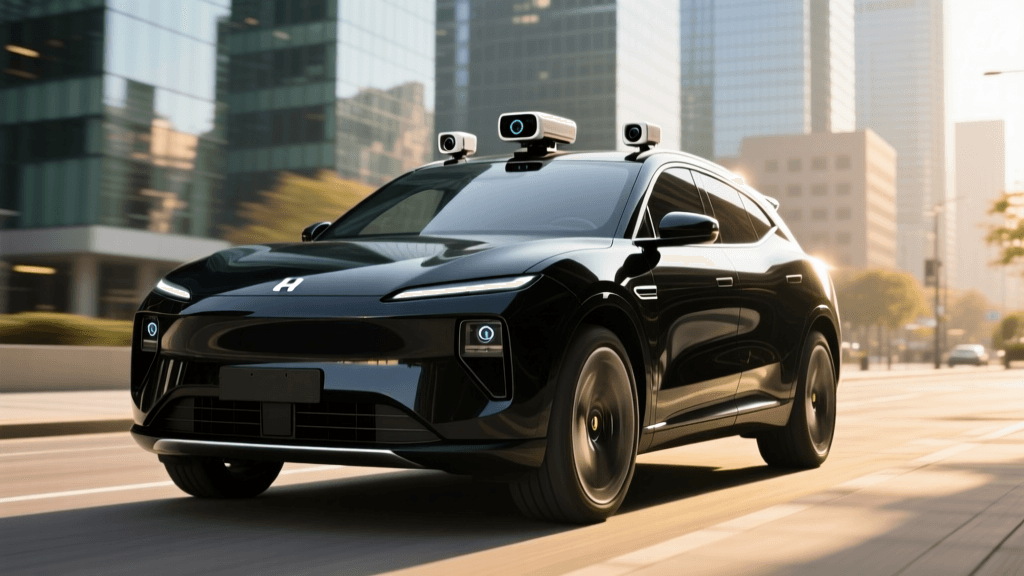
- Evaluate Sensor Placement for Repair Costs: Pay attention to where LiDAR and radar units are mounted. A radar embedded in the front emblem or lower bumper is highly susceptible to damage in minor parking lot collisions, potentially turning a $300 bumper repair into a $1,200 sensor replacement and recalibration bill. Conversely, roof-mounted LiDAR (like the 'watchtower' design on NIO and Lotus vehicles) is safer from fender benders but may be vulnerable to low-clearance garage impacts.
- Demand Heated Housings and Cleaning Systems: If you live in a climate with snow, ice, or heavy road grime, ensure your vehicle features heated camera housings and high-pressure fluid nozzles for the LiDAR and radar units. A sensor covered in road salt is effectively blind, rendering your expensive ADAS suite useless.
- Factor in Windshield Calibration Costs: Many modern EVs mount their primary stereo cameras directly behind the rearview mirror on the windshield. If a rock chips your windshield and requires a full replacement, the camera system must be dynamically and statically recalibrated. Always verify that your auto insurance policy covers 'ADAS recalibration,' as this service alone can cost between $300 and $600.
- Look for 4D Radar in Mid-Tier Models: If you cannot afford the premium trim levels equipped with LiDAR, prioritize vehicles featuring 4D Imaging Radar (such as the Continental ARS540). It provides a massive leap in highway safety and phantom-braking reduction over legacy radar systems, offering an excellent middle ground for Level 2+ highway assist features.
Ultimately, the future of ADAS is not about a single miracle sensor, but about the harmonious orchestration of hardware and AI. By understanding the strengths and limitations of cameras, radar, and LiDAR, buyers can make informed decisions that prioritize both cutting-edge technology and long-term ownership practicality.