Mastering GM Super Cruise: Map Coverage and Hands-Free Realities
General Motors has positioned Super Cruise as a premium, safety-first advanced driver assistance system (ADAS), distinctly separating itself from the vision-only approaches favored by some competitors. For EV and smart driving enthusiasts, understanding the nuances of this system is critical for maximizing both safety and convenience. Unlike systems that attempt to interpret the road in real-time using cameras alone, Super Cruise relies on a robust combination of real-time sensors, radar, and highly detailed LiDAR-mapped data. This expert review and best-practice guide dives deep into the current state of GM Super Cruise map coverage, the reality of its hands-free experience, and actionable tips for daily use.
The Evolution and State of Super Cruise Map Coverage
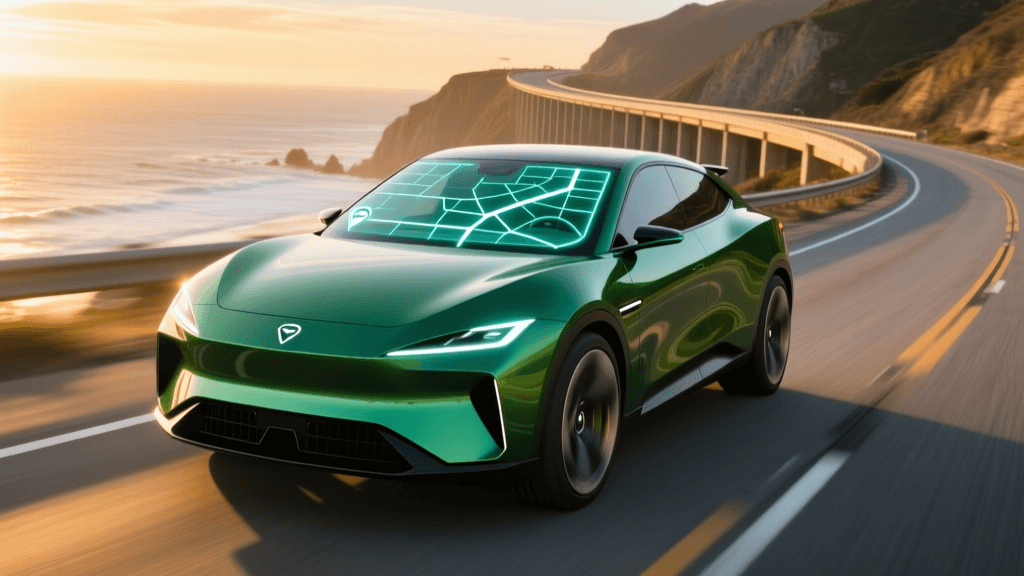
The foundation of GM Super Cruise is its High-Definition (HD) map network. Initially launching with roughly 200,000 miles of compatible limited-access freeways in the United States and Canada, GM has aggressively expanded this footprint. As of recent updates, the Super Cruise network encompasses over 750,000 miles of mapped roads in North America. This massive expansion means that drivers are far more likely to engage the system on secondary highways, ring roads, and rural interstates that were previously excluded.
The mapping process utilizes LiDAR (Light Detection and Ranging) to create a centimeter-accurate 3D model of the road. This includes the exact curvature of lanes, the placement of guardrails, and the precise location of on-ramps and off-ramps. Because the vehicle already 'knows' the road geometry, the system does not have to rely solely on visible lane markers, which can be faded, covered by snow, or obscured by heavy rain. However, it is vital to understand that Super Cruise remains geofenced. If you exit a mapped highway or enter a complex, unmapped construction zone, the system will systematically prompt you to take over and eventually disengage safely.
From an expert perspective, the map coverage is highly reliable but requires proactive route planning. The system's native navigation must be aware of your route to anticipate lane splits and complex interchanges. If you are driving without a destination set in the vehicle's infotainment system, Super Cruise may struggle to navigate impending lane drops or toll booth splits, often defaulting to the left lane to avoid unexpected exits.
Hands-Free Reality: Driver Monitoring and System Feel
The hallmark of Super Cruise is its true hands-free capability on compatible roads, but this freedom is strictly governed by an advanced Driver Attention System. According to the National Highway Traffic Safety Administration (NHTSA), it is crucial for drivers to understand that current ADAS technologies require continuous supervision, and GM enforces this through a steering-wheel-mounted infrared camera.
This camera tracks your eye contact and head position, ensuring you are looking at the road ahead rather than your phone or the passenger seat. The Insurance Institute for Highway Safety (IIHS) has repeatedly emphasized that robust driver monitoring systems like GM's infrared camera are vastly superior to torque-sensing steering wheels, which can be easily fooled by resting a hand on the wheel. With Super Cruise, you can rest your hands in your lap, but your eyes must remain on the road.
The tactile experience of the system is communicated through a prominent LED light bar integrated into the top of the steering wheel. A solid green light indicates the system is active and you may remove your hands. A flashing green light means a manual lane change is available or in progress. Blue indicates the system is preparing to engage or has just completed a maneuver. Red, accompanied by auditory and haptic alerts, demands immediate manual takeover. The lane centering itself is exceptionally smooth, utilizing the LiDAR map to anticipate curves and adjust speed proactively, resulting in a ride that feels more like a seasoned human driver than a reactive machine.
Expert Tips for Maximizing Your Super Cruise Experience
To get the most out of GM's flagship ADAS, seasoned users should adopt the following best practices:
- Always Set Your Navigation Destination: Super Cruise performs best when it knows where you are going. Setting the native navigation allows the system to anticipate complex lane splits, manage automatic lane changes (on equipped models), and smoothly navigate off-ramps.
- Manage Your Sunglasses: While the infrared driver monitoring camera is designed to work with most polarized and tinted sunglasses, heavily mirrored or specialized optical lenses can occasionally block the IR sensors. If you receive frequent 'pay attention' warnings while wearing sunglasses, try adjusting their position on your nose or switching to a different pair.
- Understand the 'Left Lane' Default: If you are driving without a navigation route set, Super Cruise will often default to the left-most lane to avoid the unpredictability of on-ramps and off-ramps on the right side of the highway. If you prefer the right lane for better fuel/charge efficiency or to avoid passing traffic, you must actively steer the vehicle back after the system completes a pass.
- Monitor Weather and Sun Glare: While LiDAR maps help in low-visibility conditions, the system's real-time cameras can still be blinded by direct, low-angle sun glare or heavy, blinding snow. In these edge cases, be prepared to take over immediately.
- Keep the Steering Wheel Camera Clean: The infrared camera is housed in the top center of the steering wheel hub. Oils from your hands, dust, or spills can obscure the lens, leading to false 'driver attention' warnings. Wipe it gently with a microfiber cloth during routine interior cleaning.
ADAS Comparison: Super Cruise vs. The Competition
How does GM's mapped approach compare to other major players in the smart driving space? The table below outlines the core differences in mapping, monitoring, and cost structures.
| Feature | GM Super Cruise | Ford BlueCruise | Tesla Autopilot / FSD |
|---|---|---|---|
| Mapped Coverage (NA) | ~750,000 miles (LiDAR HD Maps) | ~130,000 miles (LiDAR HD Maps) | Nationwide (Vision-Only, No HD Maps) |
| Hands-Free Capability | Yes (on mapped roads) | Yes (on mapped roads) | No (Requires torque/hand contact) |
| Driver Monitoring | Infrared Eye-Tracking Camera | Infrared Eye-Tracking Camera | Cabin Camera (Basic attention alerts) |
| Lane Change Automation d> | Automatic & On-Demand (Newer models) | Automatic & On-Demand (Select trims) | Automatic & On-Demand (FSD required) |
| Pricing Structure | ~$2,500 upfront + $25/month sub | ~$2,100 upfront + $75/year sub | $6,000 upfront or $99/month (FSD) |
As the data illustrates, GM and Ford share a similar philosophy regarding geofenced, LiDAR-mapped hands-free driving, but GM currently holds a massive advantage in total road coverage. Tesla, conversely, bets entirely on neural networks and real-time vision, offering ubiquitous availability but lacking the true hands-free legal and technical framework that mapped systems provide.
Best Practices for Long-Distance EV Travel
When pairing Super Cruise with GM's Ultium EV platform (such as in the Cadillac Lyriq, Chevrolet Silverado EV, or GMC Hummer EV), the system becomes a powerful tool for mitigating road trip fatigue. The best practice for long-distance travel is to rely on the vehicle's integrated route planner. When you input a destination that requires DC fast charging, the vehicle will precondition the battery and map a route that prioritizes Super Cruise-compatible highways.
During these long stints, utilize the automatic lane change feature to maintain momentum. If the system detects a slower-moving vehicle ahead, it will check the adjacent lane, confirm it is clear, and execute the pass without requiring you to touch the turn signal stalk. This keeps the driving experience seamless and reduces the micro-stresses associated with constant highway maneuvering. However, always remain vigilant during construction zones. Super Cruise will alert you via the seat haptics and steering wheel light bar when an HD map ends or a temporary construction zone is detected. Acknowledge the prompt immediately and assume manual control to navigate the altered traffic patterns safely.
Conclusion
GM Super Cruise remains one of the most refined and confidence-inspiring ADAS suites on the market today. Its reliance on LiDAR-mapped infrastructure ensures a level of predictability and smoothness that vision-only systems still struggle to match consistently. While the geofenced nature of the system means it is not a 'door-to-door' autonomous solution, the expansion to 750,000 miles of coverage makes it a highly viable tool for the vast majority of highway commuting and intercity travel. By understanding the system's limitations, maintaining the driver monitoring sensors, and actively utilizing the native navigation, drivers can safely unlock the full potential of hands-free smart driving.