The Beginner's Complete Guide to Automatic Emergency Braking (AEB)
When shopping for a new vehicle, safety is often the top priority for buyers. Among the myriad of Advanced Driver Assistance Systems (ADAS) available today, Automatic Emergency Braking (AEB) stands out as one of the most critical, life-saving technologies. But with nearly every major automaker offering their own proprietary suite—such as Toyota Safety Sense, Subaru EyeSight, Volvo City Safety, and Honda Sensing—how do you know which system actually performs best when it matters most?
This beginner's complete guide breaks down the technology behind AEB, compares the effectiveness of top automotive brands, and provides actionable advice to help you choose the safest vehicle for your needs. According to the National Highway Traffic Safety Administration (NHTSA), AEB systems are designed to detect an impending forward crash and automatically apply the brakes if the driver fails to react in time. However, not all systems are created equal.
How AEB Works: A Beginner's Breakdown
Before comparing brands, it is essential to understand how AEB systems perceive the world. Most modern systems rely on a combination of sensors, a concept known as 'sensor fusion':
- Cameras: Identify objects, read lane markings, and recognize pedestrians or cyclists through visual pattern recognition.
- Radar: Bounces radio waves off objects to determine their distance and relative speed, excelling in poor weather conditions where cameras might struggle.
- Lidar: Uses laser pulses to create a high-resolution 3D map of the vehicle's surroundings (found in higher-end or specific ADAS suites).
- Stereo Cameras: Two cameras placed side-by-side to mimic human binocular vision, providing excellent depth perception without the immediate need for radar at close ranges.
When the vehicle's computer calculates that a collision is imminent and the driver has not applied sufficient braking pressure, the AEB system intervenes, applying maximum braking force to either prevent the crash entirely or mitigate its severity.
Top Contenders: Comparing AEB Across Major Brands
Toyota Safety Sense (TSS 3.0)
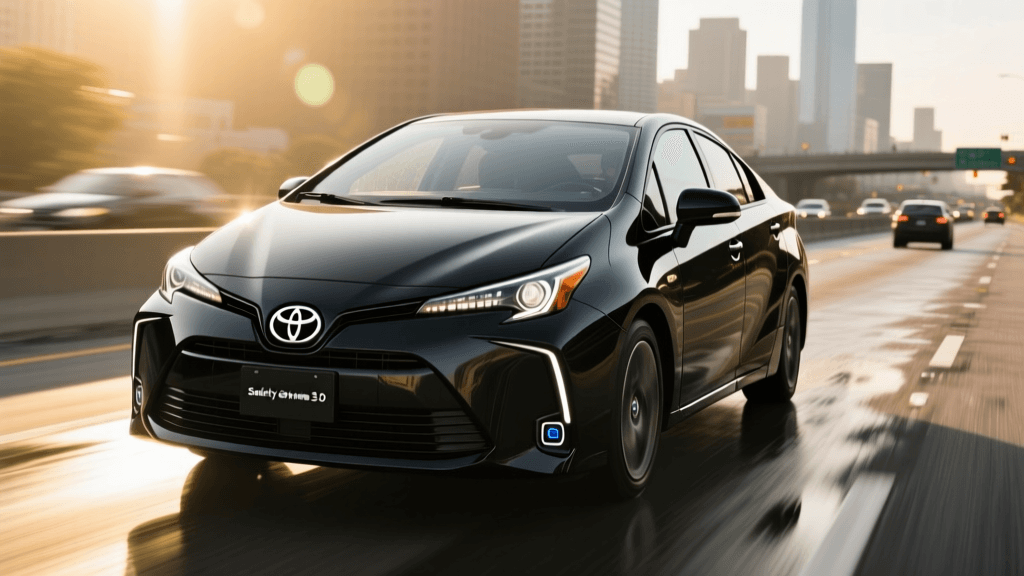
Toyota has democratized safety by making its Toyota Safety Sense suite standard on almost all new models. The latest iteration, TSS 3.0, utilizes a millimeter-wave radar and a monocular camera. Toyota's Pre-Collision System (PCS) with Pedestrian Detection is highly effective in daytime scenarios and has made significant strides in low-light performance. A standout feature of TSS 3.0 is its Intersection Support, which can detect oncoming vehicles and pedestrians when you are making a left or right turn, a common scenario for urban accidents.
Subaru EyeSight
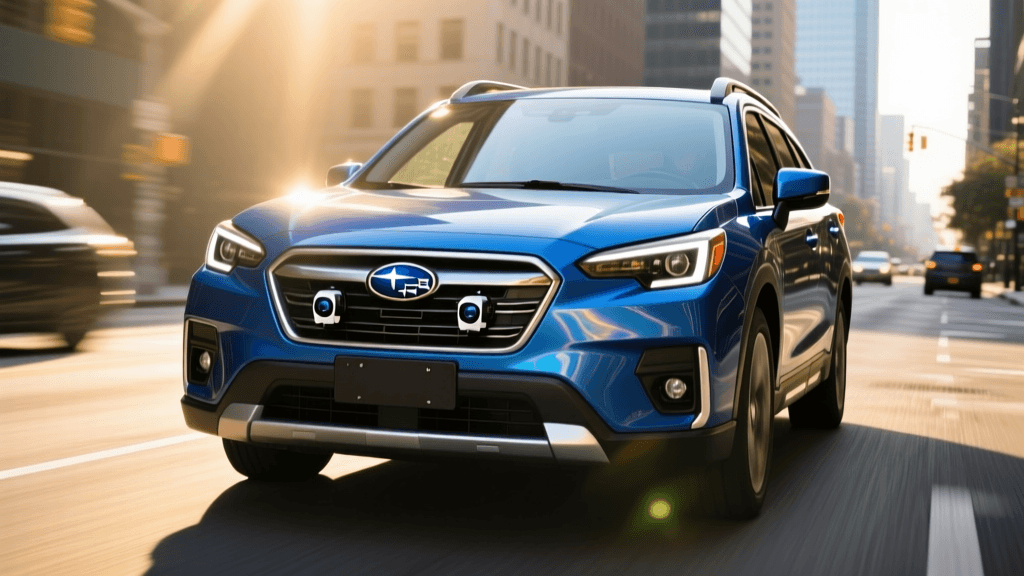
Subaru takes a unique approach with its EyeSight system, relying primarily on stereo cameras mounted near the rearview mirror rather than a traditional radar-camera fusion for its core AEB functions. This binocular vision gives EyeSight exceptional depth perception and color recognition (it can 'see' brake lights illuminating ahead). Independent testing consistently praises EyeSight for its smooth, progressive braking feel, which mimics a human driver and reduces the 'panic' sensation of abrupt stops. It is particularly highly rated for pedestrian and cyclist detection in complex urban environments.
Volvo City Safety and Pilot Assist
Volvo has long been a pioneer in automotive safety, and its City Safety AEB system is arguably the most comprehensive on the market. Using a robust radar and camera fusion, City Safety doesn't just look for cars and pedestrians; it is specifically tuned to detect large animals, such as deer or moose, which is a massive advantage for rural drivers. Volvo's system is known for its early warning times and aggressive braking intervention, prioritizing collision avoidance over passenger comfort in critical scenarios.
Honda Sensing
Honda Sensing uses a wide-angle front camera and a radar sensor located in the lower grille. While early generations of Honda Sensing were criticized for being overly sensitive and prone to 'phantom braking' (braking for shadows or overpasses), the latest iterations have vastly improved. The new 90-degree field-of-view camera allows the system to recognize lane lines, curbs, and motorcycles much earlier. Honda's AEB is highly effective on highways and performs reliably in standardized track testing.
Tesla Autopilot
Tesla controversially removed radar and ultrasonic sensors from its newer vehicles, relying entirely on 'Tesla Vision' (a camera-only neural network approach). While Tesla's AEB is highly capable in well-lit, clear conditions, independent tests have shown that camera-only systems can struggle with depth perception in heavy rain, fog, or direct sun glare compared to radar-equipped competitors.
AEB Performance Comparison Table
To help you visualize the differences, here is a structured comparison of the leading ADAS suites and their AEB capabilities:
| Brand | ADAS Suite | Primary Sensor Tech | Nighttime Pedestrian Detection | Animal Detection | Overall Effectiveness Rating |
|---|---|---|---|---|---|
| Volvo | City Safety | Radar + Camera | Excellent | Yes (Large Animals) | Superior |
| Subaru | EyeSight | Stereo Cameras | Very Good | No | Superior |
| Toyota | Toyota Safety Sense 3.0 | Radar + Camera | Good | No | Excellent |
| Honda | Honda Sensing | Radar + Wide Camera | Good | No | Very Good |
| Tesla | Autopilot | Camera Only (Vision) | Average | No | Good (Weather Dependent) |
Independent Testing: What the Experts Say
Automaker marketing materials will always claim their system is the best, which is why independent testing is crucial. Organizations like the Insurance Institute for Highway Safety (IIHS) and Euro NCAP rigorously test AEB systems using crash test dummies, soft-target vehicles, and varying speeds.
Recently, the IIHS updated its testing criteria to include nighttime pedestrian detection. This was a game-changer, as many older AEB systems that performed flawlessly in daylight failed completely in the dark. Vehicles equipped with Subaru EyeSight, Volvo City Safety, and the latest Toyota TSS 3.0 consistently score 'Advanced' or 'Superior' ratings in these grueling nighttime tests. Euro NCAP also tests 'AEB Cyclist' and 'AEB Junction' (intersection) scenarios, where Volvo and Toyota frequently achieve maximum points due to their wide-angle sensor arrays and advanced predictive algorithms.
Practical Advice for Buyers: Maximizing AEB Effectiveness
Even the most effective AEB system is not a replacement for an attentive driver. As a beginner to ADAS technology, keep these actionable tips in mind:
- Keep Sensors Clean: AEB relies on unobstructed sensors. Snow, mud, or heavy rain covering your windshield camera or front grille radar will disable the system. Always wipe these areas clean during winter months.
- Understand the Limitations: Most AEB systems are designed to mitigate rear-end collisions. They may not react to cross-traffic, animals (unless specifically equipped like Volvo), or stationary objects at highway speeds.
- Beware of Phantom Braking: If your car slams on the brakes for no apparent reason (often caused by shadows or roadside metal signs), report it to your dealer. Software updates frequently address these calibration issues.
- Check the IIHS Ratings Before Buying: Always look up the specific model year and trim level on the IIHS website. AEB performance can vary even within the same brand depending on whether the car has the base camera or the upgraded sensor package.
Conclusion: Which Brand Wins?
If you are looking for the absolute most effective, all-around Automatic Emergency Braking system, Volvo's City Safety and Subaru's EyeSight currently tie for the top spot. Volvo wins on sheer versatility and animal detection, while Subaru wins on braking smoothness and urban pedestrian safety. Toyota is a close third, offering incredible value by including its highly effective TSS 3.0 system as standard equipment on budget-friendly models. Ultimately, ensuring your next vehicle has a top-rated, modern AEB system is one of the smartest investments you can make for your safety on the road.