Introduction: The Shift to True Hands-Free Highway Driving
The automotive industry is standing on the precipice of a major paradigm shift, moving from passive driver assistance to active, hands-free highway automation. While adaptive cruise control and lane-keeping assist have been staples of the premium car market for years, the ability to legally and safely remove your hands from the steering wheel on designated highways remains a highly contested battleground. Enter Ford BlueCruise, a Level 2 advanced driver assistance system (ADAS) that has rapidly evolved to challenge segment benchmarks like GM’s Super Cruise and Tesla’s Autopilot. In this comprehensive review and industry outlook, we put Ford BlueCruise to the test in real-world highway conditions and analyze what its current trajectory means for the future of software-defined vehicles and autonomous mobility.
Real-World Review: Ford BlueCruise on the Highway
To understand BlueCruise’s capabilities, one must first look at the hardware enabling it. Unlike vision-only systems, Ford relies on a robust sensor fusion approach. The system utilizes a suite of radar and cameras, paired crucially with an infrared (IR) driver-facing camera mounted on the steering column or instrument cluster. This IR camera is the linchpin of the hands-free experience, continuously monitoring the driver’s eye gaze and head position to ensure they remain engaged with the road, even when their hands are off the wheel.
Activation and the Geofenced Experience
BlueCruise operates on a geofencing model. According to Ford's official BlueCruise technology page, the system is currently mapped for over 130,000 miles of divided highways across North America. When you enter a designated "Hands-Free Blue Zone," a prominent blue indicator illuminates on the digital instrument cluster, and the steering wheel icon transitions to show hands hovering above it. In our real-world testing on major interstates like I-95 and I-80, the transition from Active Drive Assist (hands-on) to BlueCruise (hands-off) was remarkably seamless. The system maintains a confident center-lane bias and handles gentle curves without the "ping-pong" effect that plagues lesser lane-centering systems.
BlueCruise 1.2 and 1.3: Closing the Gap
The introduction of BlueCruise 1.2 and the subsequent 1.3 over-the-air (OTA) updates dramatically improved the system's real-world utility. The standout feature is Lane Change Assist. By simply tapping the turn signal, the vehicle scans adjacent lanes, calculates closing speeds of trailing traffic, and executes a smooth, confident lane change without requiring the driver to touch the wheel. Additionally, Predictive Speed Assist automatically adjusts the vehicle's speed ahead of sharp curves, a feature that significantly reduces driver anxiety on winding mountain highways. The IR camera's performance is equally impressive; it accurately tracks eye movement even when the driver is wearing polarized sunglasses or when the cabin is subjected to harsh, direct sunlight glare.
BlueCruise vs. The Competition: A Data-Driven Comparison
How does Ford’s hands-free highway system stack up against its primary rivals? Below is a structured comparison of the current market leaders in Level 2+ partial automation.
| Feature | Ford BlueCruise (1.3+) | GM Super Cruise | Tesla Autopilot (Base) |
|---|---|---|---|
| Hands-Free Capability | Yes (Geofenced Blue Zones) | Yes (Geofenced Mapped Roads) | No (Hands-on required) |
| Driver Monitoring | IR Camera (Eye/Head tracking) | IR Camera (Eye/Head tracking) | Steering Wheel Torque / Basic Camera |
| Automated Lane Change | Yes (Signal initiated) | Yes (Signal & Auto-initiated) | Yes (Signal initiated) |
| Mapped Highway Coverage | ~130,000+ miles (NA) | ~750,000+ miles (NA) | Global (Unmapped/Vision-based) |
| Pricing Model | Upfront Tech Pkg + Subscription | Upfront Pkg + Free for 3 Years | One-time upfront purchase |
As noted by the Insurance Institute for Highway Safety (IIHS), robust driver monitoring systems—like the IR cameras used by Ford and GM—are critical for preventing automation complacency, a leading factor in ADAS-related collisions. While Tesla’s vision-based approach offers global coverage, Ford’s geofenced, LiDAR-mapped approach currently provides a more predictable and legally compliant hands-free experience on designated highways.
The Pricing Paradigm: Upfront Costs vs. Subscriptions
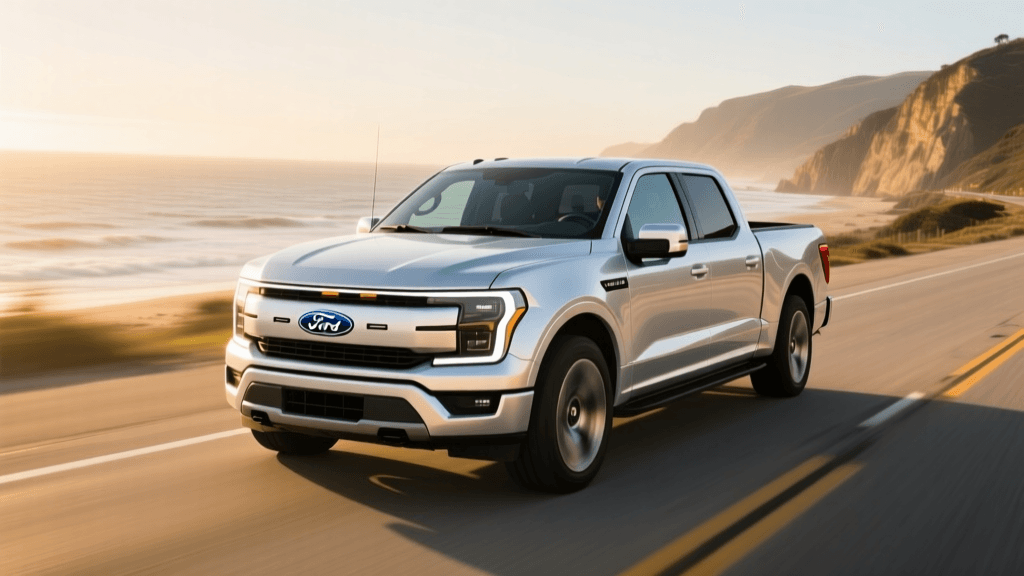
One of the most significant industry trends highlighted by BlueCruise is the shift toward Software-as-a-Service (SaaS) revenue models in the automotive sector. Accessing BlueCruise typically requires an initial hardware investment. For vehicles like the F-150 Lightning or Mustang Mach-E, this often means purchasing a $2,100 Technology Package at the point of sale. Following a complimentary 90-day trial period, owners must transition to a subscription model to maintain hands-free functionality, currently priced around $75 per month or $800 annually.
This subscription model represents a massive pivot for legacy automakers. By treating ADAS features as ongoing services rather than one-time hardware purchases, Ford can fund continuous R&D, server costs for HD map updates, and OTA deployment infrastructure. However, it also introduces consumer friction. Buyers accustomed to owning their vehicle's features outright are sometimes hesitant to "rent" a feature their car already possesses the hardware to perform. The future success of this model hinges entirely on Ford's ability to deliver continuous, tangible value through regular OTA enhancements.
Future Trends & Industry Outlook for BlueCruise
Looking ahead, the trajectory of Ford BlueCruise offers a fascinating glimpse into the broader future of ADAS and autonomous driving. Several key trends will define the next generation of this technology:
1. Expansion Beyond the Highway (Level 3 Autonomy)
Currently, BlueCruise is a Level 2 system, meaning the driver is ultimately liable and must remain attentive. The industry's next major hurdle is Level 3 autonomy, where the manufacturer assumes liability under specific conditions. While Mercedes-Benz has introduced Drive Pilot for low-speed traffic jams, Ford’s data-gathering fleet of connected vehicles is actively mapping complex urban environments and arterial roads. Expect future iterations of BlueCruise to tackle stop-and-go urban traffic and complex intersection navigation, slowly eroding the boundaries of the "Blue Zone" geofence.
2. V2X Integration and HD Mapping
The National Highway Traffic Safety Administration (NHTSA) has long highlighted the potential of Vehicle-to-Everything (V2X) communication to enhance roadway safety. Future BlueCruise updates will likely integrate V2X data, allowing Ford vehicles to communicate with smart infrastructure (like traffic lights and construction zone beacons). This will enable the system to anticipate lane closures or signal changes miles before the vehicle's onboard cameras can physically see them, creating a safer, more fluid hands-free experience.
3. End-to-End Neural Networks
While Ford currently relies on a hybrid of HD maps and sensor fusion, the broader industry is leaning heavily into end-to-end AI neural networks (similar to Tesla's FSD v12). Ford is investing billions into AI computing and data processing. By leveraging the billions of miles driven by its existing fleet in "shadow mode," Ford is training machine learning models that will eventually allow BlueCruise to handle unmapped, unpredictable rural roads with the same confidence it currently exhibits on mapped interstates.
Actionable Advice for Buyers and Early Adopters
If you are considering a Ford vehicle equipped with BlueCruise, or currently own one, here is practical advice to maximize your experience and investment:
- Leverage the 90-Day Trial Strategically: Do not activate your free trial during the winter if you live in a region with heavy snow and ice, as lane markings (which the system relies on) may be obscured. Activate the trial right before a major summer road trip to extract maximum value from the hands-free highway zones.
- Opt for the Monthly Subscription if Necessary: If you only take long highway road trips a few times a year, avoid the $800 annual subscription. Use the $75 monthly tier, activating it only during the months you plan to travel extensively. You can pause and resume the subscription via the FordPass app.
- Verify Your Hardware Generation: If buying a used 2021 or 2022 model, verify whether the vehicle has the necessary IR camera hardware for true hands-free BlueCruise, or if it is limited to Active Drive Assist (which requires hands on the wheel). Early models sometimes require dealer retrofits or specific OTA updates to unlock full functionality.
- Keep the Steering Column Clear: The IR camera requires a clear line of sight. Avoid mounting large aftermarket dashcams or phone holders directly on the steering column or upper dash where they might obstruct the camera’s view of your eyes, which will result in the system aggressively warning you to put your hands back on the wheel.
Conclusion
Ford BlueCruise represents a highly polished, confidence-inspiring entry into the hands-free highway driving space. While its geofenced limitations and subscription pricing model may give some traditionalists pause, its real-world performance, smooth lane-change execution, and robust driver-monitoring hardware make it a top-tier ADAS suite. As Ford continues to push OTA updates, expand its mapped mileage, and invest in AI-driven sensor fusion, BlueCruise is well-positioned to bridge the gap between today’s Level 2 highway assistants and tomorrow’s fully autonomous, point-to-point mobility solutions.