The Outlier in ADAS: Subaru’s Vision-First Philosophy
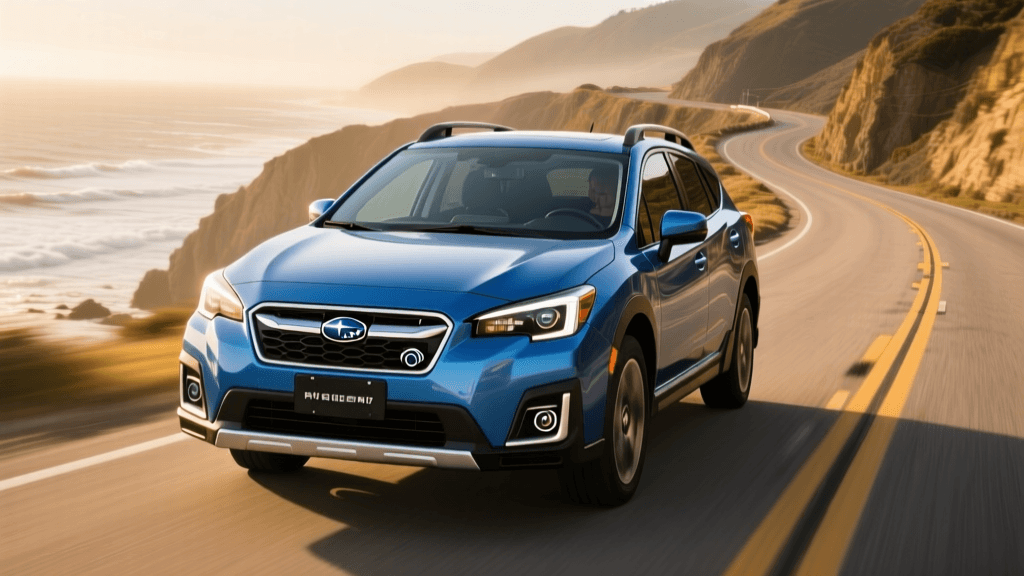
For over a decade, the automotive industry’s approach to Advanced Driver Assistance Systems (ADAS) has been heavily fragmented. While companies like Tesla, Ford, and General Motors leaned into radar, lidar, and high-definition mapping, Subaru took a distinctly different path. The Subaru EyeSight suite was built almost entirely on a stereo camera system mounted near the rearview mirror. This 'binocular vision' approach mimicked human depth perception, relying on visual data rather than radio waves. However, with the rollout of the fourth-generation EyeSight system, Subaru acknowledged the physical limitations of pure optical systems and introduced radar technology into the mix. This article provides a rigorous, data-driven comparison of stereo camera versus radar systems, analyzing how Subaru’s technological evolution impacts real-world safety, adverse weather performance, and long-term ownership costs.
The Physics of Detection: Stereo Cameras vs. Millimeter-Wave Radar
To understand the performance deltas between Subaru’s historical approach and industry-standard radar, we must examine the underlying physics of both sensor types.
Stereo Camera Technology (Stereopsis)
Subaru’s traditional EyeSight system utilizes two side-by-side CCD or CMOS cameras. By comparing the slight differences in the images captured by the left and right lenses—a phenomenon known as binocular disparity—the system’s processor calculates precise distance and depth maps. Stereo cameras excel at object classification. Because they capture visible light, they can easily distinguish between a pedestrian, a cyclist, a motorcycle, and a large truck based on shape, color, and texture.
Millimeter-Wave Radar Technology
Radar systems, typically operating in the 77 GHz frequency band, emit radio waves that bounce off objects and return to the receiver. By measuring the time-of-flight and the Doppler shift of the returning waves, radar calculates distance and relative velocity with extreme precision. Radar is entirely independent of ambient lighting and can penetrate visual obscurants like fog and light snow. However, radar struggles with object classification; a metal mailbox and a stationary vehicle can return similar radar cross-sections, historically leading to 'phantom braking' events in radar-heavy ADAS suites.
Data-Driven Performance Comparison
The following table breaks down the empirical performance metrics of Subaru’s legacy stereo camera setup, traditional automotive radar, and the modern fused approach.
| Metric | Stereo Camera (Gen 3 EyeSight) | Millimeter-Wave Radar (Industry Avg) | Gen 4 EyeSight Sensor Fusion |
|---|---|---|---|
| Effective Range | ~110 meters | 200+ meters | 200+ meters (Radar) / 150m (Vision) |
| Field of View (FOV) | ~25 degrees (horizontal) | 15° (Long) to 120° (Short/Corner) | Expanded via wide-angle mono camera |
| Object Classification | Excellent (Shape/Color) | Poor (Metallic mass only) | Excellent (Camera-led) |
| Night / Low-Light | Moderate (Relies on headlights) | Perfect (Active emission) | High (Radar supplements vision) |
| Fog / Heavy Snow | Poor (Visual occlusion) | Good (Radio wave penetration) | Good (Radar fallback) |
| Relative Hardware Cost | Low ($150 - $300 module) | Moderate ($300 - $600 module) | High (Multiple sensors + ECU) |
Real-World Testing: Weather, Lighting, and Edge Cases
Data from independent safety organizations highlights the divergent strengths of cameras and radar. According to testing protocols outlined by the Insurance Institute for Highway Safety (IIHS), pedestrian detection relies heavily on visual shape recognition, an area where stereo cameras historically outperformed early radar systems. However, pure camera systems face a hard physical limit in low-contrast environments.
In heavy fog or whiteout snow conditions, stereo cameras experience 'visual occlusion.' The lenses cannot see further than the human eye, causing the ADAS to issue a 'System Disabled' warning precisely when the driver needs assistance the most. Radar, conversely, operates flawlessly in these conditions. Yet, radar-only systems often fail to identify stationary vehicles on the side of a curved highway, misinterpreting guardrails as obstacles or failing to brake for stopped traffic. This data clearly illustrates why neither sensor is perfect in isolation.
The Gen 4 Evolution: Why Subaru Embraced Sensor Fusion
Recognizing the data regarding intersection accidents and low-speed pedestrian strikes, Subaru introduced the fourth-generation EyeSight system, debuting on the 2021 Outback and Legacy, and later the Ascent. As detailed on Subaru's Official EyeSight Technology Hub, Gen 4 does not abandon stereo cameras; instead, it supplements them. The new architecture adds a wide-angle mono camera and a millimeter-wave radar sensor.
This sensor fusion specifically targets intersection collision avoidance. The wide-angle camera expands the horizontal FOV to detect pedestrians and cyclists stepping off curbs, while the radar provides redundant velocity tracking of cross-traffic. The data shows that Gen 4 systems can initiate pre-collision braking at intersections at speeds up to 15 mph, a scenario where Gen 3 stereo cameras struggled due to the narrow 25-degree FOV and lack of lateral depth mapping.
Actionable Advice: Maintenance, Calibration, and Ownership Costs
Understanding the hardware differences is critical for prospective buyers, as it directly impacts long-term maintenance costs and repair timelines.
- Windshield Replacements: Because the stereo cameras are optically calibrated to the specific refraction index of the windshield, replacing a cracked windshield on a Subaru requires meticulous ADAS recalibration. Expect to pay between $600 and $1,200 for an OEM windshield replacement that includes the necessary camera recalibration, compared to $250 for a standard vehicle.
- Radar Calibration: On Gen 4 models, the radar is typically housed behind the front grille or emblem. Minor front-end collisions or bumper replacements require radar alignment using specialized targets and lasers. This adds roughly $150 to $300 to body shop repair bills.
- Cleaning Protocols: Stereo cameras require a clean windshield. In winter, ensure your washer fluid has a high de-icing alcohol content to prevent slush from blinding the cameras. Gen 4 radar sensors, located in the grille, must be kept free of heavy mud or thick ice buildup to prevent system degradation.
The National Highway Traffic Safety Administration (NHTSA) frequently reminds consumers that ADAS sensors are not a replacement for attentive driving, and keeping these sensors clean and calibrated is a fundamental owner responsibility.
Buyer’s Guide: Matching the Tech to Your Environment
When shopping for a used or new Subaru, the generation of EyeSight you choose should be dictated by your local climate and driving environment.
Choose Gen 3 (Stereo Camera Only) If:
You live in a region with clear weather, abundant sunshine, and well-marked roads (e.g., Southern California, Arizona). Gen 3 systems are highly capable of lane centering and adaptive cruise control in high-visibility conditions, and you will save money on long-term sensor maintenance and insurance premiums.
Choose Gen 4 (Sensor Fusion) If:
You navigate areas with frequent fog, heavy rain, or snow (e.g., the Pacific Northwest, the Midwest, or New England). The addition of the radar sensor ensures that Adaptive Cruise Control and Pre-Collision Braking remain operational in low-visibility weather where stereo cameras would otherwise time out. Furthermore, if you do a lot of urban driving, the Gen 4 wide-angle camera’s superior intersection pedestrian detection is a statistically proven life-saver.
Conclusion
The transition from a pure stereo camera setup to a fused radar-vision architecture marks Subaru’s maturation in the ADAS space. While stereo cameras remain unmatched for visual object classification and lane-keeping precision, the integration of millimeter-wave radar solves the critical vulnerabilities of optical systems in adverse weather and low light. By understanding the data behind these sensors, buyers can make informed decisions that align with their specific environmental needs and maintenance budgets.