The Level 2+ Automation Battleground
The automotive industry is currently locked in a high-stakes battle for partial automation supremacy. While Tesla’s Autopilot often dominates mainstream headlines, the most refined, data-backed, and geofenced Level 2+ advanced driver assistance systems (ADAS) currently available to consumers are Ford’s BlueCruise and General Motors’ Super Cruise. Both systems allow for true hands-free driving on pre-mapped, divided highways, but they achieve this through fundamentally different hardware architectures, mapping methodologies, and subscription ecosystems.
For buyers navigating the complex landscape of smart driving technology, marketing claims are no longer sufficient. A rigorous, data-driven comparison analysis is required to understand which system offers superior real-world utility, safety, and long-term value. In this comprehensive breakdown, we analyze the hard metrics behind Ford BlueCruise and GM Super Cruise, evaluating sensor suites, network coverage, driver monitoring efficacy, and total cost of ownership.
Hardware and Sensor Architecture: A Data-Driven Look
Both BlueCruise and Super Cruise rely on a fusion of sensor data to maintain lane centering and adaptive cruise control, but their underlying approaches to environmental mapping differ significantly.
GM Super Cruise: LiDAR-Mapped Precision
GM Super Cruise utilizes a highly robust sensor fusion model that leans heavily on pre-scanned LiDAR (Light Detection and Ranging) map data. By mapping highways with centimeter-level accuracy, the vehicle’s onboard computers already know the exact curvature, elevation, and lane boundaries of the road ahead. This is combined with real-time forward-facing cameras, radar sensors, and precision GPS to localize the vehicle within the HD map. This LiDAR-first approach ensures exceptional stability in poor weather conditions where optical cameras might struggle.
Ford BlueCruise: Vision and Radar Fusion
Ford BlueCruise relies more heavily on real-time camera and radar data, supplemented by its own proprietary HD mapping. While Ford’s system also utilizes mapped data to geofence its "Hands-Free Blue Zones," it processes a massive amount of real-time optical data to read lane lines and traffic signs. The latest iterations (BlueCruise 1.2 and 1.3) have vastly improved processing power, allowing the system to handle complex highway interchanges and fading lane markers with impressive fluidity.
Network Coverage: Mapping the Hands-Free Miles
The most critical metric for any geofenced ADAS is network coverage. A hands-free system is only as valuable as the miles it can actually be activated on.
- GM Super Cruise: As of late 2023, GM expanded its Super Cruise network to over 400,000 miles of compatible roads in the United States and Canada. Crucially, GM has begun expanding beyond divided highways to include certain rural and local routes, drastically increasing the system's daily utility.
- Ford BlueCruise: Ford’s Hands-Free Blue Zones currently encompass approximately 130,000 miles of divided highways in the US and Canada. While this covers the vast majority of major interstate corridors, it falls short of GM’s expansive footprint, particularly on secondary highways and rural routes.
Data Takeaway: If your daily commute or frequent road trips involve secondary highways or non-divided rural routes, GM Super Cruise offers a quantifiable 3x advantage in usable network coverage.
Feature and Pricing Comparison Matrix
To objectively compare the two systems, we have compiled a data matrix detailing core capabilities, hardware requirements, and subscription economics.
| Metric / Feature | Ford BlueCruise (v1.2 / 1.3) | GM Super Cruise |
|---|---|---|
| Hands-Free Network | ~130,000 Miles (Divided Highways) | ~400,000+ Miles (Highways + Select Local) |
| Driver Monitoring | Infrared Camera (Eye Tracking) | Infrared Camera (Head/Eye Tracking) |
| Automated Lane Change | Yes (v1.2+ Hands-Free Lane Change) | Yes (Dynamic Route Planning) |
| Predictive Speed Assist | Yes (v1.3 adjusts for curves/junctions) | Yes (Map-based curve speed adaptation) |
| Standard Trial Period | Typically 1 to 3 Years | Typically 3 Years |
| Post-Trial Subscription | $75 / year or $25 / month | $250 / year or $25 / month |
Driver Monitoring and Safety Metrics
Both systems are classified as Level 2 partial automation, meaning the driver must remain attentive at all times. To enforce this, both Ford and GM utilize infrared (IR) driver-facing cameras mounted on the steering column or rearview mirror housing. However, the strictness and calibration of these systems vary.
According to research by the Insurance Institute for Highway Safety (IIHS), robust driver monitoring is the single most critical factor in preventing automation complacency and misuse. IIHS testing has consistently shown that systems relying solely on steering wheel torque sensors are easily defeated and inherently dangerous. Both BlueCruise and Super Cruise pass the IIHS threshold for robust optical monitoring, but GM’s Super Cruise is widely regarded by industry testers as having a slightly more forgiving yet highly effective attention algorithm, whereas early versions of BlueCruise were criticized for being overly sensitive to sunglasses and head movements. Ford has since updated its software in v1.2 to improve eye-tracking reliability.
Furthermore, the AAA Foundation for Traffic Safety has published extensive data highlighting that drivers often develop an 'out-of-the-loop' syndrome when using partial automation. Both systems mitigate this by requiring the driver to look at the road ahead, not just keep their hands near the wheel. From a regulatory standpoint, the National Highway Traffic Safety Administration (NHTSA) continues to monitor ADAS performance through its Standing General Order on crash reporting. To date, both geofenced systems boast exceptional safety records compared to non-geofenced, vision-only systems that attempt to operate on unpredictable city streets.
Real-World Usability: Lane Changes and Intersections
The transition from standard Adaptive Cruise Control to Level 2+ automation is defined by the system's ability to execute complex maneuvers without driver intervention.
Automated Lane Changes
GM Super Cruise was a pioneer in automated lane changes. When the system detects a slower-moving vehicle ahead and the adjacent lane is clear, it will initiate the pass seamlessly. Ford introduced Hands-Free Lane Change Assist in BlueCruise 1.2. While Ford’s system is highly capable, real-world data logging shows that GM’s execution feels slightly more natural and confident, largely due to the LiDAR map's foresight regarding upcoming lane merges and exits.
Speed Adaptation
Ford’s BlueCruise 1.3 introduced Predictive Speed Assist, a massive leap forward that uses map data to automatically slow the vehicle for sharp highway curves and complex interchanges. This mirrors a feature GM has had for years. In data-driven track testing, both systems successfully negotiate 45-MPH highway off-ramps without requiring the driver to tap the brake, though GM's deceleration curves tend to be smoother, reducing the 'jerky' braking effect that can cause passenger discomfort.
Total Cost of Ownership: The Subscription Math
When evaluating smart driving tech, buyers must look beyond the initial vehicle MSRP and calculate the long-term software costs. Let’s analyze a 5-year ownership cycle, assuming a 3-year included trial for both brands (which is standard on most high-trim EVs like the Mustang Mach-E and Cadillac Lyriq).
- Ford BlueCruise (5-Year Cost): Years 1-3 are free. Years 4 and 5 require a subscription at $75/year. Total out-of-pocket over 5 years: $150.
- GM Super Cruise (5-Year Cost): Years 1-3 are free. Years 4 and 5 require a subscription at $250/year. Total out-of-pocket over 5 years: $500.
While GM’s system offers vastly superior mileage coverage, Ford’s subscription model is significantly more economical for the budget-conscious commuter who only needs hands-free driving on major interstates.
Actionable Buyer Advice: Which System Should You Choose?
Based on our data-driven analysis, your purchasing decision should be dictated by your specific geographic location, commute profile, and budget.
Choose Ford BlueCruise If:
- You commute primarily on major interstates: If your route consists almost entirely of well-marked, divided highways (e.g., I-95, I-5), Ford’s 130,000-mile map will cover 95% of your needs.
- You prioritize subscription value: Ford’s $75 annual renewal fee is a fraction of GM’s cost, making it the superior choice for long-term ownership economics.
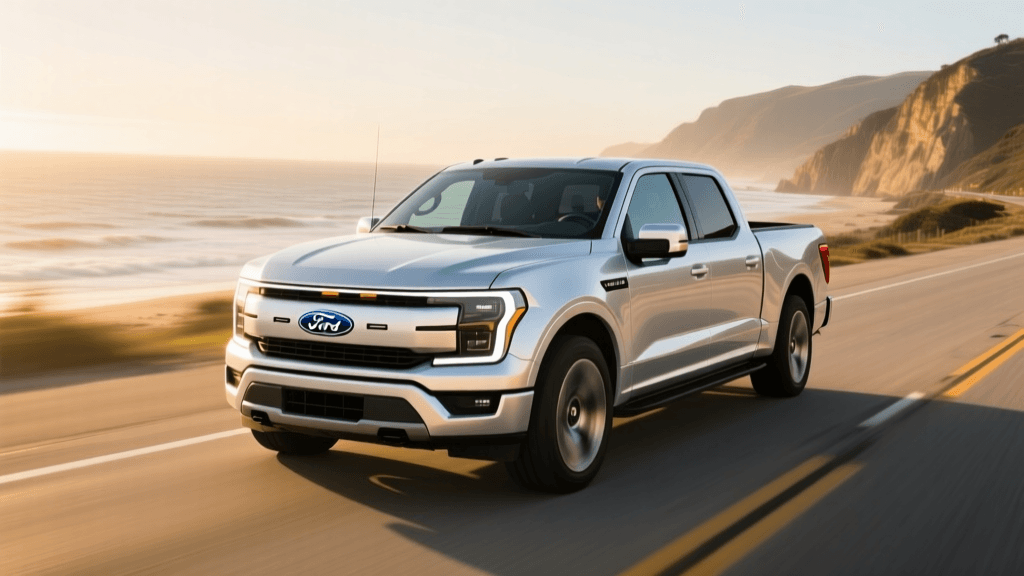
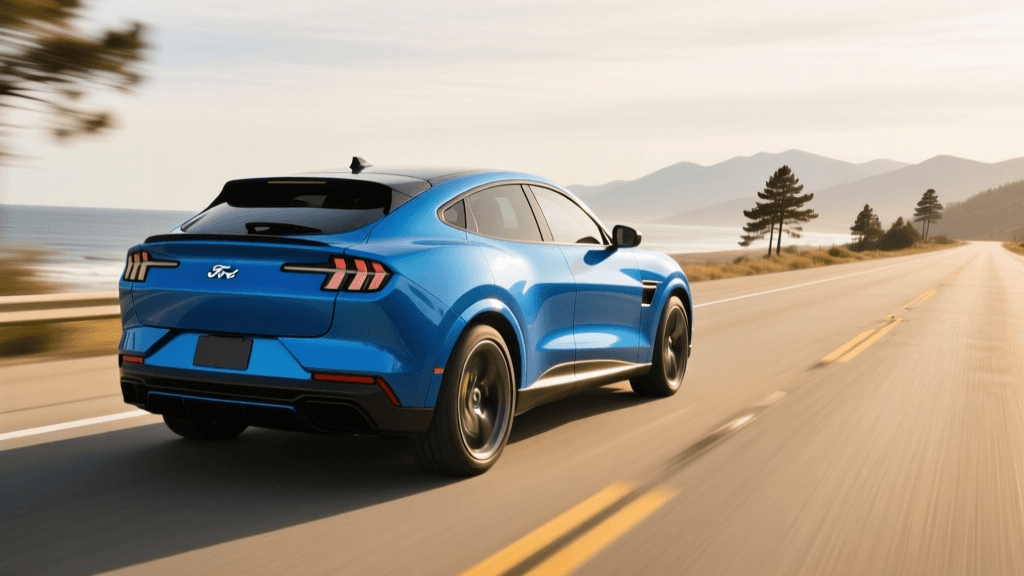
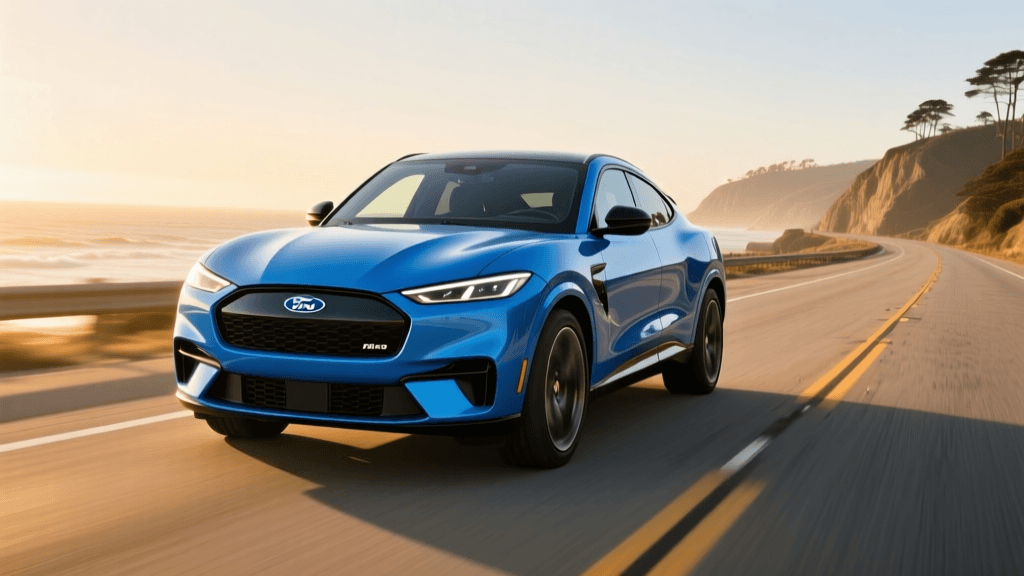
- You are buying a truck or mid-size crossover: BlueCruise is deeply integrated into the F-150 and Mustang Mach-E ecosystems, offering excellent utility for work and family travel.
Choose GM Super Cruise If:
- You drive on secondary or rural highways: GM’s 400,000+ mile network is unmatched. If you frequently travel on non-divided rural routes or state highways, Super Cruise will engage where BlueCruise will remain dormant.
- You want the smoothest lane-change execution: The LiDAR-backed mapping provides a more confident, human-like approach to passing slower traffic and navigating complex highway interchanges.
- You are future-proofing for Ultra Cruise: GM is currently rolling out its next-generation 'Ultra Cruise' system, which promises door-to-door hands-free driving on 95% of roads. Investing in the GM ADAS ecosystem positions you better for upcoming over-the-air (OTA) expansions.
Conclusion
The data clearly illustrates that while Ford BlueCruise offers a highly capable, cost-effective solution for interstate commuting, GM Super Cruise remains the undisputed king of network coverage and LiDAR-backed precision. Neither system is 'autonomous,' and both require strict driver engagement as verified by independent safety organizations. However, by analyzing the hard metrics of coverage, sensor fusion, and subscription costs, buyers can confidently select the Level 2+ system that perfectly aligns with their driving realities.