Introduction: The True Cost of Hands-Free Highway Driving
The promise of Advanced Driver Assistance Systems (ADAS) has shifted dramatically over the last five years. We have moved past basic adaptive cruise control and entered the era of true hands-free, eyes-off highway driving. However, as automakers race to deploy Level 2+ and Level 3 automation, the financial burden is increasingly shifting onto the consumer. For buyers who spend hours commuting on interstate highways, the value proposition of these systems is paramount. Is it worth paying a $5,000 premium and a monthly subscription for the privilege of taking your hands off the wheel?
In this comprehensive cost and value breakdown, we rank the best ADAS systems for highway driving by brand. We evaluate the upfront hardware costs, recurring subscription fees, long-term ownership value, and real-world highway performance to determine which system delivers the highest return on investment for daily commuters and road trippers alike.
How We Evaluate Highway ADAS Value
To accurately rank these systems, we look beyond marketing claims and focus on the total cost of ownership (TCO) over a standard five-year period. Our evaluation criteria include:
- Upfront Hardware Costs: The price of the technology package at the time of vehicle purchase.
- Subscription Fees: Recurring monthly or annual costs required to keep the hands-free features active after trial periods expire.
- Network Coverage: The total miles of mapped, compatible highways where the system can actually be used.
- Driver Monitoring Strictness: How the system balances safety with user comfort, a critical factor in daily usability.
According to the Insurance Institute for Highway Safety (IIHS), the effectiveness of partial automation heavily relies on robust driver monitoring systems (DMS) to prevent over-reliance. Therefore, a system's 'value' is intrinsically tied to how safely and intuitively it manages the handover process between human and machine.
1. General Motors Super Cruise: The Premium Benchmark
Cost Breakdown
Super Cruise is available across Cadillac, Chevrolet, and GMC lineups. The upfront cost varies wildly depending on the trim; it is often bundled into $2,500 to $5,000 technology packages on luxury Cadillacs, but can be optioned for around $2,200 on a Chevy Silverado. GM includes three years of connectivity for free. After the trial, the subscription costs $25 per month or $250 per year.
Highway Performance & Value
GM Super Cruise remains the gold standard for North American highway driving. It utilizes a combination of LiDAR-mapped data, real-time cameras, and radar, allowing for hands-free driving on over 750,000 miles of compatible roads in the U.S. and Canada. The infrared driver monitoring camera mounted on the steering column is widely considered the best in the industry—it tracks eye movement accurately even with polarized sunglasses.
5-Year Value Verdict: For frequent highway commuters, Super Cruise offers exceptional value. The $250 annual renewal fee is reasonable compared to competitors, and the sheer volume of mapped roads ensures you will actually use the feature you paid for. Over five years, the total cost (assuming a $2,500 upfront package + 2 years of paid subscription) is roughly $3,000, yielding a high daily utility for long-distance drivers.
2. Ford BlueCruise: The Accessible Challenger
Cost Breakdown
Ford BlueCruise is available on the F-150, Mustang Mach-E, and select Lincoln models. The upfront cost for the hardware and software bundle is typically $2,100. Ford provides a three-year trial period. However, Ford recently updated its post-trial pricing structure: renewals now cost $75 per year or $25 per month, a move that makes long-term ownership significantly more affordable than initially feared.
Highway Performance & Value
BlueCruise operates on over 130,000 miles of pre-qualified divided highways. While its network is smaller than GM's, it covers the vast majority of major U.S. interstates. The system is highly capable, offering smooth lane centering and adaptive cruise management. However, its driver monitoring system can be overly sensitive, occasionally prompting warnings if the driver glances at the rearview mirror or center console for more than a second.
5-Year Value Verdict: BlueCruise is a strong value proposition, especially for Ford truck buyers who already plan to purchase high-end trim levels. The $75 annual renewal fee is currently the most competitive subscription rate in the hands-free market, making it a highly cost-effective choice for buyers who want premium automation without the luxury car price tag.
3. Tesla Autopilot & FSD: The Polarizing Tech Giant
Cost Breakdown
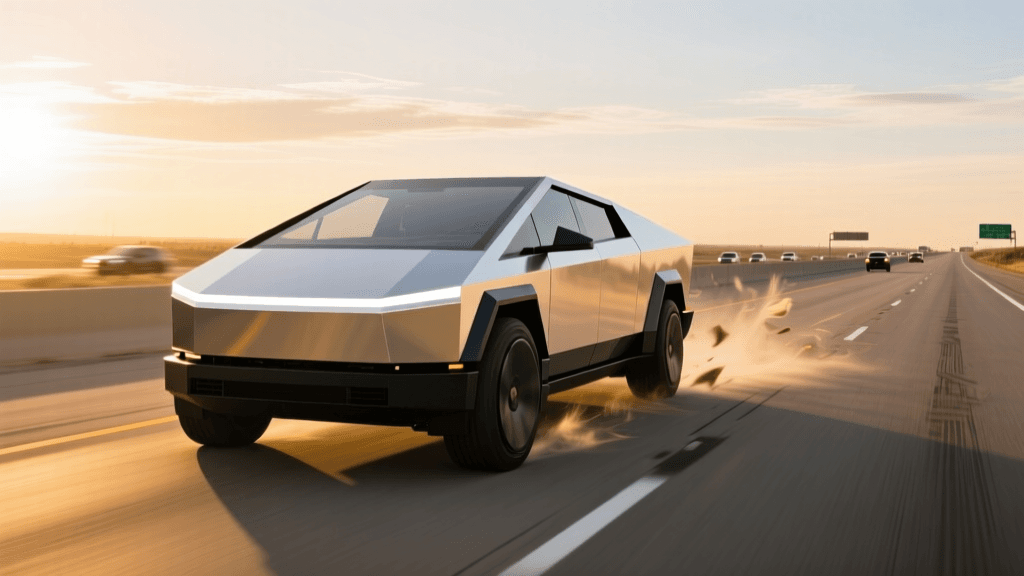
Tesla includes basic Autopilot (Traffic-Aware Cruise Control and Autosteer) for free on all vehicles. Enhanced Autopilot (EAP) costs $6,000 upfront, while Full Self-Driving (FSD) capability costs $8,000 upfront or $99 per month. Tesla does not currently charge recurring subscriptions for the core features of EAP or FSD once purchased, though the $99/mo FSD subscription is an alternative to the massive upfront capital outlay.
Highway Performance & Value
It is vital to understand that Tesla's systems are eyes-on systems. Unlike Super Cruise or BlueCruise, Tesla does not permit hands-free driving on highways. You must keep your hands on the yoke or steering wheel, applying slight torque to prove your engagement. While Tesla's Navigate on Autopilot handles highway interchanges and lane changes impressively, the lack of true hands-free capability drastically reduces its value for drivers seeking physical relaxation on long commutes.
5-Year Value Verdict: From a pure highway relaxation standpoint, Tesla offers poor financial value. Paying $8,000 for FSD or $99 a month for a system that still requires your hands on the wheel and your eyes on the road is difficult to justify when GM and Ford offer true hands-free experiences for a fraction of the cost. Basic, free Autopilot, however, remains one of the best standard lane-centering systems on the market.
4. BMW Driving Assistant Professional: The European Standard
Cost Breakdown
BMW's Highway Assistant (part of the Driving Assistant Professional package) is typically a $1,700 standalone option on models like the 5 Series, 7 Series, and X5. Crucially, BMW does not charge a recurring subscription fee for this feature. Once you buy the package, it is yours for the life of the vehicle.
Highway Performance & Value
BMW's system allows for hands-free driving at speeds up to 85 mph on mapped divided highways. It also features an automated lane change function that requires only a quick glance at the side mirror to confirm, rather than a physical turn signal input. The system is incredibly smooth, feeling more like a seasoned human driver than a robotic assistant.
5-Year Value Verdict: BMW offers the best long-term financial ROI for buyers who plan to keep their vehicles for more than five years. The absence of a subscription model means the $1,700 upfront cost is the final cost. Over a 7-year ownership cycle, BMW's system is significantly cheaper than GM or Ford's subscription-based models.
5. Toyota Safety Sense 3.0: The Budget-Friendly Baseline
Cost Breakdown
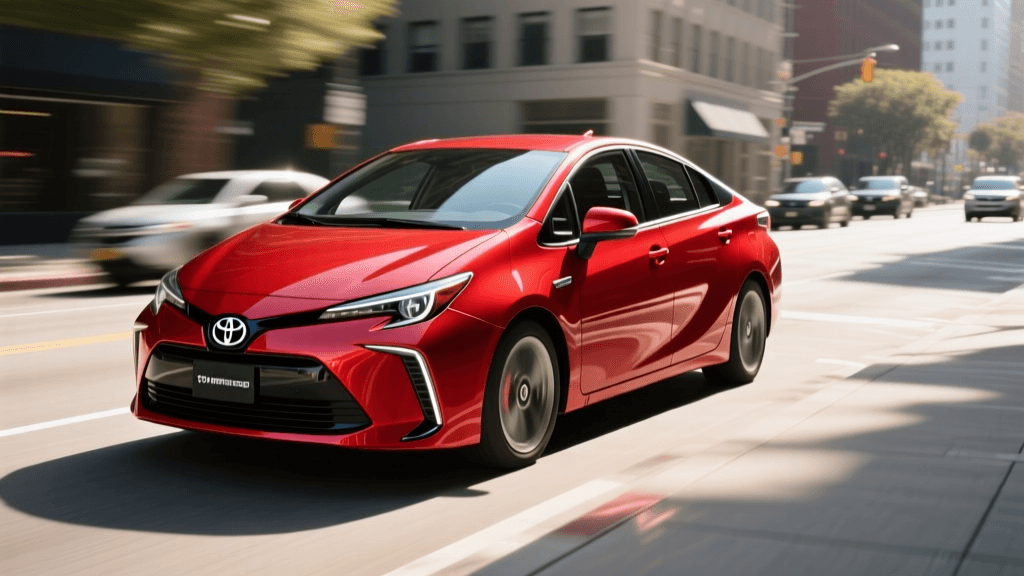
Toyota Safety Sense (TSS) 3.0 is standard equipment on nearly every new Toyota and Lexus vehicle. The upfront cost is $0, and there are no subscription fees, now or in the future.
Highway Performance & Value
TSS 3.0 includes Lane Tracing Assist (LTA) and Full-Speed Range Dynamic Radar Cruise Control. It is strictly an eyes-on, hands-on system. However, Toyota's lane centering algorithm is remarkably stable, rarely 'ping-ponging' between lane lines, and the radar is adept at handling sudden cut-offs in heavy traffic.
5-Year Value Verdict: For budget-conscious buyers who simply want to reduce the cognitive load of highway driving without breaking the bank, TSS 3.0 is unbeatable. It won't let you read a book or eat a sandwich, but it will safely manage the pedals and steering inputs in stop-and-go traffic for free.
Hidden Costs: Sensor Repairs and Insurance Premiums
When calculating the cost and value of ADAS, buyers must consider the hidden costs of ownership. Vehicles equipped with advanced LiDAR, radar, and high-definition cameras face significantly higher repair costs after minor collisions. According to the National Highway Traffic Safety Administration (NHTSA), the proliferation of sensors in bumpers and windshields has led to a spike in low-speed crash repair bills. A minor fender bender that once cost $500 to fix can now exceed $2,500 when radar calibration and camera realignment are required. Furthermore, the U.S. Department of Transportation continues to monitor how these automated systems impact overall crash rates, which directly influences insurance premiums. When evaluating value, factor in potential insurance rate increases for ADAS-heavy trim levels.
Cost vs. Value Comparison Table
| Brand / System | Upfront Cost (Approx.) | Post-Trial Subscription | Hands-Free? | 5-Year Value Score |
|---|---|---|---|---|
| GM Super Cruise | $2,200 - $5,000 | $250 / year | Yes (Eyes-off) | High (Best Network) |
| Ford BlueCruise | $2,100 | $75 / year | Yes (Eyes-off) | High (Lowest Sub Fee) |
| BMW Highway Assistant | $1,700 | $0 (No Subscription) | Yes (Eyes-off) | Very High (Long-Term) |
| Tesla FSD / EAP | $6,000 - $8,000 | $99/mo (FSD Sub) | No (Eyes-on) | Low (Overpriced) |
| Toyota Safety Sense | $0 (Standard) | $0 | No (Eyes-on) | Excellent (Budget) |
The Verdict: Which Highway ADAS Gives You the Best ROI?
If your primary goal is physical relaxation on long, mapped interstate commutes, GM Super Cruise and Ford BlueCruise offer the most immediate value, with Ford taking the edge in long-term subscription affordability. For luxury buyers who despise recurring monthly fees and plan to hold onto their vehicle for a decade, BMW's Driving Assistant Professional is the undisputed financial winner due to its zero-subscription model.
Conversely, buyers should be highly skeptical of the value proposition of Tesla's FSD for highway use. Paying a massive premium for a system that still requires hands-on engagement is a poor financial decision when competitors offer true hands-free automation for less money. Finally, for the pragmatic commuter who simply wants reliable traffic assistance without the financial baggage of high-tech sensor repairs and subscriptions, Toyota Safety Sense remains the smartest, most cost-effective choice on the market.