The Evolution of Hands-Free Driving
The automotive industry is currently navigating a massive paradigm shift from passive safety features to active, partial-automation systems. As consumers demand more relaxed commutes and manufacturers race toward autonomous mobility, Advanced Driver Assistance Systems (ADAS) have become the primary battleground. Among the myriad of options available today, Ford BlueCruise has emerged as a formidable contender in the Level 2+ automation space. Unlike systems that rely solely on forward-facing cameras, BlueCruise utilizes a robust sensor fusion approach combined with strict geofencing to offer true hands-free driving on divided highways. This real-world review evaluates the current state of Ford BlueCruise, analyzes its practical utility for modern drivers, and projects its future trajectory within the broader ADAS industry outlook.
Real-World Review: Ford BlueCruise on the Highway
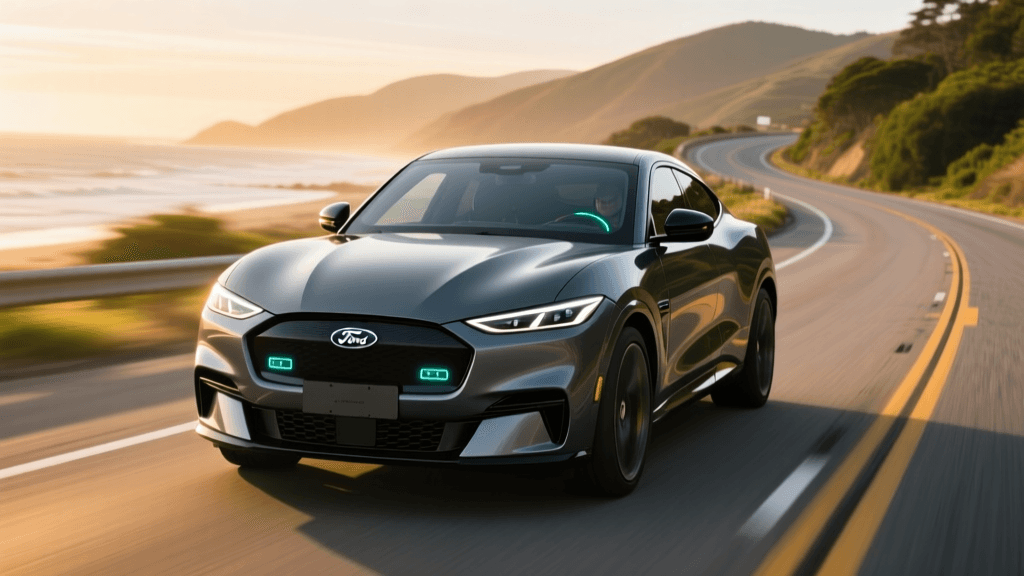
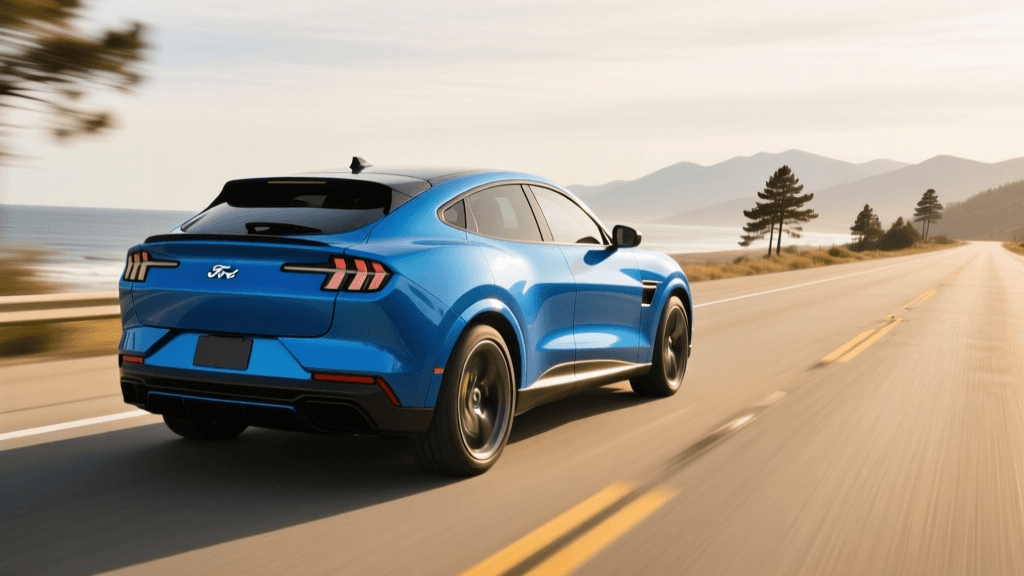
To truly understand the capabilities and limitations of BlueCruise, we tested the system in real-world conditions across various divided highways, including high-speed interstates and winding coastal routes. The activation process is remarkably intuitive. When the vehicle enters a pre-mapped Blue Zone—part of Ford’s continuously expanding network of over 130,000 miles of divided highways in North America—a visual prompt appears on the digital instrument cluster, and the ambient lighting shifts to blue. Engaging the system requires a simple press of the cruise control button, after which the system assumes control of steering, acceleration, and braking.
The most striking aspect of the real-world experience is the smoothness of the lane-centering algorithm. Unlike earlier generation lane-keeping assist systems that tend to ping-pong between lane markers, BlueCruise maintains a highly natural, human-like position in the center of the lane. Even when navigating sweeping highway curves or dealing with faded lane markings, the steering inputs are deliberate and confident. However, the system's true differentiator is its Driver Monitoring System (DMS). An infrared camera mounted on the instrument cluster tracks the driver's eye and head position, ensuring that attention remains on the road. In our testing, the DMS proved highly accurate; it easily tracked our gaze through polarized sunglasses and wide-brimmed hats, though looking down at a smartphone for more than a few seconds triggered immediate and escalating visual and auditory warnings.
Adaptive Cruise Control (ACC) integration is equally impressive. The stop-and-go traffic functionality handles sudden braking events from lead vehicles with a smooth, predictable deceleration curve that avoids the jerky, panic-inducing stops common in lesser ADAS suites. When the system encounters a complex construction zone where lane lines are temporarily obscured or shifted, BlueCruise responsibly alerts the driver to place their hands back on the wheel, acknowledging the current limitations of Level 2 automation.
Feature Breakdown: The Evolution of BlueCruise Versions
Ford has been aggressively deploying Over-The-Air (OTA) software updates to enhance the BlueCruise experience. Understanding the differences between these versions is crucial for buyers evaluating new or used Ford EVs and trucks.
| Version | Key Features & Capabilities | Availability |
|---|---|---|
| BlueCruise 1.0 | Basic hands-free driving on mapped highways, ACC, Lane Centering, Infrared DMS. | Standard on 2021-2022 models |
| BlueCruise 1.2 | Introduced Lane Change Assist (hands-free lane changes initiated by turn signal). | 2023 models and OTA updates |
| BlueCruise 1.3 | Enhanced lane positioning, smoother curve handling, improved stop-and-go traffic logic. | Late 2023 models and OTA |
| BlueCruise 1.4 | Predictive Speed Assist (adjusts speed for upcoming sharp curves), hands-free lane changes without turn signal prompting. | 2024+ models and select OTA |
The Mapping Conundrum: Geofencing vs. Vision-Only Systems
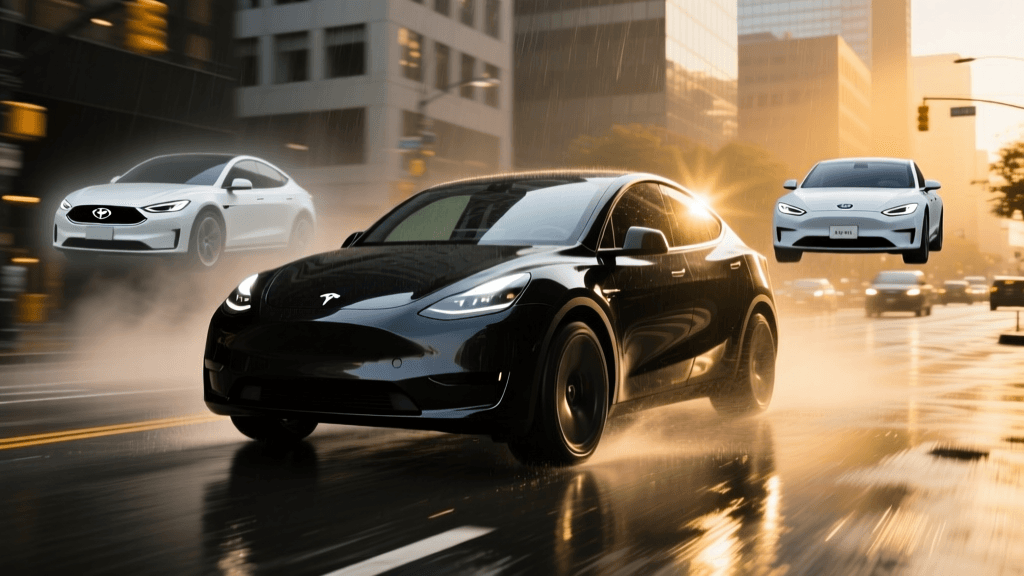
From an industry outlook perspective, Ford’s reliance on HD mapping and LiDAR/camera sensor fusion stands in stark contrast to the vision-only, everywhere-attempting approach championed by Tesla’s Autopilot and FSD. Ford’s geofenced strategy ensures that BlueCruise is only activated in environments where the system has high confidence in the road geometry, significantly reducing edge-case failures. According to the SAE International J3016 standard, defining the Operational Design Domain (ODD) is a critical component of partial automation. By strictly defining its ODD to pre-mapped divided highways, Ford minimizes liability and maximizes safety.
However, this approach has inherent limitations. The reliance on HD maps means that newly constructed highways or recently altered road layouts may not be immediately recognized by the system until Ford’s mapping fleet updates the database. Furthermore, the Insurance Institute for Highway Safety (IIHS) has repeatedly noted that while partial automation systems can reduce fatigue, they must be paired with robust driver monitoring to prevent automation complacency. Ford’s aggressive DMS integration aligns perfectly with these safety recommendations, positioning BlueCruise as one of the most responsibly engineered Level 2+ systems on the market.
Actionable Advice: Costs, Setup, and Maximizing Utility
For consumers considering a Ford vehicle equipped with BlueCruise, understanding the financial and practical commitments is essential. Here is actionable advice for maximizing your ADAS investment:
- Understand the Subscription Model: While many new Ford vehicles (like the F-150 Lightning or Mustang Mach-E) include a complimentary trial period (often 90 days to 3 years, depending on the trim and promotional package), BlueCruise ultimately requires a paid subscription. Current pricing is typically around $75 per month or $800 annually. Factor this into your long-term ownership costs.
- Verify the Map Coverage: Before purchasing, use the Ford BlueCruise website or the in-car navigation system to verify that your daily commute falls within the 130,000+ miles of mapped Blue Zones. The system will not allow hands-free driving on unmapped surface streets or undivided rural roads.
- Optimize the DMS Camera: Ensure that the infrared camera located above the instrument cluster is unobstructed. Avoid placing large dashboard mounts, toll transponders, or decorative items that could block the camera's line of sight to your face, as this will cause the system to frequently disengage and demand hands-on-wheel confirmation.
- Leverage OTA Updates: Keep your vehicle connected to a home Wi-Fi network to ensure you receive the latest BlueCruise software updates overnight. Ford frequently refines the steering algorithms and expands the mapped highway network via these background updates.
Future Trends: What is Next for BlueCruise?
Looking ahead, the trajectory of ADAS points toward increased contextual awareness and Vehicle-to-Everything (V2X) communication. Ford is actively investing in machine learning models that allow the vehicle to anticipate traffic patterns and road conditions beyond the line of sight. Future iterations of BlueCruise are expected to integrate more deeply with cloud-based traffic data, allowing the system to preemptively adjust speed or suggest lane changes miles before encountering a slowdown.
Furthermore, as the National Highway Traffic Safety Administration (NHTSA) continues to develop regulatory frameworks for advanced driver assistance, systems that can demonstrably prove their ODD limitations and driver engagement—like BlueCruise—will likely face fewer regulatory hurdles than open-ended beta-testing systems. The future of hands-free driving will not just be about removing hands from the wheel; it will be about creating a seamless, secure, and highly predictable co-pilot that understands the nuances of the North American highway infrastructure. Ford’s methodical, safety-first approach to BlueCruise positions it exceptionally well for this automated horizon, offering a compelling blend of current utility and future-proof scalability.