The Architecture of Automated Driving: How Price Dictates ADAS Completeness
Advanced Driver Assistance Systems (ADAS) have transitioned from exclusive luxury perks to baseline safety expectations. However, a critical distinction exists between feature availability and feature completeness. While a $25,000 compact car and a $120,000 luxury flagship may both advertise Adaptive Cruise Control (ACC) and Lane Centering, the underlying sensor architectures, compute capabilities, and Operational Design Domains (ODD) differ vastly. In this technology deep dive, we conduct an ADAS suite feature completeness comparison across price segments, examining how hardware limitations and processing power define the boundaries of budget, mid-range, and ultra-premium driver assistance systems.
According to the SAE International J3016 standard, driving automation ranges from Level 0 (no automation) to Level 5 (full automation). The completeness of an ADAS suite is largely defined by how close it pushes toward higher SAE levels within its specific price bracket, relying on sensor fusion, redundant compute, and high-definition mapping.
Entry-Level and Budget Segment: Vision and Basic Radar Fusion
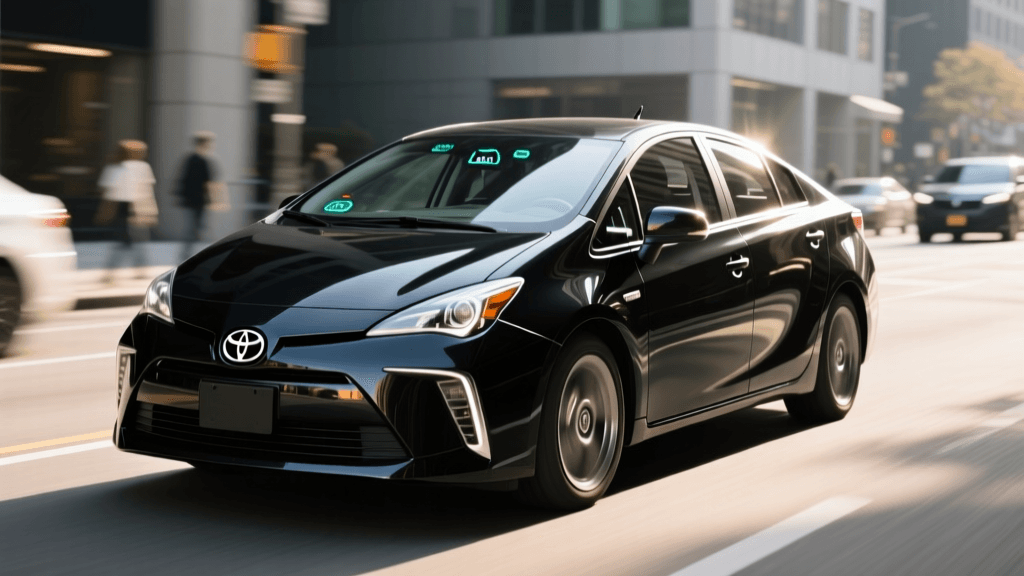
In the budget and entry-level segments (vehicles priced under $35,000), ADAS suites like Toyota Safety Sense (TSS) 3.0, Honda Sensing, and Subaru EyeSight dominate. The primary objective here is crash mitigation and basic highway assistance, firmly rooting these systems in SAE Level 1 and occasionally Level 2.
Sensor Hardware and Limitations
These suites typically rely on a monocular forward-facing camera paired with a single 77GHz millimeter-wave radar. Subaru remains an outlier, utilizing a stereo camera setup (EyeSight) mounted near the rearview mirror to generate depth maps without relying on radar for basic object detection. While highly effective for Automatic Emergency Braking (AEB) and maintaining a set following distance, these sensor configurations lack the redundancy required for true hands-free driving.
The cameras in this segment generally operate at 1.2 to 2.3 megapixels. In high-contrast scenarios, such as direct sun glare, heavy rain, or unmarked rural roads, the vision system can experience temporary blindness. Without a secondary sensor modality like LiDAR or 4D imaging radar to cross-reference the data, the system defaults to issuing a 'Takeover Request' rather than safely navigating the edge case. The Insurance Institute for Highway Safety (IIHS) notes that while these systems significantly reduce rear-end collisions, their lane-keeping capabilities often struggle with complex curves and faded lane markings due to compute and sensor constraints.
Mid-Range and Premium Segment: Sensor Fusion and Hands-Free Highway
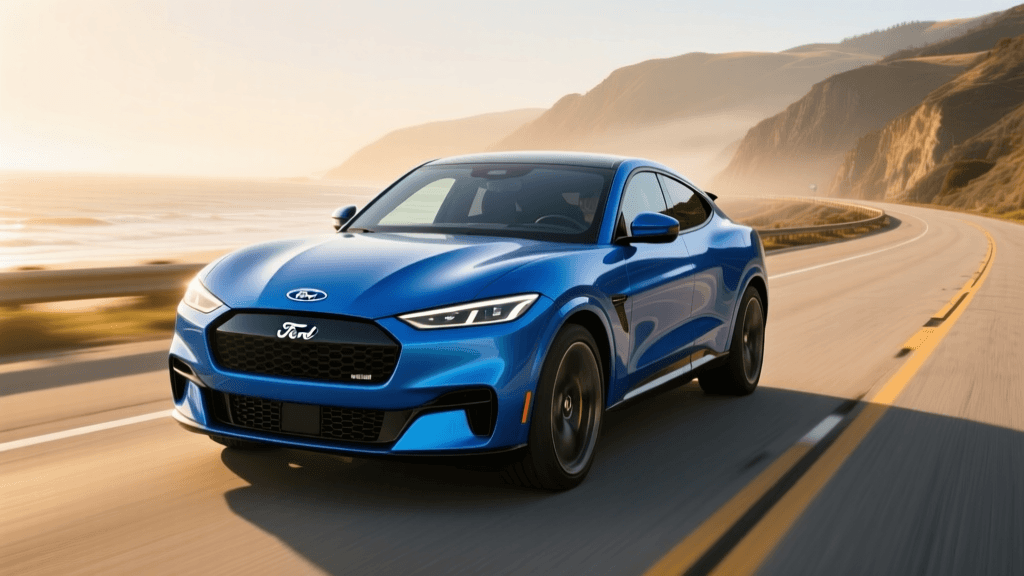
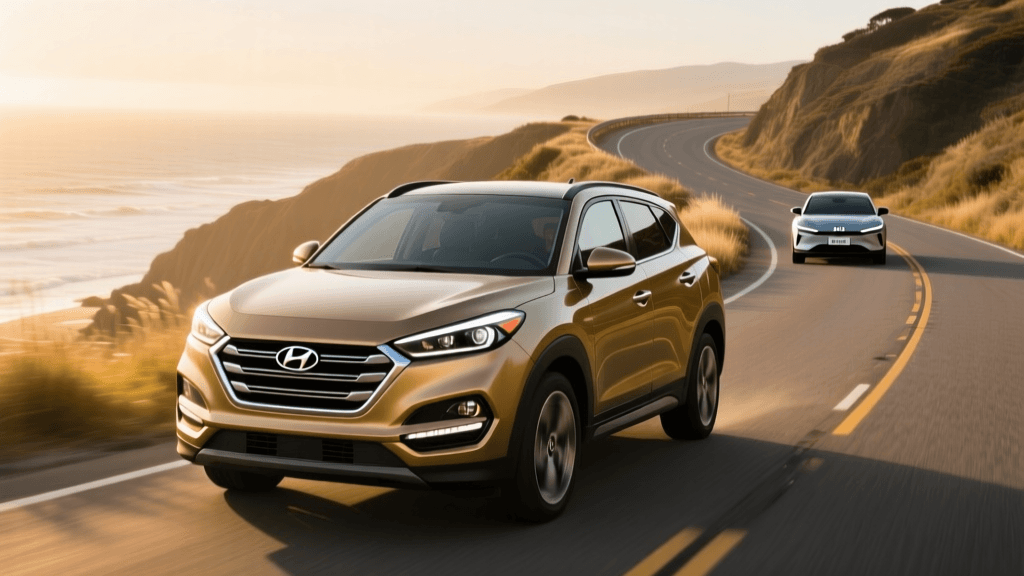
Stepping into the $40,000 to $75,000 bracket, ADAS completeness expands to include hands-free driving on divided highways, advanced navigation on autopilot, and automated lane changes. Key players include Ford BlueCruise, Tesla Autopilot (Hardware 3.0/4.0), and Hyundai SmartSense with Highway Driving Assist.
The Shift to 4D Radar and Driver Monitoring
The technological leap in this segment is defined by higher-resolution cameras (up to 5MP or 8MP) and the introduction of 4D imaging radar. Unlike traditional 3D radar that only measures distance, velocity, and azimuth, 4D radar also measures elevation. This allows the vehicle's compute system to distinguish between a stopped car and an overhead highway sign, drastically reducing 'phantom braking' events.
Furthermore, this segment introduces robust Driver Monitoring Systems (DMS) using infrared cameras to track eye gaze and head position. This hardware addition is what legally and technically enables hands-off-wheel capabilities on pre-mapped divided highways, such as Ford's BlueCruise network. Tesla, conversely, eschews radar entirely in favor of a vision-only neural network approach, relying on massive fleet data and its custom FSD computer to process 8 camera feeds simultaneously. While feature-rich, mid-range suites still require the driver to remain legally responsible and ready to intervene, keeping them strictly at SAE Level 2.
Luxury and Ultra-Premium Segment: LiDAR, Redundancy, and Level 3
At the apex of the market (vehicles exceeding $80,000), feature completeness is defined by liability shifts and sensor redundancy. Mercedes-Benz Drive Pilot, GM Super Cruise, and BMW Driving Assistant Pro represent the pinnacle of current ADAS engineering.
Achieving SAE Level 3 with LiDAR and HD Maps
Mercedes-Benz Drive Pilot is currently the benchmark for completeness, achieving certified SAE Level 3 conditional automation in specific jurisdictions. This means the automaker assumes legal liability when the system is engaged in approved traffic jam conditions (up to 40 mph). To achieve this, the hardware suite is radically more complete than mid-range offerings. It incorporates a Valeo LiDAR sensor (emitting 905nm laser pulses to generate a precise 3D point cloud of the environment), rear-facing radar, ultrasonic sensors, and even road-moisture sensors to detect wet pavement.
Crucially, luxury ADAS completeness extends beyond perception into actuation. These vehicles feature redundant steering motors, redundant braking systems, and dual-battery architectures. If a primary component fails, the vehicle can safely execute a 'minimal risk maneuver' and pull over without driver input. The National Highway Traffic Safety Administration (NHTSA) emphasizes that such redundant architectures are critical as automated systems take on more dynamic driving tasks, removing the human from the safety loop.
Data Table: ADAS Hardware and Feature Completeness by Segment
| Segment | Representative Suites | Primary Sensor Array | Max SAE Level | Compute Architecture | Liability / Hands-Free |
|---|---|---|---|---|---|
| Budget (<$35k) | Toyota Safety Sense 3.0, Subaru EyeSight, Honda Sensing | Monocular/Stereo Camera + 3D Radar | Level 2 | Distributed ECUs (e.g., Mobileye EyeQ4) | Hands-on required; Driver liable |
| Mid-Range ($40k-$75k) | Ford BlueCruise, Tesla Autopilot, Hyundai HDA | High-Res Cameras + 4D Imaging Radar + DMS | Level 2+ | Centralized SoC (e.g., Tesla FSD Chip, Qualcomm Snapdragon Ride) | Hands-off on mapped roads; Driver liable |
| Luxury (>$80k) | Mercedes Drive Pilot, GM Super Cruise, BMW Pro | LiDAR + HD Cameras + Radar + Ultrasonic + Redundant Actuation | Level 3 | High-TOPS Zonal Compute (e.g., Nvidia DRIVE Orin) | Hands-off & Eyes-off (in ODD); OEM assumes liability |
The Compute Bottleneck: Processing Power Across Tiers
Sensor hardware is only half the equation; the System on Chip (SoC) processing the data dictates the suite's true completeness. Budget vehicles often rely on distributed Electronic Control Units (ECUs) processing individual sensor streams in isolation before sending basic commands to the steering rack. This limits the system's ability to understand complex, overlapping scenarios.
Mid-range and luxury vehicles utilize centralized zonal architectures capable of processing hundreds of Tera Operations Per Second (TOPS). For example, Nvidia's DRIVE Orin platform, utilized in several premium EVs, delivers up to 254 TOPS. This immense compute allows for deep neural networks to perform real-time semantic segmentation, predicting the behavior of pedestrians and cyclists rather than merely detecting their presence. This compute ceiling is the primary reason why luxury ADAS suites can confidently navigate unmapped urban environments, while budget suites restrict themselves to well-marked highways.
Actionable Buyer Advice: Matching ADAS Tech to Your Commute
When evaluating ADAS suite feature completeness, buyers must align the technology with their specific driving environment rather than simply chasing the highest SAE level.
- For the Highway Commuter: If your drive consists primarily of well-marked, divided highways, a mid-range suite like Ford BlueCruise or Hyundai SmartSense offers the best return on investment. The inclusion of DMS and 4D radar provides a near-luxury hands-free experience without the ultra-premium price tag.
- For the Urban Navigator: If you deal with dense city traffic, prioritize budget suites with excellent low-speed AEB and intersection assist (like TSS 3.0). Luxury Level 3 systems like Mercedes Drive Pilot are currently geofenced and speed-limited, offering little advantage in chaotic, unmapped urban streets.
- For the Tech Enthusiast: If you demand continuous over-the-air (OTA) improvements and the highest degree of sensor redundancy, the luxury segment is mandatory. The presence of LiDAR and redundant actuation ensures the vehicle can handle edge cases that vision-only mid-range systems will simply pass back to the driver.
Ultimately, understanding the hardware and compute disparities across price segments allows buyers to look past marketing terminology and evaluate the true engineering completeness of a vehicle's ADAS suite.