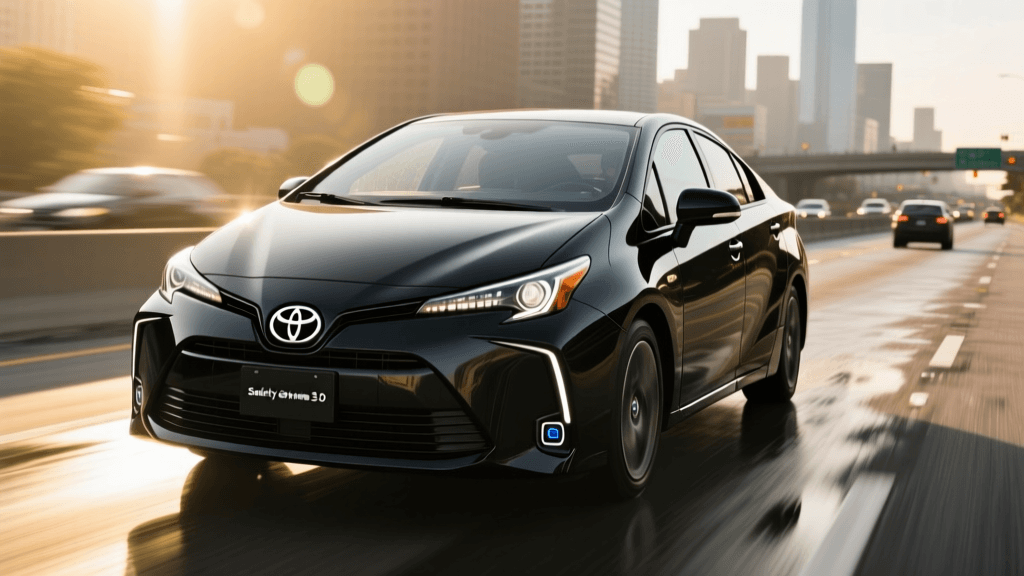
The Evolution of Mainstream ADAS: Toyota Safety Sense 3.0 Takes the Stage
As the automotive industry accelerates toward higher levels of autonomy, the battleground has shifted from luxury marques to mainstream commuter vehicles. Advanced Driver Assistance Systems (ADAS) are no longer optional luxury packages; they are fundamental expectations for modern car buyers. Leading this democratization of safety is Toyota, a brand that has aggressively standardized its active safety suites across nearly its entire lineup. With the rollout of Toyota Safety Sense (TSS) 3.0, the automaker has introduced a suite of predictive, proactive, and highly refined features that challenge the best systems on the market.
But how does Toyota’s latest iteration stack up against its fiercest mainstream rival, Honda Sensing? In this head-to-head ADAS showdown, we break down the new features of TSS 3.0, analyze its sensor hardware, and compare its real-world performance against Honda’s latest suite and Subaru’s renowned EyeSight 4.0. Whether you are cross-shopping a RAV4, a Civic, or an Outback, understanding the nuances of these systems is critical for your daily commute and long-term safety.
Breaking Down Toyota Safety Sense 3.0: What is New?
Toyota Safety Sense 3.0 represents a significant leap from TSS 2.5, moving from purely reactive emergency interventions to proactive driving assistance. By upgrading the front-facing camera to a higher-resolution unit with a wider field of view and pairing it with a more sensitive millimeter-wave radar, Toyota has vastly improved the system’s object recognition and predictive capabilities.
Proactive Driving Assist (PDA): The Game Changer
The headline feature of TSS 3.0 is Proactive Driving Assist (PDA). Unlike traditional Automatic Emergency Braking (AEB) which only engages during imminent crash scenarios, PDA acts as an invisible co-pilot during normal driving. When the system detects a slower-moving vehicle, a pedestrian, or a cyclist ahead, it gently applies the brakes to maintain a safe following distance—even if Dynamic Radar Cruise Control (DRCC) is turned off. Furthermore, PDA includes gentle steering assistance to help maintain a safe lateral distance from parked cars or pedestrians on the side of the road. This predictive braking and steering mimic human behavior, reducing the “startle factor” often associated with aggressive ADAS interventions.
Enhanced Pre-Collision System (PCS) with Intersection Support
Toyota has vastly expanded the operational design domain of its Pre-Collision System. TSS 3.0 now includes Intersection Support, which can detect oncoming vehicles when you are making a left turn, as well as pedestrians crossing the street when turning left or right. Additionally, the system’s ability to detect motorcyclists has been refined, addressing a critical vulnerability in urban environments where two-wheeled vehicles are easily obscured by larger traffic.
Lane Tracing Assist (LTA) and Road Edge Detection
Lane Tracing Assist has been optimized for smoother steering inputs, reducing the “ping-pong” effect older systems exhibited on winding roads. The Lane Departure Alert (LDA) now features enhanced Road Edge Detection, capable of recognizing the boundary between paved asphalt and unpaved shoulders, grass, or dirt, helping to prevent run-off-road accidents even when painted lane lines are faded or absent.
Head-to-Head Showdown: TSS 3.0 vs. Honda Sensing vs. Subaru EyeSight
To truly understand the value of TSS 3.0, we must compare it to its direct competitors. Honda Sensing relies heavily on a wide-angle camera and cornering radar setup, while Subaru’s EyeSight 4.0 utilizes a unique stereo-camera array supplemented by a wide mono-camera and radar. Below is a structured comparison of how these mainstream ADAS giants stack up.
| Feature Category | Toyota Safety Sense 3.0 | Honda Sensing (Latest Gen) | Subaru EyeSight 4.0 |
|---|---|---|---|
| Primary Sensor Suite | High-res Mono Camera + Front Millimeter-Wave Radar | Wide-Angle Camera + Front Radar + Cornering Radars | Stereo Cameras + Wide Mono Camera + Front Radar |
| Proactive/Pre-Emptive Assist | Yes (Proactive Driving Assist for gentle braking/steering) | Limited (Mostly reactive AEB and adaptive cruise) | Yes (Pre-emptive braking and sway warning) |
| Intersection AEB Support | Yes (Oncoming vehicles & crossing pedestrians) | Yes (Traffic Crossing & Oncoming Vehicle mitigation) | Yes (Autonomous Emergency Steering & Intersection AEB) |
| Lane Centering Tech | Lane Tracing Assist (LTA) with AI-enhanced line recognition | Lane Keeping Assist System (LKAS) with Traffic Jam Assist | Lane Centering Function with advanced stereo depth mapping |
| Standardization Strategy | Standard on nearly all trims and models | Standard on all trims (Honda Sensing Suite) | Standard on all trims equipped with automatic transmissions |
While Honda Sensing excels in low-speed Traffic Jam Assist and Subaru EyeSight offers unparalleled depth perception thanks to its stereo cameras, Toyota Safety Sense 3.0 wins on predictability and smoothness. The addition of PDA means Toyota owners experience fewer abrupt, panic-inducing braking events in daily traffic, as the system manages closing speeds long before an emergency threshold is met.
Real-World Performance and Independent Testing
Independent testing organizations consistently validate the real-world efficacy of these systems. According to the Insurance Institute for Highway Safety (IIHS), vehicles equipped with advanced AEB and forward-collision warning systems are involved in significantly fewer front-to-rear crashes. Toyota’s TSS 3.0 frequently earns the IIHS “Superior” rating for vehicle-to-vehicle and vehicle-to-pedestrian front crash prevention, thanks to its radar-camera sensor fusion that performs reliably in low-light conditions where camera-only systems (like older generations of EyeSight) might struggle.
Furthermore, the National Highway Traffic Safety Administration (NHTSA) has mandated that all new passenger vehicles must be equipped with AEB meeting strict performance standards by 2029. Toyota Safety Sense 3.0 is already engineered to exceed these upcoming federal baselines, particularly in its ability to detect pedestrians at night and execute intersection turn interventions. Honda Sensing also meets these rigorous standards, but testers often note that Honda’s AEB can be overly sensitive, occasionally triggering phantom braking events when approaching shadows or overpasses, an issue Toyota’s radar-filtering algorithms have largely mitigated in the 3.0 update.
Actionable Advice: Optimizing Your TSS 3.0 Experience
Many drivers disable ADAS features because they find them intrusive. However, TSS 3.0 is highly customizable. To get the most out of your Toyota’s safety suite without sacrificing comfort, follow these practical setup and maintenance tips:
- Calibrate PDA Sensitivity: If you find the Proactive Driving Assist braking too aggressively in stop-and-go traffic, access the Multi-Information Display (MID) via your steering wheel controls. Navigate to the ADAS settings and adjust the PDA distance and sensitivity to “Standard” or “Mild” to better match your personal driving style.
- Keep the Radar Emblem Clean: Unlike systems that hide all sensors behind the windshield, Toyota’s millimeter-wave radar is typically housed behind the front Toyota emblem. In winter or heavy rain, mud and snow can obscure this badge, disabling DRCC and PCS. Make it a habit to wipe the emblem clean alongside your windshield.
- Optimize Camera Visibility: The forward-facing camera is located near the rearview mirror. Ensure your windshield washer fluid is rated for all-season use to prevent smearing, which can blind the camera to high-contrast objects like pedestrians in dark clothing.
- Utilize Road Sign Assist (RSA): Enable RSA in the settings menu. TSS 3.0 can now read speed limit and stop signs, displaying them on your digital cluster and even linking with DRCC to automatically adjust your cruising speed when speed limits change on rural highways.
The Verdict: Which Mainstream ADAS Reigns Supreme?
The transition to Toyota Safety Sense 3.0 marks a maturity in mainstream ADAS development. While Honda Sensing remains a formidable competitor with excellent lane-centering capabilities and Subaru EyeSight 4.0 offers brilliant stereo-vision redundancy, TSS 3.0 strikes the best balance for the average commuter. The introduction of Proactive Driving Assist fundamentally changes the user experience, transforming the car from a reactive safety net into a proactive driving partner. By bridging the gap between passive cruise control and emergency braking, Toyota has set a new benchmark for how mainstream vehicles should interact with the chaotic reality of daily traffic. For buyers prioritizing a smooth, predictable, and highly standardized safety suite, Toyota’s latest ADAS architecture currently holds the edge in the mainstream automotive showdown.
For more in-depth analysis on automotive safety standards and ADAS technologies, consult the official Toyota Safety Sense Hub and stay tuned to AutoEdgeView for our ongoing smart-compare reviews.