The Bridge to Electrification: Volvo XC60 Recharge in 2024 and Beyond
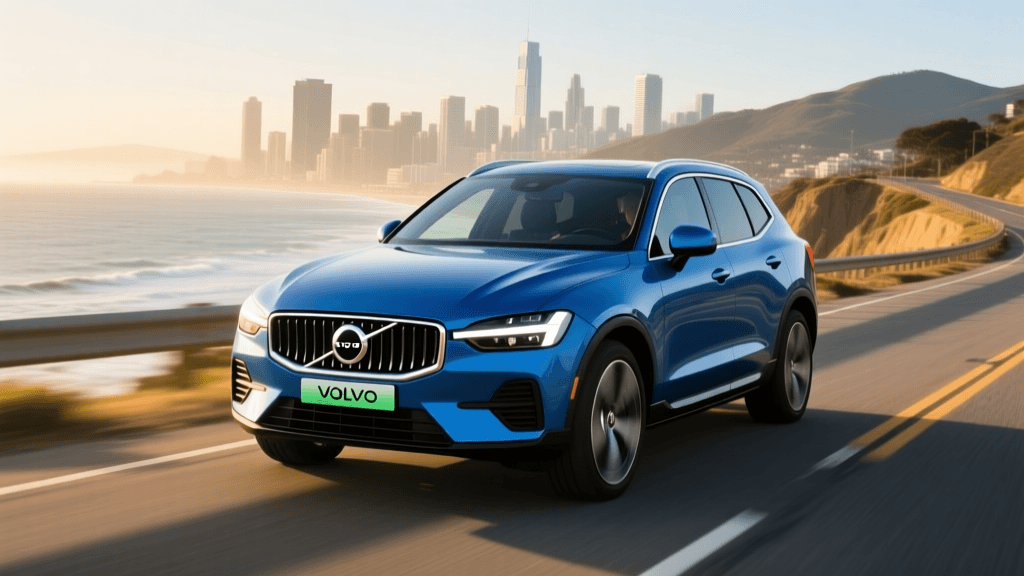
The automotive industry’s path to full electrification is rarely a straight line. While early projections assumed a rapid, unbroken transition from internal combustion engines (ICE) to battery electric vehicles (BEVs), market realities, charging infrastructure bottlenecks, and shifting consumer sentiments have forced a strategic recalibration. Enter the Plug-in Hybrid Electric Vehicle (PHEV), once viewed as a mere compliance stopgap, now recognized as a vital, long-term bridge technology. At the forefront of this premium midsize SUV segment is the Volvo XC60 Recharge. With its recent battery capacity upgrade and potent powertrain, the XC60 Recharge offers a compelling glimpse into the pragmatic future of electrified mobility. In this comprehensive review and industry outlook, we put the XC60 Recharge’s extended-range battery to the test and analyze how it fits into Volvo’s evolving 2030 electrification strategy.
Real-World Electric Range Test: Methodology and Results
For the 2023 and 2024 model years, Volvo significantly upgraded the XC60 Recharge’s battery pack, moving from an 11.6 kWh unit to a larger 18.8 kWh (gross) lithium-ion battery, yielding approximately 14.9 kWh of usable capacity. The EPA rates this setup at 35 miles of electric-only range. But how does it perform in the real world when subjected to the variables of daily driving?
Test Conditions and Route
Our real-world range test was conducted in a 2024 Volvo XC60 Recharge Ultimate trim equipped with the B5 eAWD powertrain and 20-inch alloy wheels. The test route encompassed a 45-mile loop featuring a mix of suburban stop-and-go traffic, elevated highway cruising at 65 mph, and mild topographical changes. Ambient temperatures hovered around 62°F, ideal for battery chemistry. The climate control was set to a comfortable 68°F with the seat heaters turned off to prioritize battery-to-wheel energy transfer. The vehicle was charged to 100% State of Charge (SOC) using a Level 2 home charger prior to the test.
The Verdict: EPA vs. Reality
Under these mixed conditions, the XC60 Recharge delivered an impressive 32.4 miles of pure electric driving before the 2.0-liter turbocharged and supercharged four-cylinder engine seamlessly engaged to assist the 143-horsepower electric motor. While this falls slightly short of the EPA’s 35-mile estimate, it is a highly respectable figure for a luxury SUV weighing over 4,600 pounds. Highway cruising at 70 mph naturally depleted the battery faster, yielding about 26 miles of EV range, while city driving with heavy regenerative braking opportunities pushed the EV range closer to 36 miles. For the average American commuter, whose daily round-trip commute is under 30 miles according to the Department of Transportation, the XC60 Recharge can realistically function as a daily EV, reserving its gasoline engine for weekend road trips.
Data Breakdown: XC60 Recharge Extended Range Metrics
| Metric | EPA Estimate | AutoEdgeView Real-World Test |
|---|---|---|
| Electric-Only Range | 35 Miles | 32.4 Miles (Mixed Route) |
| Combined MPGe (EV Mode) | 63 MPGe | 58 MPGe |
| Gas-Only Fuel Economy | 28 MPG Combined | 26.5 MPG (Highway Heavy) |
| Level 1 Charging (120V) | N/A (Not Recommended) | ~14 Hours (0-100%) |
| Level 2 Charging (240V) | ~5 Hours | 4 Hours 45 Minutes |
| Total System Output | 455 hp / 523 lb-ft | Verified (0-60 mph in 4.5s) |
Industry Outlook: PHEVs and Volvo’s Shifting 2030 Strategy
To understand the true value of the XC60 Recharge, one must look at the broader macroeconomic and industry trends shaping its existence. For years, Volvo Cars championed an aggressive mandate to become a fully electric car company by 2030. However, as the global EV market has experienced cooling demand, tariff uncertainties, and infrastructure growing pains, automakers are adapting. According to Volvo Cars’ official sustainability and electrification reports, the company has recently adjusted its 2030 outlook, aiming for a mix of fully electric and plug-in hybrid vehicles to comprise the vast majority of its sales, rather than strictly 100% BEVs.
This strategic pivot validates the PHEV not as a temporary compromise, but as a crucial pillar of the automotive transition. The U.S. Department of Energy notes that PHEVs offer a unique advantage in regions where charging infrastructure is still maturing, providing the emissions benefits of an EV for daily commuting while eliminating range anxiety for longer journeys. As outlined by the Alternative Fuels Data Center (AFDC), modern PHEVs with extended ranges like the XC60 Recharge are instrumental in reducing fleet-wide carbon footprints today, without demanding immediate, massive overhauls to regional power grids. By investing heavily in the Recharge lineup, Volvo is hedging its bets, ensuring profitability and market share retention while battery solid-state technology and charging networks catch up to consumer expectations.
Total Cost of Ownership and Battery Longevity
When evaluating the XC60 Recharge through a future-focused lens, Total Cost of Ownership (TCO) and battery health are paramount. The 18.8 kWh battery utilizes advanced NMC (Nickel Manganese Cobalt) chemistry. Volvo’s sophisticated thermal management system actively conditions the battery, protecting it from the rapid degradation seen in early-generation hybrids. However, PHEV batteries endure more frequent charge cycles than massive BEV batteries simply because they are smaller and drained/refilled more often.
To maximize battery longevity and TCO, owners must adopt specific charging habits. Unlike BEVs where charging to 80% is standard advice for daily use, PHEV batteries are designed with larger buffer zones at the top and bottom of the SOC. Therefore, charging the XC60 Recharge to 100% daily is generally safe and necessary to extract the full 35-mile range. The real enemy of PHEV TCO is relying on DC Fast Charging or letting the battery sit at 0% for extended periods. Furthermore, because the XC60 Recharge is manufactured in Belgium, it does not qualify for the $7,500 U.S. Federal EV Tax Credit under current sourcing rules. Buyers must therefore look to state-level rebates, utility company incentives, or favorable lease structures to offset the premium MSRP.
Actionable Advice: Maximizing Your XC60 Recharge Ownership
If you are considering the XC60 Recharge as your bridge to the electric future, here is actionable advice to optimize your ownership experience:
- Install a Level 2 Home Charger: The onboard charger is limited to roughly 3.7 kW. Using a standard 120V wall outlet will take over 14 hours to recharge the battery, rendering daily EV commuting impossible. Invest in a hardwired 40-amp Level 2 charger (like the ChargePoint Home Flex or Wallbox Pulsar Plus) to ensure a full 5-hour recharge window while you sleep.
- Utilize the ‘Pure’ Drive Mode: The XC60 features multiple drive modes. For daily commuting, manually select the ‘Pure’ mode to force the vehicle to prioritize the electric motor. Use the ‘Hold’ function when embarking on a highway trip to save your battery reserve for city driving at your destination, where EV efficiency is highest.
- Precondition While Plugged In: Use the Volvo Cars app to precondition the cabin temperature while the vehicle is still connected to your home charger. This draws power from the grid rather than the battery, preserving your full 32+ miles of electric range for the road.
- Maintenance Realities: Remember that you are maintaining two powertrains. While regenerative braking will save your brake pads and the electric motor reduces wear on the ICE, you must still adhere to strict oil change intervals for the turbocharged/supercharged 2.0L engine, even if it only runs on weekends.
Final Verdict: A Pragmatic Vision of the Future
The Volvo XC60 Recharge PHEV is a masterclass in pragmatic luxury. It does not force the driver to adapt to the limitations of current charging infrastructure, nor does it sacrifice the silent, torque-rich refinement of electric mobility. Our real-world range test confirms that its upgraded 18.8 kWh battery is more than just a spec-sheet bump; it is a functional tool that can genuinely zero out the daily commutes of millions of drivers. As Volvo and the broader industry adjust their 2030 electrification targets to reflect market realities, the XC60 Recharge stands out as a highly relevant, future-proof choice. It is not merely a stepping stone to a fully electric tomorrow; for many buyers, it is the perfect destination for today. For more insights into how plug-in systems integrate with modern grids, the U.S. Department of Energy’s comprehensive PHEV guides remain an excellent resource for prospective buyers navigating this transitional era.