The Ford Escape PHEV: A Commuter's Bridge to the Future
For years, automotive industry analysts predicted that Plug-in Hybrid Electric Vehicles (PHEVs) would serve as a brief, transitional bridge between internal combustion engines and fully electric vehicles (BEVs). However, as the global automotive market navigates infrastructure bottlenecks, battery mineral supply chain constraints, and shifting consumer sentiments, the PHEV is experiencing a massive renaissance. At the center of this pragmatic electrification movement is the Ford Escape PHEV, a compact crossover that has quietly mastered the art of the daily commute. In this review, we evaluate the real-world electric-only range of the Escape PHEV, assess its viability for modern commuters, and explore the future industry trends that will dictate the next generation of plug-in hybrids.
Real-World Commuter Review: Testing the 37-Mile EV Range
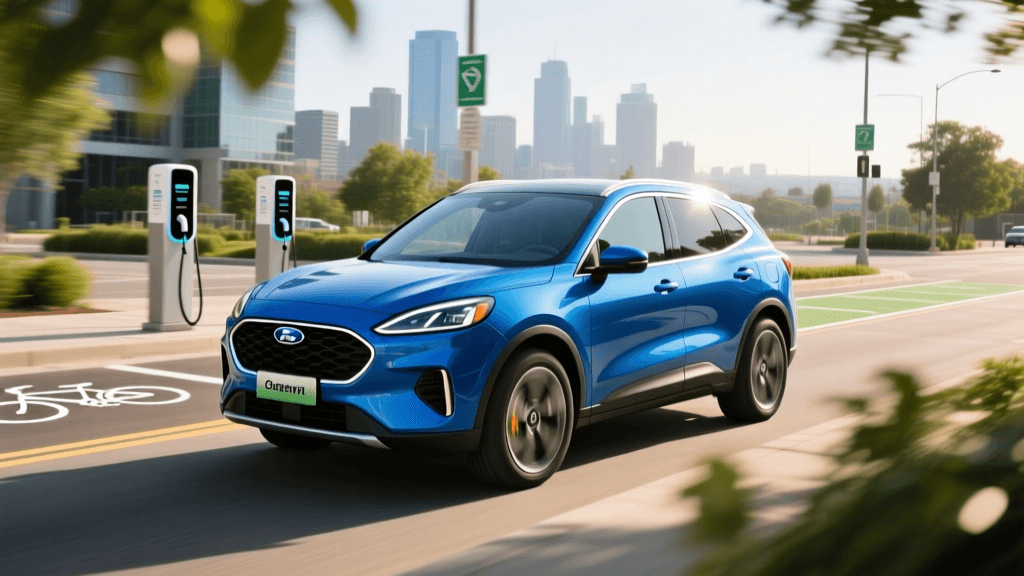
The current-generation Ford Escape PHEV pairs a 2.5-liter Atkinson-cycle four-cylinder engine with an electric motor and a 14.4 kWh lithium-ion battery pack. Together, they produce a combined 210 horsepower, routed through an electronic continuously variable transmission (eCVT). But the headline figure for commuters is the EPA-estimated 37 miles of electric-only range. For the average American, whose daily round-trip commute hovers around 30 to 35 miles, this 37-mile envelope is a sweet spot that allows for near-total gas-free weekday driving.
During our commuter testing, the Escape PHEV demonstrated remarkable efficiency in stop-and-go urban traffic. Electric motors excel in these conditions, providing instant torque and utilizing regenerative braking to recapture energy that would otherwise be lost to heat. When driven conservatively in EV mode, the vehicle easily stretches its battery to cover a 34-mile mixed-city loop before the gasoline engine seamlessly awakens. The transition between electric and gas power is nearly imperceptible, a testament to Ford's refined powertrain calibration.
Commuter Efficiency and Charging Dynamics
To maximize the 37-mile range, commuters must understand the charging logistics. The Escape PHEV is limited to Level 1 and Level 2 AC charging; it notably lacks DC Fast Charging capability. While this is a common omission in compact PHEVs due to cost and battery thermal management constraints, it means that mid-day top-ups at public fast-charging stations are not viable. Home and workplace charging are your primary lifelines.
| Charging Method | Voltage / Amperage | Estimated Time (0-100%) | Best Use Case |
|---|---|---|---|
| Level 1 (Standard Outlet) | 120V / 12A | 10 - 11 Hours | Overnight charging for short commutes |
| Level 2 (Home Wallbox) | 240V / 32A | 3.5 Hours | Workplace top-ups or rapid home replenishment |
According to the Alternative Fuels Data Center, PHEVs offer the unique advantage of eliminating range anxiety while still providing the environmental and economic benefits of electric driving for localized trips. By installing a standard Level 2 home charger, an Escape PHEV owner can easily replenish the 14.4 kWh battery in under four hours, meaning a vehicle plugged in upon returning home at 6 PM is fully charged and ready for the next morning's commute by 10 PM.
Future Trends: Why PHEVs Are Outlasting Early BEV Predictions
Looking ahead, the industry outlook for vehicles like the Escape PHEV is incredibly robust. Early roadmaps from legacy automakers suggested PHEVs would be phased out by 2030 in favor of pure EVs. Today, those roadmaps are being redrawn. BEV adoption has faced headwinds due to high upfront costs, depreciating resale values, and uneven public charging infrastructure. Consequently, consumers are pivoting back to PHEVs as the ultimate 'no-compromise' solution.
The International Energy Agency's Global EV Outlook 2024 highlights a significant surge in PHEV sales globally, noting that plug-in hybrids are capturing a growing share of the electrified market as consumers seek to mitigate range anxiety without sacrificing the ability to take long road trips. For the Ford Escape, this macro trend guarantees continued investment in the PHEV powertrain. Automakers are realizing that a larger battery in a PHEV is often more resource-efficient and profitable than building a massive 100 kWh battery for a BEV that the consumer rarely fully utilizes.
The Next Generation of PHEV Battery Density
What does the future hold for the Escape PHEV's architecture? The next frontier is energy density. As solid-state and advanced lithium-iron-phosphate (LFP) battery chemistries mature, Ford will be able to package 20 kWh to 25 kWh of usable capacity into the exact same physical footprint currently occupied by the 14.4 kWh pack. This means future iterations of the Escape PHEV could easily push the electric-only range past the 50-mile mark, effectively turning the vehicle into a pure EV for 95% of all driving scenarios, while retaining the gas engine solely for cross-country holiday travel.
Furthermore, the U.S. Environmental Protection Agency's Automotive Trends Report continually tracks the evolving footprint and efficiency of PHEVs, noting that as battery densities improve, the curb weight penalty associated with carrying dual powertrains is being offset by lighter, more efficient electric motors and smaller, less complex gasoline engines. Future Escape PHEVs may even drop the traditional multi-speed or eCVT transmissions in favor of series-hybrid setups, where the gas engine acts purely as an onboard generator, further smoothing out the commuter experience.
Total Cost of Ownership in a Shifting Market
When evaluating the Ford Escape PHEV against its purely gas-powered or fully electric siblings, the Total Cost of Ownership (TCO) heavily favors the PHEV for specific demographics. If you have access to home charging and a commute under 40 miles, your fuel costs will plummet. Electricity prices, while fluctuating, remain vastly cheaper per mile than gasoline. Moreover, the Escape PHEV avoids the steep depreciation curves currently plaguing the used BEV market, as buyers are less fearful of long-term battery degradation when a reliable 2.5-liter gas engine serves as a backup.
- Maintenance: The gas engine runs far less frequently, meaning oil changes can often be stretched, and brake pads last significantly longer due to regenerative braking.
- Tax Incentives: Depending on current federal and state legislation, PHEVs with sufficient battery capacity may still qualify for partial or full clean vehicle tax credits, softening the initial purchase premium.
- Longevity: The Atkinson-cycle engine is renowned for its durability, and the battery is backed by Ford's comprehensive hybrid component warranty, providing peace of mind for long-term commuters.
Final Verdict: Is the Escape PHEV Future-Proof?
The Ford Escape PHEV represents the pinnacle of current-generation commuter pragmatism. Its 37 miles of electric range is perfectly calibrated for the American suburban commute, and its seamless transition to hybrid mode ensures weekend road trips remain effortless. While the lack of DC fast charging is a minor drawback for apartment dwellers without home charging access, it is a non-issue for the vast majority of its target demographic.
From an industry outlook perspective, the PHEV is not a dying breed; it is evolving into a permanent fixture of the automotive landscape. As battery technology advances and the industry recalibrates its electrification timelines, the Ford Escape PHEV stands as a smart, future-proof investment for today's commuter. It offers the silent, torque-rich joy of an EV on Monday through Friday, and the limitless freedom of a traditional crossover on the weekend, proving that sometimes the best bridge to the future is one you can drive on every single day.