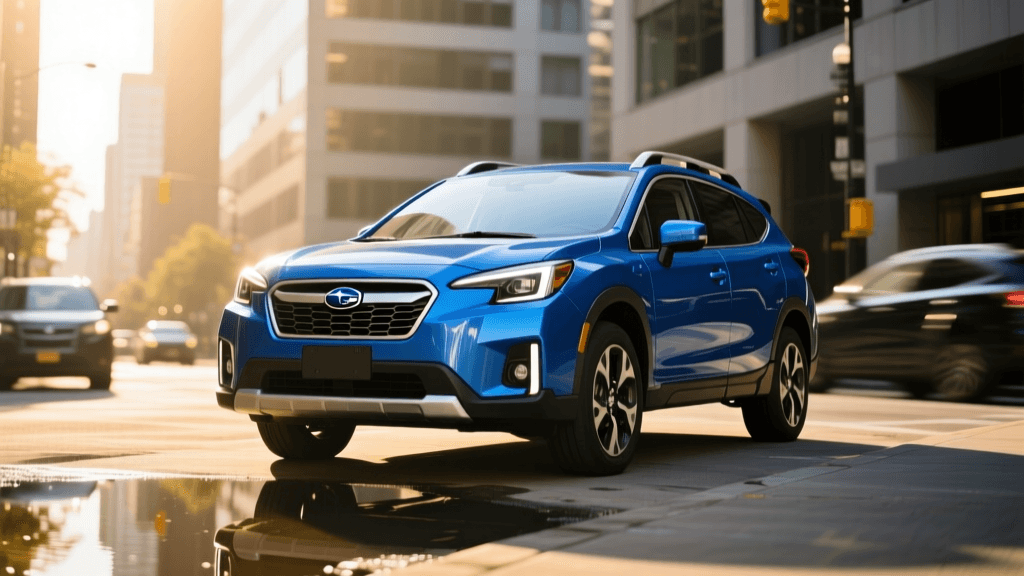
The Subaru Crosstrek Hybrid PHEV: An Ownership Overview
The Subaru Crosstrek has long been the undisputed darling of outdoor enthusiasts, commuters, and those living in regions with harsh weather. When Subaru introduced the Crosstrek Hybrid as a plug-in hybrid electric vehicle (PHEV), it aimed to combine the brand's legendary Symmetrical All-Wheel Drive with the efficiency of electrification. Although Subaru paused the PHEV variant in the United States after the 2023 model year to retool its electrification strategy, the Crosstrek Hybrid remains a highly sought-after vehicle on the used market and a benchmark for rugged PHEVs.
For buyers considering a pre-owned or remaining new-stock Crosstrek Hybrid, the central question is one of financial viability. Does the PHEV premium justify itself at the fuel pump and in the driveway? In this comprehensive cost and value breakdown, we analyze the real-world ownership experience, electric range, and total cost of ownership (TCO) to help you determine if this electrified Subaru is the right investment for your lifestyle.
Real-World Electric Range and Efficiency
The Crosstrek Hybrid PHEV is powered by a 2.0-liter Boxer engine paired with two electric motors and a 13.1 kWh lithium-ion battery pack (of which roughly 8.8 kWh is usable to preserve battery longevity). The EPA officially rates the vehicle at 17 miles of pure electric range and a combined 35 MPGe. Once the battery is depleted, it operates as a traditional hybrid, achieving an EPA-estimated 42 MPG combined.
However, real-world ownership tells a more nuanced story. According to testing by automotive experts at Car and Driver, the Crosstrek's electric range is highly sensitive to ambient temperatures and driving habits. In mild summer conditions with city driving, owners frequently report achieving 19 to 21 miles on a single charge, slightly exceeding the EPA estimate. Conversely, in freezing winter conditions where the cabin heater and battery thermal management systems draw heavily on the pack, that range can drop to 12 to 14 miles.
Furthermore, the vehicle's 3.3 kW onboard charging limit means that regenerative braking on steep mountain descents will quickly taper off once the battery reaches its buffer limit. For commuters with a round-trip distance of under 20 miles and access to home charging, the Crosstrek Hybrid can effectively operate as a pure EV for weeks at a time, drastically altering the cost-of-ownership equation.
Cost and Value Breakdown: The PHEV Premium
When it was sold new, the Crosstrek Hybrid commanded a premium of approximately $8,000 over the similarly equipped gas-only Premium trim. On the used market, this price gap narrows due to depreciation curves, but a premium of $4,000 to $6,000 remains common. To understand the value proposition, we must look at the operational savings.
Assuming an average commute of 30 miles per day (split between EV and gas modes), an electricity rate of $0.16 per kWh, and a gasoline price of $3.50 per gallon, the financial benefits become clear. The U.S. Department of Energy's Alternative Fuels Data Center notes that PHEV owners who regularly charge at home can reduce their annual fuel costs by 30% to 50% compared to conventional vehicles.
5-Year Total Cost of Ownership Comparison
Below is a structured breakdown comparing the estimated 5-year operational costs of the Crosstrek Hybrid PHEV versus the standard 2.5L Gas Crosstrek, assuming 15,000 miles driven annually and regular home charging.
| Cost Category (5-Year) | Gas Crosstrek (2.5L AWD) | Crosstrek Hybrid PHEV | Difference |
|---|---|---|---|
| Fuel / Energy Costs | $9,800 | $6,200 | +$3,600 Savings (PHEV) |
| Routine Maintenance | $3,100 | $2,800 | +$300 Savings (PHEV) |
| Insurance Premiums | $7,500 | $7,900 | -$400 (PHEV costs more) |
| Home Charger Install | $0 | $600 | -$600 (PHEV upfront cost) |
| Estimated Depreciation | $11,000 | $12,500 | -$1,500 (PHEV depreciates faster) |
| Total 5-Year TCO | $31,400 | $29,900 | +$1,500 Net Savings |
Note: TCO figures are estimates based on national averages and do not include the initial purchase price or potential state/federal tax incentives available at the time of original purchase.
Charging Logistics and Home Setup Costs
To extract the true value from the Crosstrek Hybrid, home charging is non-negotiable. Relying solely on public charging or gas power negates the financial and environmental benefits of the PHEV system. The Crosstrek Hybrid's battery can be fully replenished in about 5 hours using a standard 120V Level 1 household outlet. While this is sufficient for overnight charging, it limits flexibility if you need to top off during the day.
For optimal ownership, installing a 240V Level 2 home charger is highly recommended. Because the Crosstrek's onboard charger is capped at 3.3 kW, you do not need to invest in an expensive 48-amp hardwired unit. A cost-effective 16-amp or 20-amp plug-in Level 2 charger (such as the Lectron V-Box or a basic Emporia Vue) will max out the vehicle's charging capabilities and reduce charge times to roughly 2.5 hours. The average cost to install a 240V NEMA 14-50 outlet in a garage ranges from $400 to $800, depending on your electrical panel's proximity to the parking spot. As highlighted by the EPA's Fuel Economy Guide, optimizing your home charging setup is the single most effective way to lower the per-mile cost of a plug-in hybrid.
Maintenance, Warranty, and Long-Term Reliability
One of the primary concerns for used PHEV buyers is battery degradation and replacement costs. Subaru mitigates this risk with a robust hybrid system warranty. The high-voltage battery and associated hybrid components are covered for 8 years or 100,000 miles (whichever comes first). In states that follow California Air Resources Board (CARB) regulations, this warranty extends to 10 years or 150,000 miles.
Routine maintenance on the Crosstrek Hybrid is nearly identical to the gas model. Oil changes are required every 6,000 miles or 6 months. Interestingly, because the electric motor handles low-speed acceleration and regenerative braking slows the vehicle down, PHEV owners often report significantly less wear on their brake pads, with some reaching 70,000 miles before needing a brake job. However, the added weight of the battery pack (roughly 300 lbs) can lead to slightly faster tire wear, making regular rotations every 6,000 miles critical.
Actionable Advice for Maximizing Crosstrek PHEV Value
If you are taking ownership of a Crosstrek Hybrid, implement these specific strategies to maximize your range and protect your investment:
- Pre-Condition While Plugged In: Use the Subaru STARLINK app to pre-heat or pre-cool the cabin while the car is still connected to your Level 2 charger. This draws power from the grid rather than the battery, preserving your 17-mile EV range for actual driving.
- Manage X-Mode Wisely: Subaru's X-Mode is fantastic for snow and mud, but it alters the throttle response and AWD engagement in a way that drains the battery faster. Turn X-Mode off during dry, paved commutes to maximize electric efficiency.
- Utilize 'Save Battery' Mode on Highways: If your commute involves 15 miles of highway driving followed by 10 miles of city traffic, engage the 'Battery Save' mode on the highway. The gas engine is more efficient at high speeds, saving your precious electric range for the stop-and-go city traffic where the EV motor excels.
- Monitor Tire Pressures Monthly: The added weight of the PHEV system makes rolling resistance more noticeable. Keep tires inflated to the exact PSI listed on the driver's door jamb (usually 33-35 PSI) to prevent a 5-10% drop in electric range.
Final Verdict: Is the Crosstrek Hybrid Worth It?
The Subaru Crosstrek Hybrid PHEV represents a highly specific value proposition. It is not the most aerodynamic EV, nor does it offer the 40-mile electric range of some of its newer competitors. However, it offers something unique: genuine all-weather capability, 8.7 inches of ground clearance, and the ability to run purely on electricity for daily chores without the range anxiety of a full EV.
From a strict cost perspective, the 5-year operational savings will not entirely offset the initial purchase premium if you buy the vehicle brand new. However, on the used market, where the initial depreciation hit has already been absorbed by the first owner, the Crosstrek Hybrid transforms into an exceptional value. For the outdoor commuter who wants to minimize their carbon footprint during the week but demands the traction and ruggedness of a Subaru for weekend trail runs, the Crosstrek Hybrid PHEV remains an incredibly smart, cost-effective choice.