Toyota Sequoia Hybrid Powertrain: The Full i-FORCE MAX Breakdown
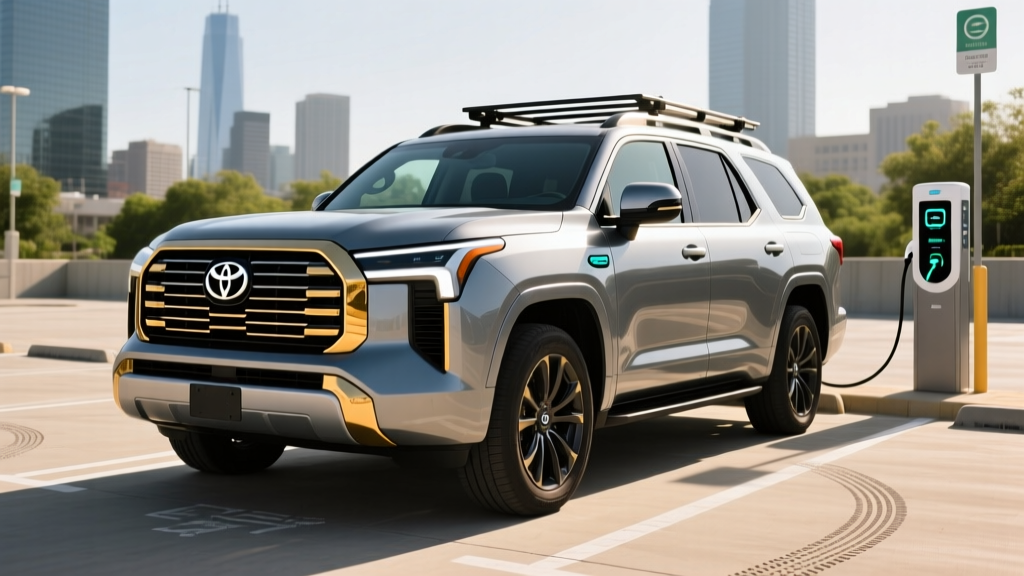
The third-generation Toyota Sequoia ditched its V8 entirely when it was redesigned, replacing it with the i-FORCE MAX hybrid powertrain across every trim level. Unlike a plug-in hybrid (PHEV), the Sequoia is a conventional hybrid electric vehicle (HEV) — meaning it never needs to be plugged in. It generates all its own electricity through regenerative braking and engine-driven generation, storing energy in a compact nickel-metal hydride (NiMH) battery pack.
For 2026, the Sequoia remains one of the few full-size, body-on-frame SUVs offered exclusively as a hybrid, competing against the Ford Expedition (gas-only), Chevrolet Tahoe (gas with available diesel), and the Jeep Wagoneer (gas-only). The result is a 3-row family hauler that delivers meaningfully better fuel economy than its rivals without sacrificing towing capacity or off-road capability.
HEV vs PHEV: Where the Sequoia Fits
Conventional Hybrid (HEV) — Toyota Sequoia: The Sequoia's 1.87 kWh NiMH battery is charged entirely by the engine and regenerative braking. There is no plug, no electric-only driving mode, and no external charging required. You simply fill up with gas and drive. The hybrid system assists the engine during acceleration and captures energy during braking, improving overall fuel economy by roughly 25–30% compared to a comparable non-hybrid V8.
Plug-In Hybrid (PHEV): A PHEV like the Toyota RAV4 Prime carries a much larger battery (18.1 kWh) that can be charged from a wall outlet or public charger, delivering 42 miles of electric-only range before the gas engine kicks in. The Sequoia does not offer a PHEV variant — Toyota has not announced one for any current or upcoming model year.
This distinction matters for buyers evaluating electrified SUVs: if you want plug-in electric range, the Sequoia isn't it. But if you want hybrid efficiency with zero lifestyle change — no charging cables, no range planning, no home charger installation — the HEV approach is the simplest path to better fuel economy in a full-size SUV.
Powertrain Specs: Twin-Turbo V6 Meets Electric Motor
| Component | Specification |
|---|---|
| Engine | 3.4L twin-turbo V6 (V35A-FTS) |
| Electric Motor | 49 hp (36 kW) integrated between engine and transmission |
| Combined System Output | 437 hp / 583 lb-ft torque |
| Transmission | 10-speed automatic (Direct Shift-10AT) |
| Drivetrain | RWD standard; part-time 4WD available (TRD Pro: full-time 4WD) |
| Hybrid Battery | 1.87 kWh NiMH (sealed, no plug) |
| 0–60 mph | ~5.6 seconds (MotorTrend tested, 4WD) |
| Max Towing Capacity | 9,520 lbs (RWD SR5) |
| Seating | 8 passengers (bench) or 7 (captain's chairs) |
The i-FORCE MAX system places a compact electric motor-generator between the twin-turbo V6 and the 10-speed automatic transmission. This motor fills in torque at low RPM before the turbos spool up, smoothing out acceleration and eliminating the turbo lag that plagues some downsized engines. The combined 583 lb-ft of torque arrives low in the rev range, which is especially useful when towing heavy trailers or climbing grades.
Toyota's hybrid control system manages power blending seamlessly — most drivers won't notice when the electric motor is assisting versus when the engine is operating alone. Regenerative braking captures kinetic energy during deceleration and feeds it back to the NiMH battery, which Toyota chose over lithium-ion for its proven long-term durability and tolerance of extreme temperatures.
Fuel Economy: EPA Ratings and Real-World MPG
| Configuration | City MPG | Highway MPG | Combined MPG |
|---|---|---|---|
| RWD (SR5, Limited, Platinum, Capstone) | 21 | 24 | 22 |
| 4WD (SR5, Limited, Platinum, Capstone) | 19 | 22 | 20 |
| TRD Pro (4WD, off-road tires) | 19 | 22 | 20 |
Real-World MPG Expectations: The Sequoia's hybrid system shines in stop-and-go city driving, where regenerative braking and electric-motor assist do the most work. In our experience and owner reports, city MPG for the 4WD model often reaches 20–21 MPG in moderate traffic — slightly above the EPA's 19 MPG estimate. Highway driving is where the Sequoia's aerodynamic profile and 5,900+ lb curb weight work against it: expect 20–21 MPG at 70 mph on flat terrain, dropping to 17–18 MPG at 80 mph or in mountainous terrain.
Towing impact: When towing near the 9,520-lb maximum, fuel economy drops significantly to roughly 10–12 MPG depending on trailer profile and terrain. This is comparable to the gas-only Expedition and Tahoe when towing, so the hybrid advantage essentially disappears under heavy load.
Cold weather: In sub-freezing temperatures, expect a 1–2 MPG reduction as the engine runs more frequently to maintain cabin heat and battery temperature.
For context, the gas-only Ford Expedition 4WD returns an EPA 18 MPG combined, and the Chevrolet Tahoe 4WD with the 5.3L V8 achieves 17 MPG combined. The Sequoia's hybrid system delivers a 2–3 MPG advantage over these competitors in combined driving, which translates to roughly 80–120 fewer gallons of fuel per year at 15,000 miles annually — or approximately $250–$400 in annual fuel savings at $3.50/gallon.
Pricing, Trims, and Tax Credit Eligibility
| 2026 Trim | MSRP (approx.) | Drivetrain |
|---|---|---|
| SR5 | $63,500 | RWD or 4WD (+$3,000) |
| Limited | $69,500 | RWD or 4WD |
| Platinum | $76,000 | 4WD standard |
| TRD Pro | $81,500 | 4WD standard |
| Capstone | $83,000 | 4WD standard |
Federal tax credit status: The Toyota Sequoia does not qualify for the IRS §30D Clean Vehicle Credit. That credit — up to $7,500 for new vehicles — is restricted to plug-in electric vehicles (BEVs and PHEVs) with a minimum battery capacity of 7 kWh. The Sequoia's 1.87 kWh NiMH battery falls far below this threshold. Conventional hybrids (HEVs) are not eligible for the federal EV tax credit under current IRS rules. Source: IRS.gov
Some states may offer modest incentives for hybrid purchases, but these vary widely by jurisdiction and change frequently. Check your state's energy office or department of revenue for current programs.
Hybrid Battery Warranty, Lifespan, and Replacement Cost
Toyota Hybrid Battery Warranty: Toyota covers the Sequoia's hybrid battery for 10 years or 150,000 miles (whichever comes first) from the date of first use. This is one of the longest hybrid battery warranties in the industry and applies in all 50 states.
Expected lifespan: Toyota's NiMH hybrid batteries have demonstrated exceptional longevity across the brand's hybrid lineup. The Prius, Camry Hybrid, and Highlander Hybrid have shown hybrid batteries routinely lasting 150,000–200,000+ miles with minimal degradation. The Sequoia's battery is relatively small (1.87 kWh) and operates within a narrow state-of-charge window managed by Toyota's battery management system — it never fully charges or fully depletes, which dramatically extends cycle life.
Replacement cost: If the hybrid battery does require replacement outside of warranty, expect to pay approximately $3,000–$4,500 for a new OEM battery pack including labor. Refurbished/remanufactored units are available for $1,500–$2,500. Given the 10-year/150,000-mile warranty and Toyota's track record, out-of-pocket battery replacement is uncommon for Sequoia owners who keep the vehicle within typical ownership periods.
It's worth noting that the Sequoia also carries a conventional 12V auxiliary battery (like every modern vehicle) for starting electronics and accessories. This is separate from the hybrid traction battery and typically costs $200–$350 to replace every 4–6 years.
Reliability, Ownership Costs, and Long-Term Value
Toyota's i-FORCE MAX hybrid system has been in production since the 2022 model year in the Tundra, and the Sequoia adopted it for its 2023 redesign. Early reliability data is promising: the twin-turbo V6 is derived from Toyota's proven V35A engine family, and the hybrid motor-generator assembly shares architecture with Toyota's extensively validated hybrid components.
The Sequoia holds strong resale value. Toyota's full-size SUVs historically depreciate less than their domestic competitors, and the hybrid-only powertrain gives the Sequoia a unique market position that supports used pricing. Toyota Safety Sense 3.0 comes standard on all trims, including pre-collision with pedestrian detection, lane departure alert with steering assist, full-speed dynamic radar cruise control, and automatic high beams.
Insurance: Expect insurance premiums 5–10% higher than the gas-only Expedition, reflecting the Sequoia's higher MSRP and hybrid-specific repair considerations. Get quotes before purchasing, as rates vary significantly by carrier and region.
Maintenance: The hybrid system adds no routine maintenance items. There is no hybrid battery coolant flush interval separate from the standard cooling system service, and the regenerative braking system actually extends brake pad life — many Toyota hybrid owners report 80,000+ miles on original brake pads.
Who Should Choose the Sequoia Hybrid vs a Full EV or Gas SUV
Pros
- Best fuel economy in the full-size SUV class (22 MPG combined RWD)
- 583 lb-ft of torque excellent for towing (up to 9,520 lbs)
- No plug-in required — zero lifestyle change from a gas vehicle
- 10-year/150,000-mile hybrid battery warranty
- Strong resale value and Toyota reliability reputation
- Standard Toyota Safety Sense 3.0 on all trims
Cons
- No electric-only driving capability
- No federal tax credit eligibility (HEV, not PHEV/BEV)
- High starting price ($63,500+ MSRP)
- Third-row space tighter than Tahoe/Expedition
- Fuel economy advantage disappears when towing heavy loads
- No Apple CarPlay/Android Auto wireless on lower trims
Choose the Toyota Sequoia hybrid if: You need a 3-row, body-on-frame SUV with strong towing capacity, you want better fuel economy without plugging in, you plan to keep the vehicle 8+ years (maximizing the hybrid battery warranty and Toyota's reliability advantage), and you don't qualify for or want to depend on EV tax credits.
Choose a full EV (like the Rivian R1S or Tesla Model X) if: You have reliable home charging access, you want zero tailpipe emissions, you drive under 300 miles daily, you want to qualify for the $7,500 federal tax credit, and you prioritize lower per-mile fuel costs over towing capacity.
Choose a gas-only SUV (Ford Expedition, Chevy Tahoe) if: Your budget is tighter (Expedition starts ~$57,000), you frequently tow near maximum capacity where the hybrid advantage disappears, or you prioritize maximum cargo and third-row space over fuel economy.
Frequently Asked Questions
How many MPG does the Toyota Sequoia hybrid get?
The Sequoia hybrid achieves an EPA-estimated 21 city / 24 highway / 22 combined MPG in rear-wheel-drive form, and 19 city / 22 highway / 20 combined MPG with 4WD. Real-world city driving often matches or slightly exceeds EPA estimates thanks to the hybrid system's regenerative braking, while sustained highway speeds above 75 mph will yield lower numbers.
Does the Toyota Sequoia need to be plugged in?
No. The Sequoia is a conventional hybrid (HEV), not a plug-in hybrid (PHEV). Its 1.87 kWh battery is charged entirely by the gasoline engine and regenerative braking. You never plug it in — just fill up with gas as you would with any conventional vehicle.
How far can the Sequoia go on electric power alone?
The Sequoia cannot drive on electric power alone for any meaningful distance. Its electric motor assists the gasoline engine during acceleration and low-load conditions, but there is no EV-only mode. If you need electric-only range, look at a PHEV like the Toyota RAV4 Prime (42 miles EV range) or a full BEV.
Is the Sequoia hybrid reliable, and what does battery replacement cost?
Toyota's hybrid systems have a strong reliability track record spanning over 25 years since the original Prius. The Sequoia's hybrid battery is covered for 10 years / 150,000 miles. Out-of-warranty replacement costs approximately $3,000–$4,500 for an OEM pack, though many Toyota hybrid batteries last well beyond 200,000 miles.
Does the Toyota Sequoia qualify for any tax credit?
No. The Sequoia does not qualify for the federal IRS §30D Clean Vehicle Credit because it is a conventional hybrid (HEV), not a plug-in vehicle. That credit requires a minimum 7 kWh battery and plug-in charging capability. Some states may offer small hybrid incentives, but these vary by location — check your state's official energy or revenue website.
How does the Sequoia hybrid compare to the Ford Expedition on fuel costs?
At 15,000 miles per year and $3.50/gallon, the Sequoia 4WD (20 MPG combined) costs approximately $2,625 annually in fuel. The Ford Expedition 4WD (18 MPG combined) costs approximately $2,917 — a difference of about $292 per year in the Sequoia's favor. Over a 10-year ownership period, that's roughly $2,900 in fuel savings, not accounting for the Sequoia's higher purchase price.
Can the Sequoia hybrid tow as much as gas-only competitors?
Yes. The Sequoia RWD tows up to 9,520 lbs, which is competitive with the Ford Expedition (9,300 lbs max) and Chevrolet Tahoe (8,400 lbs with 5.3L V8). The hybrid system's 583 lb-ft of combined torque provides strong low-end pulling power. However, fuel economy while towing drops to 10–12 MPG, similar to gas-only competitors under load.