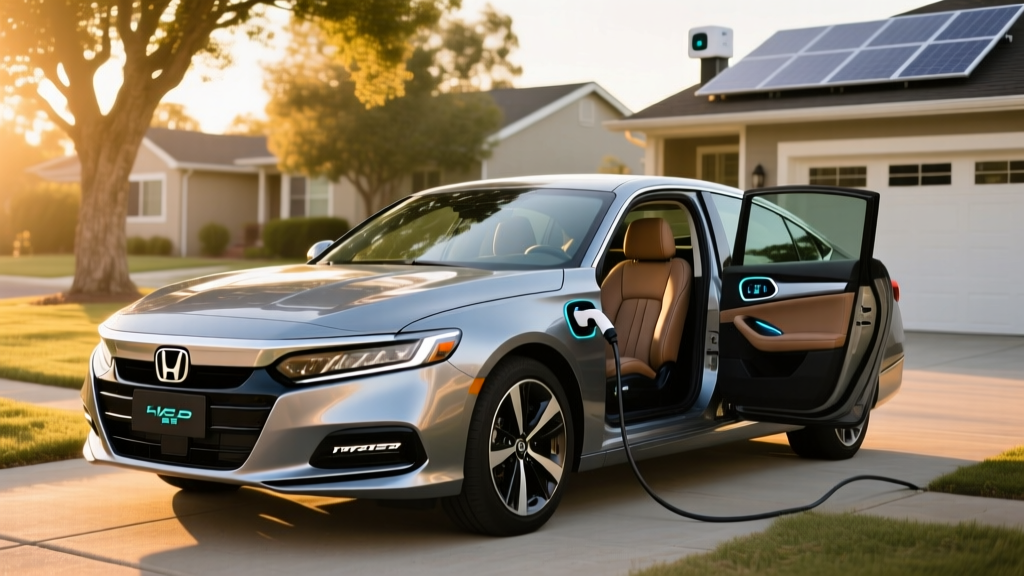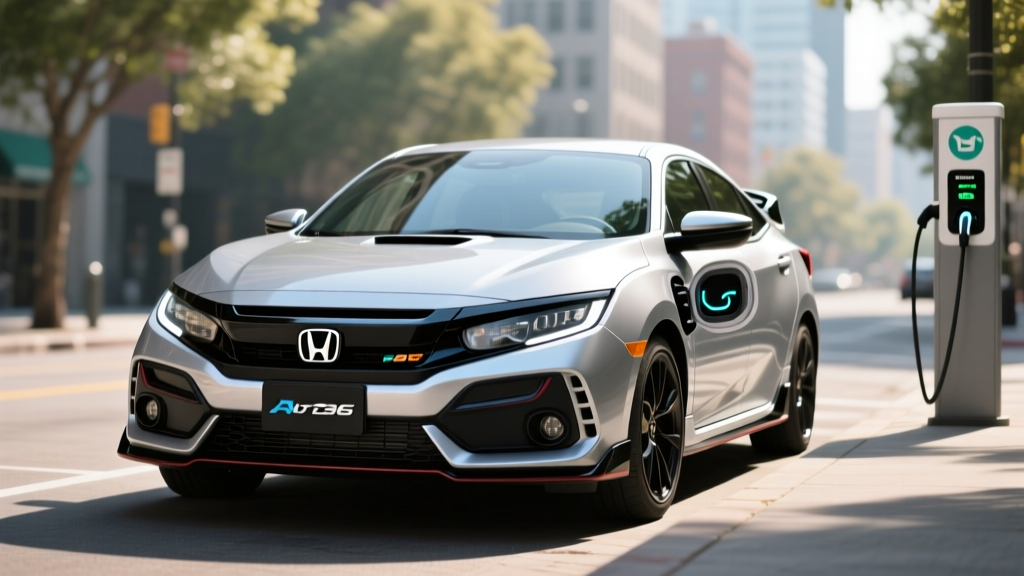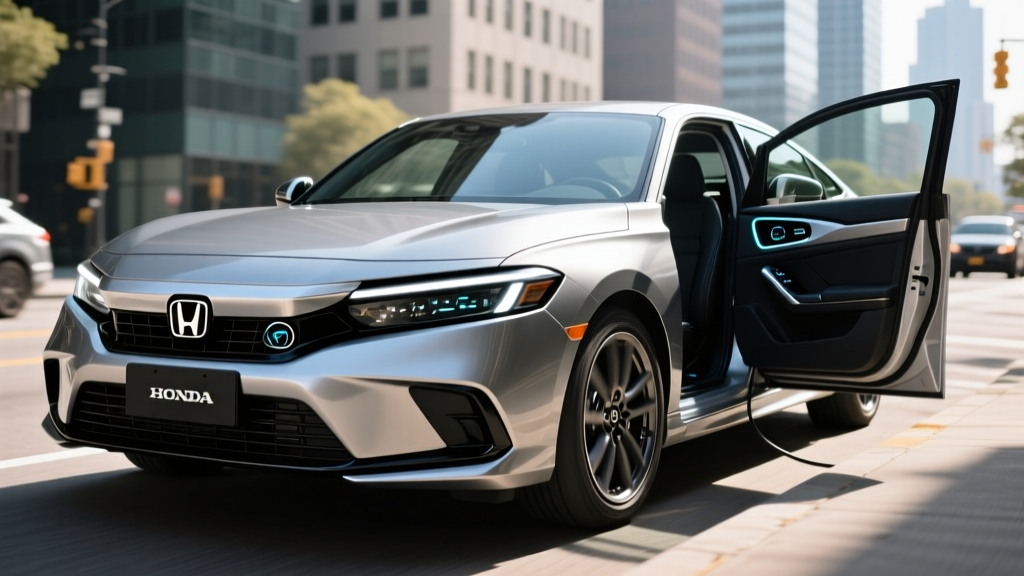
Quick Verdict: The 2026 Civic Hybrid Sport in Three Sentences
The 2026 Honda Civic Hybrid Sport pairs a 2.0-liter Atkinson-cycle engine with a two-motor hybrid system for 200 combined horsepower and an EPA-estimated 49 MPG combined. It requires no plug, no behavior change, and no charging infrastructure — making it one of the most practical electrified vehicles for buyers who can't install a home charger or who take frequent long road trips. At a starting MSRP of $30,950, it undercuts most PHEV and full-EV competitors while delivering fuel economy that rivals them in mixed driving.
HEV vs PHEV: What the 2026 Civic Hybrid Sport Actually Is
Before diving into specs, a critical distinction. The 2026 Civic Hybrid Sport is a conventional hybrid electric vehicle (HEV), not a plug-in hybrid (PHEV). This matters because buyers sometimes confuse the two and expect plug-in electric-only range.
| Feature | HEV (Civic Hybrid Sport) | PHEV (e.g., Toyota Prius Prime) | BEV (e.g., Chevy Bolt) |
|---|---|---|---|
| Plug-in charging required? | No | Yes (Level 1/2) | Yes (Level 1/2/DC) |
| Electric-only range | ~1 mile at low speed | 25–44 miles typical | 200–350+ miles |
| Battery size | ~1.1 kWh (small buffer) | 10–14 kWh usable | 55–85 kWh usable |
| Fuel source | Gasoline only | Gasoline + grid electricity | Grid electricity only |
| Tailpipe emissions | Reduced vs gas-only | Zero on electric, reduced on gas | Zero at tailpipe |
| Home charger needed? | No | Recommended (Level 2) | Essential (Level 2) |
The Civic Hybrid Sport's small lithium-ion battery (approximately 1.1 kWh) recharges itself through regenerative braking and the gasoline engine. You simply fill up at a gas station and drive. The electric motor assists the engine during acceleration and enables brief electric-only movement at very low speeds (parking lots, traffic creep), but the gasoline engine is always the primary energy source.
EPA Fuel Economy and Real-World MPG
Honda publishes the following EPA estimates for the 2026 Civic Hybrid Sport, and they represent some of the best numbers in the compact sedan segment:
| Driving Cycle | EPA Estimate | Real-World Expectation |
|---|---|---|
| City | 50 MPG | 48–55 MPG (hybrids often exceed EPA city due to regen braking) |
| Highway | 47 MPG | 42–46 MPG (aerodynamic drag and sustained speeds reduce hybrid advantage) |
| Combined | 49 MPG | 45–50 MPG (varies with driving mix) |
Why real-world city MPG can beat the sticker: Conventional hybrids shine in stop-and-go traffic. Every deceleration event feeds energy back into the battery via regenerative braking, and the engine shuts off at stops. In dense urban driving with frequent lights, owners regularly report 52–55 MPG. Highway driving is the opposite: sustained 70–80 mph speeds minimize the hybrid system's regenerative advantage and put the load squarely on the gasoline engine, where aerodynamic drag dominates.
Cold-weather impact: In sub-freezing temperatures, expect a 5–10% MPG reduction. The engine runs longer to heat the cabin and bring the catalytic converter to operating temperature. This is far less severe than the 20–35% range loss a full EV experiences in cold weather, but it's measurable.
For official EPA data, see the Civic Hybrid on fueleconomy.gov.
Powertrain, Performance, and Driving Character
| Specification | 2026 Civic Hybrid Sport |
|---|---|
| Engine | 2.0L 4-cylinder Atkinson-cycle |
| Hybrid System | Two-motor e-CVT (Honda's 4th-gen hybrid system) |
| Combined Horsepower | 200 hp |
| Combined Torque | 232 lb-ft (motor-dominant delivery) |
| 0–60 mph | ~6.5 seconds (est.) |
| Drivetrain | Front-wheel drive |
| Transmission | Direct-drive (no traditional gears) |
| Fuel Tank | 12.4 gallons |
| Total Driving Range | ~607 miles (12.4 gal × 49 MPG) |
| Curb Weight | ~3,150 lbs |
The Sport trim gets a slightly stiffer suspension tune and 18-inch alloy wheels compared to the base Hybrid, which adds a touch more engagement on back roads at a marginal cost to ride comfort. The 232 lb-ft of torque arrives almost instantly from the electric motor, giving the Civic Hybrid Sport surprisingly punchy acceleration from a stop — it feels quicker than its 0–60 time suggests in everyday driving.
The two-motor system operates in three modes seamlessly: EV Drive (electric motor only, brief low-speed), Hybrid Drive (engine generates electricity to feed the motor, which drives the wheels), and Engine Drive (engine mechanically connects to the wheels at highway cruising speeds via a lock-up clutch). You don't select these — the car's computer optimizes mode switching in real time.
Pricing, Trims, and Tax Credit Eligibility
| Trim | MSRP (2026) | Key Additions Over Prior Trim |
|---|---|---|
| Civic Hybrid (base) | $29,850 | Hybrid powertrain, Honda Sensing suite, 7" touchscreen |
| Civic Hybrid Sport | $30,950 | 18" wheels, sport suspension, black accents, leather-wrapped steering wheel |
| Civic Hybrid Sport Touring | $33,950 | 9" touchscreen, wireless CarPlay/Android Auto, Bose audio, leather seats, navigation |
No. The 2026 Civic Hybrid Sport is a conventional HEV and does not qualify for the IRS §30D Clean Vehicle Credit, which applies only to plug-in electric vehicles (PHEVs and BEVs) with a minimum 7 kWh battery capacity. The Civic Hybrid's ~1.1 kWh battery falls far below this threshold.
Some states offer modest rebates for conventional hybrids (typically $500–$1,500), but these vary widely. Check your state's energy office or Alternative Fuels Data Center for current state-level incentives. Consult a tax professional for eligibility on any credit.
For buyers comparing total cost, the lack of a tax credit is offset by the Civic Hybrid's lower MSRP versus most PHEVs and BEVs in the segment, plus the zero cost of home charger installation.
Battery Longevity, Warranty, and Replacement Cost
This is the question every hybrid buyer asks, and Honda's track record is strong.
| Component | Warranty Coverage |
|---|---|
| Hybrid Battery (Li-ion) | 8 years / 100,000 miles (10 years / 150,000 miles in CARB states: CA, CT, ME, MA, NJ, NY, OR, RI, VT, WA) |
| Hybrid System Components | 8 years / 100,000 miles |
| Powertrain (engine, transmission) | 5 years / 60,000 miles |
| Bumper-to-Bumper | 3 years / 36,000 miles |
Real-world battery lifespan: Honda's hybrid batteries in the Civic, Accord, and CR-V lines have demonstrated strong longevity. Based on data from earlier-generation Honda hybrids and industry-wide hybrid battery tracking, most Honda hybrid batteries retain above 80% capacity at 150,000 miles. Many first-generation Insight and Civic Hybrid owners have reported original batteries lasting 200,000+ miles before meaningful degradation.
Replacement cost if out of warranty: A Honda hybrid battery replacement runs approximately $2,000–$3,500 (parts and labor) at a dealership. Independent hybrid specialists often offer refurbished battery packs for $1,200–$2,000. This is dramatically less than the $10,000–$20,000+ replacement cost for a full EV traction battery, and it's a cost most owners will never face within the vehicle's useful life.
What degrades a hybrid battery? Extreme heat is the primary enemy. Owners in Phoenix, Las Vegas, and similar hot climates may see faster degradation than those in temperate regions. The battery's thermal management system mitigates this, but parking in shade and avoiding prolonged idling in extreme heat can extend battery life.
Who Should Buy the 2026 Civic Hybrid Sport?
✅ Pros
- 49 MPG combined — among the best in the compact segment
- 200 hp feels punchy; 232 lb-ft torque from the electric motor
- No plug required — zero infrastructure dependency
- 607-mile total range eliminates range anxiety entirely
- Sport-tuned suspension adds engagement without harshness
- Strong battery warranty (8yr/100k mi; 10yr/150k in CARB states)
- Low replacement battery cost ($2k–$3.5k) if ever needed
❌ Cons
- No federal tax credit (HEV, not PHEV/BEV)
- FWD only — no AWD option (unlike the Toyota Prius)
- Highway MPG drops to ~42–46 in real-world sustained cruising
- Sport trim's 18" wheels slightly reduce ride comfort
- No electric-only commuting capability
- 12.4-gal fuel tank means frequent fill-ups on long trips vs. larger-tank hybrids
Decision Framework: Hybrid vs PHEV vs EV
Choose the Civic Hybrid Sport (HEV) if: You lack reliable access to home or workplace charging, you want maximum simplicity with no behavior change, you drive a mix of city and highway miles, or you want a sub-$31,000 entry point with excellent fuel economy.
Choose a PHEV (e.g., Toyota Prius Prime) if: You can install a Level 2 home charger, your daily commute is under 40 miles (covering most trips on electricity), but you still want gasoline backup for road trips without charging stops.
Choose a full BEV (e.g., Chevy Bolt, Hyundai Ioniq 5) if: You have reliable home charging, you want zero tailpipe emissions, your daily driving is under 250 miles, and you want to eliminate gasoline costs entirely — plus you may qualify for the $7,500 federal credit (subject to IRS §30D income, MSRP, and battery-sourcing rules).
How the 2026 Civic Hybrid Sport Compares
| Spec | 2026 Civic Hybrid Sport | 2026 Toyota Prius LE | 2026 Hyundai Elantra Hybrid Limited |
|---|---|---|---|
| EPA Combined MPG | 49 | 57 | 50 |
| Horsepower | 200 hp | 194 hp | 139 hp |
| 0–60 mph | ~6.5 sec | ~7.0 sec | ~8.2 sec |
| Drivetrain | FWD | FWD (AWD available) | FWD |
| Starting MSRP | $30,950 | $29,450 | $30,100 |
| Cargo (rear seats up) | 14.8 cu ft | 20.3 cu ft | 14.2 cu ft |
| Federal Tax Credit | None | None | None |
The Prius wins on pure MPG and cargo volume, and offers AWD. The Civic Hybrid Sport wins on power and driving engagement — its 200 hp and sport-tuned chassis make it the enthusiast's hybrid. The Elantra Hybrid is the value play with the longest warranty (10yr/100k mi bumper-to-bumper on the hybrid system).
Frequently Asked Questions
How many MPG does the 2026 Civic Hybrid Sport get?
The EPA rates it at 50 city / 47 highway / 49 combined MPG. In real-world city driving with frequent stops, many owners report 52–55 MPG thanks to aggressive regenerative braking. Highway-only driving at 75+ mph typically yields 42–46 MPG.
Does the Civic Hybrid need to be plugged in?
No. The 2026 Civic Hybrid Sport is a conventional HEV. Its small lithium-ion battery charges exclusively through regenerative braking and the gasoline engine. You simply refuel at a gas station as you would with any car.
Is the 2026 Civic Hybrid reliable?
Honda's hybrid systems have a strong reliability record spanning two decades (since the 2000 Insight). The 4th-generation two-motor system in the 2026 Civic has fewer moving parts than a traditional automatic transmission — no torque converter, no gear sets to wear. Honda's hybrid battery warranty covers 8 years/100,000 miles (10 years/150,000 miles in CARB states), reflecting the company's confidence in long-term durability.
What does a Civic Hybrid battery replacement cost?
If the hybrid battery fails outside of warranty, expect to pay $2,000–$3,500 at a Honda dealership for a new pack. Independent hybrid battery specialists offer refurbished packs for $1,200–$2,000. However, based on historical Honda hybrid data, most batteries last 150,000–200,000+ miles before needing replacement.
Does the Civic Hybrid qualify for any tax credit?
Not the federal §30D Clean Vehicle Credit, which requires plug-in capability and a minimum 7 kWh battery. The Civic Hybrid's ~1.1 kWh battery does not qualify. Some states offer smaller hybrid incentives ($500–$1,500) — check the Alternative Fuels Data Center for your state. A tax professional can confirm your specific eligibility.
How far can the Civic Hybrid go on a full tank?
With a 12.4-gallon fuel tank and a 49 MPG combined rating, total range is approximately 607 miles. In city-heavy driving at 52+ MPG, some drivers have reported 640+ miles between fill-ups.
Is the Civic Hybrid Sport faster than the gas Civic?
Yes. The gas-only Civic Sport 2.0L produces 158 hp and 138 lb-ft of torque. The Hybrid Sport's 200 hp and 232 lb-ft give it a clear advantage, particularly in low-to-mid-speed acceleration where the electric motor's instant torque delivery shines. The 0–60 time drops from roughly 8.1 seconds (gas) to approximately 6.5 seconds (hybrid).
Does the Sport trim affect fuel economy?
Marginally. The Sport trim's 18-inch wheels and sport suspension add slight rolling resistance and weight compared to the base Hybrid's 16-inch wheels. The difference is typically 1–2 MPG in real-world driving — not enough to meaningfully change ownership costs over the vehicle's life.
Bottom Line
The 2026 Honda Civic Hybrid Sport occupies a specific and valuable position: maximum fuel economy with zero lifestyle compromise. No plug, no charging apps, no range calculations, no $7,500 credit eligibility headaches. You pay $30,950, fill up with regular unleaded, and average 49 MPG while getting 200 hp and a genuinely engaging drive. For buyers without home charging access, or those who simply want electrification without complexity, it's one of the smartest purchases in the compact segment.