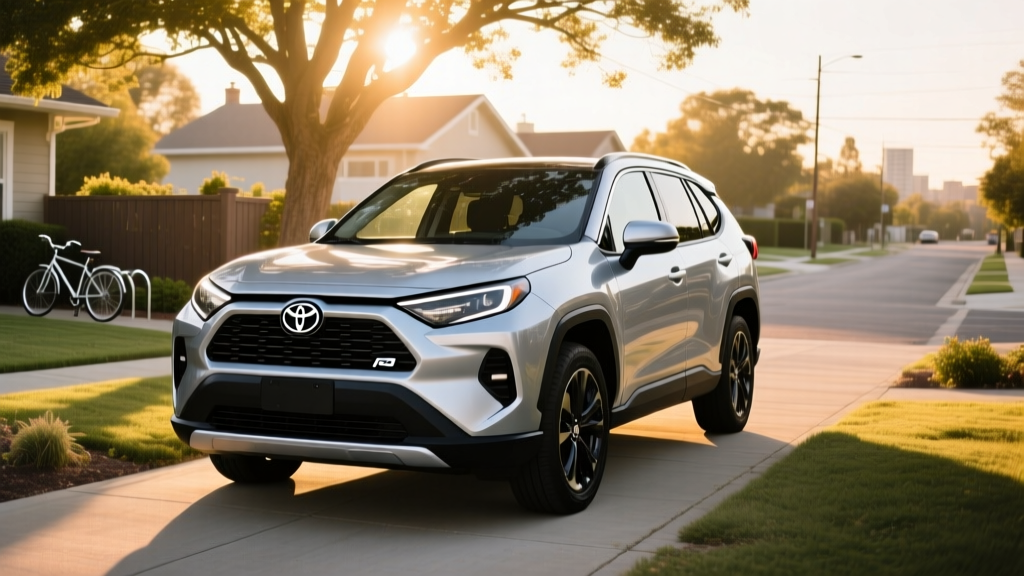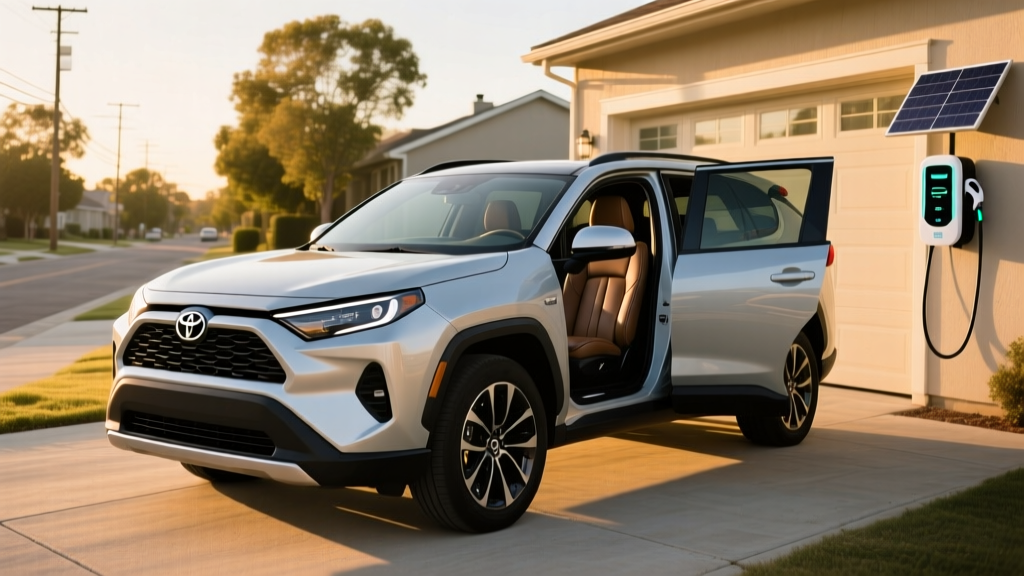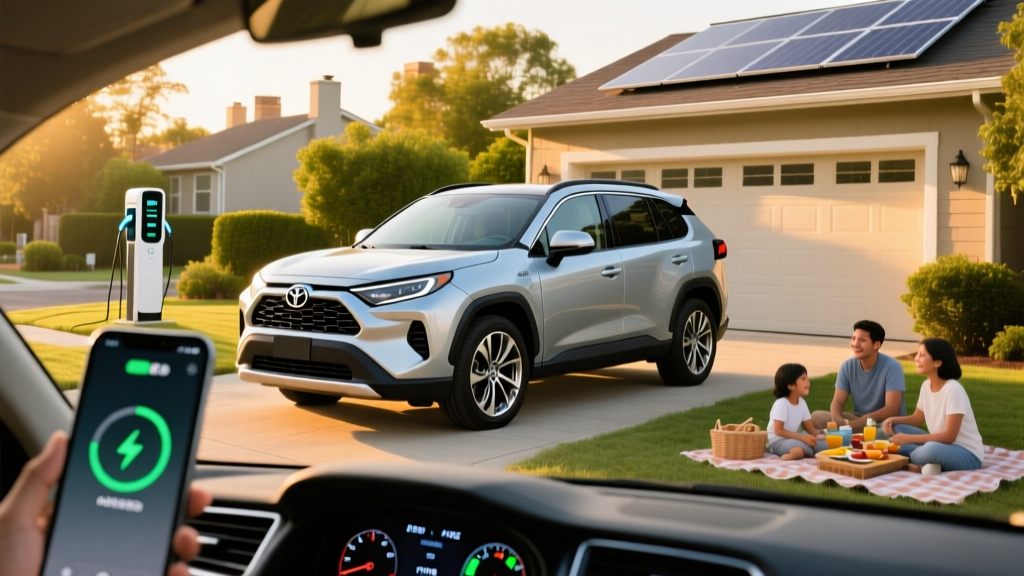
The Toyota RAV4 Hybrid remains one of the best-selling electrified vehicles in the United States, and for good reason: it delivers SUV practicality with fuel economy that undercuts most compact sedans. But the EPA window sticker only tells part of the story. If you're researching RAV4 Hybrid mileage before pulling the trigger, you need real-world data, a clear picture of how the standard hybrid (HEV) stacks up against the plug-in RAV4 Prime (PHEV), and honest answers about battery longevity and tax incentives.
This guide covers the 2026 Toyota RAV4 Hybrid and RAV4 Prime with exact figures — EPA ratings, observed fuel economy, powertrain output, battery warranty terms, and total cost of ownership — so you can decide which version fits your driving pattern.
2026 RAV4 Hybrid MPG: EPA Ratings and Real-World Fuel Economy
The 2026 Toyota RAV4 Hybrid uses Toyota's fifth-generation hybrid system, pairing a 2.5-liter four-cylinder engine with front and rear electric motors for standard all-wheel drive (AWD). The result is an EPA-estimated 41 MPG city, 38 MPG highway, and 39 MPG combined across most trims (LE, XLE, XLE Premium, SE, Woodland Edition, Limited).
| Trim | City MPG | Highway MPG | Combined MPG | Drivetrain |
|---|---|---|---|---|
| LE | 41 | 38 | 39 | AWD (e-motor rear) |
| XLE / XLE Premium | 41 | 38 | 39 | AWD |
| SE | 40 | 37 | 38 | AWD |
| Woodland Edition | 38 | 35 | 37 | AWD (off-road tires) |
| Limited | 41 | 38 | 39 | AWD |
Source: EPA fueleconomy.gov
RAV4 Hybrid vs. RAV4 Prime (PHEV): Which Powertrain Fits You?
Toyota sells the RAV4 in two electrified flavors, and confusing them is the most common buyer mistake. Here's the critical difference:
- RAV4 Hybrid (HEV): A conventional, self-charging hybrid. You never plug it in. A small 1.6 kWh nickel-metal hydride (NiMH) battery captures energy from regenerative braking and the gas engine. It can drive short distances at low speed on electric power alone, but the engine is always available.
- RAV4 Prime (PHEV): A plug-in hybrid with a much larger 18.1 kWh lithium-ion battery. You plug it in to charge, and it can drive 42 miles on electricity alone (EPA) before the gas engine engages. After the battery depletes, it operates as a conventional hybrid rated at 38 MPG combined.
| Spec | RAV4 Hybrid (HEV) | RAV4 Prime (PHEV) |
|---|---|---|
| Powertrain Type | Self-charging hybrid | Plug-in hybrid |
| Combined Horsepower | 219 hp | 302 hp |
| Battery Capacity | 1.6 kWh (NiMH) | 18.1 kWh (Li-ion) |
| Electric-Only Range | <1 mile (low speed) | 42 miles (EPA) |
| Total Range (gas + electric) | ~580 miles | ~600 miles |
| EPA Combined MPG / MPGe | 39 MPG | 94 MPGe (electric) / 38 MPG (gas) |
| Plug-In Charging Required? | No | Yes (Level 1 or Level 2) |
| DC Fast Charging? | No | No (Level 2 max) |
| Level 2 Charge Time (0–100%) | N/A | ~2.5 hours (6.6 kW onboard) |
| 0–60 mph | 7.4 sec | 5.7 sec |
| Base MSRP (2026) | $33,575 (LE) | $45,440 (SE) |
How Far Can the RAV4 Prime Go on Electric Only?
The 2026 RAV4 Prime delivers an EPA-rated 42 miles of all-electric range. In real-world conditions — moderate temperatures, suburban speeds under 55 mph — many owners see 44–47 miles before the engine kicks on. At highway speeds or in cold weather, expect that to drop to roughly 35–38 miles. The Prime's 94 MPGe rating applies only while operating in EV mode; once the battery is depleted, the 38 MPG combined hybrid rating takes over.
Charging the RAV4 Prime
The Prime charges via a standard J1772 connector. It does not support DC fast charging — a common point of confusion. Here's what to expect:
- Level 1 (120V household outlet): ~5.5 hours from empty to full using the included cord. Adds roughly 4 miles of EV range per hour of charging.
- Level 2 (240V home or public charger): ~2.5 hours at the Prime's maximum 6.6 kW onboard charge rate. Adds roughly 17 miles of EV range per hour.
For most Prime owners, plugging in overnight on a Level 2 home charger means starting every morning with a full 42-mile EV buffer — enough to cover the average American's daily commute without burning a drop of gas.
Powertrain and Performance: 219 hp vs. 302 hp
The standard RAV4 Hybrid pairs a 176-hp 2.5-liter Atkinson-cycle four-cylinder with a 134-hp front electric motor and a 54-hp rear motor, delivering a net system output of 219 horsepower. The electronically controlled CVT provides smooth, linear acceleration. The 0–60 mph time of 7.4 seconds is adequate for merging and passing, though not sporty.
The RAV4 Prime uses the same 2.5-liter engine but pairs it with more powerful electric motors (180 hp front, 54 hp rear) and the larger battery pack for a combined 302 horsepower. The 5.7-second 0–60 time makes it one of the quickest compact SUVs in its class — a genuine performance advantage that catches many buyers by surprise.
Pricing, Trims, and Tax Credit Eligibility
Here's how the 2026 RAV4 lineup is priced before any incentives:
| Model | Trim | MSRP (incl. destination) |
|---|---|---|
| Hybrid | LE | $33,575 |
| Hybrid | XLE | $35,060 |
| Hybrid | XLE Premium | $37,560 |
| Hybrid | SE | $37,810 |
| Hybrid | Woodland Edition | $38,060 |
| Hybrid | Limited | $40,985 |
| Prime | SE | $45,440 |
| Prime | XSE | $48,840 |
Does the RAV4 Hybrid or Prime Qualify for a Federal Tax Credit?
Under the IRS §30D Clean Vehicle Credit rules in effect for 2026:
- RAV4 Hybrid (HEV): Does not qualify for the federal §30D tax credit. Conventional hybrids without plug-in capability are ineligible.
- RAV4 Prime (PHEV): Eligibility is unlikely for 2026 model-year vehicles due to the critical-mineral and battery-component sourcing requirements that took full effect in 2024. Toyota has confirmed that the RAV4 Prime's battery supply chain does not currently meet the thresholds for the full $7,500 credit. Some model years may qualify for a partial $3,750 credit if critical-mineral requirements are met but battery-component requirements are not — verify with your dealer and consult the IRS eligible vehicle list before purchasing.
Some states offer additional incentives for PHEVs. California's CVRP rebate, for example, has historically offered up to $1,000–$2,000 for qualifying plug-in hybrids, though funding and eligibility change frequently. Check your state's energy or environmental agency for current programs.
Battery Warranty, Reliability, and Replacement Costs
Hybrid battery longevity is the single most common concern among first-time hybrid buyers. Here's what Toyota provides:
• Hybrid battery: 10 years / 150,000 miles (whichever comes first)
• Hybrid system components (inverter, control module, motor): 10 years / 150,000 miles
• Basic vehicle warranty: 3 years / 36,000 miles
• Powertrain warranty: 5 years / 60,000 miles
Warranty applies to all 50 states. California-emissions states may have extended coverage on certain components.
How Reliable Is the RAV4 Hybrid?
Toyota's hybrid system is among the most proven in the industry — the same basic architecture has been in continuous production since the 1997 Prius. The RAV4 Hybrid consistently earns top marks in long-term reliability surveys. The NiMH battery in the standard hybrid is less energy-dense than lithium-ion but is exceptionally durable, with many Toyota hybrids surpassing 200,000 miles on the original battery pack.
The RAV4 Prime's lithium-ion pack operates within a narrower state-of-charge window (Toyota buffers the top and bottom to reduce degradation), and the 10-year/150,000-mile warranty guarantees at least 70% capacity retention during the coverage period.
What Does a Hybrid Battery Replacement Cost?
If your hybrid battery fails outside the warranty window:
- RAV4 Hybrid (NiMH): $2,500–$3,800 for a new OEM replacement, including labor. Refurbished packs from third-party suppliers run $1,500–$2,200.
- RAV4 Prime (Li-ion): $6,000–$9,000 for a new OEM pack, reflecting the larger capacity and lithium-ion chemistry.
For context, independent data shows that fewer than 5% of Toyota hybrid batteries require replacement within the first 15 years of service. The vast majority of owners will never face this cost.
Real-World Ownership: 5-Year Cost Comparison
Let's compare what five years of ownership actually costs for the RAV4 Hybrid, the RAV4 Prime, and the gas-only RAV4 — assuming 15,000 miles per year, $3.50/gallon regular unleaded, and $0.14/kWh home electricity:
| Model | Avg. Economy | 5-Yr Fuel/Energy Cost | Savings vs. Gas RAV4 |
|---|---|---|---|
| RAV4 (gas, AWD) | 29 MPG combined | $9,052 | — |
| RAV4 Hybrid (HEV) | 41 MPG combined (real-world) | $6,402 | ~$2,650 |
| RAV4 Prime (PHEV)* | ~70% EV / 30% gas | $3,200–$4,100 | ~$5,000–$5,850 |
*Prime savings assume daily home charging and a commute under 42 miles. Without regular plug-in charging, the Prime operates as a 38 MPG hybrid and savings narrow significantly.
The RAV4 Hybrid's $2,650 fuel savings over five years doesn't fully capture the value proposition. Factor in the hybrid's lower maintenance costs (no traditional starter motor, reduced brake wear from regenerative braking, no alternator) and the total cost advantage widens. Toyota's resale values for the RAV4 Hybrid also consistently lead the segment, with 5-year depreciation averaging 10–15 percentage points lower than comparable turbocharged gas SUVs.
Who Should Buy the RAV4 Hybrid vs. the Prime vs. a Full EV?
Choose the RAV4 Hybrid (HEV) If:
- You want maximum fuel savings with zero lifestyle change — no plug, no app, no charging planning
- You live in an apartment or lack access to home charging
- Your budget is $33,000–$41,000
- You want proven reliability with minimal new technology risk
- You drive a mix of city and highway and want consistent 38–44 MPG
Choose the RAV4 Prime (PHEV) If:
- You can install a Level 2 home charger and will plug in daily
- Your daily commute is under 42 miles round-trip (you'll rarely burn gas)
- You want 302 hp and 5.7-second 0–60 performance
- You take road trips and want gas-engine range flexibility
- You're willing to pay a ~$12,000 premium over the Hybrid LE
Consider a Full EV Instead If:
- You have reliable home Level 2 charging
- Your daily driving is under 250 miles and you're comfortable with road-trip DC charging
- You want to eliminate gas station visits entirely
- You qualify for the full $7,500 §30D credit on an eligible EV (e.g., Tesla Model Y, Hyundai Ioniq 5)
- You want lower long-term maintenance (no engine, no oil changes, minimal brake wear)
Stick With the Gas RAV4 If:
- You drive very low annual miles (<6,000) and fuel savings won't offset the hybrid premium
- You regularly tow near the RAV4's 3,500-lb limit (hybrid towing is rated at 1,750 lbs)
- Upfront cost is the sole decision factor
Frequently Asked Questions
How many MPG does the RAV4 Hybrid actually get?
The EPA rates the 2026 RAV4 Hybrid at 41 city / 38 highway / 39 combined MPG. In real-world suburban driving, most owners see 42–45 MPG. Highway-only driving at 75+ mph drops to 34–37 MPG, and cold weather reduces economy by 3–6 MPG due to increased engine runtime for cabin heat.
Does the RAV4 Hybrid need to be plugged in?
No. The RAV4 Hybrid (HEV) is a self-charging conventional hybrid. It recovers energy through regenerative braking and the gas engine. You fuel it like any other car at a gas station. Only the RAV4 Prime (PHEV) requires plug-in charging to access its 42-mile electric range.
How far can the RAV4 Prime go on electric power alone?
The EPA rates the 2026 RAV4 Prime at 42 miles of all-electric range. Real-world results vary from roughly 35 miles (highway, cold weather) to 47 miles (mild weather, city speeds). After the battery depletes, the Prime operates as a standard hybrid rated at 38 MPG combined.
Is the RAV4 Hybrid battery reliable, and what does replacement cost?
Toyota's hybrid batteries are among the most durable in the industry. The battery and hybrid system are warrantied for 10 years / 150,000 miles. Independent data shows fewer than 5% of Toyota hybrid batteries require replacement within 15 years. If replacement is needed out of warranty, expect $2,500–$3,800 for the standard hybrid's NiMH pack and $6,000–$9,000 for the Prime's lithium-ion pack.
Does the RAV4 Hybrid qualify for any federal tax credit?
No. The conventional RAV4 Hybrid (HEV) does not qualify for the IRS §30D Clean Vehicle Credit, which requires plug-in capability. The RAV4 Prime (PHEV) may qualify for a partial credit depending on battery-sourcing compliance — check the IRS eligible vehicle list for the specific model year. Buyer income caps ($150K single / $300K joint) and the non-refundable nature of the credit also apply.
Can the RAV4 Prime DC fast charge?
No. The RAV4 Prime supports Level 1 (120V) and Level 2 (240V) AC charging only, using a standard J1772 connector. The onboard charger is rated at 6.6 kW, allowing a full charge in approximately 2.5 hours on a Level 2 station. There is no DC fast charging port.
How does the RAV4 Hybrid's towing capacity compare to the gas model?
The gas-only RAV4 with the Adventure or TRD Off-Road trim is rated to tow up to 3,500 pounds. The RAV4 Hybrid is rated at 1,750 pounds across all trims. If you regularly tow a small trailer or boat, the gas model (or a different vehicle entirely) may be more appropriate. The RAV4 Prime also carries the 1,750-lb hybrid towing rating.
For the most current EPA fuel economy data, visit fueleconomy.gov. For tax credit eligibility, consult irs.gov and a qualified tax professional. All MSRP figures include destination charges and reflect Toyota's published 2026 model-year pricing; dealer prices may vary.