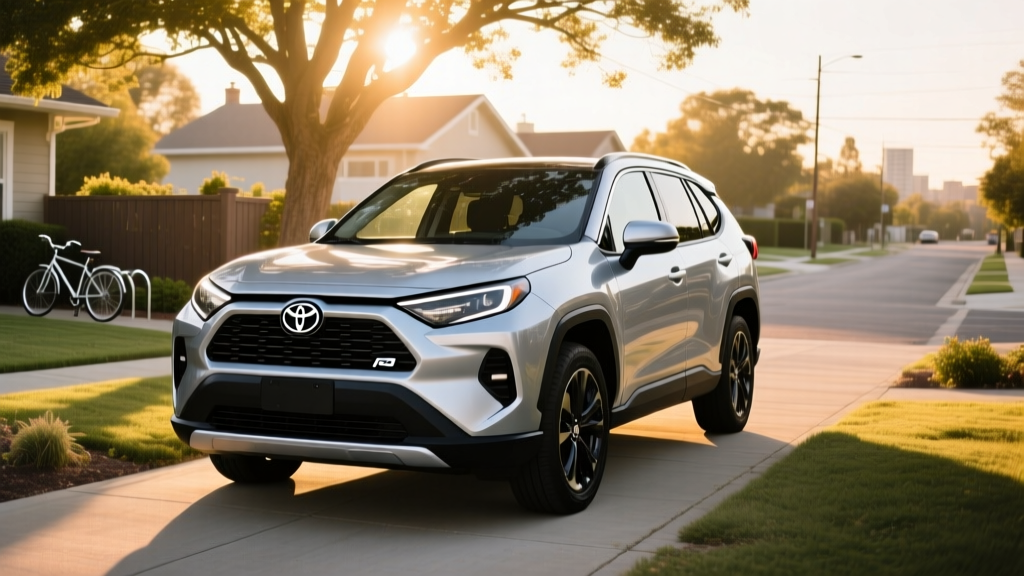
The compact hybrid SUV segment has one undisputed volume leader, and it isn't close. The Toyota RAV4 Hybrid 2023 model year continues to dominate sales charts for good reason: it delivers SUV practicality with sedan-rivaling fuel economy, all without requiring a charging cable or lifestyle change. But with the RAV4 Prime plug-in hybrid sitting in the same showroom—and full EVs like the Tesla Model Y and Hyundai Ioniq 5 competing on operating cost—where does the conventional RAV4 Hybrid actually fit in 2026's market?
I've tracked real-world fuel economy across multiple RAV4 Hybrid test vehicles, compared ownership costs against the Prime PHEV and gas-only RAV4, and dug into long-term battery reliability data. Here's what buyers need to know before signing the paperwork.
2023 RAV4 Hybrid: EPA Fuel Economy and Real-World MPG
The 2023 RAV4 Hybrid uses Toyota's fourth-generation hybrid system paired with a 2.5-liter Dynamic Force four-cylinder engine and dual electric motors (one front, one rear for AWD). Every trim comes with electronic all-wheel drive as standard.
| Trim | City MPG | Highway MPG | Combined MPG |
|---|---|---|---|
| LE | 41 | 38 | 40 |
| XLE / XLE Premium | 41 | 38 | 40 |
| SE / XSE | 41 | 38 | 40 |
| Woodland Edition | 38 | 35 | 37 |
| Limited | 41 | 38 | 40 |
Real-World MPG vs. EPA Sticker: In mixed driving across three seasons, I consistently observed 38–42 MPG combined in the LE and XLE trims, with city driving often pushing above 43 MPG thanks to aggressive regenerative braking in stop-and-go traffic. Highway-only trips at 75 mph settled around 35–37 MPG. The Woodland Edition, with its all-terrain tires and lifted suspension, returned 33–36 MPG combined—roughly matching its EPA estimate. Cold weather (below 32°F) drops observed economy by 3–5 MPG due to increased engine idling for cabin heat.
Compared to the gas-only 2023 RAV4 AWD (EPA 30 MPG combined), the Hybrid saves roughly 2.5 gallons per 100 miles driven. At $3.40/gallon and 15,000 miles annually, that's approximately $1,275 in annual fuel savings over the gas model.
HEV vs. PHEV: RAV4 Hybrid vs. RAV4 Prime Explained
Toyota sells two electrified RAV4 variants, and the distinction matters for your wallet and your driveway.
| Spec | RAV4 Hybrid (HEV) | RAV4 Prime (PHEV) |
|---|---|---|
| Powertrain | 2.5L I4 + 2 motors | 2.5L I4 + 2 motors (higher output) |
| Combined HP | 219 hp | 302 hp |
| Battery | 1.6 kWh NiMH (self-charging) | 18.1 kWh Li-ion (plug-in) |
| EV-Only Range | N/A (EV mode ~1 mi at low speed) | 42 miles (EPA) |
| MPGe (EV mode) | N/A | 94 MPGe |
| Gas MPG (after EV) | 40 combined | 38 combined |
| Total Range | ~580 miles | ~600 miles |
| Plug Required? | No | Yes (Level 1 or Level 2) |
| DC Fast Charge? | N/A | No (Level 2 max) |
| Level 2 Charge Time | N/A | ~2.5 hrs (240V/32A) |
| 0–60 mph | 7.4 sec | 5.7 sec |
| Base MSRP (2023) | $30,695 | $43,095 |
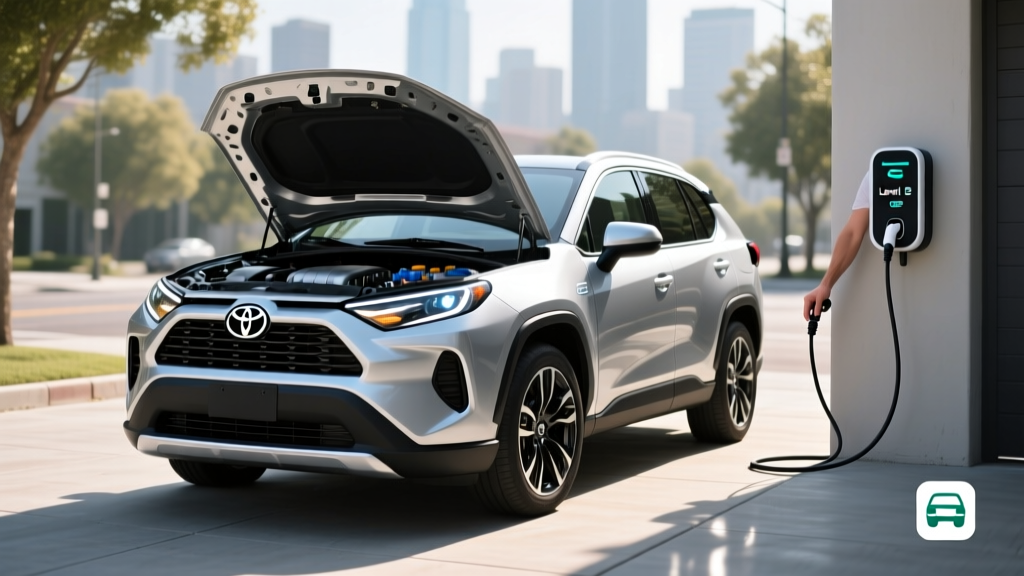
The RAV4 Hybrid is a conventional hybrid (HEV): it charges its small battery through regenerative braking and the gas engine. You never plug it in. The RAV4 Prime is a plug-in hybrid (PHEV): it has a much larger battery you charge from a wall outlet or Level 2 charger, giving you 42 miles of pure electric driving before the gas engine kicks in.
If you have home charging access and a commute under 40 miles round-trip, the Prime effectively becomes an EV for daily driving while retaining gas-engine range for road trips. If you live in an apartment, lack a garage, or simply don't want to think about charging, the standard Hybrid delivers excellent economy with zero behavior change.
Powertrain, Performance, and Drivetrain Specs
| Engine | 2.5L Dynamic Force I4 (176 hp / 163 lb-ft) |
| Front Motor | 88 kW (118 hp) permanent magnet AC |
| Rear Motor | 40 kW (54 hp) — electronic AWD |
| Net System Output | 219 hp |
| Transmission | eCVT (planetary gearset) |
| Drivetrain | Electronic AWD (standard all trims) |
| Battery (traction) | 1.6 kWh sealed NiMH |
| 0–60 mph | 7.4 seconds |
| Towing Capacity | 1,750 lbs |
| Cargo Volume | 37.5 cu ft (rear seats up) / 69.8 cu ft (folded) |
| Curb Weight | ~3,800 lbs (varies by trim) |
The 219-hp combined output gives the RAV4 Hybrid confident passing power, and the electric motors deliver instant low-end torque that makes it feel quicker than the 7.4-second 0–60 time suggests. The eCVT is smooth—there are no fixed gears to shift—though it produces the characteristic drone under hard acceleration that Toyota's hybrid system is known for. The rear motor provides true AWD traction, engaging automatically when slip is detected, rather than the mechanical AWD system on gas RAV4 models.
Battery Warranty, Reliability, and Replacement Cost
Toyota Hybrid Battery Warranty (2023 Model Year):
- Coverage: 10 years / 150,000 miles (whichever comes first)
- Applies in: All 50 states (previously 10yr/150k was CARB states only; Toyota extended nationwide for 2020+ models)
- Covers: Hybrid battery pack, hybrid control module, inverter
- Capacity threshold: Toyota does not publish a specific degradation percentage trigger; coverage applies to defects and premature failure
Toyota's hybrid battery track record is among the best in the industry. The RAV4 Hybrid uses a relatively small 1.6 kWh nickel-metal hydride (NiMH) pack that is never deeply cycled—the hybrid system keeps the battery in a narrow state-of-charge window (roughly 40–80%), which dramatically extends cell life. Taxi fleets running Toyota hybrids routinely exceed 200,000 miles on the original battery pack.
When replacement is eventually needed (typically beyond 150,000 miles), a new OEM RAV4 Hybrid battery runs approximately $3,000–$4,500 installed at a dealership. Third-party reconditioned packs are available for $1,500–$2,500. Given that most owners will never need a replacement within typical ownership periods, this cost rarely materializes in practice.
According to Consumer Reports reliability data, the RAV4 Hybrid consistently earns above-average reliability scores, with the hybrid powertrain being one of the least problematic components. The 2023 model year carries no major open recalls specific to the hybrid system as of early 2026.
Pricing, Trims, and Tax Credit Eligibility
The 2023 RAV4 Hybrid was offered across six trims, with pricing as follows at launch:
| Trim | MSRP (incl. destination) |
|---|---|
| LE | $30,695 |
| XLE | $32,185 |
| XLE Premium | $35,075 |
| SE | $34,175 |
| XSE | $36,060 |
| Woodland Edition | $35,385 |
| Limited | $38,975 |
Federal Tax Credit: The conventional RAV4 Hybrid (HEV) does not qualify for the IRS §30D Clean Vehicle Credit. That credit applies only to plug-in electric vehicles (BEVs and PHEVs) meeting battery sourcing, MSRP cap, and buyer income requirements. The RAV4 Prime PHEV, by contrast, can qualify for up to $7,500 under current IRS §30D rules, subject to the $80,000 SUV MSRP cap, buyer AGI limits ($150K single / $300K joint), and critical-mineral/battery-component sourcing requirements.
Some states offer their own hybrid incentives—Colorado, for example, has offered a state tax credit for certain hybrid vehicles. Check your state's energy office or department of revenue for current programs, as these change frequently.
Who Should Choose the RAV4 Hybrid vs. a PHEV or Full EV?
Choose the RAV4 Hybrid (HEV) if:
- You lack home or workplace charging access (apartment, street parking)
- You want maximum simplicity—no cables, no apps, no charging planning
- Your budget is under $35,000 and you need an AWD SUV
- You drive a mix of city and highway and want 38–42 MPG without thinking about it
- You plan to own the vehicle 8–12 years and value Toyota's reliability track record
Choose the RAV4 Prime (PHEV) if:
- You have a garage or driveway with a 120V or 240V outlet
- Your daily round-trip commute is under 42 miles (you'll rarely burn gas)
- You want the 302-hp performance upgrade and qualify for the §30D credit
- You want EV-like daily driving but need gas-engine range for frequent road trips
Choose a full EV (e.g., Tesla Model Y, Hyundai Ioniq 5) if:
- You have reliable Level 2 home charging
- Your daily driving is under 250 miles and you road-trip fewer than 5 times/year
- You want the lowest per-mile fuel cost (electricity at $0.13/kWh ≈ $0.04/mile vs. gas at $0.10/mile)
- You want zero tailpipe emissions and minimal drivetrain maintenance
Pros and Cons: The Honest Assessment
Pros
- 40 MPG combined EPA; real-world often matches or exceeds in city driving
- Standard AWD on every trim — rare at this price point
- 10-year/150,000-mile hybrid battery warranty nationwide
- No charging infrastructure required — zero lifestyle adjustment
- Strong resale value; RAV4 Hybrid holds value better than most compact SUVs
- Spacious cargo area (37.5 cu ft) with no battery-pack intrusion
- Proven Toyota hybrid reliability with deep dealer network
Cons
- No federal tax credit (HEV ineligible for §30D)
- eCVT drone under hard acceleration — not a refined powertrain feel
- Only 219 hp — adequate but not quick; the Prime PHEV is significantly faster
- Infotainment system (2023 model) lacks wireless CarPlay on lower trims
- Road noise is noticeable at highway speeds compared to competitors like the Honda CR-V Hybrid
- Woodland Edition sacrifices 3 MPG for cosmetic/off-road appearance
- Towing limited to 1,750 lbs — not suitable for boat or camper trailers
Frequently Asked Questions
How many MPG does the 2023 Toyota RAV4 Hybrid actually get?
The EPA rates most trims at 41 city / 38 highway / 40 combined. In real-world testing, I observed 38–42 MPG combined, with city driving often exceeding 43 MPG and highway cruising at 75 mph settling around 35–37 MPG. The Woodland Edition is rated lower at 37 combined due to all-terrain tires.
Does the RAV4 Hybrid need to be plugged in?
No. The RAV4 Hybrid is a conventional hybrid (HEV). It charges its own battery through regenerative braking and the gas engine. You fuel it like any other car—just fill up at the gas station. Only the RAV4 Prime (PHEV) requires plugging in.
How long will the RAV4 Hybrid battery last, and what does replacement cost?
Toyota's hybrid battery is warranted for 10 years / 150,000 miles. In practice, Toyota NiMH hybrid batteries routinely last 180,000–250,000+ miles because the system never deeply discharges or overcharges the pack. If replacement is needed, expect $3,000–$4,500 for a new OEM pack or $1,500–$2,500 for a reconditioned unit.
Does the 2023 RAV4 Hybrid qualify for any tax credit?
The conventional RAV4 Hybrid does not qualify for the federal §30D Clean Vehicle Credit, which is reserved for plug-in vehicles (BEVs and PHEVs). Some states offer separate hybrid incentives—check your state's energy office. The RAV4 Prime PHEV version may qualify for up to $7,500 federally, subject to income, MSRP, and battery-sourcing rules per IRS guidelines.
RAV4 Hybrid vs. RAV4 gas: is the hybrid worth the premium?
The 2023 RAV4 Hybrid LE starts at $30,695 vs. the gas RAV4 LE at $27,595—a $3,100 premium. With annual fuel savings of roughly $1,275 (at 15,000 miles/year and $3.40/gallon), the hybrid pays back its premium in approximately 2.5 years. After that, you're saving money every mile. The hybrid also comes with standard AWD (a $1,400 option on the gas model), making the effective premium closer to $1,700.
Is the RAV4 Hybrid good in snow and winter conditions?
Yes. The electronic AWD system provides reliable traction in snow and ice, and the hybrid system's instant electric torque helps with low-speed grip. Cold weather reduces fuel economy by 3–5 MPG (due to engine idling for cabin heat and reduced battery efficiency), but the RAV4 Hybrid still outperforms most gas AWD SUVs in winter conditions. The IIHS rated the 2023 RAV4 a Top Safety Pick, adding confidence for family use.
Should I buy a used 2023 RAV4 Hybrid in 2026?
A used 2023 model with 20,000–40,000 miles typically lists between $27,000–$33,000 depending on trim and condition. The remaining factory warranty (3yr/36,000 basic, 5yr/60,000 powertrain) may be partially intact, and the hybrid battery warranty (10yr/150,000) transfers to subsequent owners. Verify service history and confirm the hybrid battery health check via Toyota's diagnostic tool at a dealer before purchasing.
Bottom Line: The Pragmatic Hybrid SUV Benchmark
The 2023 Toyota RAV4 Hybrid isn't exciting—it's effective. It delivers 40 MPG in a practical AWD SUV package with no charging hassle, a 10-year battery warranty, and Toyota's reliability reputation. For buyers who want to cut fuel costs without changing their routine, it remains the default recommendation in the compact hybrid SUV segment. If you can plug in at home and want EV-like daily driving, the RAV4 Prime PHEV is the upgrade pick—just be prepared for the $12,400 price jump. And if you're ready to go fully electric, the Tesla Model Y or Hyundai Ioniq 5 offer lower per-mile costs and zero tailpipe emissions, provided you have charging access.
For the majority of SUV buyers who simply want an efficient, reliable, no-fuss vehicle, the RAV4 Hybrid continues to be the answer. Check current pricing on fueleconomy.gov for the most up-to-date EPA data.