Quick Verdict: The Sporty Hybrid Crossover That Delivers Where It Counts
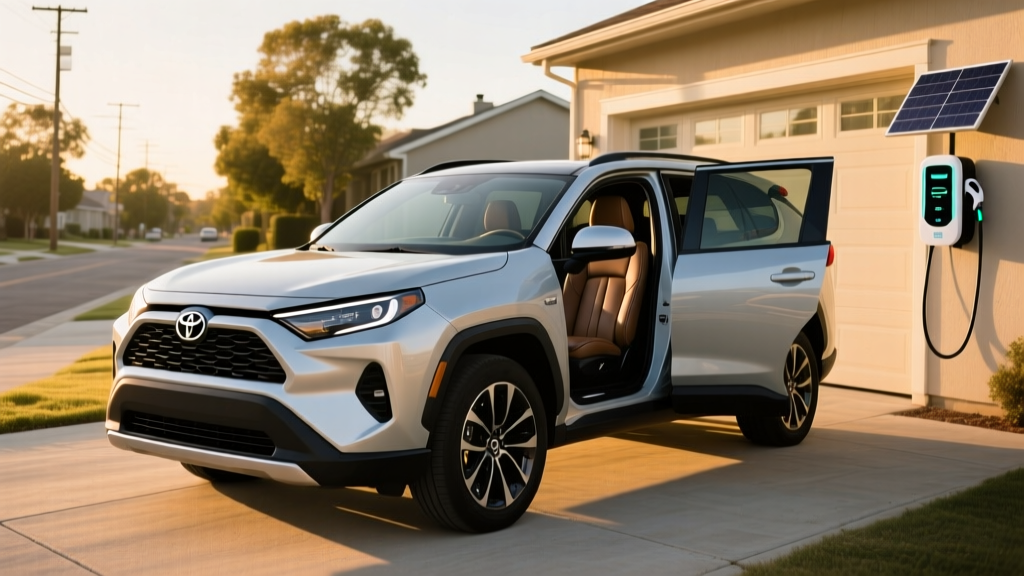
The 2023 Toyota RAV4 Hybrid XSE sits in a sweet spot that few compact SUVs occupy: genuine fuel economy without sacrificing the sporty aesthetic or all-wheel-drive capability. With an EPA-rated 41 MPG city / 38 MPG highway / 39 MPG combined, a 219-horsepower hybrid powertrain, and Toyota's proven hybrid reliability, the XSE trim appeals to buyers who want the look and feel of a performance SUV without the fuel bill to match.
As a conventional hybrid (HEV), the RAV4 Hybrid XSE requires no plug-in charging — it generates electricity through regenerative braking and its gasoline engine. This makes it fundamentally different from the RAV4 Prime plug-in hybrid (PHEV), which we'll distinguish clearly below. For 2026 buyers shopping the used or remaining new-inventory market, this model remains one of the most compelling hybrid crossovers available.
| Specification | Value |
|---|---|
| Powertrain | 2.5L 4-cylinder + 3 electric motors (AWD) |
| Combined Horsepower | 219 hp |
| EPA Fuel Economy | 41 city / 38 highway / 39 combined MPG |
| Fuel Tank Capacity | 14.5 gallons |
| Total Range | ~565 miles |
| 0–60 mph | 7.4 seconds (est.) |
| Drivetrain | Electronic On-Demand AWD (eAWD) |
| Cargo Volume | 37.6 cu ft (rear seats up) / 69.8 cu ft (folded) |
| Hybrid Battery | 1.6 kWh nickel-metal hydride (NiMH) |
| Hybrid Battery Warranty | 10 years / 150,000 miles |
| Base MSRP (2023 XSE) | $34,315 (excluding destination) |
Fuel Economy: EPA Numbers vs. Real-World MPG
The EPA rates the 2023 RAV4 Hybrid XSE at 41 MPG city, 38 MPG highway, and 39 MPG combined. These figures come directly from fueleconomy.gov and apply to all RAV4 Hybrid trims equipped with electronic AWD.
| Driving Condition | EPA MPG | Real-World Expectation |
|---|---|---|
| City | 41 MPG | 42–45 MPG (hybrids excel in stop-and-go) |
| Highway | 38 MPG | 35–38 MPG (sustained high speed reduces regen benefit) |
| Combined | 39 MPG | 38–42 MPG (depends on driving mix) |
| Cold Weather (below 35°F) | — | 34–37 MPG (engine runs more for cabin heat) |
Toyota's hybrid system thrives in city driving, where regenerative braking recaptures energy at every stop and the electric motor handles low-speed acceleration. Many owners report exceeding the EPA city estimate by 3–4 MPG in warm-weather urban commuting. Highway driving tells a different story: at sustained 75+ mph speeds, the gasoline engine carries most of the load, and aerodynamic drag erodes efficiency. Expect highway MPG to dip to 35–36 on flat interstate runs and potentially lower in hilly terrain or high winds.
Cold weather impacts all hybrids. Below 35°F, the engine runs more frequently to generate cabin heat and maintain battery temperature, reducing fuel economy by roughly 10–15%. Owners in northern climates should budget for 34–37 MPG combined during winter months.
Powertrain Deep Dive: How the 219-HP Hybrid System Works
The RAV4 Hybrid XSE pairs a 2.5-liter Dynamic Force 4-cylinder engine (176 hp, 163 lb-ft torque on its own) with three electric motor-generators — two driving the front wheels and one powering the rear axle through Toyota's electronic on-demand AWD system. Combined system output is 219 horsepower.
The rear electric motor activates automatically when the system detects front-wheel slip, during hard acceleration, or in low-traction conditions. Unlike mechanical AWD systems with a driveshaft, this setup adds minimal weight and imposes no efficiency penalty during normal cruising. The trade-off is that the rear motor provides limited torque — it's designed for traction assistance, not off-road crawling.
The hybrid battery pack is a 1.6 kWh nickel-metal hydride (NiMH) unit mounted beneath the rear seats. This is a small battery by EV standards — it exists to buffer energy between the engine, regenerative braking, and the electric motors, not to provide standalone electric driving range. The RAV4 Hybrid can operate on electric power alone for roughly 0.5–1 mile at low speeds (under 25 mph), but this is incidental, not a design feature you should plan around.
Acceleration to 60 mph takes approximately 7.4 seconds — competitive with turbocharged rivals and noticeably quicker than the non-hybrid RAV4 LE's 8.1-second estimate. The XSE trim's sport-tuned suspension adds firmer damping and a slightly lower ride height compared to other RAV4 Hybrid trims, though the difference is subtle. You'll feel it more on winding roads than on potholed city streets.
HEV vs. PHEV: RAV4 Hybrid vs. RAV4 Prime
Toyota offers the RAV4 in two electrified flavors, and confusing them is one of the most common buyer mistakes in this segment. Here's the clear distinction:
| Feature | RAV4 Hybrid (HEV) | RAV4 Prime (PHEV) |
|---|---|---|
| Plug-in Charging Required? | No — self-charging via engine + regen | Yes — plug in for full electric range |
| Battery Size | 1.6 kWh (NiMH) | 18.1 kWh (lithium-ion) |
| Electric-Only Range | ~0.5 mi at low speed | 42 miles (EPA) |
| Combined Horsepower | 219 hp | 302 hp |
| 0–60 mph | ~7.4 seconds | ~5.7 seconds |
| Fuel Economy (gas mode) | 39 MPG combined | 38 MPG combined (after battery depleted) |
| MPGe (electric + gas) | N/A | 94 MPGe combined |
| DC Fast Charging | N/A | No — Level 2 AC only (~2.5 hours) |
| Federal Tax Credit (§30D) | Not eligible | Up to $7,500 (subject to eligibility rules) |
| Base MSRP (2023) | From ~$31,345 | From ~$43,090 |
The RAV4 Prime (PHEV) is the clear choice if you have home charging access and a commute under 42 miles — you could drive months without visiting a gas station. However, it commands a $12,000+ premium, and availability has been constrained since launch. The standard RAV4 Hybrid is the pragmatic pick for buyers who lack reliable charging access, drive longer distances, or simply want a lower purchase price with strong fuel economy.
Battery Longevity, Warranty, and Replacement Cost
Hybrid battery anxiety is understandable but largely misplaced for Toyota's system. Toyota covers the hybrid battery in the 2023 RAV4 Hybrid for 10 years or 150,000 miles (whichever comes first), one of the strongest hybrid battery warranties in the industry. This applies to the original owner and is transferable to subsequent owners.
Hybrid Battery Coverage — 2023 RAV4 Hybrid
- Warranty Period: 10 years / 150,000 miles
- Coverage: Defects, capacity loss below threshold, hybrid system components
- Also Covered: Hybrid control module, inverter, electric motors (8 yr / 100,000 mi)
- Transferable: Yes, to subsequent owners
In practice, Toyota's NiMH hybrid batteries have proven remarkably durable. Data from long-term fleet usage and owner reports suggest that RAV4 Hybrid batteries commonly reach 150,000–200,000 miles before significant degradation. The 1.6 kWh pack is small and operates within a conservative state-of-charge window (roughly 40–80%), which minimizes stress on the cells. Toyota has been refining this hybrid architecture since the 1997 Prius — the engineering maturity shows.
If replacement is needed out of warranty, a new OEM hybrid battery pack for the RAV4 Hybrid costs approximately $3,000–$4,000 installed at a dealership. Third-party refurbished packs are available for $1,500–$2,500 installed. For context, this is far less than a full EV battery replacement and comparable to a major engine repair on a conventional vehicle.
Pricing, Trims, and Tax Credit Eligibility
The 2023 Toyota RAV4 Hybrid XSE carried a base MSRP of $34,315 (plus $1,335 destination charge). Key XSE-standard features include SofTex-trimmed seats, a 9-inch touchscreen with wireless Apple CarPlay and Android Auto, a 7-inch digital driver display, LED headlights and taillights, 18-inch black alloy wheels, and Toyota Safety Sense 2.5+ (adaptive cruise control, lane-keeping assist, automatic emergency braking, blind-spot monitoring).
Options that push the price higher include the Premium Package (panoramic glass roof, JBL audio, heated/ventilated front seats, wireless charging pad) at roughly $2,815, and standalone additions like roof rack cross bars or mudguards.
Federal tax credit status: The conventional RAV4 Hybrid (HEV) does not qualify for the IRS §30D Clean Vehicle Credit. That credit applies only to plug-in electric vehicles (BEVs and PHEVs) meeting battery sourcing, MSRP, and buyer income requirements. The RAV4 Prime (PHEV) may qualify for up to $7,500, but eligibility depends on current-year critical mineral and battery component sourcing rules, buyer adjusted gross income limits ($150K single / $300K joint), and the $80,000 SUV MSRP cap. Always verify current rules at IRS.gov or consult a tax professional before relying on credit estimates.
Some states offer additional rebates for hybrids — check your state's energy office or Alternative Fuels Data Center for local incentive availability, as these vary widely by jurisdiction and change frequently.
Who Should Choose the RAV4 Hybrid XSE — And Who Shouldn't
Pros
- 39 MPG combined — exceptional for an AWD compact SUV
- No plug-in charging required — works with any lifestyle
- 219 hp with smooth, linear acceleration
- Toyota's industry-leading hybrid reliability record
- 10-year / 150,000-mile hybrid battery warranty
- Sporty XSE styling without a performance fuel penalty
- Standard Toyota Safety Sense 2.5+ ADAS suite
Cons
- No meaningful electric-only driving range
- Not eligible for federal §30D tax credit
- XSE sport suspension slightly firmer than some buyers prefer
- Engine noise noticeable under hard acceleration (CVT drone)
- No DC fast charging (N/A for HEV, but worth noting vs. PHEV/EV)
- Cargo space marginally reduced vs. non-hybrid (battery packaging)
Choose the RAV4 Hybrid XSE If:
- You lack home or workplace charging access and can't reliably plug in
- Your daily driving exceeds 40 miles and you want consistent efficiency without range planning
- You want AWD capability for snow or rain without a fuel-economy penalty
- You prioritize long-term reliability and low maintenance costs
- You want a sporty appearance without paying for a performance powertrain
Choose the RAV4 Prime (PHEV) Instead If:
- You have Level 2 home charging and a commute under 42 miles
- You want 302 hp and 5.7-second 0–60 performance
- You can absorb the higher upfront cost and want potential §30D tax credit eligibility
Choose a Full EV Instead If:
- You have reliable home charging and want zero tailpipe emissions
- Your daily driving is under 250 miles and you want minimal maintenance
- You want to maximize federal and state incentive eligibility
Real-World Ownership: What to Expect After the Dealership
Beyond the spec sheet, the 2023 RAV4 Hybrid XSE delivers a ownership experience defined by low running costs and minimal surprises. At 39 MPG combined and roughly $3.40/gallon (2026 national average for regular unleaded), you're looking at approximately $0.087 per mile in fuel costs — compared to $0.14–$0.16 per mile for a comparable non-hybrid AWD compact SUV getting 25–28 MPG combined.
Over 15,000 miles per year, that translates to roughly $1,300 in annual fuel costs versus $2,100–$2,400 for a gas-only competitor. Over a 5-year ownership period, the hybrid saves approximately $4,000–$5,500 in fuel alone — enough to offset most of the hybrid premium over a base RAV4 LE AWD.
Maintenance costs are also favorable. The hybrid system eliminates the traditional starter motor and alternator (the motor-generators handle those functions), and regenerative braking significantly extends brake pad life — many owners report original brake pads lasting 80,000+ miles. Toyota recommends standard intervals: oil changes every 10,000 miles, cabin air filter every 15,000–30,000 miles, and hybrid system coolant inspection at 100,000 miles.
Insurance premiums for the RAV4 Hybrid XSE are typically 5–10% higher than the non-hybrid equivalent, reflecting the higher replacement cost of hybrid components. Shop quotes before purchase — the spread varies significantly by insurer and state.
Frequently Asked Questions
How many MPG does the 2023 RAV4 Hybrid XSE actually get?
The EPA rates it at 41 city / 38 highway / 39 combined MPG. In real-world driving, expect 42–45 MPG in warm-weather city conditions, 35–38 MPG on the highway, and 34–37 MPG combined in cold weather. Your results will vary based on driving style, terrain, and climate.
Does the RAV4 Hybrid need to be plugged in?
No. The RAV4 Hybrid is a conventional hybrid (HEV), not a plug-in hybrid. It charges its own small battery through regenerative braking and the gasoline engine. You simply fill it with gas like any other vehicle. If you want plug-in capability with electric-only range, look at the RAV4 Prime (PHEV).
Is the hybrid battery reliable and what does replacement cost?
Toyota's hybrid batteries have an excellent longevity record, commonly lasting 150,000–200,000 miles. The 2023 RAV4 Hybrid battery is covered by a 10-year / 150,000-mile warranty. Out-of-warranty replacement costs approximately $3,000–$4,000 for a new OEM pack or $1,500–$2,500 for a refurbished unit.
Does the RAV4 Hybrid qualify for any federal tax credit?
No. The conventional RAV4 Hybrid (HEV) is not eligible for the IRS §30D Clean Vehicle Credit, which applies only to plug-in vehicles (BEVs and PHEVs). The RAV4 Prime PHEV may qualify for up to $7,500, subject to income limits, MSRP caps, and battery sourcing requirements. Check current rules at IRS.gov.
How does the RAV4 Hybrid XSE compare to the RAV4 Prime?
The Prime offers 42 miles of electric-only range, 302 hp, and potential tax credit eligibility — but costs $12,000+ more and requires plug-in charging access. The Hybrid XSE delivers 39 MPG combined without any plug-in requirement, at a significantly lower price. Choose the Prime if you can charge at home and want electric commuting; choose the Hybrid if you want simplicity and lower upfront cost.
What's the difference between the XSE and other RAV4 Hybrid trims?
The XSE adds sport-tuned suspension, 18-inch black alloy wheels, SofTex-trimmed seats, a black roof (two-tone paint), and unique interior stitching compared to the XLE. Mechanically, all RAV4 Hybrid trims share the same 219-hp powertrain and 39 MPG combined rating. The XSE is a styling and handling package, not a performance upgrade.
Can the RAV4 Hybrid XSE tow?
Yes. The 2023 RAV4 Hybrid is rated to tow up to 1,750 pounds when properly equipped — adequate for a small utility trailer or a pair of dirt bikes, but not for a boat or camper. Towing will reduce fuel economy significantly, likely into the low 30s or high 20s MPG depending on load and terrain.