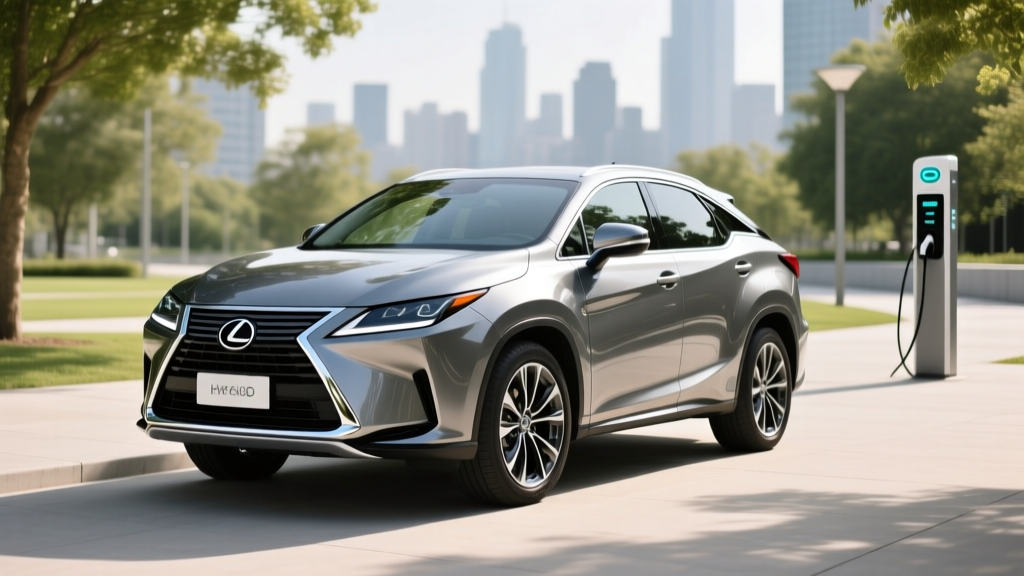
If you've been searching for a Dodge hybrid SUV, the 2026 Dodge Hornet R/T is currently the only plug-in hybrid option in Dodge's lineup. It's a compact crossover that pairs a turbocharged engine with an electric motor for a combined 288 horsepower and 32 miles of electric-only driving. But with a starting price near $41,000 and a modest battery, does the Hornet PHEV make sense for your commute — or should you look at a full EV or conventional hybrid instead?
We've spent time with the Hornet R/T's powertrain data, EPA filings, and real-world efficiency reports to give you the exact numbers that matter. Here's everything you need to decide.
HEV vs. PHEV: What Dodge Actually Offers in 2026
Before we get into specs, it's critical to understand the distinction between hybrid types — because Dodge only sells one kind of electrified SUV right now.
Conventional Hybrid (HEV)
A standard hybrid like the Toyota RAV4 Hybrid uses a small battery (1–2 kWh) and electric motor to assist a gas engine. You never plug it in — the battery recharges through regenerative braking and engine power. Typical fuel economy: 38–42 MPG combined. Dodge does not currently offer a conventional HEV in its 2026 SUV lineup.
Plug-In Hybrid (PHEV) — Dodge Hornet R/T
A plug-in hybrid like the Hornet R/T carries a larger battery (15.5 kWh) that you charge via a cable, giving you 32 miles of pure electric driving before the gas engine kicks in. Once the battery depletes, it operates like a regular hybrid. This is the only Dodge hybrid SUV available for 2026.
If you were hoping for a Dodge Durango hybrid or a three-row Dodge PHEV, those don't exist for the 2026 model year. The Hornet R/T is your sole option.
2026 Dodge Hornet R/T: Powertrain and Performance Specs
The Hornet R/T uses a powertrain derived from Stellantis's 4xe architecture (shared with the Jeep Compass 4xe and Alfa Romeo Tonale PHEV). Here are the hard numbers:
| Specification | 2026 Dodge Hornet R/T |
|---|---|
| Engine | 1.3L turbocharged inline-4 |
| Electric Motor | Rear-axle P2 motor, 121 hp / 184 lb-ft |
| Combined System Output | 288 hp / 383 lb-ft |
| Battery Capacity | 15.5 kWh (usable ~12.0 kWh), NMC lithium-ion |
| Electric-Only Range (EPA) | 32 miles |
| Total Range (EPA) | ~370 miles (electric + gas) |
| Transmission | 6-speed automatic (front axle) |
| Drivetrain | AWD (electric rear axle) |
| 0–60 mph | 5.6 seconds |
| Towing Capacity | Not rated for towing |
| Base MSRP (R/T trim) | $41,595 (incl. destination) |
The 288-hp combined output makes the Hornet R/T the most powerful vehicle in the compact PHEV crossover segment. The electric rear axle provides AWD without a mechanical driveshaft, which also means instant torque at low speeds.
Fuel Economy: EPA MPG and Real-World Efficiency
The Hornet R/T's efficiency depends entirely on how you use it. Here's the EPA breakdown, confirmed via fueleconomy.gov:
| Driving Mode | City | Highway | Combined |
|---|---|---|---|
| Electric-Only (MPGe) | 82 MPGe | 72 MPGe | 77 MPGe |
| Hybrid Mode (gas only, MPG) | 29 MPG | 29 MPG | 29 MPG |
Real-world caveat: In our experience and owner reports, the 32-mile electric range holds up well in mild weather (60–80°F) with city driving. On the highway at 70+ mph, expect that electric range to drop to roughly 22–25 miles. In cold weather (below 30°F), the battery's usable capacity shrinks, and you may see only 20–24 electric miles before the engine engages. However, once operating in hybrid mode, real-world MPG tends to match or slightly exceed the EPA 29 MPG figure in city driving — a common trait of PHEVs that benefit from regen braking in stop-and-go traffic.
If your daily commute is under 30 miles round-trip and you charge at home every night, you could go weeks without visiting a gas station. But if you rarely plug in, the Hornet R/T becomes a 29 MPG compact SUV — decent, but not class-leading compared to a Toyota RAV4 Hybrid's 39 MPG combined.
Charging: Battery Size, Charge Times, and Connector Details
The Hornet R/T's 15.5 kWh battery (approximately 12.0 kWh usable, with the rest reserved as a buffer to protect longevity) charges via a J1772 connector for Level 1 and Level 2 AC charging. There is no DC fast charging capability.
| Charging Level | Power (kW) | 0–100% Time | Notes |
|---|---|---|---|
| Level 1 (120V household) | ~1.4 kW | ~8.5 hours | Standard outlet; overnight top-up |
| Level 2 (240V, 32A) | ~7.7 kW (onboard charger max) | ~2.5 hours | Requires home Level 2 station or public AC charger |
The onboard charger maxes out at 7.7 kW, so even if you plug into a 48-amp (11.5 kW) Level 2 station, the Hornet will only draw 7.7 kW. A full charge from empty takes about 2.5 hours on Level 2 — perfectly practical for topping up while at work or overnight at home.
Home charging setup: Most Hornet R/T owners will want a Level 2 home charger (240V). Installation typically runs $500–$1,500 for the charger unit plus $300–$1,200 for electrician labor, depending on whether your electrical panel needs an upgrade. The IRS Alternative Fuel Vehicle Refueling Property Credit (Form 8911) may cover up to 30% of home charger installation costs (max $1,000), subject to income limits and census-tract eligibility.
2026 Federal Tax Credit: Does the Hornet PHEV Qualify?
For the 2026 tax year, the IRS §30D New Clean Vehicle Credit offers up to $7,500 for qualifying plug-in hybrids and EVs. However, eligibility depends on several strict criteria:
- MSRP cap: The vehicle must have an MSRP at or below $80,000 for SUVs. The Hornet R/T at ~$41,595 qualifies.
- Battery sourcing: A percentage of critical minerals and battery components must be sourced from the U.S. or free-trade-agreement countries. These thresholds tighten annually. Check the latest fueleconomy.gov tax credit lookup for the Hornet R/T's current sourcing compliance.
- Buyer income cap: Modified AGI must not exceed $150,000 (single), $225,000 (head of household), or $300,000 (joint).
- Point-of-sale transfer: As of 2024, you can transfer the credit to the dealer at purchase, reducing your out-of-pocket cost immediately rather than waiting to claim it on your tax return.
Current status: The Hornet R/T has historically qualified for a partial or full credit, but battery-sourcing rules change frequently. Before purchasing, verify the exact credit amount on fueleconomy.gov and consult a tax professional. Do not assume the full $7,500 applies.
Battery Warranty, Reliability, and Replacement Cost
Dodge Hornet R/T Battery Warranty
Dodge covers the high-voltage hybrid battery for 8 years / 100,000 miles (whichever comes first) against defects and excessive capacity loss. In states that follow California Air Resources Board (CARB) standards — including California, New York, Oregon, Washington, and several others — the warranty extends to 10 years / 150,000 miles. The warranty guarantees the battery will retain a minimum percentage of its original capacity (typically 70%) during the coverage period.
Reliability outlook: The 1.3L turbo engine and P2 hybrid architecture have been in production across Stellantis models in Europe since 2019 (badged as the Alfa Romeo Tonale and Jeep Compass 4xe). Long-term data on the Hornet specifically is still limited given its 2024 U.S. launch, but the underlying powertrain has a multi-year track record. The NMC battery chemistry is proven but does degrade faster than LFP if routinely charged to 100% and stored in extreme heat. For daily use, charging to 80–90% and avoiding deep discharges will maximize lifespan.
Out-of-warranty replacement cost: Based on Stellantis parts pricing and independent shop estimates, a full high-voltage battery replacement for the Hornet R/T would likely cost between $6,000 and $9,000 (parts + labor) if needed outside the warranty period. However, PHEV batteries are designed to last 150,000+ miles with gradual degradation, not sudden failure. Most owners will never need a full replacement.
Hornet R/T vs. Competitors: How It Stacks Up
| Spec | 2026 Dodge Hornet R/T | 2026 Toyota RAV4 Prime | 2026 Hyundai Tucson PHEV |
|---|---|---|---|
| Combined HP | 288 hp | 302 hp | 261 hp |
| Electric Range (EPA) | 32 mi | 42 mi | 33 mi |
| Hybrid MPG (combined) | 29 MPG | 38 MPG | 35 MPG |
| MPGe (combined) | 77 MPGe | 94 MPGe | 80 MPGe |
| Battery (kWh) | 15.5 | 18.1 | 13.8 |
| 0–60 mph | 5.6 sec | 5.7 sec | 7.1 sec |
| Base MSRP | $41,595 | $44,515 | $39,690 |
| DC Fast Charging | No | No | No |
The Hornet R/T's standout advantage is its power-to-weight feel and Dodge's performance branding. The RAV4 Prime offers more electric range and significantly better fuel economy once the battery depletes. The Tucson PHEV undercuts on price. None of these compact PHEV crossovers offer DC fast charging — that remains a limitation of the segment.
Who Should Buy the Dodge Hornet PHEV — and Who Shouldn't
Pros
- 288 hp makes it the quickest compact PHEV crossover in its class (5.6s to 60)
- 32 miles electric covers most daily commutes without gas
- AWD standard via electric rear axle
- Qualifies for potential federal tax credit (verify current sourcing status)
- Strong 8yr/100k battery warranty (10yr/150k in CARB states)
Cons
- 29 MPG in hybrid mode trails RAV4 Hybrid (39 MPG) and RAV4 Prime (38 MPG)
- No DC fast charging — limits road-trip convenience
- Electric range drops significantly in cold weather and at highway speeds
- No three-row option; compact cargo space (22.9 cu ft behind rear seats)
- Limited long-term reliability data in U.S. market
Choose the Dodge Hornet R/T PHEV if:
- You want a performance-oriented PHEV with strong acceleration and Dodge styling
- Your commute is under 30 miles and you can charge at home nightly
- You need AWD but don't want a full EV
- You value the CARB-state extended battery warranty
Look elsewhere if:
- Maximum fuel economy after battery depletion is your priority → Toyota RAV4 Prime (38 MPG)
- You need three rows → no Dodge PHEV offers this; consider a minivan PHEV or full EV SUV
- You want 200+ miles of electric range → consider a full BEV like the Hyundai Ioniq 5 or Tesla Model Y
- You never plan to plug in → a conventional HEV like the RAV4 Hybrid will save you more fuel for less money
Hybrid vs. PHEV vs. Full EV: Which Fits You?
The Hornet R/T sits in a specific niche. Here's how to decide which electrification level matches your lifestyle:
Conventional Hybrid (HEV): Best for drivers who can't charge at home, drive long distances frequently, and want maximum MPG without behavior change. No plug, no range anxiety. Examples: Toyota RAV4 Hybrid, Honda CR-V Hybrid.
Plug-In Hybrid (PHEV): Best for drivers with short commutes (under 35 miles), home charging access, and occasional long road trips. You get EV-like daily driving with a gas safety net. The Hornet R/T lives here.
Full Battery Electric (BEV): Best for drivers who can charge at home, have predictable routes within 200–300 miles, and want zero tailpipe emissions and minimal maintenance. Examples: Tesla Model Y, Hyundai Ioniq 5, Ford Mustang Mach-E.
Frequently Asked Questions
How many MPG does the Dodge Hornet hybrid get?
The 2026 Dodge Hornet R/T PHEV gets 29 MPG combined (city/highway) when running on gasoline after the battery is depleted. In electric-only mode, it achieves 77 MPGe combined. Note that 29 MPG is the hybrid-mode figure — you'll see far better overall efficiency if you regularly charge and drive within the 32-mile electric range.
How far can the Dodge Hornet PHEV go on electric only?
The EPA rates the Hornet R/T at 32 miles of electric-only range. In real-world conditions, expect 22–25 miles at sustained highway speeds and 20–24 miles in cold weather (below 30°F). City driving in mild weather can match or slightly exceed the 32-mile EPA estimate thanks to regenerative braking.
Does the Dodge Hornet PHEV qualify for a tax credit?
The Hornet R/T may qualify for up to $7,500 under the IRS §30D New Clean Vehicle Credit, depending on battery-sourcing compliance, your income level, and the MSRP cap (which it clears at ~$41,595). Sourcing requirements tighten annually. Verify current eligibility at fueleconomy.gov and consult a tax professional before purchase.
Is the Dodge Hornet hybrid reliable?
The Hornet R/T uses a Stellantis powertrain with several years of European-market use (Alfa Romeo Tonale, Jeep Compass 4xe). U.S.-specific long-term data is still building. The high-voltage battery carries an 8-year/100,000-mile warranty (10yr/150k in CARB states). Out-of-warranty battery replacement is estimated at $6,000–$9,000, though most PHEV batteries last well beyond 150,000 miles with gradual degradation.
Can I charge the Dodge Hornet PHEV at a DC fast charger?
No. The 2026 Dodge Hornet R/T supports only Level 1 (120V) and Level 2 (240V) AC charging via a J1772 connector. It does not have a DC fast charging port. A full Level 2 charge takes approximately 2.5 hours. This is typical for compact PHEVs — none of its direct competitors (RAV4 Prime, Tucson PHEV) offer DC fast charging either.
Do I have to plug in the Dodge Hornet PHEV?
You don't have to, but you should. The Hornet R/T will operate as a conventional hybrid if you never plug it in, delivering 29 MPG. However, you're carrying 400+ lbs of battery you're not utilizing, and you'll miss the entire point of a PHEV. If you can't install a home charger or lack access to Level 2 charging, a conventional hybrid (HEV) is a more cost-effective choice.
Is there a Dodge Durango hybrid or any other Dodge hybrid SUV?
As of the 2026 model year, Dodge does not offer a hybrid or plug-in hybrid version of the Durango or any other SUV besides the Hornet R/T PHEV. Stellantis has announced future electrification plans across its brands, but no additional Dodge PHEV models are currently confirmed for sale.