Quick Verdict: The 782-HP Plug-In That Defies Its Weight
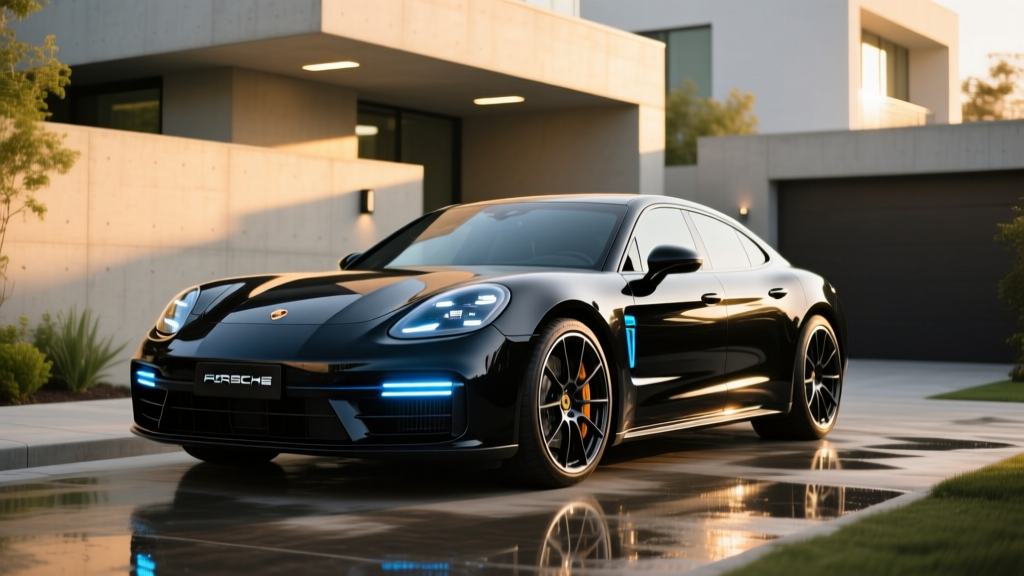
The 2026 Porsche Panamera Turbo S E-Hybrid is the most powerful Panamera Porsche has ever built, and it arrives with a plug. Combining a twin-turbocharged 4.0-liter V8 with an upgraded electric motor integrated into the eight-speed PDK transmission, this flagship PHEV produces a combined 782 horsepower and 738 lb-ft of torque. It rockets to 60 mph in 2.7 seconds — figures that embarrass dedicated sports cars, let alone a 5,400-pound luxury sedan.
But the Panamera Turbo S E-Hybrid isn't just about performance. The 2026 model year carries over the significantly upgraded 25.9 kWh (gross) battery pack introduced with the current generation, delivering an EPA-estimated 34 miles of electric-only range and a total combined range exceeding 430 miles. For a vehicle in this performance bracket, that electric range is genuinely usable for daily commuting — if you can charge at home.
This review breaks down the real-world efficiency, charging logistics, powertrain engineering, tax-credit eligibility, and ownership calculus of Porsche's electrified flagship.
| Spec | Value |
|---|---|
| Powertrain | 4.0L Twin-Turbo V8 + Electric Motor (PHEV) |
| Combined Horsepower | 782 HP |
| Combined Torque | 738 lb-ft |
| 0–60 mph | 2.7 seconds |
| Top Speed | 201 mph |
| Battery (Gross / Usable) | 25.9 kWh / ~21.5 kWh |
| EPA Electric-Only Range | 34 miles |
| EPA Combined Range (Gas + Electric) | ~430 miles |
| EPA MPGe (Electric + Gas) | 48 MPGe |
| EPA MPG (Charge-Sustaining) | 22 city / 27 hwy / 24 combined |
| Level 2 Charge Time (0–100%) | ~2.5 hours at 9.6 kW |
| DC Fast Charging | Not available |
| Drivetrain | All-Wheel Drive (AWD) |
| Base MSRP | $199,900 |
| Federal §30D Tax Credit | Not eligible (MSRP cap: $55,000 sedans) |
| Hybrid Battery Warranty | 8 years / 100,000 miles |
HEV vs PHEV: Where the Panamera Turbo S E-Hybrid Fits
Before evaluating this car's efficiency, it's essential to distinguish between conventional hybrids and plug-in hybrids — because the ownership experience differs dramatically.
| Feature | Conventional Hybrid (HEV) | Plug-In Hybrid (PHEV) |
|---|---|---|
| Plug-in charging | No — regenerative braking only | Yes — Level 1/Level 2 AC charging |
| Battery size | 1–2 kWh | 10–40+ kWh |
| Electric-only range | 0–2 miles (low speed only) | 20–50+ miles at highway speeds |
| Gas engine | Always available to assist | Activates when battery depletes or under heavy load |
| Best for | Drivers without home charging | Drivers who can charge nightly at home |
| Fuel savings | Moderate (10–30% vs gas) | High (50–80% less gas if charged daily) |
The Panamera Turbo S E-Hybrid is a plug-in hybrid (PHEV). It has a substantial 25.9 kWh battery pack that can be recharged from a wall outlet or Level 2 home charger, and it can drive up to 34 miles on electricity alone before the V8 fires up. If you never plug it in, it operates as a heavy, less-efficient conventional hybrid — you'd be carrying around a depleted 600+ lb battery for no benefit. This car rewards owners who charge regularly.
Fuel Economy: EPA Numbers and Real-World MPG
Porsche publishes two efficiency figures for the Panamera Turbo S E-Hybrid: an MPGe rating that accounts for electric driving, and a charge-sustaining MPG figure for when the battery is depleted and the V8 handles everything.
| Mode | City | Highway | Combined |
|---|---|---|---|
| MPGe (with full battery) | — | — | 48 MPGe |
| MPG (charge-sustaining, gas only) | 22 | 27 | 24 |
Real-world expectations: The 24 MPG combined figure applies once the battery is depleted. In practice, owners who charge nightly and commute under 34 miles round-trip may burn almost no gasoline on weekdays — only engaging the V8 on longer weekend trips. On those highway runs, expect 25–28 MPG at 70 mph in charge-sustaining mode, which is impressive for a 782-HP AWD sedan. In cold weather (below 30°F), the electric-only range drops to roughly 25–28 miles due to cabin heating demands and reduced battery efficiency.
For comparison, the gas-only Panamera Turbo E-Hybrid (non-S variant) achieves roughly 21 MPG combined, and competitors like the BMW M760i xDrive average 16–17 MPG. The PHEV powertrain's efficiency advantage is real — but only if you plug in.
Electric-Only Range and Battery Specs
The 2026 Panamera Turbo S E-Hybrid's 25.9 kWh gross battery (approximately 21.5 kWh usable, using an NMC chemistry) provides an EPA-estimated 34 miles of electric-only range. This is a meaningful improvement over the previous-generation PHEV Panamera's ~17-mile range, and it's competitive within the luxury PHEV segment.
EPA Electric Range: 34 miles
Real-World Expectation: 28–32 miles in mixed driving; 25–28 miles in cold weather (below 30°F); up to 34 miles in mild city driving under 50 mph.
The electric motor produces 187 HP and 332 lb-ft on its own — enough for confident highway merging and genuinely brisk city driving without ever waking the V8. In E-Power mode, the car defaults to electric propulsion and only engages the engine under heavy throttle or when the battery is depleted.
Charging the battery:
- Level 1 (120V household outlet): ~1.4 kW — approximately 18 hours for a full charge. Impractical for daily use unless your commute is very short.
- Level 2 (240V home charger at 9.6 kW): ~2.5 hours from empty to full. This is the practical solution — plug in when you get home, and the car is fully charged by morning.
- DC Fast Charging: Not available. The Panamera Turbo S E-Hybrid uses an AC-only onboard charger. You cannot use CCS or NACS DC fast chargers to replenish the battery quickly on road trips.
The lack of DC fast charging is typical for PHEVs — the battery is small enough that a Level 2 charge fills it quickly. But it does mean that on a road trip, once you've used your 34 electric miles, you're running on gasoline until you can find a Level 2 station or return home.
Powertrain Deep Dive: How 782 HP Comes Together
The Panamera Turbo S E-Hybrid's powertrain is a masterclass in hybrid integration. Here's how the components break down:
- Internal Combustion Engine: 4.0-liter twin-turbocharged V8 producing 523 HP and 568 lb-ft of torque. This is Porsche's latest-generation hot-vee V8, with twin-scroll turbos mounted in the valley between the cylinder banks for reduced turbo lag.
- Electric Motor: 187 HP / 332 lb-ft, integrated directly into the eight-speed PDK dual-clutch transmission housing. This replaces the torque converter found in conventional automatics and provides seamless electric-only driving.
- Combined Output: 782 HP and 738 lb-ft. Porsche uses a specific mapping strategy — combined output isn't simply the arithmetic sum of both power sources, because peak outputs occur at different RPM points.
- Transmission: 8-speed PDK dual-clutch with integrated electric motor. Shifts are imperceptible in electric mode and aggressively quick in Sport+ mode.
- Drivetrain: Porsche Traction Management all-wheel drive with an electronically controlled rear limited-slip differential.
The result is a 0–60 mph time of 2.7 seconds — making this the quickest-accelerating Panamera ever and one of the fastest four-door sedans in production. The electric motor's instant torque fills the brief spool-up gap of the twin turbos, creating a seamless, relentless wave of acceleration.
Driving modes include E-Power (electric-only), Hybrid Auto (intelligent blending), Sport, and Sport+ (maximum combined output, aggressive regeneration). In Sport+ mode, the system pre-conditions the battery to ensure maximum electric boost is available — a feature Porsche calls "launch control with electric pre-charge."
Pricing, Tax Credits, and Ownership Economics
The 2026 Porsche Panamera Turbo S E-Hybrid starts at a base MSRP of $199,900, with the Executive (long-wheelbase) variant starting around $209,000. Well-optioned examples with carbon-ceramic brakes, rear-axle steering, and the Burmester audio system can push past $230,000.
Federal §30D Tax Credit — Eligibility Check:
- MSRP cap for sedans: $55,000 — Panamera Turbo S E-Hybrid at $199,900 does NOT qualify
- Buyer income cap: $150K single / $300K joint — irrelevant due to MSRP cap
- Battery sourcing / critical minerals requirements — irrelevant due to MSRP cap
- Result: No federal tax credit available for this vehicle
Source: IRS §30D Clean Vehicle Credit rules. Some states offer separate PHEV incentives regardless of MSRP — check your state's energy office for details.
Total cost of ownership reality: At $200K+, the Panamera Turbo S E-Hybrid is not purchased for fuel savings. A buyer driving 12,000 miles annually and charging nightly might save roughly $1,500–$2,000 per year in gasoline compared to the gas-only Panamera Turbo — meaningful in percentage terms for a normal car, but a rounding error against this vehicle's purchase price, insurance premiums ($4,500–$6,500/year), and maintenance costs. The PHEV powertrain here is a performance and refinement feature, not an economy play.
Battery Warranty, Reliability, and Replacement Cost
Hybrid Battery Warranty: 8 years / 100,000 miles (whichever comes first)
Coverage threshold: Battery capacity retention below 70% of original capacity
Powertrain Warranty: 4 years / 50,000 miles (Porsche standard limited warranty)
Porsche's 8-year/100,000-mile hybrid battery warranty is industry-standard and aligns with the federal mandate for emissions-related components. In practice, Porsche's NMC battery packs in the previous-generation Panamera E-Hybrid have shown degradation of approximately 8–12% over 5 years and 60,000 miles based on owner reports — meaning you can expect roughly 30 miles of electric range after five years rather than the original 34.
Battery replacement cost: If the battery pack requires replacement out of warranty, expect a cost between $18,000 and $24,000 including parts and labor at a Porsche dealership. This is a significant expense, though it's worth noting that total battery failure is rare — most degradation is gradual capacity loss, not catastrophic failure.
Overall reliability: The Panamera as a platform has improved substantially in the current generation. The PDK transmission is one of the most proven dual-clutch units in production, and the V8 is a carryover design with known service intervals. The primary reliability risk is the complexity of the hybrid system — two power sources, additional cooling circuits, and high-voltage electronics add potential failure points compared to a conventional powertrain. We recommend purchasing a certified pre-extended warranty if you plan to keep the vehicle past the 4-year/50,000-mile bumper-to-bumper coverage.
Panamera Turbo S E-Hybrid vs Full EV vs Gas: Which Is Right for You?
Choose the Panamera Turbo S E-Hybrid (PHEV) if:
- You want 700+ HP performance with the option of silent, zero-emission daily commuting
- You can charge at home (Level 2) every night
- You regularly take long road trips where EV charging infrastructure is uncertain
- You want a single vehicle that eliminates range anxiety while still reducing fuel consumption
Choose a full EV (e.g., Porsche Taycan Turbo S, Tesla Model S Plaid) if:
- You want zero tailpipe emissions and minimal maintenance (no oil changes, no spark plugs)
- You have reliable home charging and access to DC fast charging for road trips
- You prefer instant torque without turbo lag or gear shifts
- You want to qualify for the full $7,500 federal tax credit (income and sourcing permitting)
Choose the gas-only Panamera Turbo if:
- You cannot charge at home or at work
- You want lower vehicle weight (~500 lb less) and sharper handling dynamics
- You prefer a simpler powertrain with fewer potential failure points
- You don't care about electric-only driving and want to save ~$15,000 on purchase price
The Panamera Turbo S E-Hybrid occupies a specific niche: buyers who demand flagship performance and luxury, have access to home charging, and want the flexibility to drive cross-country without planning charging stops. It is not the most efficient choice in the Porsche lineup — the Taycan is a pure EV that will cost less to "fuel" — but it is the most versatile, and for many luxury sedan buyers, versatility matters more than maximizing MPGe.
Pros and Cons
Pros
- 782 HP and 2.7-second 0–60 — the quickest Panamera ever built
- 34 miles of usable electric-only range covers most daily commutes
- Seamless PDK integration of electric motor — no CVT drone or torque-converter slip
- Genuinely impressive 24 MPG combined in charge-sustaining mode for this performance class
- Total range exceeding 430 miles — no range anxiety on road trips
- 8-year/100,000-mile hybrid battery warranty
Cons
- $199,900 starting price — no federal tax credit due to MSRP cap
- No DC fast charging — Level 2 only (2.5-hour full charge)
- 5,400+ lb curb weight affects handling agility vs gas-only Panamera Turbo
- Expensive out-of-warranty battery replacement ($18K–$24K)
- Complex hybrid powertrain adds maintenance and repair risk long-term
- Electric-only range drops to ~25 miles in cold weather
Frequently Asked Questions
How many MPG does the Panamera Turbo S E-Hybrid get?
The EPA rates the 2026 Panamera Turbo S E-Hybrid at 22 city / 27 highway / 24 combined MPG in charge-sustaining mode (battery depleted). With a full charge and short commutes, the MPGe rating is 48 MPGe. Real-world highway driving in gas-only mode yields 25–28 MPG at 70 mph. Source: fueleconomy.gov.
How far can the Panamera Turbo S E-Hybrid go on electric only?
The EPA estimates 34 miles of electric-only range. In real-world mixed driving, expect 28–32 miles. In cold weather below 30°F, expect 25–28 miles due to battery chemistry limitations and cabin heating demands.
Does the Panamera Turbo S E-Hybrid qualify for a tax credit?
No. The federal §30D Clean Vehicle Credit has an MSRP cap of $55,000 for sedans, and the Panamera Turbo S E-Hybrid starts at $199,900 — well above the limit. Some states offer their own PHEV incentives that are not subject to MSRP caps; check your state energy office. Consult a tax professional for personal eligibility. Source: IRS.gov.
Is the hybrid battery reliable and what does replacement cost?
Porsche covers the hybrid battery for 8 years / 100,000 miles against capacity loss below 70%. Previous-generation Panamera E-Hybrid batteries have shown 8–12% degradation over 5 years — considered normal for NMC chemistry. Out-of-warranty replacement costs approximately $18,000–$24,000.
Can the Panamera Turbo S E-Hybrid DC fast charge?
No. The vehicle supports AC charging only — Level 1 (120V, ~1.4 kW) and Level 2 (240V, up to 9.6 kW). A full Level 2 charge takes approximately 2.5 hours. DC fast charging (CCS or NACS) is not supported, which is typical for PHEVs given their smaller battery packs.
Hybrid vs PHEV vs EV — which should I choose?
If you can charge at home and want maximum versatility with no range anxiety, the Panamera Turbo S E-Hybrid (PHEV) is the right call. If you want zero emissions and lower running costs with access to DC fast charging, consider the Taycan (full EV). If you have no charging access at all, a conventional hybrid (HEV) — though Porsche doesn't offer one in the Panamera lineup — would be more practical than a PHEV you never plug in.
How does the Panamera Turbo S E-Hybrid compare to the Taycan Turbo S?
The Taycan Turbo S (full EV) produces up to 944 HP in launch-control mode, achieves 2.2 seconds 0–60, and offers 283 miles of EPA range. It's quicker, lighter, and cheaper to fuel — but limited to EV charging infrastructure on road trips. The Panamera Turbo S E-Hybrid trades some performance for unlimited range flexibility and a more traditional luxury sedan profile. They serve different buyer priorities.