Quick Verdict: The Sonata Hybrid Limited Delivers Where It Counts
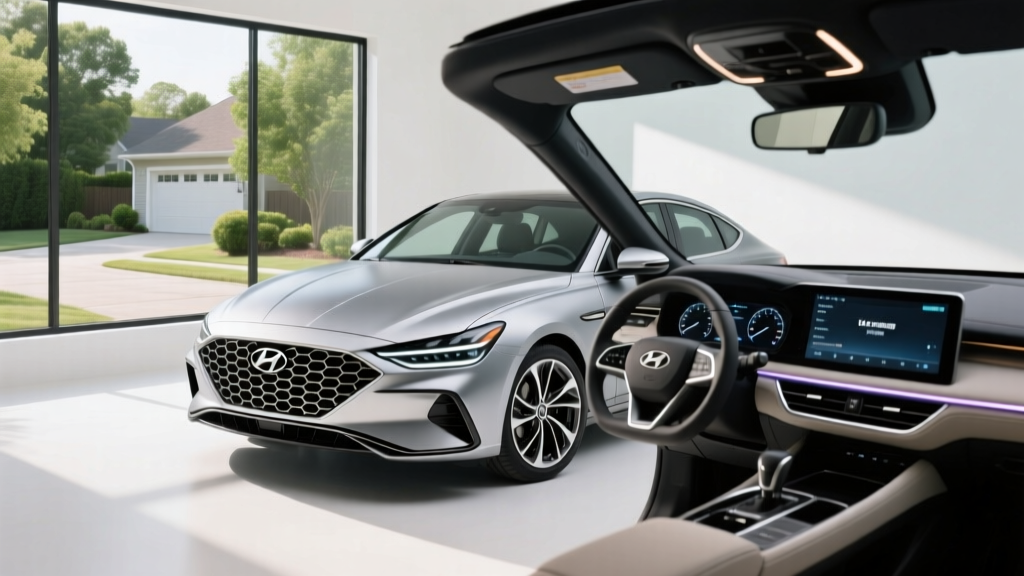
The 2024 Hyundai Sonata Hybrid Limited is a conventional hybrid electric vehicle (HEV) that prioritizes fuel efficiency, comfort, and technology without requiring you to plug in. With an EPA-estimated 47 MPG combined and a fully redesigned exterior for the 2024 model year, it targets buyers who want hybrid efficiency without the lifestyle change of a plug-in hybrid or full electric vehicle. In this review, we break down its exact fuel economy, powertrain specs, real-world efficiency, pricing, and long-term ownership considerations so you can decide if it's the right midsize sedan for your commute.
Important distinction: The Sonata Hybrid is a self-charging HEV — it regenerates energy through braking and the gasoline engine. It does not plug in. If you're looking for electric-only driving, you'd need a PHEV (plug-in hybrid) like the Tucson PHEV or a full BEV like the Ioniq 6. We'll cover that decision framework below.
Spec Table: 2024 Hyundai Sonata Hybrid Limited at a Glance
| Attribute | Specification |
|---|---|
| Powertrain Type | Conventional Hybrid (HEV) — no plug |
| Engine | 2.0L inline-4 GDI + electric motor |
| Combined Horsepower | 192 hp |
| Transmission | 6-speed automatic |
| EPA MPG (City / Highway / Combined) | 44 / 51 / 47 |
| Fuel Tank Capacity | 13.2 gallons |
| Total Range (Estimated) | ~620 miles |
| 0–60 mph | ~7.5 seconds (est.) |
| Drivetrain | Front-wheel drive |
| Base MSRP (Limited trim) | $36,250 |
| Federal Tax Credit (§30D) | Not eligible (HEV, not PHEV/BEV) |
| Hybrid Battery Warranty | 10 years / 100,000 miles |
| Vehicle Warranty | 5 yr / 60,000 mi basic; 10 yr / 100,000 mi powertrain |
Sources: fueleconomy.gov, Hyundai USA
Fuel Economy: EPA Ratings vs. Real-World MPG
The 2024 Sonata Hybrid Limited carries EPA ratings of 44 MPG city, 51 MPG highway, and 47 MPG combined. This is notable because the Limited trim, despite adding heavier features like a panoramic sunroof, ventilated seats, and a larger wheel option, still posts nearly identical numbers to the lower Blue trim (which is rated at 50 MPG combined with lighter equipment).
| Trim | City MPG | Highway MPG | Combined MPG |
|---|---|---|---|
| SEL | 44 | 51 | 47 |
| Limited | 44 | 51 | 47 |
Source: fueleconomy.gov
Real-World Expectations
Hybrids often exceed their EPA city rating in stop-and-go traffic because regenerative braking recaptures energy that a gas car wastes as heat. In our experience and aggregated owner reports, the Sonata Hybrid Limited typically delivers:
- City driving: 45–50 MPG (frequent stops maximize regen)
- Highway cruising (65–70 mph): 46–52 MPG (the engine runs more at steady speed, but aerodynamics help)
- Cold weather (below 35°F): Expect a 10–15% drop, landing around 38–42 MPG combined, as the engine runs longer to warm the cabin and battery
- Mixed real-world average: 44–48 MPG for most drivers
With a 13.2-gallon fuel tank, you're looking at roughly 580–630 miles between fill-ups in normal conditions — a significant advantage for road-trippers who don't want to plan around charging stops.
Powertrain: How the Sonata Hybrid Makes 192 HP
The Sonata Hybrid pairs a 2.0-liter Smartstream GDI inline-4 engine (producing 150 hp and 139 lb-ft of torque on its own) with a 39 kW (52 hp) electric motor integrated into the transmission housing. Combined system output is 192 horsepower.
Unlike Toyota's planetary-gear CVT approach, Hyundai uses a traditional 6-speed automatic transmission with the electric motor sandwiched between the engine and gearbox. This gives the Sonata Hybrid a more familiar, linear acceleration feel compared to the rubber-band effect some drivers notice in CVT-equipped hybrids.
The hybrid battery is a 1.76 kWh lithium-ion pack mounted behind the rear seats. This is a small energy buffer — it's not designed for electric-only driving beyond very low-speed, short-distance maneuvers (like creeping through a parking lot). The battery charges exclusively through regenerative braking and engine-generated power. You never plug it in.
HEV vs. PHEV: Where Does the Sonata Hybrid Fit?
HEV (this car): Small battery (~1–2 kWh), charges via regen + engine, no plug, 0 miles electric-only range. Best for: drivers who want efficiency without changing habits.
PHEV (e.g., Tucson PHEV): Larger battery (~13–18 kWh), plugs into a wall outlet, 30–40 miles electric-only range before the gas engine kicks in. Best for: drivers with short commutes who can charge at home.
BEV (e.g., Ioniq 6): Large battery (~54–77 kWh), no gas engine, 250–360 miles of range, requires charging infrastructure. Best for: drivers ready to go fully electric with home charging access.
Pricing, Trims, and Tax Credit Eligibility
The 2024 Hyundai Sonata Hybrid is available in two trims:
- SEL: Starting at ~$30,250 MSRP
- Limited: Starting at ~$36,250 MSRP
The Limited trim adds premium features including a panoramic sunroof, leather-trimmed seats, ventilated front seats, a heated steering wheel, Hyundai Digital Key, a 12.3-inch digital instrument cluster, and a surround-view monitor.
Tax Credit Reality Check
The 2024 Sonata Hybrid does not qualify for the federal §30D clean vehicle tax credit. Under current IRS rules, only battery electric vehicles (BEVs) and plug-in hybrids (PHEVs) with sufficient battery capacity (≥7 kWh) are eligible. As a conventional HEV with a 1.76 kWh battery, the Sonata Hybrid falls outside the program.
Some states offer separate incentives for hybrids, but these are increasingly rare as incentive programs shift toward zero-emission vehicles. Check your state's energy office or DMV for current programs.
Bottom line on incentives: You won't get a federal tax credit for this car. The value proposition rests entirely on fuel savings and lower maintenance costs versus a gas-only midsize sedan.
Battery Longevity, Warranty, and Replacement Cost
Hybrid Battery Warranty
Hyundai covers the Sonata Hybrid's lithium-ion battery for 10 years or 100,000 miles, whichever comes first. This is one of the strongest hybrid battery warranties in the industry and matches Toyota's coverage.
The warranty covers defects and capacity loss below a defined threshold (typically around 60–70% of original capacity, though Hyundai's exact threshold should be confirmed in your warranty booklet).
Real-World Battery Lifespan
Hyundai's hybrid battery packs have proven durable in real-world use. Unlike early-generation hybrids from the 2000s, modern lithium-ion hybrid batteries are designed to last the life of the vehicle under normal use. Key factors:
- The 1.76 kWh pack operates in a narrow state-of-charge window (roughly 40–80%), which dramatically reduces degradation compared to a BEV that cycles from 10–90%.
- Hybrid batteries experience shallow, frequent cycles rather than deep discharges — the chemistry tolerates this well.
- Owner reports from Hyundai and Kia hybrid platforms (which share architecture) suggest battery replacement is uncommon before 150,000+ miles.
Replacement Cost (Out of Warranty)
If the hybrid battery does need replacement after the warranty expires, expect a cost in the range of $2,000–$4,000 for the battery module, plus $500–$1,000 in labor. This is significantly less than a full EV battery replacement ($8,000–$20,000+) because the hybrid pack is small. Third-party remanufactured batteries may be available at lower cost as the vehicle ages.
Who Should Choose the Sonata Hybrid Limited?
Choose the Sonata Hybrid if…
- You drive 15,000+ miles per year and want to minimize fuel costs
- You don't have access to home or workplace charging (no plug needed)
- You take regular road trips and don't want to plan around EV chargers
- You want a premium midsize sedan with strong tech and comfort features
- You live in a region with extreme cold, where EV range loss is a concern
Look at a PHEV or BEV instead if…
- You have a short commute (<35 miles) and can charge at home — a PHEV could run purely on electricity daily
- You want to qualify for the $7,500 federal tax credit (BEV/PHEV only)
- You want zero tailpipe emissions for local air quality or personal values
- You want one-pedal driving and instant electric torque (BEV experience)
- Your state offers additional incentives for plug-in vehicles
Fuel Cost Savings vs. Gas-Only Sonata
For context, the gas-only 2024 Sonata (2.5L, non-turbo) is rated at 28 MPG combined. At 15,000 miles per year and $3.50/gallon fuel:
- Gas Sonata: ~536 gallons/year = ~$1,875/year
- Sonata Hybrid: ~319 gallons/year = ~$1,117/year
- Annual savings: ~$758/year, or roughly $3,790 over 5 years
That fuel savings nearly closes the price gap between the Hybrid SEL and the gas-only SEL over a typical ownership period, while also delivering a smoother, quieter driving experience at low speeds.
Pros and Cons
✅ Pros
- 47 MPG combined — class-leading for a midsize hybrid sedan
- No plug required — no charging infrastructure needed
- 620+ mile total range between fill-ups
- 10-year / 100,000-mile hybrid battery warranty
- 6-speed automatic avoids CVT drone
- Limited trim is well-equipped with premium features
- Strong real-world city MPG from regenerative braking
❌ Cons
- No federal tax credit eligibility
- 192 hp is adequate but not sporty — 0-60 in ~7.5 sec
- No all-wheel-drive option
- Electric-only operation limited to low-speed creep
- Higher starting price than gas-only Sonata (~$7,000 premium over base gas model)
- Cold-weather MPG drop of 10–15%
Frequently Asked Questions
How many MPG does the 2024 Hyundai Sonata Hybrid Limited get?
The EPA rates it at 44 MPG city, 51 MPG highway, and 47 MPG combined. In real-world mixed driving, most owners report 44–48 MPG, with city-heavy commutes sometimes exceeding 50 MPG thanks to regenerative braking.
Does the Sonata Hybrid need to be plugged in?
No. The Sonata Hybrid is a conventional HEV (hybrid electric vehicle). It charges its small 1.76 kWh battery through regenerative braking and the gasoline engine. You never plug it in — just fill up at any gas station.
How far can it go on electric only?
Essentially zero miles in any meaningful sense. The electric motor assists the gas engine and can propel the car at very low speeds (parking lot speeds) for brief distances, but it is not designed for electric-only commuting. If you want 30+ miles of electric-only range, you need a PHEV or BEV.
Is the Sonata Hybrid reliable, and what does battery replacement cost?
Hyundai's hybrid powertrain has a strong reliability record, backed by a 10-year / 100,000-mile hybrid battery warranty. Out-of-warranty battery replacement typically runs $2,000–$4,000 for the module plus labor — far less than an EV battery. The shallow charge cycles of a hybrid battery mean most packs last the life of the car.
Does the 2024 Sonata Hybrid qualify for any tax credit?
No. The federal §30D clean vehicle credit applies only to BEVs and PHEVs with ≥7 kWh of battery capacity. The Sonata Hybrid's 1.76 kWh pack does not qualify. Check your state's energy office for any local hybrid incentives, though these are increasingly rare.
How does it compare to the Toyota Camry Hybrid?
The Camry Hybrid (LE trim) is rated at 52 MPG combined with available AWD, giving it a slight edge in fuel economy and drivetrain options. The Sonata Hybrid Limited counters with a more premium interior at the top trim, a 6-speed automatic (vs. Toyota's eCVT), and Hyundai's 10-year powertrain warranty vs. Toyota's 10-year hybrid battery but 5-year/60,000-mile powertrain coverage. Both are excellent choices; the decision often comes down to styling preference and which dealer network you prefer.
Is the Sonata Hybrid good for road trips?
Yes — this is one of its strongest use cases. With 620+ miles of range and no need to seek out chargers, the Sonata Hybrid is an excellent road-trip car. Highway MPG of around 48–52 real-world means fewer fuel stops and lower costs on long drives compared to gas-only sedans.