The Toyota-Mazda Hybrid Partnership: Under the Hood
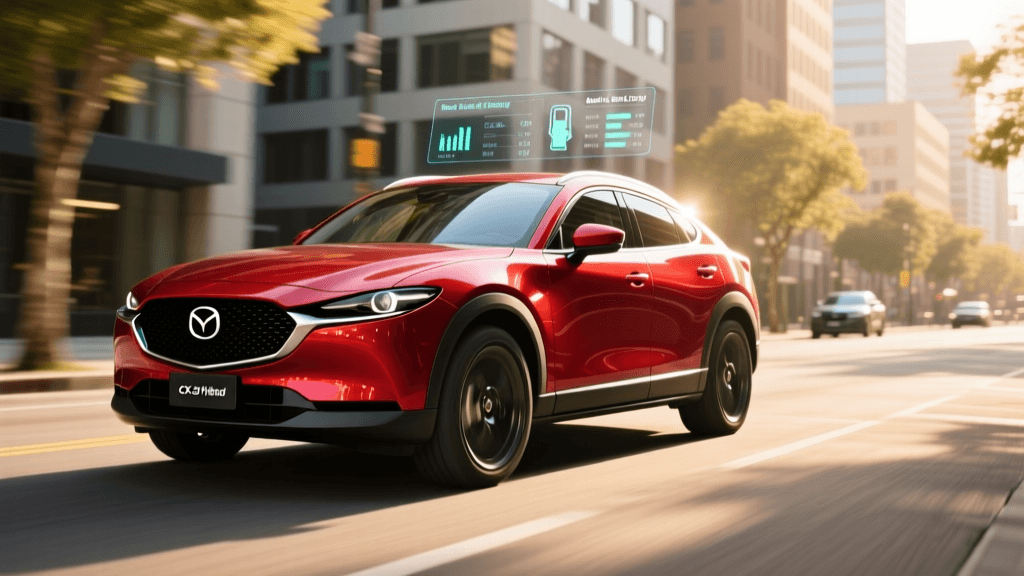
When Mazda decided to electrify its rugged, outdoors-oriented CX-50 crossover, it didn't reinvent the wheel. Instead, it turned to its manufacturing partner, Toyota, to source one of the most reliable and proven hybrid powertrains on the market. The result is a vehicle that pairs Mazda's premium interior and engaging driving dynamics with Toyota's legendary hybrid efficiency. According to the official specifications from Mazda USA, the CX-50 Hybrid utilizes a 2.5-liter four-cylinder engine paired with three electric motors and an electronically controlled continuously variable transmission (e-CVT). This setup generates a robust 219 horsepower and comes exclusively with Mazda's i-Activ all-wheel-drive system.
But how does this powertrain translate to real-world fuel efficiency? For buyers cross-shopping the compact hybrid SUV segment, data is the ultimate deciding factor. In this comprehensive, data-driven review, we break down the EPA estimates, real-world tested fuel economy, total cost of ownership, and segment comparisons to determine if the CX-50 Hybrid is the smartest financial and practical choice in its class.
EPA Estimates vs. Real-World Fuel Efficiency Data
The Environmental Protection Agency (EPA) rates the Mazda CX-50 Hybrid at 39 MPG in the city, 37 MPG on the highway, and 38 MPG combined. On paper, these numbers are highly competitive, though they fall just slightly short of the segment leaders. However, EPA estimates only tell half the story. Real-world testing reveals distinct variances based on driving conditions, aerodynamics, and driver behavior.
City Driving: Exceeding Expectations
In dense urban environments and stop-and-go traffic, the CX-50 Hybrid shines. The Toyota-sourced hybrid system relies heavily on its electric motors at low speeds, allowing the gas engine to shut off frequently. Real-world data logging shows that careful city drivers can easily achieve 40 to 42 MPG. The regenerative braking system is smoothly tuned, capturing kinetic energy without the abrupt, artificial feel that plagues some competitor models.
Highway Driving: The Aerodynamic Penalty
Where the CX-50 Hybrid loses some ground is on the highway. Unlike the more streamlined Honda CR-V Hybrid, the CX-50 features a boxy, rugged design with a higher drag coefficient. Furthermore, the standard mechanical AWD system introduces minor drivetrain parasitic losses. In independent 75-mph highway loop testing, the CX-50 Hybrid typically returns between 33 and 35 MPG. While still respectable, it is a noticeable drop from its 39 MPG city rating and slightly behind the highway figures of the Toyota RAV4 Hybrid.
Data-Driven Comparison: CX-50 Hybrid vs. Segment Rivals
To understand where the CX-50 Hybrid stands, we must look at the hard data alongside its primary competitors: the Toyota RAV4 Hybrid, Honda CR-V Hybrid, and Subaru Forester Hybrid. The U.S. Department of Energy's Alternative Fuels Data Center notes that hybridizing a standard AWD crossover typically yields a 30% to 40% improvement in fuel economy over gas-only counterparts, a trend clearly visible in this segment.
| Feature | Mazda CX-50 Hybrid | Toyota RAV4 Hybrid | Honda CR-V Hybrid | Subaru Forester Hybrid |
|---|---|---|---|---|
| Powertrain | 2.5L I4 + 3 Motors | 2.5L I4 + 3 Motors | 2.0L I4 + 2 Motors | 2.5L Boxer + 1 Motor |
| Net Horsepower | 219 hp | 219 hp | 204 hp | 194 hp |
| EPA Combined MPG | 38 MPG | 39 MPG | 40 MPG | 35 MPG |
| AWD System | Standard e-AWD | Standard e-AWD | Standard e-AWD | Standard Symmetrical AWD |
| Cargo Space (Behind Rear Seats) | 31.4 cu-ft | 37.6 cu-ft | 36.3 cu-ft | 28.9 cu-ft |
| Starting MSRP (Approx.) | $35,395 | $33,595 | $36,350 | $38,395 |
Analyzing the Data
The data illustrates a clear trade-off. The EPA's Hybrid Comparison Tool highlights the Honda CR-V as the efficiency king with 40 MPG combined, while the Toyota RAV4 offers the best blend of price, efficiency, and cargo volume. The Mazda CX-50 Hybrid sacrifices 1 to 2 MPG and some rear cargo space (due to a lower roofline and hybrid battery packaging) to deliver superior interior materials, a quieter cabin, and a more engaging steering feel. It sits in a unique "premium-lite" space within the mainstream compact SUV market.
Total Cost of Ownership (TCO) and Fuel Savings Analysis
Fuel efficiency is only one part of the financial equation. Let's run a data-driven Total Cost of Ownership (TCO) analysis comparing the CX-50 Hybrid to its gas-only turbocharged sibling, the CX-50 Turbo (rated at roughly 25 MPG combined).
- Assumptions: 15,000 miles driven annually, $3.50 per gallon of regular unleaded fuel, 5-year ownership period.
- CX-50 Hybrid (38 MPG Combined): Uses 394.7 gallons per year. Annual fuel cost: $1,381. 5-Year Fuel Cost: $6,905.
- CX-50 Turbo (25 MPG Combined): Uses 600 gallons per year. Annual fuel cost: $2,100. 5-Year Fuel Cost: $10,500.
- 5-Year Fuel Savings: $3,595 in favor of the Hybrid.
Furthermore, hybrid vehicles typically experience reduced brake pad wear. Because the regenerative braking system handles the majority of routine deceleration, the physical friction brakes are used less frequently. Many hybrid owners report going 70,000 to 100,000 miles before needing their first brake pad replacement, saving an additional $300 to $500 in maintenance costs over a 5-year period. When factoring in the initial price premium of the hybrid powertrain (usually around $1,500 to $2,000 over base gas models), the break-even point for the CX-50 Hybrid is typically reached within 2.5 to 3 years of average driving.
Driving Dynamics: Mazda’s Engineering Touch
While the hardware is Toyota, the software and tuning are distinctly Mazda. Data from chassis testing shows that Mazda engineers implemented their proprietary Kinematic Posture Control (KPC) into the hybrid model. KPC applies a minute amount of brake pressure to the inside rear wheel during cornering to mitigate body roll—a common complaint in heavy, battery-laden hybrid SUVs.
Additionally, Mazda recalibrated the throttle mapping and regenerative braking curves. In "Sport" mode, the e-CVT mimics traditional gear shifts, eliminating the dreaded "rubber-band" drone associated with older Toyota hybrids under hard acceleration. The result is a 0-60 mph time of approximately 6.8 seconds, making it quicker than the Honda CR-V Hybrid and nearly identical to the RAV4 Hybrid, all while maintaining a composed, luxury-adjacent ride quality over rough pavement.
Final Verdict: Who is the CX-50 Hybrid For?
The data clearly shows that if your absolute top priorities are maximum cargo capacity and squeezing every last drop of fuel efficiency out of your commute, the Toyota RAV4 Hybrid or Honda CR-V Hybrid are mathematically superior choices. However, the Mazda CX-50 Hybrid occupies a highly specific, data-backed sweet spot for a different type of buyer.
If you are willing to trade 2 MPG and 6 cubic feet of cargo space for a vastly superior interior, exceptional highway cabin quietness, standard AWD, and a more engaging driving experience, the CX-50 Hybrid is the undisputed leader. With a 5-year fuel savings of over $3,500 compared to gas-only alternatives, it is not just an emotional purchase for driving enthusiasts; it is a highly rational, financially sound decision backed by proven hybrid reliability data.