Introduction: The Midsize Sedan's Value Proposition
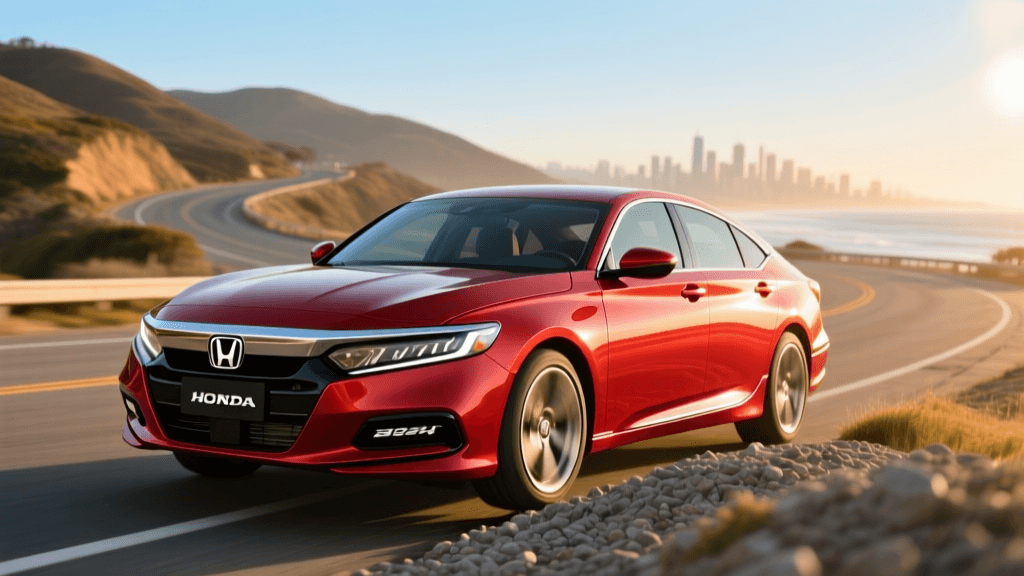
The midsize sedan segment has faced an onslaught from compact SUVs over the last decade, yet the Honda Accord remains a benchmark for efficiency, comfort, and long-term value. For the current generation, Honda has placed a massive emphasis on its hybrid lineup, making the two-motor hybrid system the volume seller in the Accord family. But for buyers weighing the initial sticker price against long-term savings, the ultimate question remains: does the math actually work out? In this comprehensive cost and value breakdown, we analyze the Honda Accord Hybrid specifically through the lens of daily commuting and long-distance road trips, evaluating fuel economy, maintenance, depreciation, and total cost of ownership (TCO).
Real-World Fuel Economy: City Commuting vs. Highway Road Trips
The Honda Accord Hybrid utilizes a sophisticated series-parallel hybrid system. It pairs a 2.0-liter Atkinson-cycle four-cylinder engine with two electric motors, generating a combined 204 horsepower and 247 lb-ft of torque. According to Honda's official powertrain specifications, this setup delivers an EPA-estimated 51 mpg in the city and 44 mpg on the highway, for a combined rating of 48 mpg. However, real-world driving scenarios tell a more nuanced story about where this car truly shines.
The Daily Commute: Where the Hybrid Excels
Stop-and-go traffic is the bane of traditional internal combustion engines, but it is the natural habitat of the Accord Hybrid. During low-speed city commuting, the vehicle operates primarily as a series hybrid. The gas engine acts merely as a generator to feed electricity to the propulsion motor, while the battery buffer handles immediate acceleration demands. This means you are essentially driving an electric vehicle for large portions of your urban commute, resulting in real-world city mileage that frequently exceeds 50 mpg. The regenerative braking system, which can be adjusted via steering-wheel-mounted paddle shifters, captures kinetic energy that would otherwise be lost to heat, further padding your urban efficiency.
The Road Trip: Highway Aerodynamics and Engine Clutch
When the weekend arrives and the highway stretches out, the Accord Hybrid's efficiency profile shifts. At sustained speeds above 45 mph, a lock-up clutch engages, connecting the 2.0L engine directly to the front wheels. This bypasses the electrical conversion process, which is less efficient at high, steady speeds. While the EPA rates the highway fuel economy at 44 mpg, real-world road trips at 75-80 mph with a full cabin and cargo will likely yield between 40 and 42 mpg. While this is a drop from its city numbers, it still vastly outperforms the non-hybrid 1.5L turbocharged Accord, which typically achieves around 33-35 mpg on the highway. Furthermore, the hybrid's 12.8-gallon fuel tank provides a theoretical road-trip range of over 550 miles, meaning fewer stops at the pump during cross-country drives.
The Hybrid Premium: Calculating the Break-Even Point
One of the most critical aspects of our cost breakdown is the "hybrid premium"—the extra money you pay upfront for the electrified powertrain. Comparing similarly equipped trims, the Accord Hybrid typically commands a premium of roughly $1,200 to $1,500 over its gasoline-only counterpart. Let us break down the break-even math based on national averages.
- Annual Mileage: 15,000 miles (55% city / 45% highway)
- Average Fuel Cost: $3.50 per gallon
- Accord 1.5T Gas (32 mpg combined): 468 gallons/year = $1,638 annual fuel cost
- Accord Hybrid (48 mpg combined): 312 gallons/year = $1,092 annual fuel cost
- Annual Savings: $546
At this rate, the $1,500 hybrid premium is recouped in roughly 2.7 years. If your commute is heavily skewed toward city driving, or if local gas prices exceed the national average, that break-even point shrinks to under two years. After that threshold, every mile driven is pure savings compared to the gas model.
5-Year Total Cost of Ownership (TCO) Breakdown
To truly understand the value proposition, we must look beyond the fuel pump. Below is a 5-year TCO comparison (assuming 75,000 total miles) pitting the Accord Hybrid against the gas-powered Accord and its chief rival, the Toyota Camry Hybrid. Data regarding hybrid efficiency trends aligns with insights found in the EPA's official fuel economy guide.
| Cost Factor (5 Years / 75k Miles) | Honda Accord Hybrid (Sport-L) | Honda Accord Gas (1.5T EX-L) | Toyota Camry Hybrid (SE) |
|---|---|---|---|
| Estimated MSRP | $38,000 | $36,500 | $37,500 |
| Fuel Costs ($3.50/gal) | $5,460 | $8,190 | $5,250 |
| Maintenance & Repairs | $2,100 | $2,800 | $2,200 |
| Insurance (Avg) | $8,500 | $8,200 | $8,400 |
| Estimated Depreciation | $14,500 | $16,000 | $15,200 |
| Total 5-Year Cost | $38,560 | $41,690 | $39,050 |
As the table illustrates, the Accord Hybrid not only beats its gasoline sibling by over $3,000 over five years, but it also slightly edges out the Camry Hybrid in total cost, largely due to stronger projected resale values and slightly lower maintenance costs associated with Honda's e-CVT architecture.
Maintenance, Reliability, and Insurance Costs
A common misconception is that hybrid vehicles are inherently more expensive to maintain due to the complexity of their battery packs and power electronics. In reality, the Accord Hybrid benefits from several mechanical advantages that reduce routine maintenance costs:
- No Traditional Transmission: The Accord Hybrid does not use a conventional multi-gear automatic or a belt-driven CVT. Its e-CVT is essentially a direct-drive gearset with no physical belts or pulleys to wear out, eliminating transmission fluid flushes and belt replacements.
- Extended Brake Life: The aggressive regenerative braking system handles the majority of daily deceleration. It is not uncommon for Accord Hybrid owners to report original brake pads lasting well past 70,000 miles.
- Battery Warranty: Honda backs the hybrid battery and powertrain components with an 8-year/100,000-mile warranty (extended to 10 years/150,000 miles in CARB states), mitigating the risk of catastrophic out-of-warranty repair bills during the typical ownership cycle.
Insurance premiums for the Accord Hybrid are marginally higher than the gas model—typically by 3% to 5%. This is due to the higher replacement cost of hybrid-specific components in the event of a collision. However, the Accord's stellar safety profile, consistently earning top marks from the IIHS Top Safety Pick ratings, helps keep baseline insurance rates competitive compared to lesser-equipped midsize sedans.
Road Trip Comfort and Utility: Is the Value There?
Value is not solely defined by spreadsheet mathematics; it is also defined by the quality of the experience. For road trips, the Accord Hybrid offers immense utility without the compromises that plagued earlier generations of hybrid sedans.
In previous iterations, hybrid battery packs were often mounted behind the rear seats, intruding into trunk space and eliminating the possibility of a rear seat fold-down. Honda has since relocated the battery pack beneath the rear floor. The result is a massive 16.7 cubic feet of trunk space—identical to the gas model—and a standard 60/40 split-folding rear seat. Whether you are hauling luggage for a family vacation or transporting oversized gear from a home improvement store, the Accord Hybrid makes zero compromises on cargo practicality.
Furthermore, the cabin's Noise, Vibration, and Harshness (NVH) levels are exceptionally well-managed. The transition between electric and gas power is nearly imperceptible, and the inclusion of active noise cancellation on higher trims ensures that highway drone is kept to a minimum. The Honda Sensing suite of driver-assist features, including Adaptive Cruise Control with Low-Speed Follow and Lane Keeping Assist, significantly reduces driver fatigue on long interstate stretches, adding an intangible but highly valuable layer of comfort to the road trip experience.
Final Verdict: Who Should Buy the Accord Hybrid?
From a strict cost and value perspective, the Honda Accord Hybrid is an undeniable triumph. The initial premium over the gasoline model is easily justified by the fuel savings, lower maintenance requirements, and superior depreciation resistance. For the daily commuter, the electric-like low-speed torque and 50+ mpg city efficiency transform gridlock from a frustrating, fuel-burning chore into a serene, economical experience. For the road-tripper, the direct-drive highway efficiency, expansive trunk, and refined cabin ensure that long miles are covered comfortably and cheaply. If you are in the market for a midsize sedan and plan to keep the vehicle for at least three years, the Accord Hybrid isn't just the smart eco-friendly choice—it is simply the smartest financial choice in the segment.