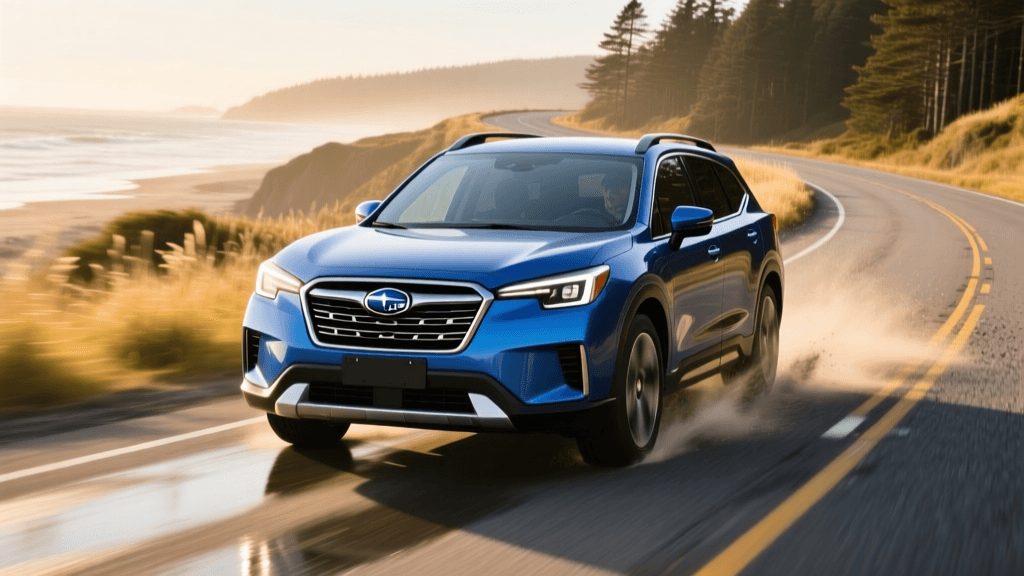
The Subaru Crosstrek Hybrid: A PHEV with a Purpose
When Subaru introduced the Crosstrek Hybrid, it marked a significant milestone for the brand: the integration of Toyota’s legendary Hybrid Synergy Drive into Subaru’s rugged, all-wheel-drive platform. Although Subaru has paused the plug-in hybrid electric vehicle (PHEV) variant for the newest model years in favor of upcoming electrification strategies, the 2019–2023 Crosstrek Hybrid remains a massive player in the used and Certified Pre-Owned (CPO) market. For outdoorsy commuters and eco-conscious adventurers, it offers a compelling blend of capability and efficiency.
But does the financial math actually work out? Buying a PHEV often involves paying a premium upfront in exchange for long-term fuel savings, reduced maintenance, and environmental benefits. In this comprehensive cost and value breakdown, we will analyze the real-world electric range, charging economics, and five-year total cost of ownership (TCO) to determine if the Subaru Crosstrek Hybrid is a smart financial move for your driveway.
Real-World Electric Range and the 8.8 kWh Battery
The Crosstrek Hybrid is equipped with an 8.8 kWh lithium-ion battery pack. According to EPA estimates, this provides an all-electric range of 17 miles. However, as any seasoned EV owner knows, the window sticker is just a starting point. Real-world range in the Crosstrek PHEV is highly dependent on climate, terrain, and driving habits.
- Ideal Conditions (65°F, flat terrain, city driving): 19 to 21 miles of pure electric range.
- Highway Driving (70 mph): 14 to 16 miles before the 2.0-liter Boxer engine kicks in.
- Cold Weather (Below freezing with cabin heating): 10 to 13 miles of range.
Once the battery is depleted, the vehicle seamlessly transitions into standard hybrid mode, delivering an impressive EPA-rated 35 MPG combined. With a 10.6-gallon fuel tank (slightly smaller than the gas-only model to accommodate the battery), the total system range hovers around 440 to 480 miles. According to the U.S. Department of Energy, PHEVs like the Crosstrek are specifically designed to handle daily short commutes on electricity while eliminating range anxiety for longer weekend road trips.
Charging Economics: Level 1 vs. Level 2
One crucial detail every prospective Crosstrek Hybrid owner must know is that the vehicle does not support DC Fast Charging. It is limited to AC charging, which heavily influences the ownership experience and cost structure.
Level 1 (Standard 120V Outlet)
Plugging into a standard household outlet yields about 4 to 5 miles of range per hour of charging. A full charge from empty takes roughly 5 hours. This is perfectly viable for overnight charging if your daily commute is under 15 miles, requiring zero upfront infrastructure investment.
Level 2 (240V Home Charger)
Installing a Level 2 home charger (like a ChargePoint Home Flex or Emporia Vue) reduces charging time to about 2 to 2.5 hours. While the Alternative Fuels Data Center notes that home charging setups can cost between $500 and $1,500 including installation, the convenience and time savings make it a highly recommended upgrade for PHEV owners. Furthermore, charging at home at the national average electricity rate of $0.16 per kWh means a full charge costs roughly $1.20. Compare that to $15.00+ for a tank of gas, and the daily savings become immediately apparent.
The Cost & Value Breakdown: Upfront Price vs. Incentives
On the used and CPO market, a well-maintained 2021–2023 Subaru Crosstrek Hybrid typically commands between $26,000 and $32,000, depending on mileage and trim. This represents a $4,000 to $6,000 premium over an equivalently equipped gas-only Crosstrek Premium or Sport trim.
Historically, the Crosstrek Hybrid qualified for a Federal Plug-In Tax Credit of up to $4,502, alongside various state-level rebates (such as those in New York, California, and Colorado). While federal credits for used EVs/PHEVs are now capped at $4,000 under the new IRS guidelines (subject to income and MSRP caps), these incentives drastically alter the value proposition. If you qualify for the used clean vehicle credit, the price gap between the gas and PHEV models narrows to almost nothing, making the Hybrid an absolute no-brainer.
5-Year Total Cost of Ownership: Gas vs. PHEV
To truly understand the value, we must look at the Total Cost of Ownership over a 5-year period, assuming 15,000 miles driven annually (with 3,000 of those miles covered purely on electricity in the PHEV). We utilize data modeling similar to the EPA Fuel Economy Calculator to estimate these costs.
| Cost Category (5-Year Estimate) | Crosstrek Gas (AWD Premium) | Crosstrek Hybrid (PHEV) |
|---|---|---|
| Purchase Price (CPO/Used Avg) | $24,000 | $29,000 |
| Fuel / Electricity Costs | $10,500 | $6,800 |
| Maintenance & Repairs | $4,200 | $3,500 |
| Insurance Premiums | $6,500 | $6,800 |
| Depreciation | $11,000 | $12,500 |
| Total 5-Year Cost | $56,200 | $58,600 |
Note: The PHEV shows slightly higher depreciation and insurance costs, but significantly lower fuel and maintenance costs. If the buyer qualifies for a $4,000 used EV tax credit, the PHEV's total cost drops to $54,600, making it cheaper to own than the gas model over five years.
Maintenance, Reliability, and Battery Longevity
Subaru’s Symmetrical All-Wheel-Drive system requires routine maintenance, including differential fluid changes that gas models also require. However, the Hybrid system introduces several cost-saving mechanical benefits:
- Brake Wear: The regenerative braking system does the heavy lifting in daily driving. It is common for Crosstrek Hybrid owners to report original brake pads lasting well past 70,000 miles.
- Engine Longevity: Because the electric motor handles low-speed city driving and idling, the 2.0-liter Boxer engine experiences less wear and tear, potentially extending its lifespan.
- Battery Warranty: Subaru covers the high-voltage hybrid battery for 8 years or 100,000 miles (10 years/150,000 miles in CARB states). Because this system is derived from Toyota’s bulletproof Prius architecture, catastrophic battery failures are exceedingly rare, and replacement costs for individual modules are far lower than replacing an entire EV battery pack.
Final Verdict: Who is the Crosstrek Hybrid For?
The Subaru Crosstrek Hybrid is not a vehicle for everyone. If you live in an apartment without charging access, or if you rely on public DC fast chargers for road trips, the lack of rapid charging capability will be a major frustration. Furthermore, if your daily one-way commute exceeds 25 miles, you will spend most of your time driving in standard hybrid mode, negating the primary benefit of the PHEV premium.
The Ideal Buyer Profile:
- Homeowners or renters with access to a standard 120V outlet or a 240V Level 2 charger.
- Commuters with a round-trip daily drive of 20 miles or less.
- Outdoor enthusiasts who need genuine AWD capability for snow, mud, and trailheads, but want to minimize their carbon footprint during the workweek.
- Shoppers in states offering robust local EV rebates or those who qualify for the federal used PHEV tax credit.
Ultimately, the Subaru Crosstrek Hybrid offers a brilliant compromise. It provides the silent, smooth, and incredibly cheap daily commute of an electric vehicle, wrapped in the rugged, go-anywhere body of a Subaru. When factoring in home charging savings, reduced brake maintenance, and available tax incentives, the Crosstrek PHEV proves that electrified efficiency and off-road readiness can successfully share the same balance sheet.