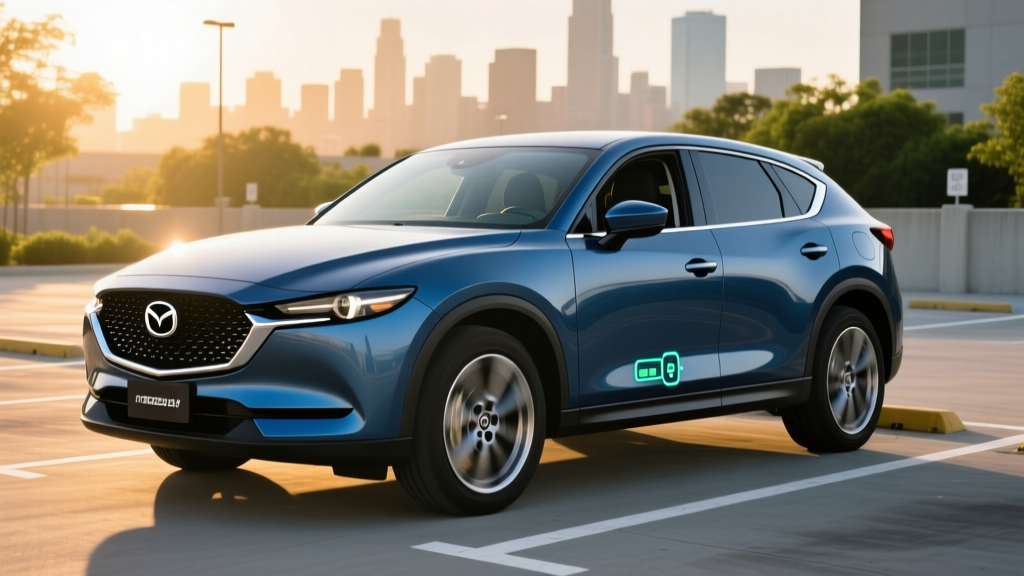
For buyers researching the Mazda CX hybrid lineup, the 2026 CX-70 PHEV represents Mazda's most compelling electrified offering — a midsize two-row SUV that pairs a turbocharged inline-six with a plug-in hybrid system. Unlike Mazda's mild-hybrid CX-50, the CX-70 PHEV can genuinely operate as an electric vehicle for daily commutes before its gasoline engine takes over for longer trips. This guide covers everything from real-world MPG and electric-only range to tax credit eligibility and long-term battery reliability.
Understanding the Mazda CX-70 PHEV: Plug-In vs Conventional Hybrid
Before evaluating specs, it's critical to distinguish what Mazda actually offers. The CX-70 is available exclusively as a plug-in hybrid (PHEV) or a mild-hybrid inline-six (the Turbo S models). Mazda does not currently sell a conventional hybrid (HEV) version of the CX-70 — meaning you won't find a self-charging, no-plug variant in this model line.
HEV vs PHEV: What's the Difference?
| Feature | Conventional Hybrid (HEV) | Plug-In Hybrid (PHEV) |
|---|---|---|
| Plug-in charging | No — charges via regenerative braking and engine | Yes — plugs into Level 1 or Level 2 charger |
| Electric-only range | Typically 0–2 miles at low speed | 20–40+ miles on most models |
| Battery size | 1–2 kWh | 10–25 kWh typical |
| Federal tax credit | Not eligible | Up to $7,500 (subject to §30D rules) |
| Example | Toyota RAV4 Hybrid | Mazda CX-70 PHEV |
The CX-70 PHEV's 17.8 kWh battery pack is large enough to cover most daily commutes on electricity alone, then seamlessly transitions to hybrid operation when the battery depletes. If you never plug it in, it still functions as a hybrid — but you'll sacrifice the electric-only miles that make a PHEV worthwhile.
Powertrain and Performance Specifications
The CX-70 PHEV pairs Mazda's 2.5-liter turbocharged inline-four engine with an electric motor integrated into the eight-speed automatic transmission. Combined output reaches 323 horsepower and 369 lb-ft of torque when running on premium fuel — making it one of the more powerful PHEVs in its class.
| Specification | 2026 Mazda CX-70 PHEV |
|---|---|
| Engine | 2.5L turbocharged inline-4 |
| Electric Motor | Integrated into transmission |
| Combined Output (premium fuel) | 323 hp / 369 lb-ft |
| Battery Capacity | 17.8 kWh (lithium-ion) |
| Transmission | 8-speed automatic |
| Drivetrain | All-wheel drive (i-Activ AWD) |
| 0–60 mph | ~6.3 seconds (est.) |
| Towing Capacity | 3,500 lbs |
| EPA Electric-Only Range | 26 miles |
| EPA Combined Range (total) | ~430 miles |
On regular 87-octane fuel, output drops to approximately 308 hp. The electric motor provides immediate low-end torque, which gives the CX-70 PHEV a responsive, refined feel around town — particularly in EV mode where the gasoline engine stays off entirely.
Fuel Economy: EPA Ratings vs Real-World MPG
The EPA rates the 2026 CX-70 PHEV at 25 MPG combined once the battery is depleted and the vehicle operates as a hybrid. In electric mode, it achieves approximately 56 MPGe. Here's the full breakdown:
| Driving Condition | EPA Rating | Real-World Expectation |
|---|---|---|
| City (hybrid mode) | 24 MPG | 26–28 MPG (regen-heavy routes) |
| Highway (hybrid mode) | 27 MPG | 24–26 MPG (70+ mph sustained) |
| Combined (hybrid mode) | 25 MPG | 24–27 MPG |
| Electric Mode | 56 MPGe | 48–58 MPGe (varies with climate) |
| Electric-Only Range | 26 miles | 20–28 miles (weather/terrain dependent) |
Real-World Range Reality Check
The EPA's 26-mile electric-only estimate assumes moderate temperatures and mixed driving. In cold weather (below 35°F), expect electric range to drop to approximately 18–22 miles due to battery efficiency loss and cabin heating demands. In warm weather with conservative driving, some owners report 28–30 miles before the engine engages.
Once the battery depletes, the hybrid system's efficiency is respectable for a 4,800-lb SUV with a turbocharged powertrain. On city routes with frequent stops, regenerative braking pushes real-world MPG above the EPA estimate. Highway cruising at 75+ mph will reduce efficiency below the sticker number — typical for any hybrid, as the engine shoulders the full load without regen assistance.
Charging the CX-70 PHEV: Times, Levels, and Connector
The CX-70 PHEV uses a J1772 connector for AC charging and does not support DC fast charging — consistent with nearly all PHEVs on the market. The onboard charger maxes out at approximately 7.2 kW on Level 2.
| Charging Level | Power | Estimated Time (0–100%) |
|---|---|---|
| Level 1 (120V household outlet) | ~1.4 kW | ~12–14 hours |
| Level 2 (240V home/public charger) | ~7.2 kW | ~2.5–3 hours |
| DC Fast Charging | Not supported | N/A |
For most PHEV owners, Level 1 charging from a standard 120V outlet is sufficient if you park for 10+ hours overnight and your daily electric-only needs fall within the 26-mile range. Level 2 installation (typically $500–$1,500 including equipment and electrician labor) cuts charge time to under three hours — useful if you make multiple short trips per day and want to recharge between drives.
Preconditioning the battery while plugged in (available via the Mazda Connected Services app) warms the battery in cold weather and can preserve electric-only range that would otherwise be lost to thermal management.
Pricing, Trims, and Federal Tax Credit Eligibility
The 2026 CX-70 PHEV starts at approximately $41,695 MSRP (including destination) for the Preferred trim and climbs to around $52,000 for the Premium Plus. Key trims include:
- PHEV Preferred — ~$41,695
- PHEV Premium — ~$47,695
- PHEV Premium Plus — ~$52,095
Does the CX-70 PHEV Qualify for the Federal Tax Credit?
Under IRS §30D clean vehicle credit rules, the CX-70 PHEV may qualify for a partial or full credit of up to $7,500 — but eligibility depends on several factors that change annually:
- MSRP cap: SUVs must have an MSRP at or below $80,000 — the CX-70 PHEV clears this easily.
- Buyer income cap: Modified adjusted gross income must not exceed $150,000 (single), $225,000 (head of household), or $300,000 (joint filers).
- Battery sourcing requirements: A percentage of critical minerals and battery components must be sourced from the U.S. or free-trade-agreement countries. These thresholds tighten annually and can reduce or eliminate the credit for some models mid-year.
- Point-of-sale transfer: As of 2024, eligible buyers can transfer the credit to the dealer at purchase, reducing the purchase price directly rather than waiting for a tax refund.
Because battery sourcing rules shift frequently, always verify current eligibility on the fueleconomy.gov tax credit lookup tool before purchasing. Consult a tax professional to confirm your personal eligibility — this is not tax advice.
Battery Warranty, Reliability, and Long-Term Ownership
CX-70 PHEV Battery and Powertrain Warranty
- Hybrid Battery Warranty: 8 years / 100,000 miles (whichever comes first), covering defects and capacity loss below a specified threshold
- Powertrain Warranty: 5 years / 60,000 miles
- Bumper-to-Bumper: 3 years / 36,000 miles
Mazda's hybrid battery warranty aligns with the industry standard for PHEVs. The 17.8 kWh lithium-ion pack is liquid-cooled, which helps mitigate degradation compared to passively cooled batteries. Based on data from similar PHEV systems, expect approximately 8–12% capacity loss over 8–10 years of typical use — meaning your 26-mile electric range might shrink to 22–24 miles over a decade.
Should the battery require replacement outside of warranty, costs for a PHEV battery of this size typically range from $6,000 to $9,000 including labor — though this is rare within the first 150,000 miles for modern liquid-cooled packs. Mazda's hybrid system is less complex than a full EV powertrain, and the inline-four engine is a proven design shared across the Mazda lineup.
For reliability ratings, check IIHS and Consumer Reports as model-year data becomes available. Mazda's overall brand reliability has been strong in recent years.
Who Should Choose the CX-70 PHEV vs a Full EV or Gas SUV?
Decision Framework: Is the CX-70 PHEV Right for You?
Choose the CX-70 PHEV if:
- Your daily commute is under 26 miles round-trip and you can charge at home
- You take regular road trips where charging infrastructure is sparse
- You want electric driving without range anxiety
- You need towing capacity (3,500 lbs) that most electric SUVs at this price lack
- You want a premium interior without paying luxury-brand prices
Choose a full EV (e.g., Hyundai Ioniq 5, Tesla Model Y) if:
- You have reliable home and workplace charging
- Your daily driving is under 250 miles and you rarely tow
- You want near-zero maintenance (no oil changes, no spark plugs)
- You want to maximize fuel savings — electricity costs roughly $0.04–$0.06 per mile vs $0.12–$0.16 for gas
Choose a conventional hybrid (e.g., Toyota RAV4 Hybrid) if:
- You cannot charge at home (apartment, street parking)
- You want simpler ownership with no plug-in routine
- Your budget is under $35,000
The CX-70 PHEV occupies a specific niche: buyers who want genuine electric commuting for short trips but aren't ready to commit to a full EV due to road-trip habits, cold-climate range concerns, or limited charging access away from home. It's also attractive for those who value Mazda's interior quality and driving dynamics — areas where the CX-70 punches above its price class.
Pros
- 26 miles electric-only covers most commutes
- 323 hp provides confident acceleration
- Premium interior materials rival luxury competitors
- 3,500-lb towing capacity
- Eligible for up to $7,500 federal tax credit (verify sourcing rules)
- Liquid-cooled battery for better longevity
Cons
- 25 MPG hybrid mode is modest for the class
- No DC fast charging
- Electric range drops in cold weather to ~18–22 miles
- Two-row layout — no third seat option (see CX-90 PHEV for that)
- Requires premium fuel for maximum output
- Level 1 charging takes 12+ hours
Frequently Asked Questions
How many MPG does the Mazda CX-70 hybrid get?
The 2026 CX-70 PHEV achieves an EPA-estimated 25 MPG combined (24 city / 27 highway) once the battery is depleted. In real-world city driving with regenerative braking, many drivers report 26–28 MPG. Highway driving at speeds above 70 mph typically yields 24–26 MPG.
How far can the CX-70 PHEV go on electric only?
The EPA rates the CX-70 PHEV at 26 miles of electric-only range. In warm weather with conservative driving, you may see 28–30 miles. In cold weather below 35°F, expect 18–22 miles due to battery efficiency loss and cabin heating demands.
Does the Mazda CX-70 PHEV qualify for a tax credit?
The CX-70 PHEV may qualify for the federal §30D clean vehicle credit of up to $7,500, depending on current battery sourcing requirements, your income level, and the vehicle's MSRP (which falls well under the $80,000 SUV cap). Always check fueleconomy.gov and consult a tax professional before purchasing to confirm eligibility.
Is the CX-70 PHEV reliable? What about battery replacement cost?
Mazda's hybrid system uses proven components, and the liquid-cooled battery should retain most of its capacity over a decade. The battery is warranted for 8 years/100,000 miles. Out-of-warranty replacement costs typically range from $6,000 to $9,000, though full battery failure within 150,000 miles is uncommon for modern PHEV packs.
Can I drive the CX-70 PHEV without ever plugging it in?
Yes. If you never plug it in, the CX-70 PHEV operates as a conventional hybrid, delivering approximately 25 MPG combined. However, you'll miss the entire value proposition of a PHEV — the 26 miles of electric-only driving that costs roughly $0.04 per mile vs $0.14 per mile on gasoline. Without plugging in, a conventional hybrid (which is lighter and cheaper) would be a better choice.
How does the CX-70 PHEV compare to the CX-90 PHEV?
The CX-90 PHEV is mechanically similar but offers three rows of seating, slightly more cargo space, and a marginally higher starting price (~$5,000 more). Electric-only range and powertrain output are nearly identical. Choose the CX-70 if you don't need a third row and prefer a more agile driving experience; choose the CX-90 for family hauling.
Final Verdict
The 2026 Mazda CX-70 PHEV earns its place as one of the best plug-in hybrids for buyers who prioritize interior quality, driving engagement, and practical electric commuting without sacrificing road-trip flexibility. Its 26-mile electric range, 323-hp powertrain, and 3,500-lb towing capacity make it genuinely versatile. The main trade-offs — modest hybrid-mode MPG, no DC fast charging, and cold-weather range reduction — are inherent to the PHEV format rather than unique to Mazda. If your daily driving fits within the electric range and you can charge at home, the CX-70 PHEV delivers a compelling blend of electric efficiency and go-anywhere confidence.