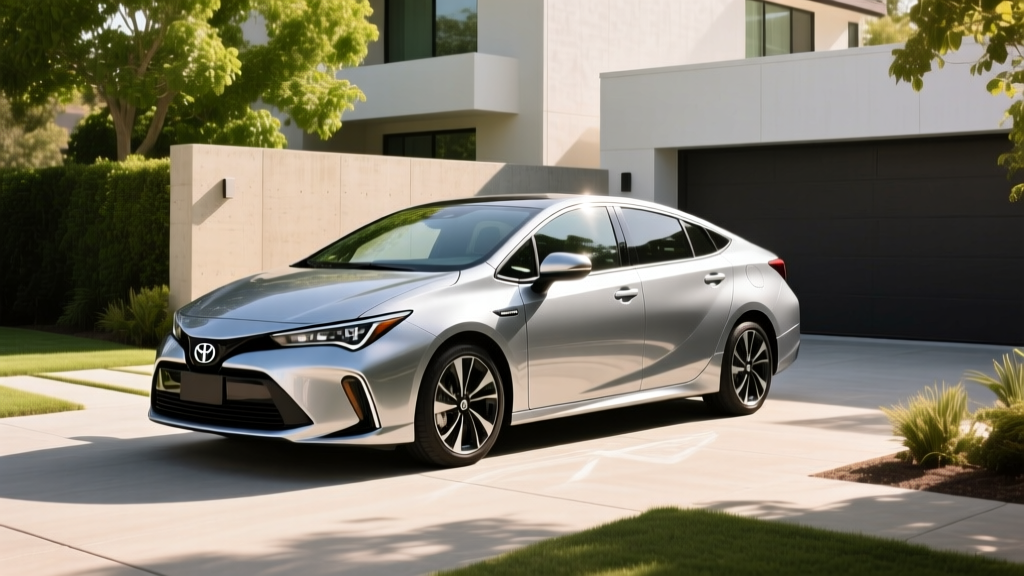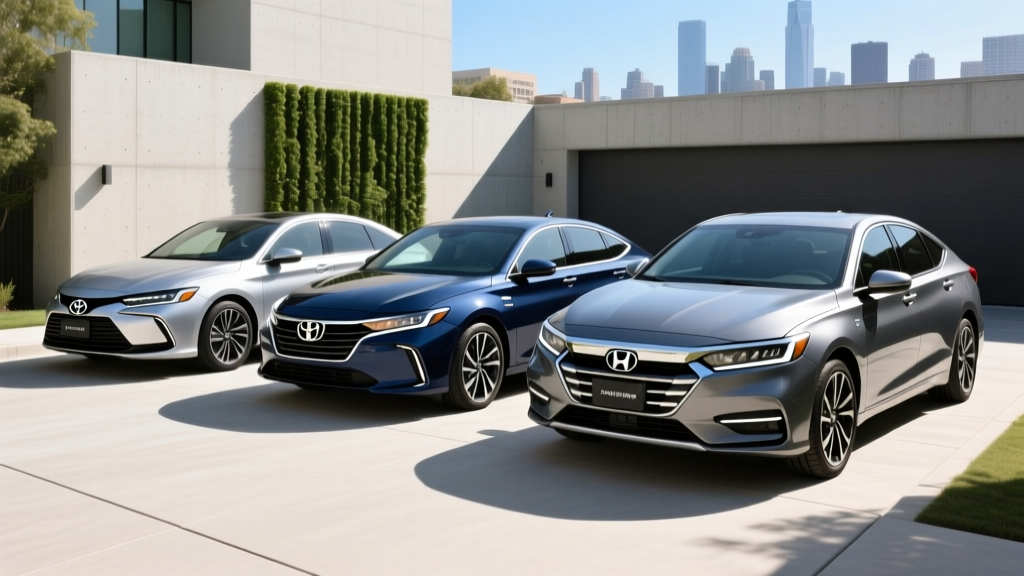
The Hybrid Value Proposition in 2026
If you're asking "are hybrid cars worth it?" — you're not alone. With EV prices softening but charging infrastructure still uneven, hybrids and plug-in hybrids (PHEVs) occupy a practical middle ground for millions of buyers. In 2026, the hybrid market has matured: conventional hybrids (HEVs) from Toyota, Honda, and Hyundai deliver 40-57 MPG combined without ever plugging in, while PHEVs like the RAV4 Prime and Jeep Wrangler 4xe offer 30-42 miles of electric-only range before the gas engine kicks in.
The short answer: yes, hybrids are worth it — but which type depends on your commute, charging access, and budget. This guide breaks down the exact economics, EPA data, and ownership realities so you can decide between an HEV, a PHEV, or going full EV.
HEV vs PHEV: What's the Actual Difference?
Before comparing numbers, it's essential to separate the two hybrid categories. They share a name but operate very differently in daily use.
Conventional Hybrid (HEV)
- No plug required. A small battery (typically 1.0–2.0 kWh) recharges through regenerative braking and the engine.
- How it helps: The electric motor assists the gas engine during acceleration and enables engine-off coasting, cutting fuel consumption 25–40% versus a gas-only equivalent.
- Best for: Drivers without home charging access, apartment dwellers, or anyone who wants better MPG with zero behavior change.
Plug-In Hybrid (PHEV)
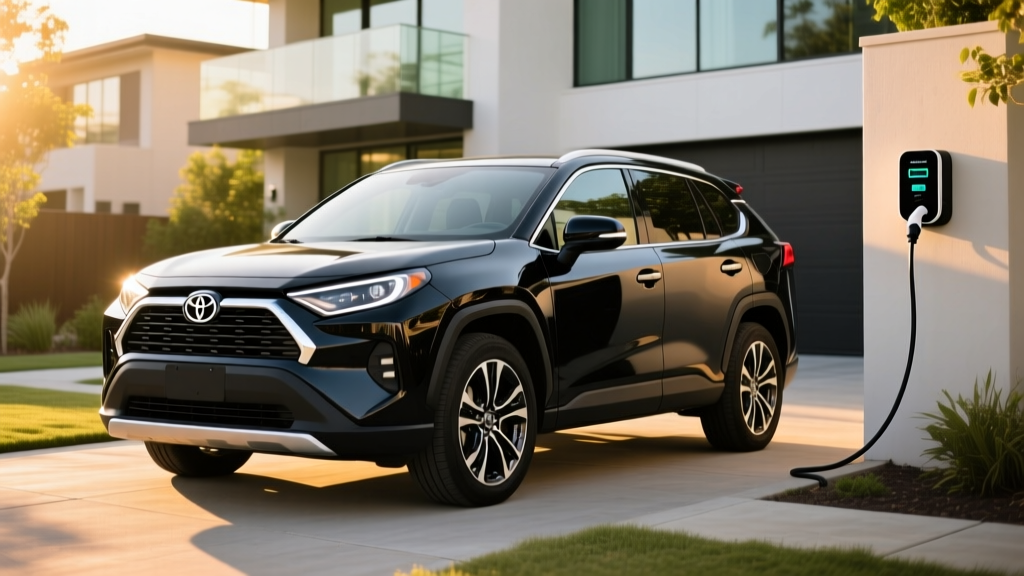
- Plugs in to charge. A larger battery (13–25 kWh usable) provides 25–45 miles of pure electric driving before the gas engine activates.
- How it helps: If your daily commute falls within the electric range and you charge at home, you may burn almost zero gasoline on weekdays — while retaining full gas-engine range for road trips.
- Best for: Homeowners or renters with access to a standard 120V outlet (Level 1) or 240V Level 2 charger, and a commute under ~40 miles round-trip.
A common misconception: conventional hybrids do not need to be plugged in. They generate their own electricity internally. If you see a Toyota Camry Hybrid or Honda CR-V Hybrid, it refuels at the gas station like any other car — you simply get far better MPG.
Fuel Economy Breakdown: Real MPG by the Numbers
Here's how popular 2026 hybrids and PHEVs stack up on EPA-rated fuel economy. Note that hybrids often exceed their EPA city rating in real-world stop-and-go driving because regenerative braking recaptures energy that gas cars waste as heat.
| Vehicle | Type | City MPG | Hwy MPG | Combined | EV-Only Range |
|---|---|---|---|---|---|
| 2026 Toyota Prius | HEV | 57 | 56 | 57 | — |
| 2026 Honda CR-V Hybrid | HEV | 43 | 36 | 40 | — |
| 2026 Toyota RAV4 Prime | PHEV | 94 MPGe | 84 MPGe | 94 MPGe | 42 mi |
| 2026 Hyundai Tucson PHEV | PHEV | 80 MPGe | 75 MPGe | 78 MPGe | 33 mi |
| 2026 Ford Escape PHEV | PHEV | 105 MPGe | 91 MPGe | 100 MPGe | 37 mi |
Source: EPA Fuel Economy. MPGe = miles-per-gallon-equivalent when operating on electricity. Once a PHEV's battery depletes, it reverts to gas-hybrid MPG (typically 35–40 combined).
Real-World MPG vs. EPA Sticker
Conventional hybrids frequently beat their EPA city rating in real-world urban driving. The Prius, for instance, can achieve 60+ MPG in heavy stop-and-go traffic where regenerative braking is maximized. Highway driving tells a different story: expect 5–10% below the EPA highway figure at sustained 75+ mph speeds, as aerodynamic drag dominates and the electric motor provides less benefit.
For PHEVs, the critical variable is how often you charge. A RAV4 Prime owner who charges nightly and commutes 20 miles may go months between fill-ups. A PHEV owner who never plugs in is essentially driving a heavier, more expensive conventional hybrid — getting 35–38 MPG instead of the 94 MPGe on the sticker.
Powertrain Specs: What's Under the Hood
Modern hybrids aren't slow. The current generation pairs turbocharged or high-compression engines with powerful electric motors for combined output that rivals many V6 gas vehicles.
| Vehicle | Engine | Combined HP | 0–60 mph | Battery (kWh) | Base MSRP |
|---|---|---|---|---|---|
| 2026 Toyota Prius | 2.0L I4 + 2 motors | 196 hp | 7.2 sec | ~1.3 kWh | $29,450 |
| 2026 Honda CR-V Hybrid | 2.0L I4 + 2 motors | 204 hp | 7.6 sec | ~1.1 kWh | $36,700 |
| 2026 Toyota RAV4 Prime | 2.5L I4 + 2 motors | 302 hp | 5.7 sec | 18.1 kWh usable | $44,900 |
| 2026 Hyundai Tucson PHEV | 1.6L turbo I4 + motor | 261 hp | 6.8 sec | 13.8 kWh usable | $39,500 |
| 2026 Ford Escape PHEV | 2.5L I4 + motor | 210 hp | 7.5 sec | 14.4 kWh usable | $39,900 |
PHEV Charging Times
PHEV batteries are small enough that most owners charge fully on a standard 120V household outlet (Level 1) overnight:
- Level 1 (120V / ~1.4 kW): 8–12 hours for a full charge — adequate for overnight top-ups.
- Level 2 (240V / ~3.6–7.2 kW): 2–4 hours — useful if you need mid-day top-ups.
- DC Fast Charging: Most PHEVs do not support DC fast charging. The Toyota RAV4 Prime is a notable exception, offering optional DC fast charge capability (CCS connector) that can replenish the battery to ~80% in roughly 45 minutes — but this remains rare in the PHEV segment due to battery size and cost trade-offs.
Battery Longevity, Warranty, and Replacement Costs
This is the number-one concern among hybrid shoppers. Let's address it directly with data.
Hybrid Battery Warranty Standard (2026)
Federal emissions regulations require that hybrid and PHEV batteries carry a minimum warranty of 8 years / 100,000 miles. In California Air Resources Board (CARB) states — which include CA, NY, MA, WA, OR, CO, and several others — that extends to 10 years / 150,000 miles.
Real-world degradation data: Toyota's hybrid battery packs (nickel-metal hydride and lithium-ion) have an extensive field record. Consumer Reports data and owner surveys show that the vast majority of Prius batteries last 150,000–200,000+ miles before needing replacement. Failures within the warranty period are uncommon.
Battery Replacement Cost If Out of Warranty
If a hybrid battery does fail beyond the warranty window, here's what replacement typically costs in 2026:
- Conventional HEV (Prius, CR-V Hybrid): $2,000–$4,000 for a new OEM pack. Refurbished/reconditioned packs are available for $1,000–$2,000 through independent hybrid specialists.
- PHEV (RAV4 Prime, Tucson PHEV): $4,000–$8,000 for OEM replacement, owing to the larger battery capacity.
For context, a conventional automatic transmission replacement on a gas car runs $3,500–$7,000 — and hybrid drivetrains eliminate the traditional transmission entirely, replacing it with a simpler planetary gearset (Toyota) or direct-drive system (Honda) that has far fewer failure points.
Tax Credits: Do Hybrids Qualify?
Under the current IRS §30D Clean Vehicle Credit rules for 2026:
- Conventional hybrids (HEVs): Do not qualify for the federal §30D tax credit. They lack sufficient battery capacity and plug-in capability.
- Plug-in hybrids (PHEVs): May qualify for up to $7,500, but eligibility depends on multiple requirements:
§30D Eligibility Checklist for PHEVs (2026)
- ✅ Vehicle MSRP must not exceed $80,000 (SUVs/pickups/vans) or $55,000 (sedans)
- ✅ Buyer modified AGI must be under $150,000 (single) / $300,000 (joint)
- ✅ Battery must meet critical-mineral and component-sourcing thresholds (phased in annually)
- ✅ Final assembly in North America
- ✅ Credit can be transferred to the dealer as a point-of-sale discount
Sourcing requirements tighten each year. A PHEV that qualified in 2025 may not qualify in 2026 if its battery supply chain hasn't shifted. Always verify current eligibility on the IRS website or with your tax professional before purchasing.
Some states offer additional rebates for PHEVs (typically $1,000–$2,500), while conventional hybrids rarely receive state incentives. Check your state's energy office or DMV for current programs.
5-Year Cost of Ownership: Hybrid vs Gas vs EV
Let's compare what you'd actually spend over five years and 75,000 miles across three powertrain types, using the compact SUV segment as our baseline:
| Cost Factor | Gas SUV (e.g., RAV4 AWD) |
Hybrid SUV (RAV4 Hybrid) |
PHEV SUV (RAV4 Prime) |
Full EV (Tesla Model Y) |
|---|---|---|---|---|
| Purchase Price (MSRP) | $33,000 | $36,500 | $44,900 | $44,990 |
| Fed. Tax Credit | $0 | $0 | Up to $7,500 | Up to $7,500 |
| Fuel/Energy (75k mi) | $9,400 | $5,800 | $2,100 | $3,200 |
| Maintenance (5 yr) | $3,800 | $3,200 | $3,000 | $1,500 |
| Insurance (5 yr avg) | $8,500 | $8,500 | $9,200 | $10,500 |
| Estimated Depreciation | $14,000 | $13,500 | $18,000 | $19,500 |
| 5-Year Total | ~$38,700 | ~$37,500 | ~$39,700 | ~$42,190 |
Assumptions: $3.50/gal gas, $0.14/kWh electricity, 50% electric driving for PHEV, 15k mi/yr. Tax credit applied at point of sale. Insurance and depreciation vary widely by region and driver profile. Source: fueleconomy.gov data and industry depreciation estimates.
Key takeaway: The conventional hybrid (HEV) often wins on pure 5-year economics thanks to its low purchase price, strong fuel savings, and minimal insurance premium increase. The PHEV's higher upfront cost is partially offset by the tax credit and near-zero fuel costs for short commutes. Full EVs save the most on fuel and maintenance but carry higher purchase prices, insurance, and depreciation risk in 2026.
Hybrid vs PHEV vs EV: Which Fits Your Life?
Choose a Conventional Hybrid (HEV) If:
- You rent or live somewhere without reliable charging access
- You want maximum MPG with zero lifestyle change — just gas up and go
- Your budget is under $38,000 and you need the lowest cost of entry
- You drive mostly in the city where regen braking maximizes hybrid efficiency
Choose a Plug-In Hybrid (PHEV) If:
- You have access to home charging (even a standard 120V outlet works overnight)
- Your daily round-trip commute is under 35–40 miles
- You want electric daily driving but take road trips where charging infrastructure is unreliable
- You qualify for the §30D tax credit, narrowing the price gap with a full EV
Choose a Full EV (BEV) If:
- You have reliable Level 2 home charging and your daily driving is under 250 miles
- You want the lowest per-mile energy cost and near-zero maintenance
- You're ready to plan road trips around DC fast-charging networks
- You value instant torque, quiet operation, and zero tailpipe emissions
Pros and Cons: The Honest Summary
✅ Why Hybrids Are Worth It
- 40–57 MPG combined (HEV) with zero behavior change
- No charging required for conventional hybrids
- Proven long-term reliability; batteries routinely last 150k+ miles
- Lower upfront cost than EVs; no range anxiety
- Hybrids hold resale value exceptionally well (Prius, RAV4 Hybrid)
- PHEVs offer the best of both worlds: electric commute + gas road trips
- Lower maintenance than gas cars (no traditional transmission, less brake wear from regen)
❌ Where Hybrids Fall Short
- HEVs do not qualify for the federal $7,500 tax credit
- PHEVs carry a $5,000–$10,000 price premium over HEV equivalents
- PHEV battery replacement costs more ($4k–$8k) if out of warranty
- Highway fuel economy advantage over gas cars is smaller than city advantage
- PHEVs that aren't charged regularly waste their electric capability
- Some PHEVs lack DC fast charging, limiting mid-day electric top-ups
- Still burning gasoline — if your goal is zero tailpipe emissions, only a BEV delivers that
Frequently Asked Questions
How many MPG does a hybrid really get?
It depends on the model and driving conditions. The 2026 Toyota Prius achieves an EPA-rated 57 MPG combined (57 city / 56 highway). The Honda CR-V Hybrid delivers 40 MPG combined (43 city / 36 highway). In real-world city driving with frequent stops, many hybrids exceed their EPA city rating thanks to aggressive regenerative braking. Highway driving at 75+ mph typically returns 5–10% below the EPA highway figure.
How far can a PHEV go on electric only?
Current 2026 PHEVs offer 25–42 miles of electric-only range. The Toyota RAV4 Prime leads at 42 miles, followed by the Ford Escape PHEV at 37 miles and the Hyundai Tucson PHEV at 33 miles. Once the battery depletes, the vehicle seamlessly switches to hybrid mode — you're never stranded. Total combined range (electric + gas) typically exceeds 500 miles.
Is a hybrid reliable, and what does battery replacement cost?
Hybrid drivetrains from Toyota, Honda, and Hyundai have excellent reliability records. Toyota alone has over 25 years of hybrid production data. Battery packs are warranted for 8 years/100,000 miles (10 years/150,000 miles in CARB states), and field data shows most last 150,000–200,000+ miles. If replacement is eventually needed, expect $2,000–$4,000 for a conventional HEV and $4,000–$8,000 for a PHEV — comparable to or less than a gas-car transmission replacement.
Do hybrids qualify for any tax credit?
Conventional hybrids (HEVs) do not qualify for the federal §30D Clean Vehicle Credit. Plug-in hybrids (PHEVs) may qualify for up to $7,500, subject to MSRP caps ($80,000 for SUVs), buyer income limits ($300,000 joint / $150,000 single), battery-sourcing requirements, and North American final assembly. Always verify eligibility at IRS.gov before purchasing, as sourcing rules change annually.
Hybrid vs PHEV vs full EV — which should I buy?
If you lack home charging or want the lowest purchase price, a conventional hybrid (HEV) is the smartest pick. If you can charge at home and your commute is under ~40 miles, a PHEV lets you drive electric daily while keeping a gas engine for road trips — and it may qualify for the $7,500 federal credit. A full EV makes the most sense if you have reliable home Level 2 charging, mostly drive under 250 miles daily, and want the lowest operating costs with zero tailpipe emissions. The "right" answer depends entirely on your charging access, commute length, and budget.
Do I need to plug in a hybrid?
No — only plug-in hybrids (PHEVs) require charging. Conventional hybrids (HEVs) like the Toyota Prius, Honda CR-V Hybrid, and Toyota Camry Hybrid never plug in. They generate electricity internally through regenerative braking and the engine. You simply fill them with gas like any other vehicle and enjoy dramatically improved MPG.
The Bottom Line
Are hybrid cars worth it in 2026? The data says yes — particularly if you value proven reliability, low operating costs, and the flexibility to skip charging entirely (HEV) or use it when convenient (PHEV). A conventional hybrid like the Prius or RAV4 Hybrid delivers 40–57 MPG for $29,000–$38,000 with no lifestyle change. A PHEV like the RAV4 Prime offers 42 miles of electric range for commuters who charge at home, with the safety net of a gas engine for longer trips.
Full EVs remain the lowest-cost-per-mile option for drivers with reliable home charging, but hybrids eliminate the two biggest barriers to electrification: charging access and range anxiety. For most American drivers in 2026, a hybrid isn't a compromise — it's the most practical path to dramatically lower fuel costs today.