Introduction to the Jeep Wrangler 4xe
The Jeep Wrangler has long been the undisputed king of off-road trails, but the introduction of the Wrangler 4xe has completely redefined what this iconic vehicle can do. For beginners stepping into the world of electrified vehicles, the 4xe represents a fascinating bridge between rugged, gas-powered utility and modern, electric efficiency. As a plug-in hybrid electric vehicle (PHEV), it promises the best of both worlds: silent, zero-emission driving for your daily commute, and the legendary Trail Rated capability for your weekend adventures. In this beginner's complete guide, we will break down the real-world electric range, off-road performance, charging logistics, and total cost of ownership to help you decide if the Wrangler 4xe is the right vehicle for your lifestyle.
Understanding the PHEV Powertrain
Before diving into the numbers, it is essential to understand what makes a PHEV different from a standard hybrid or a fully electric vehicle. According to the U.S. Department of Energy's Fuel Economy Guide, a plug-in hybrid uses a battery to power an electric motor and uses another fuel, such as gasoline, to power an internal combustion engine. The Wrangler 4xe pairs a 2.0-liter turbocharged four-cylinder engine with two electric motors and a 17.3-kWh lithium-ion battery pack mounted safely under the rear seats. This complex but brilliant setup generates a massive 375 horsepower and 470 lb-ft of torque. Unlike a traditional hybrid that only charges its battery through regenerative braking and the gas engine, the 4xe can be plugged into a wall to charge, giving you a dedicated bucket of pure electric miles before the gas engine ever turns on.
Real-World Electric Range vs. EPA Estimates
The EPA officially rates the Jeep Wrangler 4xe at 21 miles of pure electric range. However, as any seasoned EV owner will tell you, real-world conditions rarely mirror the controlled environment of a laboratory. For a beginner, understanding the variables that affect this range is crucial for daily planning.
The Impact of Aerodynamics and Tires
The Wrangler is shaped like a brick, and its off-road tires are designed for gripping rocks, not slicing through the air. When driving at highway speeds of 70 mph or higher, aerodynamic drag significantly reduces the electric range. In real-world highway testing, owners frequently report seeing between 16 and 18 miles of electric range. Conversely, if your daily commute consists of stop-and-go city traffic at speeds under 45 mph, regenerative braking helps recapture energy, and you can easily stretch the range to 23 or even 25 miles in mild weather.
Weather and Temperature Extremes
Battery chemistry is highly sensitive to temperature. In freezing winter conditions, the battery must use some of its stored energy to keep itself warm, while the cabin heater draws additional power. During harsh winter months, expect your real-world electric range to drop to around 14 to 16 miles. In moderate spring or fall weather, the 21-mile EPA estimate is highly achievable.
Off-Roading on Electric Power
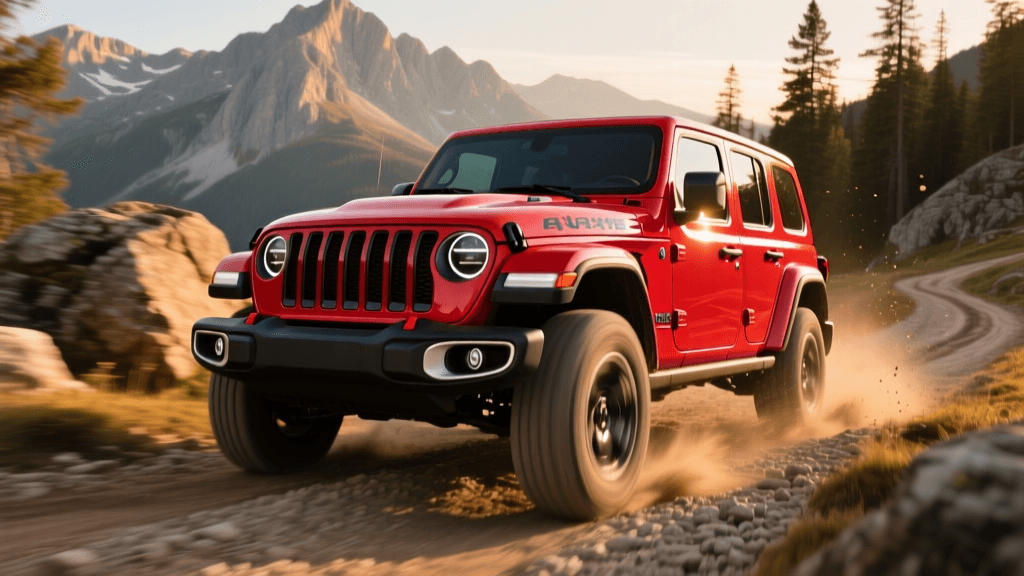
Where the Wrangler 4xe truly separates itself from competitors like the Toyota RAV4 Prime or Ford Escape PHEV is its off-road prowess. Jeep offers the 4xe powertrain across multiple trims, including the highly capable Rubicon. According to Car and Driver's comprehensive testing, the 4xe's electric motors provide instant torque at zero RPM, which is a massive advantage when crawling over technical obstacles. You do not need to rev the engine to get the power you need; you simply modulate the pedal for precise, smooth movements over rocks and ledges.
The Stealth Trail Experience
One of the most surprising benefits for beginners is the acoustic experience of electric off-roading. By forcing the vehicle into 'Electric Mode' on the trail, the gas engine shuts off completely. This allows you to hear the tires gripping the dirt, the suspension articulating, and the nature around you. It is a serene, stealthy way to explore the wilderness, minimizing noise pollution on shared trails.
Trail Tactics: E-Save Mode
Smart trail runners use the 'E-Save' button on the dashboard during their highway drive to the trailhead. This mode forces the gas engine to do the heavy lifting on the highway, preserving the battery's 21 miles of electric range specifically for the low-speed, high-torque demands of the off-road trail. Additionally, the 4xe's battery pack is sealed and waterproof, allowing the vehicle to maintain its impressive 31.6 inches of water fording capability even when fully submerged.
Charging the Wrangler 4xe at Home
Charging a PHEV is incredibly straightforward, especially since the 4xe's battery is relatively small compared to a full EV. The vehicle comes with a Level 1 charging cable that plugs into a standard 120-volt household outlet. However, Level 1 charging is slow, taking roughly 12 hours to replenish the battery from empty. For most owners, this means plugging in when you get home from work and waking up to a full charge.
If you want faster turnaround times, installing a Level 2 (240-volt) home charger is highly recommended. A Level 2 setup will charge the Wrangler 4xe from zero to full in just over two hours. This is perfect if you use up your electric range on a morning grocery run and want to recharge before your afternoon commute. You can find more details on home charging setups and tax incentives via Jeep's official 4xe owner resources.
Fuel Economy and Total Cost of Ownership
What happens when the battery dies? Unlike some early PHEVs that became sluggish and inefficient when depleted, the Wrangler 4xe operates as a standard hybrid. Once the electric range is exhausted, the vehicle seamlessly blends the gas engine and electric motors, achieving around 20 MPG combined in real-world driving. While 20 MPG is not groundbreaking, it is perfectly respectable for a heavy, boxy, solid-axle off-roader.
For a beginner calculating the total cost of ownership, consider your daily commute. If you drive less than 20 miles a day and charge at home overnight, you might go months without visiting a gas station, effectively making your daily commute cost just a few dollars in electricity. Furthermore, the 4xe often qualifies for federal and local clean energy incentives, which can significantly offset the initial premium over a gas-only Wrangler.
Data Comparison: Wrangler 4xe vs. PHEV Competitors
To help you visualize where the Wrangler 4xe stands in the broader PHEV market, we have compiled a comparison chart against other popular plug-in hybrid SUVs. While others offer better on-road efficiency, none can match the Jeep's trail capabilities.
| Vehicle Model | EPA Electric Range | Battery Capacity | Combined Gas MPG (Depleted) | Off-Road Capability |
|---|---|---|---|---|
| Jeep Wrangler 4xe Rubicon | 21 Miles | 17.3 kWh | 20 MPG | Extreme (Trail Rated) |
| Toyota RAV4 Prime | 42 Miles | 18.1 kWh | 38 MPG | Moderate (AWD) |
| Ford Escape PHEV | 37 Miles | 14.4 kWh | 40 MPG | Low (FWD Only) |
| Subaru Crosstrek Hybrid | 17 Miles | 8.8 kWh | 35 MPG | High (Symmetrical AWD) |
Maximizing Regenerative Braking
One of the best features for beginners to master in the Wrangler 4xe is the Max Regen button located on the steering wheel. When engaged, this setting dramatically increases the aggressive nature of the regenerative braking system. Lifting off the accelerator pedal will slow the vehicle down significantly while sending a high volume of electrons back into the battery. This feature is incredibly useful when descending steep off-road grades, allowing you to control your speed without riding the mechanical brakes, or when navigating stop-and-go city traffic, reducing wear and tear on your brake pads.
Final Verdict: Is the 4xe Right for You?
The Jeep Wrangler 4xe is not the most aerodynamic, nor is it the most fuel-efficient PHEV on the market when the battery is depleted. However, it is arguably the most versatile. For the beginner who wants to dip their toes into the world of electric driving without suffering from range anxiety, the 4xe offers a perfect safety net. You get roughly 21 miles of silent, emission-free driving for your daily errands, backed by a robust turbocharged gas engine for cross-country road trips. More importantly, it sacrifices absolutely zero off-road capability in the name of electrification. If your lifestyle involves weekday commuting and weekend trail blazing, the Wrangler 4xe remains in a class of its own, proving that you do not have to compromise on adventure to embrace the future of automotive technology.