The Beginner's Complete Guide to the Jeep Wrangler 4xe
Entering the world of electrified vehicles can feel overwhelming, but the Jeep Wrangler 4xe (pronounced "four-by-e") serves as an incredible bridge between traditional gas-powered off-roaders and the electric future. As a Plug-In Hybrid Electric Vehicle (PHEV), it offers the best of both worlds: silent, emission-free electric driving for daily commutes, and a rugged gas engine for cross-country road trips and extreme trail crawling. In this comprehensive beginner's guide, we break down the real-world electric range, off-road capabilities, drive modes, and ownership realities of the Wrangler 4xe to help you decide if it is the right vehicle for your lifestyle.
Understanding the Wrangler 4xe Powertrain
Before diving into range and mud, it is essential to understand what makes a PHEV different from a standard hybrid or a fully electric vehicle (EV). According to the U.S. Department of Energy's Alternative Fuels Data Center, a PHEV uses a battery to power an electric motor and uses a gas engine to extend the range. The Wrangler 4xe pairs a 2.0-liter turbocharged inline-four engine with two electric motors and a 17-kWh lithium-ion battery pack. This setup generates a robust 375 horsepower and 470 lb-ft of torque. For a beginner, this means you get instant, massive torque for rock crawling without the lag of a traditional turbo engine, alongside the ability to drive to work without burning a drop of gasoline.
Mastering the Three Drive Modes
To get the most out of the 4xe, you must understand the three primary E-Selec drive modes located on the dashboard:
- Hybrid Mode: The default setting. The vehicle seamlessly blends electric and gas power, prioritizing the battery first to maximize efficiency. It will automatically switch to gas when you demand heavy acceleration or when the battery depletes.
- Electric Mode: Forces the vehicle to run strictly on battery power. The gas engine will only kick in if you floor the accelerator past the detent or if you exceed the top electric speed of roughly 80 mph.
- E-Save Mode: Preserves your current battery charge for later use. This is crucial for off-roaders who want to save their electric power for silent trail crawling once they reach the dirt.
Real-World Electric Range vs. EPA Estimates
The EPA officially rates the Jeep Wrangler 4xe at 21 miles of pure electric range. However, as any seasoned EV owner will tell you, real-world conditions rarely mirror laboratory tests perfectly. The Wrangler is shaped like a brick, weighs over 5,000 pounds, and features all-terrain tires that create immense rolling resistance and aerodynamic drag.
Highway vs. City Driving
If your daily commute involves highway speeds of 70 mph or higher, expect your real-world electric range to drop to between 14 and 17 miles. The electric motors work overtime to push the heavy, boxy chassis through the wind. Conversely, if your route consists of stop-and-go city traffic or suburban school runs at speeds under 45 mph, you can easily achieve or even slightly exceed the 21-mile estimate, thanks to regenerative braking capturing energy every time you slow down.
The Aftermarket Tire Penalty
One of the most common modifications Jeep owners make is upgrading to larger, more aggressive mud-terrain tires. As a beginner, you must know that adding 35-inch tires and a suspension lift will drastically reduce your electric range. The added weight, increased rolling resistance, and worsened aerodynamics can drop your real-world EV range down to 10 or 12 miles. If maximizing your daily electric commute is a priority, stick to the factory all-terrain tires or opt for lightweight, highway-friendly alternatives.
Off-Road Performance: The Silent Trail Experience
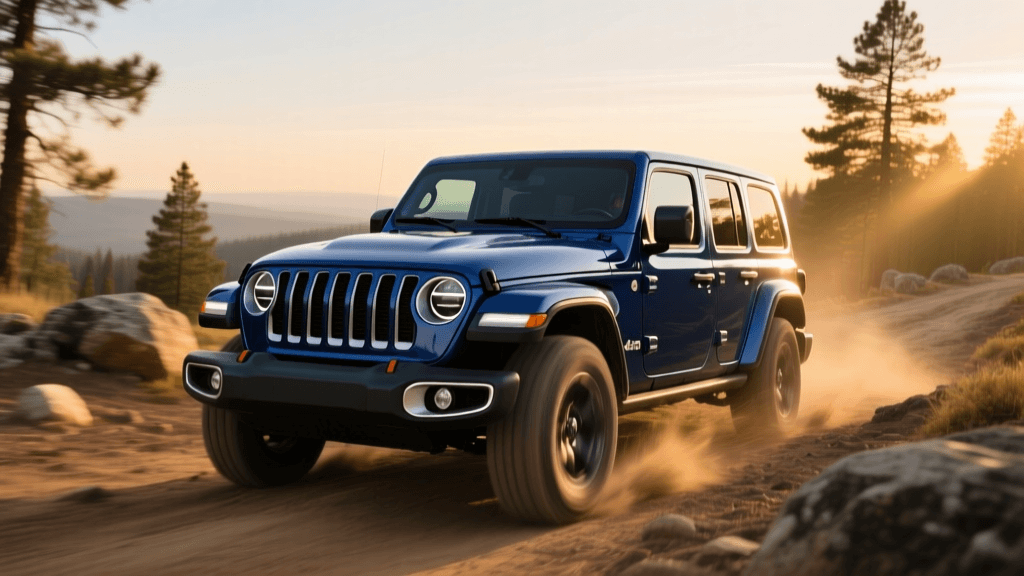
Jeep has a legendary reputation for off-road prowess, and the 4xe badge does not dilute it. In fact, the electric powertrain enhances the trail experience in ways gas engines simply cannot match. When you shift the transfer case into 4-Low and engage Electric mode, the Wrangler crawls over rocks in near-total silence. This allows you to hear your spotter's instructions clearly and appreciate nature without the roar of an exhaust.
Furthermore, electric motors deliver 100% of their torque at zero RPM. When you are inching up a steep, technical rock ledge, this instant torque provides precise, predictable throttle control without the need to rev the engine and risk spinning the tires. Jeep has also meticulously waterproofed the high-voltage battery pack and electrical components, allowing the 4xe to ford water up to 30 inches deep without hesitation. You can review the exact trail-rated specifications and waterproofing details on the official Jeep Wrangler 4xe platform page.
Charging at Home: What Beginners Need to Know
One of the most common questions new PHEV owners have is about charging logistics. The Wrangler 4xe features a charge port located on the front left fender. It uses a standard J1772 connector, meaning it is compatible with almost every public Level 2 charger in North America. Note that the 4xe does not support DC Fast Charging, so you will primarily rely on home charging.
- Level 1 Charging (120V Standard Outlet): Using the included portable charging cord, a full charge from 0% to 100% takes roughly 12 hours. This is fine if you drive less than 20 miles a day and can plug in overnight.
- Level 2 Charging (240V Outlet or Wallbox): By installing a home Level 2 charger (like a ChargePoint Home Flex or a simple NEMA 14-50 outlet), you can cut charging time down to just 2 to 2.5 hours. This is highly recommended for 4xe owners, allowing you to top up the battery during the day or quickly recharge before an evening errand.
Pro Tip for Beginners: Always use the 'Max Regen' button located near the gear shifter when driving in hilly areas or heavy traffic. This increases the regenerative braking force, allowing you to recapture more kinetic energy and extend your electric range without touching the brake pedal.
Wrangler 4xe vs. Gas Wrangler: By the Numbers
To help you decide if the premium for the plug-in hybrid system is worth it, we have compiled a direct comparison between the 4xe and a similarly equipped gas-powered Wrangler.
| Specification | Wrangler 4xe (PHEV) | Wrangler 2.0L Turbo (Gas) |
|---|---|---|
| Total Horsepower | 375 hp | 270 hp |
| Total Torque | 470 lb-ft | 295 lb-ft |
| Electric-Only Range | 21 miles (EPA) | N/A |
| MPGe (Combined) | 49 MPGe | 24 MPG |
| Curb Weight | ~5,100 lbs | ~4,400 lbs |
| Towing Capacity | 3,500 lbs | 3,500 lbs |
As highlighted by automotive experts at Edmunds in their Wrangler 4xe review, the massive torque advantage and the ability to run electric accessories via the onboard power outlets make the 4xe a compelling upgrade despite the added curb weight.
Final Verdict: Is the 4xe Right for You?
The Jeep Wrangler 4xe is not a perfect vehicle; it is heavy, expensive, and its aerodynamic profile limits highway electric efficiency. However, as a beginner's gateway into the PHEV lifestyle, it is unmatched in its versatility. If you have a short daily commute where you can charge at home, and you want a vehicle that can conquer rugged trails on the weekend without the anxiety of finding an EV charger in the wilderness, the Wrangler 4xe is a brilliant choice. It teaches you the habits of plugging in and managing battery modes, all while wrapping you in the iconic, removable-doors freedom that only a Jeep can provide.