The Luxury PHEV Heavyweights Collide
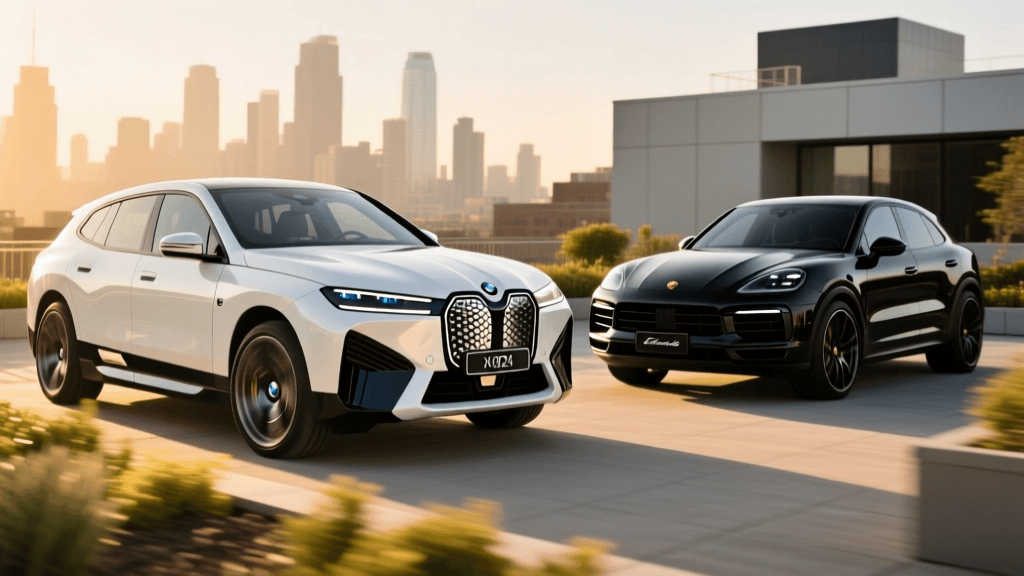
The luxury midsize plug-in hybrid electric vehicle (PHEV) segment is experiencing a renaissance. Automakers have finally realized that buyers want the silent, torque-rich commute of an EV combined with the limitless road-trip capability of a gas engine. Two of the most prominent titans in this space are the newly refreshed BMW X5 xDrive50e and the updated Porsche Cayenne E-Hybrid. Both offer exceptional build quality, prestigious badges, and the ability to drive on pure electricity for daily errands. But when you park them side-by-side and dig into the spec sheets, real-world usability, and total cost of ownership, clear differences emerge. In this head-to-head showdown, we will determine which German luxury PHEV deserves a spot in your garage.
Powertrain and Performance: Inline-Six vs. Turbo V6
BMW recently retired the excellent xDrive45e, replacing it with the xDrive50e variant. Under the hood lies a buttery-smooth 3.0-liter turbocharged inline-six engine paired with an electric motor integrated into the eight-speed automatic transmission. The combined output is a massive 483 horsepower and 516 lb-ft of torque. This setup allows the heavy SUV to sprint from 0 to 60 mph in just 4.6 seconds. The inline-six is renowned for its linear power delivery and acoustic refinement, making it a perfect match for a luxury cruiser.
Porsche counters with its own 3.0-liter turbocharged V6, also mated to an electric motor within the eight-speed PDK transmission. The base Cayenne E-Hybrid produces 463 horsepower and 479 lb-ft of torque, achieving a 0-60 mph time of 4.9 seconds. While the BMW holds a slight edge in straight-line acceleration, the Porsche's powertrain tuning prioritizes throttle response and sporty engagement. The PDK transmission shifts with telepathic speed, and the V6 offers a more aggressive, sporty exhaust note when pushed hard in Sport mode.
Electric Range, Battery, and Charging Infrastructure
For PHEV owners, electric range is the metric that matters most for daily driving. BMW equipped the X5 xDrive50e with a 25.7 kWh battery pack (approximately 22 kWh usable). This translates to an EPA-estimated 38 to 40 miles of pure electric range, depending on wheel size. In real-world mixed commuting, owners frequently report achieving the full 38 miles before the gas engine fires up.
The newly updated Porsche Cayenne E-Hybrid features a slightly larger 25.9 kWh battery pack. However, due to its sportier tuning, wider tires, and less aerodynamic profile, its EPA-estimated electric range sits lower, typically around 27 to 30 miles. While 30 miles is sufficient for many short commutes, the BMW's 40-mile advantage is highly noticeable for those with longer suburban drives.
When it comes to recharging, Porsche takes the lead in AC charging speeds. The Cayenne E-Hybrid supports up to 11 kW Level 2 charging, meaning you can replenish the battery in about 2.5 hours using a robust home wallbox. The BMW X5 xDrive50e is limited to 7.4 kW, requiring closer to 3.5 to 4 hours for a full charge. For home charging setups, we highly recommend installing a NEMA 14-50 outlet on a dedicated 50-amp circuit and utilizing a smart charger like the ChargePoint Home Flex to take full advantage of the Porsche's faster onboard charger.
Interior Technology, Cargo, and Practicality
Stepping inside the X5, you are greeted by BMW's massive Curved Display, which merges a 12.3-inch digital instrument cluster with a 14.9-inch central touchscreen running the latest iDrive 8.5 operating system. The interface is highly responsive, features excellent voice recognition, and retains some physical shortcuts for climate control via the center console roller dial. Cargo space is a major victory for BMW: the X5 offers 33.9 cubic feet behind the rear seats, and the battery packaging does not severely intrude on the trunk floor.
The Cayenne's interior is undeniably more driver-focused and features premium materials, including available Race-Tex microfiber and stunning leather upholstery. Porsche utilizes a 12.6-inch curved digital cluster and a 12.3-inch central screen, with an optional 10.9-inch passenger display. However, the Porsche's sloping roofline and sporty packaging compromise cargo capacity, offering just 27.2 cubic feet behind the second row. If you frequently haul golf clubs, strollers, or luggage for family vacations, the BMW is the vastly more practical choice.
Driving Dynamics and Ride Quality
This is where the Porsche badge traditionally earns its premium. The Cayenne E-Hybrid features Porsche Active Suspension Management (PASM) and an incredibly well-sorted chassis. Despite weighing nearly 5,000 pounds, the Cayenne corners with minimal body roll, offers precise steering feedback, and brakes with immense confidence. It is a sports car disguised as a family SUV.
The BMW X5 xDrive50e, equipped with optional adaptive air suspension, prioritizes plushness and isolation. It glides over highway expansion joints and absorbs potholes with remarkable composure. While it is capable in the canyons, it feels distinctly heavier and more detached than the Porsche. If your priority is a serene, quiet, and comfortable daily commute, the BMW's ride quality is superior.
Head-to-Head Specifications Comparison
| Feature | BMW X5 xDrive50e | Porsche Cayenne E-Hybrid |
|---|---|---|
| Powertrain | 3.0L Turbo I6 + Electric Motor | 3.0L Turbo V6 + Electric Motor |
| Combined Horsepower | 483 hp | 463 hp |
| Combined Torque | 516 lb-ft | 479 lb-ft |
| Battery Capacity (Gross) | 25.7 kWh | 25.9 kWh |
| EPA Electric Range | ~38-40 miles | ~27-30 miles |
| Max AC Charging Speed | 7.4 kW | 11.0 kW |
| Cargo Space (Behind 2nd Row) | 33.9 cu-ft | 27.2 cu-ft |
| Starting MSRP (Approx.) | $74,000 | $91,000 |
Total Cost of Ownership and Tax Incentives
Price is a significant differentiator. The BMW X5 xDrive50e starts around $74,000, while the Porsche Cayenne E-Hybrid commands a steep premium, starting near $91,000 before diving into Porsche's extensive (and expensive) options list.
Federal tax incentives also play a massive role in the total cost of ownership. Because BMW manufactures the X5 at its Spartanburg, South Carolina plant, it frequently qualifies for partial or full IRS Clean Vehicle Credits, potentially knocking $3,750 or $7,500 off the purchase price, depending on current battery component sourcing rules. Porsche builds the Cayenne in Slovakia, meaning it does not qualify for the new purchase tax credit, though buyers can sometimes bypass the MSRP and North American assembly requirements by utilizing the commercial leasing loophole. Over a five-year ownership cycle, the BMW's lower starting price, better cargo utility, and potential tax credits make it a far more financially sound investment, while the Porsche will suffer steeper initial depreciation.
The Final Verdict
Choosing between the 2024 BMW X5 xDrive50e and the Porsche Cayenne E-Hybrid ultimately comes down to your personal priorities as a driver and a family member. The Porsche Cayenne E-Hybrid is the undisputed champion of driving dynamics. It offers faster charging, a more engaging chassis, and an interior that feels a tier above in terms of sporty luxury. If you view your SUV as a weekend canyon-carver and budget is of little concern, the Porsche is worth the premium.
However, the BMW X5 xDrive50e wins this head-to-head showdown as the better overall luxury PHEV for the majority of buyers. It delivers a superior electric range that will actually cover most daily round-trip commutes without using a drop of gas. It offers vastly more cargo space, a more comfortable highway ride, and a significantly lower barrier to entry regarding price and tax incentives. For the daily grind, the school run, and the cross-country road trip, the X5 xDrive50e is the smarter, more well-rounded luxury hybrid.