Introduction: The Evolution of Lexus Performance Hybrids
When Lexus introduced the original RX 400h nearly two decades ago, it pioneered the luxury hybrid SUV segment. For years, the formula remained largely unchanged: pair a naturally aspirated V6 engine with a battery pack and an electronically controlled continuously variable transmission (eCVT) to prioritize smooth, silent, and efficient cruising. However, the automotive landscape has shifted dramatically, and so has the engineering philosophy at Lexus. Enter the Lexus RX 500h F SPORT Performance, a vehicle that completely rewrites the brand's hybrid playbook. By abandoning the V6 in favor of a high-output turbocharged four-cylinder hybrid system and introducing the revolutionary DIRECT4 all-wheel-drive system, Lexus has transformed its best-selling SUV into a genuine performance contender. In this technology deep dive, we dissect the engineering marvels that make the RX 500h a standout in the luxury hybrid market.
Powertrain Engineering: The 2.4L Turbo Hybrid System
At the heart of the RX 500h is the T24A-FTS engine, a 2.4-liter inline-four equipped with a twin-scroll turbocharger. This engine is a masterpiece of modern thermodynamics and fuel delivery, utilizing Lexus’s D-4S dual injection system. By combining both direct and port fuel injection, the engine optimizes fuel atomization across the entire rev range, reducing carbon buildup on the intake valves while maximizing combustion efficiency. On its own, the gas engine produces a robust 271 horsepower and 317 lb-ft of torque.
However, the true magic happens when the internal combustion engine is mated to the hybrid electric system. A high-output electric motor is sandwiched between the engine and the transmission, drawing power from a 288-volt nickel-metal hydride (NiMH) battery pack. The combined system output is a formidable 366 horsepower and 406 lb-ft of torque. According to MotorTrend's first drive review, this massive surge of low-end torque completely eliminates the traditional 'hybrid lag' associated with older Lexus models, resulting in a brisk 0-60 mph time of just 5.7 seconds.
Transmission Tech: Ditching the eCVT
Perhaps the most significant mechanical departure for the RX 500h is its transmission. While the lower-tier RX 350h relies on the traditional planetary-gear eCVT, the 500h utilizes a Direct Shift-6AT (six-speed automatic transmission). Enthusiasts and automotive journalists have long criticized eCVTs for their 'rubber-band' effect, where engine RPMs drone disconnected from vehicle speed during hard acceleration. By utilizing a stepped automatic transmission with a physical first gear and a traditional torque converter setup, the RX 500h delivers linear, predictable, and engaging gear shifts. This setup not only improves the visceral driving experience but also enhances high-speed passing confidence and towing stability, making it a vastly superior choice for dynamic driving.
The DIRECT4 AWD System: A Masterclass in Torque Vectoring
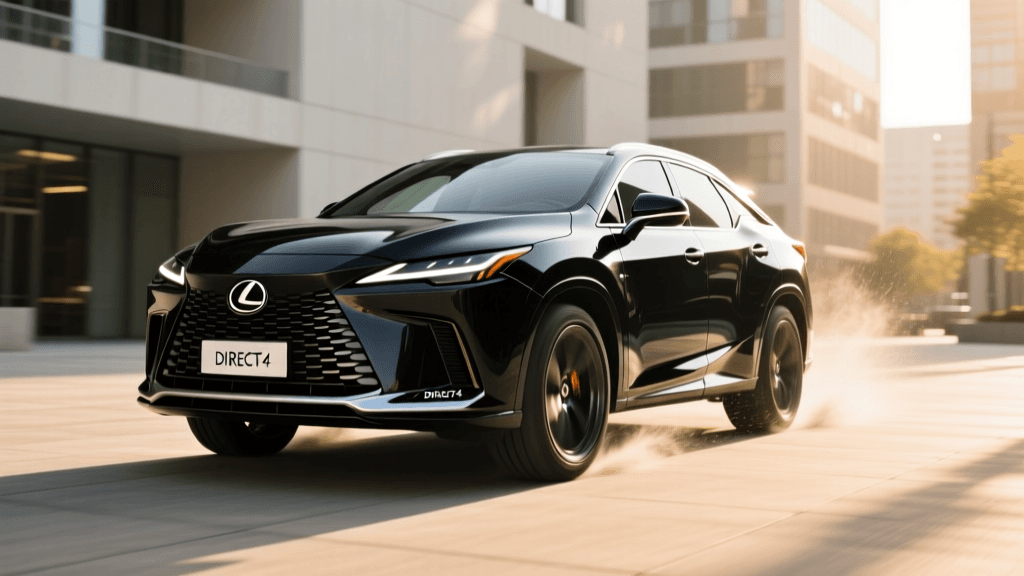
The crown jewel of the RX 500h’s technology suite is the DIRECT4 all-wheel-drive system. Unlike traditional mechanical AWD systems that rely on viscous couplings or clutch packs to react to wheel slip after it happens, DIRECT4 is a predictive, electronically controlled system. It utilizes a 40-kW (54-horsepower) electric motor on the rear axle, known as an eAxle, to independently manage rear-wheel torque.
DIRECT4 operates by continuously monitoring a network of sensors, including steering angle, yaw rate, longitudinal and lateral G-forces, and individual wheel speeds. Based on this data, the system can shift torque distribution between the front and rear axles in milliseconds. During hard acceleration, it can send up to 80% of the torque to the rear wheels, mimicking the stance and grip of a rear-wheel-drive sports car. During steady-state highway cruising, it can route up to 100% of the power to the front wheels to minimize drivetrain parasitic losses and maximize fuel efficiency.
Furthermore, DIRECT4 actively manages vehicle posture. When you brake, the system adjusts torque to mitigate nose-dive. When you accelerate, it counters rear squat. In cornering, it subtly alters the torque split to reduce understeer, effectively 'pushing' the car through the apex. As noted in Car and Driver's comprehensive RX testing, this results in a remarkably flat, composed ride that defies the vehicle's 4,600-pound curb weight.
Braking Integration and Chassis Dynamics
Managing the kinetic energy of a heavy luxury SUV requires sophisticated braking. The RX 500h employs an Electronically Controlled Braking (ECB) system that seamlessly blends regenerative braking from the electric motors with traditional hydraulic friction brakes. The transition between regen and friction is notoriously difficult to tune, often resulting in a 'grabby' or inconsistent pedal feel in lesser hybrids. Lexus has mastered this algorithm, providing a linear, progressive pedal feel that inspires confidence in both city traffic and canyon carving. Additionally, the GA-K (Global Architecture-K) platform provides immense torsional rigidity, while the battery pack's placement beneath the rear seats lowers the center of gravity, further enhancing the SUV's dynamic prowess.
Luxury Tech and Cabin Integration
Performance is only half the equation in a luxury SUV; the cabin must serve as a high-tech sanctuary. The RX 500h features the latest iteration of the Lexus Interface, centered around a massive 14-inch HD touchscreen. The system ditches the frustrating touchpads of previous generations in favor of a highly responsive, smartphone-like UI with cloud-based native navigation, OTA (Over-The-Air) updates, and an intelligent voice assistant that responds to natural speech patterns.
Other notable technological inclusions include the available Mark Levinson 21-speaker PurePlay surround sound system, which uses advanced acoustic mapping to deliver studio-quality audio regardless of where you are seated. The RX also features the e-Latch electronic door release system, integrated with Safe Exit Assist. This radar-based system monitors the vehicle's blind spots and physically prevents the doors from opening if a cyclist or approaching vehicle is detected, a brilliant fusion of safety and convenience technology.
Spec Showdown: RX 500h vs. The Competition
To understand where the RX 500h sits in the market, it is helpful to compare its core specifications against both its internal sibling and a primary German rival.
| Specification | Lexus RX 500h F SPORT | Lexus RX 350h | BMW X5 xDrive40i |
|---|---|---|---|
| Powertrain | 2.4L Turbo I-4 Hybrid | 2.5L I-4 Hybrid | 3.0L Turbo I-6 Mild-Hybrid |
| Horsepower | 366 hp | 246 hp | 375 hp |
| Torque | 406 lb-ft | 233 lb-ft | 398 lb-ft |
| 0-60 MPH | 5.7 seconds | 7.4 seconds | 5.2 seconds |
| EPA Combined MPG | 27 MPG | 36 MPG | 24 MPG |
| Drivetrain | DIRECT4 AWD | Electronic AWD | xDrive AWD |
As the data illustrates, the RX 500h strikes a unique middle ground. It offers vastly superior performance and torque compared to the efficiency-focused RX 350h, while delivering better real-world fuel economy than the BMW X5, albeit with a slight deficit in outright straight-line acceleration. The DIRECT4 system, however, gives the Lexus a unique dynamic character that bridges the gap between comfort and sportiness.
Final Verdict: A Triumph of Hybrid Engineering
The Lexus RX 500h represents a watershed moment for the brand. It proves that hybrid technology is no longer solely a tool for maximizing miles per gallon; when engineered with intent, it can dramatically elevate vehicle dynamics, torque delivery, and driving engagement. The integration of the turbocharged powertrain, the stepped automatic transmission, and the predictive brilliance of the DIRECT4 AWD system results in an SUV that is as thrilling to drive on a winding backroad as it is comfortable on a cross-country highway tour. For buyers seeking a luxury SUV that refuses to compromise between performance, cutting-edge technology, and hybrid efficiency, the RX 500h stands as an undisputed segment leader.