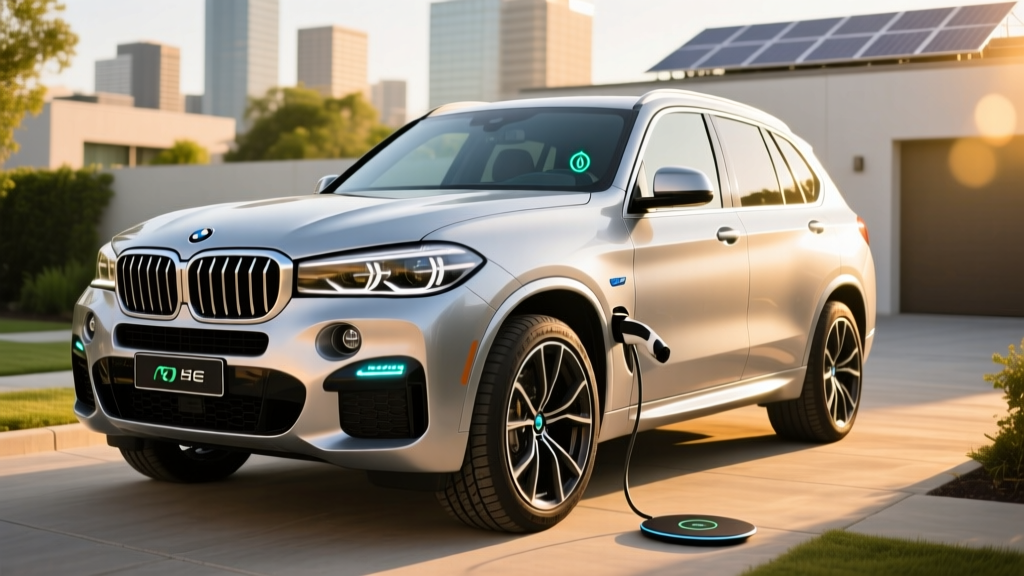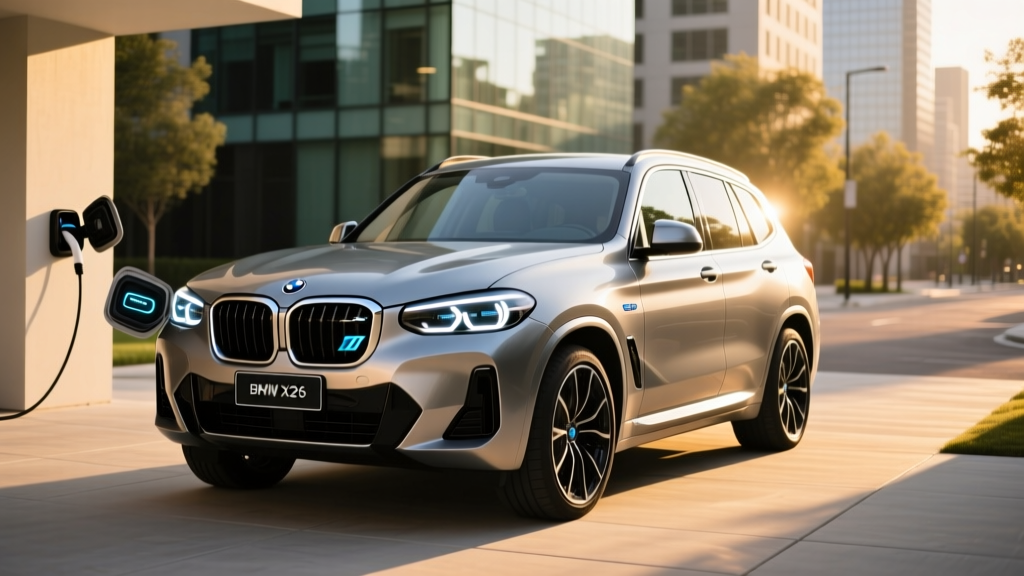
The 2026 BMW X3 has been fully redesigned for its fourth generation, and with it comes a critical powertrain question for luxury compact SUV buyers: should you go hybrid? The answer now centers on the BMW X3 xDrive30e, a plug-in hybrid electric vehicle (PHEV) that pairs a turbocharged four-cylinder with a potent electric motor. Unlike the previous generation's xDrive30e, which offered limited electric range, the 2026 model represents a substantial leap in electrification — making it a legitimate bridge between a conventional gas SUV and a full battery-electric vehicle.
In this guide, we break down the hybrid BMW X3's real-world fuel economy, electric-only range, charging logistics, and total ownership cost — with exact numbers, not marketing fluff. We'll also clarify whether you're looking at a conventional hybrid (HEV) or a plug-in hybrid (PHEV), because the difference fundamentally changes how you'd own this vehicle.
HEV vs PHEV: What the BMW X3 Actually Offers in 2026
Before diving into specs, a critical distinction: the 2026 BMW X3 lineup includes both a conventional hybrid and a plug-in hybrid. Understanding the difference determines whether you need a charger, qualify for incentives, and how much you'll spend at the pump.
| Feature | X3 xDrive30 (Mild Hybrid) | X3 xDrive30e (Plug-in Hybrid) |
|---|---|---|
| Type | Conventional HEV (mild hybrid assist) | PHEV (plug-in hybrid) |
| Needs to be plugged in? | No — regenerates via braking/engine | Yes — for electric-only driving |
| Electric-only range | None (motor assists gas engine only) | EPA-estimated 35 miles |
| Battery size | ~0.5 kWh (48V mild-hybrid system) | 19.7 kWh usable (lithium-ion) |
| Federal tax credit eligible? | No | Potentially up to $3,750* |
| Combined power output | 255 hp | 308 hp (combined system) |
*Tax credit eligibility depends on IRS §30D rules including buyer income caps, MSRP limits, and battery component/critical mineral sourcing. See the pricing section below for details.
The conventional X3 xDrive30 uses a 48-volt mild-hybrid system that smooths stop-start operation and provides minor torque fill. It cannot drive on electricity alone. The xDrive30e is a fundamentally different powertrain — one that lets you complete daily commutes entirely on electric power before the gas engine ever starts. This review focuses primarily on the xDrive30e PHEV, as it's the more consequential choice for electrified-vehicle shoppers.
Powertrain Specs: Engine, Motor, and Combined Output
| Specification | 2026 BMW X3 xDrive30e |
|---|---|
| Gas engine | 2.0L turbocharged inline-4 |
| Engine output | 184 hp / 221 lb-ft torque |
| Electric motor | Integrated into 8-speed transmission |
| Motor output | 184 hp / 184 lb-ft |
| Combined system output | 308 hp / 332 lb-ft |
| Transmission | 8-speed automatic (ZF) |
| Drivetrain | xDrive AWD |
| 0-60 mph | 5.9 seconds (est.) |
| Battery (usable) | 19.7 kWh lithium-ion (NMC chemistry) |
| Onboard charger | 7.4 kW (Level 2 AC only) |
| DC fast charging | Not supported |
The xDrive30e's powertrain architecture places the electric motor directly within the transmission housing, meaning both the gas engine and electric motor drive all four wheels through the same 8-speed automatic. This is a more sophisticated layout than competitors that mount the motor on a single axle. The result is seamless transitions between electric and gas power — in our experience, you rarely feel the engine kick in unless you floor the accelerator or the battery depletes.
The 19.7 kWh usable battery capacity is a significant upgrade from the previous generation's roughly 12 kWh pack. BMW uses NMC (nickel manganese cobalt) chemistry, which offers higher energy density than LFP (lithium iron phosphate) — important for fitting meaningful range into a compact SUV platform.
Fuel Economy: EPA Ratings and Real-World MPG
The question every hybrid buyer asks: how many MPG does this hybrid actually get? Here's the EPA-estimated breakdown for the 2026 X3 xDrive30e, per fueleconomy.gov:
| Driving Mode | City | Highway | Combined |
|---|---|---|---|
| Charge-depleting (EV mode) | 56 MPGe combined | ||
| Charge-sustaining (gas only, battery depleted) | 28 MPG | 33 MPG | 30 MPG |
Understanding these two numbers is essential. The 56 MPGe figure applies when you're driving primarily on electric power with a charged battery. Once the battery depletes to its minimum state of charge (roughly 10-15% remaining buffer), the X3 operates as a conventional hybrid at 30 MPG combined.
Real-world MPG expectations:
- City driving with daily charging: Expect 40-55 MPGe equivalent. PHEVs excel in stop-and-go traffic where regenerative braking recaptures energy and the electric motor handles low-speed driving.
- Highway driving with depleted battery: Expect 28-31 MPG. The turbo four is reasonably efficient at cruise, but aerodynamic drag and the vehicle's ~4,500-lb curb weight work against it.
- Mixed driving without charging: Expect 27-30 MPG. If you never plug in, you're carrying a heavy battery you're not using — the X3 xDrive30 (non-hybrid) actually achieves similar numbers without the weight penalty.
- Cold weather (below 32°F): Expect 15-25% reduction in electric-only range (roughly 26-30 miles instead of 35). Battery chemistry slows in cold temperatures, and cabin heating draws additional power.
The key takeaway: the hybrid BMW X3 delivers its best efficiency when you charge regularly and your daily driving falls within that 35-mile electric window. If you can't or won't charge, the efficiency advantage over the conventional xDrive30 is marginal.
Electric-Only Range and Charging Logistics
EPA-estimated electric range: 35 miles
Real-world expectation: 28-33 miles in mixed driving; 25-28 miles in cold weather or at sustained highway speeds above 65 mph.
Thirty-five miles of electric-only range covers the average American's one-way commute — the U.S. Census Bureau reports a median commute of roughly 16 miles each way. If you charge at home overnight, you could complete many workdays without the gas engine starting at all.
Total combined range (electric + full 17.2-gallon gas tank): approximately 470 miles when starting with a full charge and full tank.
Charging the X3 xDrive30e:
| Charging Level | Power | 0-100% Time | Notes |
|---|---|---|---|
| Level 1 (120V household outlet) | ~1.4 kW | ~14 hours | Emergency/overnight trickle only |
| Level 2 (240V home/public) | 7.4 kW (max) | ~2.75 hours | Ideal daily charging solution |
| DC Fast Charging | Not supported | N/A | No CCS/NACS DC port on this model |
The 7.4 kW onboard charger is competitive for the PHEV segment. A Level 2 home charger — whether a BMW Wallbox or a third-party unit like a ChargePoint Home Flex — will fully replenish the battery in under three hours. This means you can easily top off during the workday if you have workplace charging, or fully charge overnight on a standard Level 2 installation.
The lack of DC fast charging is standard for PHEVs in this class. The battery is small enough that Level 2 refills it quickly, and adding DC charging hardware would increase cost and weight for minimal benefit.
Pricing, Trims, and Federal Tax Credit Eligibility
The 2026 BMW X3 xDrive30e starts at an MSRP of approximately $52,200 (including destination). A well-equipped model with the Premium Package, Driving Assistance Professional, and larger wheels will land in the $58,000-$63,000 range.
Federal tax credit under IRS §30D: The X3 xDrive30e may qualify for a partial federal tax credit — potentially up to $3,750 — depending on battery component and critical mineral sourcing requirements that the IRS updates periodically. Here's the eligibility checklist:
- MSRP cap: SUVs must be under $80,000 MSRP — the X3 xDrive30e qualifies on all trims.
- Buyer income cap: Modified AGI must not exceed $150,000 (single), $225,000 (head of household), or $300,000 (joint filing).
- Battery sourcing: A percentage of critical minerals and battery components must be sourced from the U.S. or free-trade-agreement countries. BMW's supply chain determines whether the credit is $3,750 (one requirement met) or $7,500 (both met). As of early 2026, most BMW PHEVs qualify for the partial $3,750 credit.
- Point-of-sale transfer: You can elect to transfer the credit to the dealer at purchase, reducing your out-of-pocket cost immediately rather than waiting for tax filing.
- North American assembly: The 2026 X3 is assembled at BMW's Spartanburg, SC plant, satisfying final-assembly requirements.
Important: Tax credit rules are subject to change. Always verify current eligibility on irs.gov and consult a tax professional before relying on credit estimates in your purchase decision.
Reliability, Battery Warranty, and Replacement Cost
Hybrid battery longevity is the number-one concern we hear from prospective PHEV buyers. Let's address it directly.
BMW High-Voltage Battery Warranty: 8 years or 80,000 miles (whichever comes first), covering defects and capacity loss below 70% of original capacity.
Hybrid system warranty: 8 years / 80,000 miles on electric motor, power electronics, and related components.
Expected battery lifespan: BMW's NMC lithium-ion packs in PHEVs have demonstrated strong longevity in practice. Based on data from the previous-generation X3 xDrive30e and similar BMW PHEV powertrains, owners typically see 8-12% degradation over the first 5 years / 60,000 miles. This means a battery starting at 35 miles of range might deliver roughly 31-32 miles after five years — a noticeable but manageable decline.
Battery replacement cost: If the high-voltage battery requires full replacement outside of warranty, expect a cost in the range of $8,000-$12,000 including parts and labor at a BMW dealership. This is a significant expense, but it's worth noting that catastrophic battery failures in BMW PHEVs are rare. Most degradation is gradual, and the battery remains functional — just with reduced electric range — well beyond the warranty period.
Overall reliability: BMW's fourth-generation X3 is new for the 2025 model year, so long-term reliability data specific to this generation is limited. The previous-generation X3 earned average reliability scores from Consumer Reports and J.D. Power. The PHEV powertrain adds complexity (dual power sources, high-voltage systems), but BMW has been refining this architecture since the 330e sedan launched in 2016. The ZF 8-speed transmission is one of the most proven automatics in the industry.
Who Should Choose the Hybrid BMW X3?
The X3 xDrive30e isn't the right choice for everyone. Here's our decision framework based on real ownership scenarios:
Choose the X3 xDrive30e PHEV if:
- You can install a Level 2 charger at home or have reliable workplace charging
- Your daily driving is under 35 miles round-trip, meaning you'll rarely burn gas on commutes
- You want electric daily driving but need gas flexibility for road trips and towing (3,500-lb rating)
- You live in a region with sparse DC fast-charging infrastructure and aren't ready for a full EV
- You want luxury-badge refinement with lower running costs than the gas-only X3
Choose the conventional X3 xDrive30 (mild hybrid) if:
- You cannot charge at home or work (apartment, street parking, no outlet access)
- Your daily driving regularly exceeds 50+ miles, negating the PHEV's electric advantage
- You want a lower purchase price (roughly $5,000 less than the xDrive30e)
Choose a full EV (e.g., BMW iX3, Tesla Model Y, Genesis GV70 Electrified) if:
- You want zero tailpipe emissions and minimal maintenance (no oil changes, no gas engine service)
- You have reliable home charging and access to DC fast-charging networks for road trips
- You want to maximize fuel cost savings — electricity at $0.14/kWh costs roughly $0.04/mile vs. $0.15+/mile for gas
Pros
- 35 miles of electric range covers most daily commutes
- 308 hp combined — genuinely quick for a compact luxury SUV
- Seamless gas-electric transitions; no range anxiety on road trips
- Qualifies for partial federal tax credit and HOV lane access in select states
- BMW Spartanburg assembly supports domestic manufacturing
Cons
- No DC fast charging — fine for PHEV, but limits on-the-go top-ups
- $52,200 starting price is steep vs. non-luxury PHEV competitors
- Cargo space reduced by ~3 cu ft vs. gas X3 due to battery placement
- Full electric range drops meaningfully in cold weather
- Only qualifies for partial ($3,750) federal credit, not the full $7,500
Hybrid vs PHEV vs EV: Which X3 Fits Your Life?
The 2026 X3 lineup forces a genuine choice between three electrification levels. Here's how to think about it in terms of total cost of ownership over five years and 75,000 miles:
| Model | Starting MSRP | Est. 5-Yr Fuel Cost | Est. Tax Credit | Est. 5-Yr Total* |
|---|---|---|---|---|
| X3 xDrive30 (mild hybrid) | $47,200 | $9,800 | $0 | $57,000 |
| X3 xDrive30e (PHEV) | $52,200 | $5,400** | -$3,750 | $53,850 |
| BMW iX (full EV, closest equivalent) | $62,000 | $3,900 | -$3,750 to $7,500 | $54,600-$58,450 |
*Includes purchase price, estimated fuel/electricity, minus tax credit. Excludes insurance, maintenance, and depreciation, which vary significantly by region and driver.
**Assumes 60% of driving is within electric range with regular home charging.
The PHEV occupies a compelling middle ground: lower upfront cost than a full EV, lower running costs than a gas car, and no lifestyle compromise on road trips. The math works best when you charge daily and your commute fits within the electric window.
Frequently Asked Questions
How many MPG does the hybrid BMW X3 get?
The 2026 BMW X3 xDrive30e achieves 56 MPGe combined when operating on electric power, and 30 MPG combined (28 city / 33 highway) once the battery is depleted and it operates as a conventional hybrid. The conventional mild-hybrid X3 xDrive30 achieves approximately 28 MPG combined. Real-world numbers for the PHEV depend heavily on how often you charge — daily charging maximizes the electric portion and pushes effective MPGe well above 40.
How far can the BMW X3 PHEV go on electric only?
The EPA-estimated electric-only range is 35 miles. In real-world driving, expect 28-33 miles in moderate temperatures with mixed city/highway driving. In cold weather below freezing, range drops to approximately 25-28 miles due to reduced battery efficiency and cabin heating demands. At sustained speeds above 70 mph, electric range also decreases as aerodynamic drag increases.
Does the BMW X3 hybrid qualify for a tax credit?
The 2026 X3 xDrive30e (PHEV) may qualify for a partial federal tax credit of up to $3,750 under IRS §30D, depending on battery sourcing requirements. Eligibility also depends on your income (capped at $150K single / $300K joint), and the vehicle's MSRP must be under $80,000 (which all X3 trims satisfy). The conventional mild-hybrid X3 xDrive30 does not qualify for any federal EV tax credit. Always verify current rules at irs.gov before purchasing.
Is the BMW X3 hybrid reliable, and what does battery replacement cost?
BMW's PHEV powertrain has been in production since 2016 and has demonstrated solid reliability. The high-voltage battery is warrantied for 8 years / 80,000 miles against defects and capacity loss below 70%. Real-world degradation data suggests 8-12% capacity loss over five years. Out-of-warranty battery replacement costs approximately $8,000-$12,000 at a BMW dealer. Complete battery failure is uncommon; most batteries remain functional well beyond the warranty period with gradually reduced electric range.
Can I charge the BMW X3 PHEV at home?
Yes. The X3 xDrive30e charges on any standard 120V outlet (Level 1, ~14 hours for a full charge) or a 240V Level 2 charger (~2.75 hours). A dedicated Level 2 home charger is strongly recommended for daily PHEV ownership. Installation typically costs $500-$2,000 depending on your electrical panel's capacity and the distance from panel to charger location. The X3 PHEV does not support DC fast charging, which is standard for plug-in hybrids in this class.
Does the BMW X3 hybrid need to be plugged in?
The xDrive30e PHEV should be plugged in to realize its electric-range and efficiency benefits, but it will operate as a conventional hybrid if you never charge it. However, driving a PHEV without charging means carrying ~200 lbs of battery weight you're not using, slightly reducing fuel economy compared to the lighter conventional X3. The mild-hybrid xDrive30 does not plug in at all.
The 2026 BMW X3 xDrive30e makes a strong case as a luxury compact SUV for the electrification-curious buyer. It won't match a full EV's running costs or eliminate tailpipe emissions entirely, but it eliminates the two biggest barriers to EV adoption: range anxiety on long trips and dependence on public charging infrastructure. If your daily routine fits within 35 miles and you can charge at home, the hybrid BMW X3 delivers electric-commute silence with weekend road-trip freedom — and that's a combination that still has real value in 2026.