Quick Verdict: A Pioneer PHEV With Real Trade-Offs
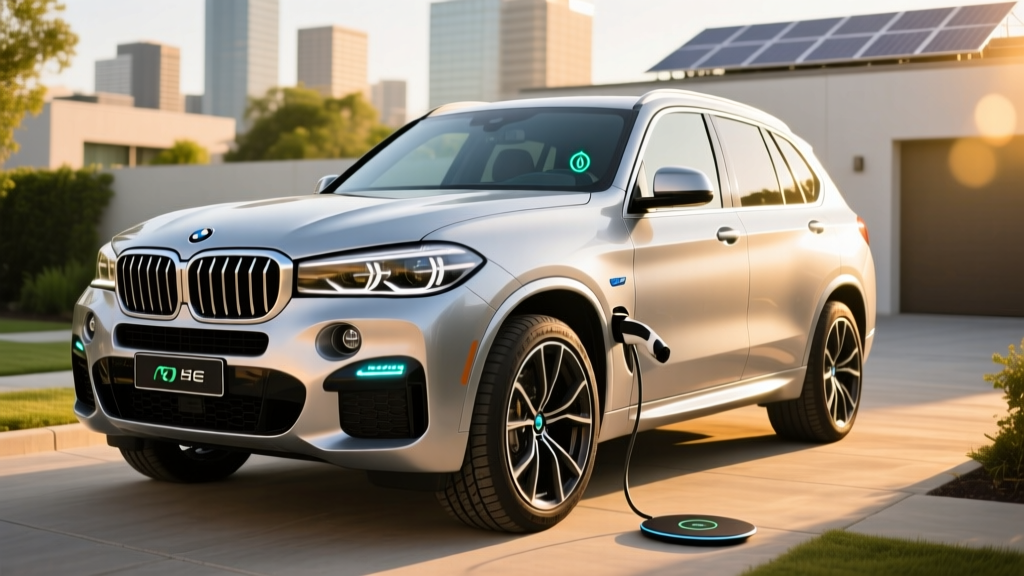
The 2017 BMW X5 xDrive40e was BMW's first plug-in hybrid SUV sold in the United States, pairing a turbocharged four-cylinder engine with an electric motor integrated into the 8-speed automatic transmission. Nearly a decade later, it remains a popular used-PHEV option for buyers who want luxury-badge comfort, standard all-wheel drive, and short-distance electric commuting without full EV commitment. But its 9.2 kWh battery and modest 14-mile EPA electric-only range reveal its early-generation roots. This guide covers everything you need to know before buying one in 2026.
| Spec | Value |
|---|---|
| Powertrain | 2.0L turbo I4 + electric motor (PHEV) |
| Combined Horsepower | 308 hp / 332 lb-ft torque |
| Engine Output | 240 hp (gas) + 111 hp (electric motor) |
| Battery Capacity | 9.2 kWh gross (~7.0 kWh usable), NMC lithium-ion |
| EPA Electric-Only Range | 14 miles |
| EPA Combined MPGe | 56 MPGe (gas + electric) |
| EPA MPG (gas only, combined) | 24 MPG combined (23 city / 25 highway) |
| Total Combined Range | ~330 miles (gas + electric) |
| Level 2 Charge Time (0–100%) | ~2 hours 45 minutes at 3.5 kW |
| DC Fast Charging | Not supported |
| 0–60 mph | 6.5 seconds |
| Drivetrain | xDrive AWD, 8-speed automatic |
| Cargo Volume | 34.2 cu ft (rear seats up) / 70.3 cu ft (folded) |
| Original MSRP (2017) | $63,795 (base, before destination) |
| Typical 2026 Used Price | $18,000–$28,000 depending on mileage/condition |
HEV vs PHEV: Where the X5 xDrive40e Fits
Before evaluating this vehicle, it's critical to understand the distinction between hybrid types — confusion here leads to disappointed buyers.
| Feature | Conventional Hybrid (HEV) | Plug-In Hybrid (PHEV) |
|---|---|---|
| Plugs in to charge? | No — regenerates via braking/engine | Yes — plugs into Level 1 or Level 2 |
| Electric-only range | 0–2 miles at low speed | Typically 15–50 miles (14 mi on this model) |
| Battery size | 1–2 kWh | 9–40 kWh |
| Federal tax credit (new) | None | Up to $7,500 (when eligible) |
| Example | Toyota RAV4 Hybrid | 2017 BMW X5 xDrive40e |
The X5 xDrive40e is a plug-in hybrid (PHEV). It has a charge port (J1772 connector) and a battery large enough for genuine electric-only driving on short trips. A conventional HEV like the Toyota Highlander Hybrid cannot plug in and has negligible electric-only range.
Electric Range and Fuel Economy: The Numbers That Matter
The EPA rated the 2017 X5 xDrive40e at 14 miles of electric-only range and 56 MPGe when combining electric and gasoline operation. Once the battery is depleted, the gas engine takes over and delivers an EPA-estimated 24 MPG combined (23 city / 25 highway). (Source: fueleconomy.gov)
| Mode | City | Highway | Combined |
|---|---|---|---|
| Electric + Gas (MPGe) | 56 MPGe | ||
| Gas Only (MPG) | 23 | 25 | 24 |
Real-World MPG vs. EPA Sticker
Real-world results depend heavily on how you use the vehicle:
- Short commutes (under 14 miles) with daily charging: You may use almost zero gasoline for weeks. Owners report 60–80 MPGe equivalent on mixed short-trip driving when the battery is consistently topped up.
- Highway road trips (battery depleted): Expect 22–24 MPG at 70 mph. The 2.0L turbo four-cylinder is working hard to move a 5,300-lb SUV without electric assist, so highway efficiency is unremarkable.
- Cold weather (below 35°F): Electric range drops to 10–12 miles due to battery chemistry limitations and cabin heating demand. Gas MPG may dip 1–2 MPG below EPA.
- City driving (charge-sustaining mode): Regenerative braking helps. Some owners report 25–26 MPG city once the battery is depleted, slightly above the EPA city figure — typical for hybrids in stop-and-go traffic.
Charging: What to Expect at Home and on the Road
The 2017 X5 xDrive40e uses a standard J1772 connector for AC charging. It does not support DC fast charging — a common limitation of early-generation PHEVs with smaller batteries.
| Level | Power | Time (0–100%) | Practical Notes |
|---|---|---|---|
| Level 1 (120V outlet) | ~1.4 kW | ~7 hours | Overnight charging; included cord |
| Level 2 (240V) | 3.5 kW (onboard charger max) | ~2 hours 45 min | Recommended for daily use |
| DC Fast Charge | N/A | N/A | Not supported — no CCS/CHAdeMO port |
The onboard charger is limited to 3.5 kW, meaning even a 48-amp Level 2 home charger will only deliver 3.5 kW to this vehicle. This is perfectly adequate for a 9.2 kWh battery — a full charge in under 3 hours is practical for nightly top-ups.
Home charging cost: At the US average electricity rate of ~$0.17/kWh (EIA, 2025), a full charge costs approximately $1.56 — roughly the equivalent of half a gallon of gasoline for 11–14 miles of electric driving.
Powertrain and Driving Experience
The xDrive40e combines a 240-hp turbocharged 2.0-liter four-cylinder engine with a 111-hp electric motor mounted inside the ZF 8-speed automatic transmission housing. Combined system output is 308 horsepower and 332 lb-ft of torque. BMW's xDrive all-wheel-drive system is standard.
Three driving modes govern the powertrain:
- MAX eDrive: Forces electric-only operation up to ~75 mph, depleting the battery fastest but providing zero-emission driving.
- AUTO eDrive: The default mode — the car intelligently blends gas and electric based on speed, load, and navigation data.
- SAVE Battery: The gas engine maintains the current battery state of charge, useful when you want to save electric range for an upcoming city zone or low-emission area.
The 0–60 mph time of 6.5 seconds is respectable for a midsize luxury SUV of this era. Weight is the penalty — at roughly 5,300 lbs, the X5 xDrive40e is about 400 lbs heavier than the gas-only X5 xDrive35i due to the battery and electric motor.
Battery Health, Warranty, and Replacement Cost
Battery Degradation and Real-World Health
The 9.2 kWh NMC (nickel-manganese-cobalt) battery in the X5 xDrive40e was engineered with a conservative buffer — BMW locks off a portion of gross capacity to reduce deep-cycle stress. After 8–9 years of use, owners typically report electric range degradation of 15–25%, meaning an original 14-mile range may now deliver 10–12 miles on a full charge.
Key factors affecting battery longevity:
- Frequent charging to 100% and discharging to 0% accelerates degradation.
- Exposure to extreme heat (sustained above 95°F) is more damaging than cold.
- The X5 xDrive40e's liquid-cooled battery pack manages thermal stress better than passively cooled PHEV packs.
Battery Replacement Cost
If the high-voltage battery requires replacement out of warranty, expect costs in the range of $6,000–$10,000 (parts and labor) at a BMW dealership. Independent EV shops may offer refurbished pack replacements for $4,000–$6,000. Before buying used, request a battery state-of-health (SoH) diagnostic from a BMW dealer or use an OBD-II scanner with BMW-specific software to check remaining capacity percentage.
Tax Credits and Incentives: What Applies in 2026?
When new, the 2017 BMW X5 xDrive40e qualified for a federal tax credit of up to $7,500 under the pre-2023 IRS §30D rules (based on battery capacity). That credit was available only to the original purchaser and is not transferable to used buyers.
For used PHEV buyers in 2026, the relevant incentive is the Used Clean Vehicle Credit (§25E):
- Credit amount: Up to $4,000 or 30% of the sale price, whichever is lower
- Vehicle must be at least 2 model years old (2017 qualifies)
- Sale price must be $25,000 or less — check current dealer listings, as some X5 xDrive40e examples exceed this cap
- Buyer income limits: $75,000 (single), $112,500 (head of household), $150,000 (joint)
- Vehicle must be purchased from a licensed dealer (private-party sales do not qualify)
- Battery capacity must be at least 7 kWh (the X5 xDrive40e's 9.2 kWh qualifies)
- Credit can be transferred to the dealer as a point-of-sale discount
State incentives: Some states offer additional rebates for used PHEV purchases (e.g., California, Colorado, Massachusetts). Check your state energy office or DMV for current programs, as these vary widely and change annually.
Who Should Buy This PHEV — And Who Shouldn't?
Choose the 2017 BMW X5 xDrive40e if:
- Your daily commute is under 15 miles round-trip and you can charge at home nightly.
- You want luxury SUV comfort and AWD without committing to a full EV.
- You regularly take road trips where charging infrastructure is sparse.
- You want a used PHEV under $25,000 that may qualify for the $4,000 used-vehicle tax credit.
- You value BMW's driving dynamics and interior quality over maximum electric efficiency.
Look elsewhere if:
- You need more than 14 miles of electric range — consider a newer PHEV like the 2026 Toyota RAV4 Prime (42 mi) or BMW X5 xDrive50e (38 mi).
- You want DC fast charging for road-trip convenience.
- You lack home charging access — without plugging in, you're just driving a heavy, less-efficient gas SUV.
- You want a current battery warranty — all 2017 models are now out of the 8-year window.
Pros
- Luxury interior, smooth ride, and BMW driving dynamics
- Standard xDrive AWD for all-weather capability
- Short electric commutes drastically cut fuel costs
- Eligible for up to $4,000 used-EV tax credit if priced ≤$25,000
- Practical cargo space and towing capacity (up to 5,000 lbs with factory hitch)
Cons
- Only 14 miles EPA electric range (real-world ~10–13 mi)
- No DC fast charging capability
- Out of factory battery warranty as of 2025
- Gas-only MPG (24 combined) is unimpressive for the segment
- 4-cylinder engine sounds strained under heavy acceleration
- Potential $6K–$10K battery replacement cost out of pocket
Frequently Asked Questions
How many MPG does the 2017 BMW X5 xDrive40e get?
The EPA rates it at 56 MPGe combined (gas + electric) and 24 MPG combined (23 city / 25 highway) on gasoline alone after the battery is depleted. Real-world gas-only MPG ranges from 22–26 depending on driving style and conditions.
How far can the X5 xDrive40e go on electric only?
The EPA rates it at 14 miles electric-only. In real-world driving, expect 11–13 miles in warm weather and 9–11 miles in freezing temperatures. Highway speeds above 65 mph deplete the battery faster.
Hybrid vs PHEV vs EV — which fits me?
A conventional HEV (like a Toyota RAV4 Hybrid) needs no plug and gives you 35–40 MPG everywhere. A PHEV (like this X5) gives you 10–40 miles electric for daily commuting plus a gas engine for road trips — ideal if you have home charging but also take long trips. A full EV (like a Tesla Model Y) offers 250–330 miles of range and zero gasoline, but requires reliable charging access. If your commute is short and you can charge nightly, a PHEV like the X5 xDrive40e is a practical bridge.
Is the 2017 BMW X5 xDrive40e reliable, and what does a battery replacement cost?
The powertrain is generally reliable — BMW's ZF 8-speed transmission and turbo 2.0L are well-proven. The high-voltage battery was warranted for 8 years/80,000 miles, which has now expired for all 2017 models. Real-world degradation is typically 15–25% after 8–9 years. A replacement battery costs $6,000–$10,000 at a dealer or $4,000–$6,000 from an independent shop. Always get a battery SoH diagnostic before purchasing.
Does the 2017 BMW X5 xDrive40e qualify for any tax credit in 2026?
The original $7,500 federal credit is no longer available (it applied only to the original buyer when new). However, used buyers may qualify for the §25E Used Clean Vehicle Credit of up to $4,000 if the sale price is $25,000 or less, the buyer meets income caps, and the purchase is through a licensed dealer. (IRS.gov)
Can I charge the X5 xDrive40e at a public charging station?
Yes, at any public Level 2 (J1772) station. It will charge at a maximum of 3.5 kW, so a full charge takes about 2 hours 45 minutes. It cannot use DC fast chargers (CCS, CHAdeMO, or Tesla Superchargers).
What should I check before buying a used 2017 X5 xDrive40e?
Prioritize: (1) a high-voltage battery state-of-health diagnostic, (2) service records for the cooling system and transmission fluid, (3) confirmation that the charging cable is included (replacement is $300–$500), and (4) a pre-purchase inspection by a BMW-qualified technician familiar with PHEV systems.