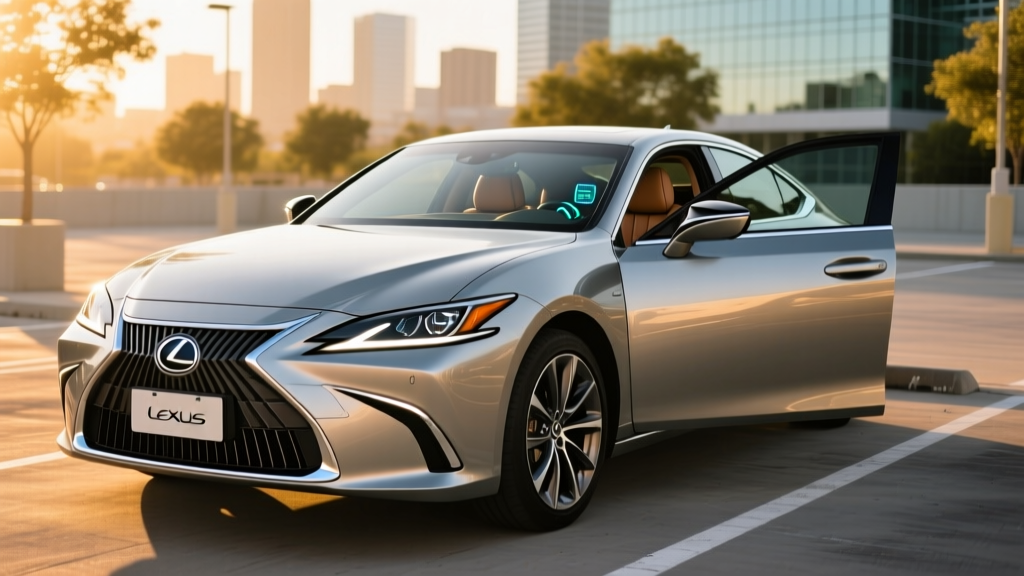
The midsize luxury sedan segment has thinned considerably, but the 2025 Lexus ES Hybrid — badged as the ES 300h — remains a stronghold for buyers who want premium comfort without the fuel bill or the charging logistics of a full EV. With an EPA-estimated 44 MPG combined and Lexus's reputation for long-term reliability, the ES 300h occupies a specific niche: luxury efficiency without a plug.
This guide covers everything a research-driven buyer needs — exact fuel economy figures, powertrain specs, battery warranty details, real-world efficiency expectations, and how the ES 300h stacks up against plug-in hybrids and full EVs in this price range.
2025 Lexus ES 300h Powertrain and Efficiency Specs
The ES 300h pairs a 2.5-liter inline-four engine with an electric motor through Toyota's fourth-generation hybrid system. Unlike a plug-in hybrid (PHEV), the ES 300h is a conventional hybrid (HEV) — it generates all its electricity onboard through regenerative braking and the gasoline engine. You never plug it in.
| Specification | Value |
|---|---|
| Powertrain | 2.5L I4 + electric motor (HEV) |
| Combined Horsepower | 215 hp |
| Engine Output | 176 hp @ 5,700 rpm |
| Electric Motor Output | 88 kW (118 hp) |
| Transmission | eCVT (planetary gearset) |
| Drivetrain | Front-wheel drive |
| Hybrid Battery | 1.6 kWh lithium-ion (nominal) |
| EPA Fuel Economy (Combined) | 44 MPG |
| EPA City | 43 MPG |
| EPA Highway | 44 MPG |
| Fuel Tank Capacity | 13.2 gallons |
| Total Driving Range | ~581 miles |
| 0–60 mph | 7.7 seconds (est.) |
| Base MSRP (ES 300h) | $44,590 |
The 215 combined horsepower is adequate for confident highway merging and passing, though the ES 300h is tuned for smoothness rather than sportiness. The eCVT eliminates shift shock entirely, and the transition between electric-only and engine-assisted driving is nearly imperceptible from the cabin.
Fuel Economy Breakdown: EPA vs. Real-World MPG
According to fueleconomy.gov, the 2025 ES 300h achieves 43 city / 44 highway / 44 combined MPG. These numbers are remarkably consistent across driving conditions — a hallmark of Toyota/Lexus hybrid systems that manage energy flow efficiently at both low and high speeds.
| Condition | EPA MPG | Real-World Expectation |
|---|---|---|
| City | 43 MPG | 44–48 MPG (hybrids excel in stop-and-go) |
| Highway | 44 MPG | 40–43 MPG (sustained 75+ mph reduces regen benefit) |
| Combined | 44 MPG | 42–46 MPG depending on driving mix |
| Cold Weather (below 32°F) | — | 37–40 MPG (engine runs more for cabin heat) |
Real-world insight: Conventional hybrids like the ES 300h often exceed their EPA city estimate in actual stop-and-go driving. Regenerative braking recaptures energy that a gas car wastes as heat, and the engine shuts off at stops. On a 15-mile urban commute with frequent lights, owners commonly report 46–48 MPG in moderate temperatures.
Highway efficiency is slightly different. At sustained speeds above 70 mph, aerodynamic drag dominates and the hybrid system has fewer opportunities to recapture energy. Expect 40–43 MPG on long interstate trips at 75 mph. In cold weather, the gasoline engine runs more frequently to provide cabin heating, which can drop combined figures into the high 30s until the powertrain reaches operating temperature.
HEV vs. PHEV vs. EV: Which Powertrain Fits Your Life?
The ES 300h is a conventional hybrid (HEV). It does not plug in, has no electric-only range to speak of (it can creep short distances at low speed on battery alone, but this is measured in blocks, not miles), and requires zero behavioral change from a gas-car owner. Here's how it compares to the alternatives:
| Factor | HEV (ES 300h) | PHEV (e.g., BMW 550e xDrive) | BEV (e.g., BMW i5) |
|---|---|---|---|
| Plug-in Required? | No | Yes (for max benefit) | Yes |
| Electric-Only Range | ~0.5 mi at low speed | 30–40 mi typical | 250–350 mi typical |
| Fuel/Energy Cost (per mile) | ~$0.09 (gas) | ~$0.04 (electric) / ~$0.10 (gas) | ~$0.04–0.06 (electric) |
| Home Charging Needed? | No | Recommended (Level 2) | Essential (Level 2) |
| Federal Tax Credit (§30D) | Not eligible | Up to $7,500 (if eligible) | Up to $7,500 (if eligible) |
| Maintenance Complexity | Low (proven system) | Moderate (two full powertrains) | Low (few moving parts) |
| Best For | No home charging, long trips, simplicity | Short commutes + road trips, home charging | Home charging, daily commuting, lowest running cost |
Choose the ES 300h (HEV) if: You don't have access to home or workplace charging, you take frequent long road trips where charging infrastructure is uncertain, or you simply want zero lifestyle change with significantly better fuel economy than a gas-only luxury sedan.
Consider a PHEV instead if: You have a garage with a 240V outlet, your daily commute is under 35 miles round-trip, and you still want gas-engine range for weekend trips. The trade-off is higher purchase price and the complexity of maintaining both an electric and gasoline powertrain.
Consider a full EV (BEV) if: You can install a Level 2 home charger, most of your driving is within 200 miles of home, and you want the lowest per-mile energy cost and zero tailpipe emissions. Models like the BMW i5 or Mercedes EQE offer comparable luxury with 250+ miles of range.
Pricing, Trims, and Tax Credit Eligibility
The 2025 Lexus ES 300h starts at $44,590 (including destination) in base form. Key trims and approximate pricing:
- ES 300h (base): $44,590 — includes Lexus Safety System+ 2.5, 12.3-inch infotainment, heated front seats, wireless Apple CarPlay/Android Auto
- ES 300h Luxury: ~$48,500 — adds leather upholstery, power-folding rear sunshade, upgraded interior trim
- ES 300h Ultra Luxury: ~$52,000 — adds semi-aniline leather, rear-seat climate controls, Mark Levinson audio
- ES 300h F SPORT Design: ~$47,500 — sport-tuned suspension, unique wheels, F SPORT interior accents
For buyers comparing total cost, the ES 300h's advantage isn't tax credits — it's fuel savings. At 44 MPG combined and $3.40/gallon gas, annual fuel cost runs approximately $1,160 for 15,000 miles. A comparable gas-only luxury sedan averaging 26 MPG would cost roughly $1,960 per year — a difference of about $800 annually in the ES 300h's favor.
Hybrid Battery Warranty, Lifespan, and Replacement Cost
Battery longevity is consistently the top concern for hybrid buyers, and this is where Lexus's track record provides genuine reassurance. The ES 300h uses a relatively small 1.6 kWh lithium-ion hybrid battery — far smaller than a PHEV or BEV pack — and it operates within a narrow state-of-charge window (roughly 40–80%) to minimize degradation stress.
- Hybrid Battery: 10 years / 150,000 miles (whichever comes first)
- Hybrid System Components: 8 years / 100,000 miles
- Basic Vehicle Warranty: 4 years / 50,000 miles
- Powertrain Warranty: 6 years / 70,000 miles
What does real-world data show? Toyota/Lexus hybrid batteries have demonstrated exceptional longevity. Taxi fleets running Camry Hybrids and Prius models routinely pass 200,000–300,000 miles on the original hybrid battery. The ES 300h's battery is under less stress than earlier nickel-metal-hydride packs, and the thermal management system keeps cell temperatures stable.
Replacement cost if out of warranty: A new OEM hybrid battery for the ES 300h typically costs between $2,500 and $4,000 including installation at a Lexus dealer. Third-party reconditioned batteries are available for $1,500–$2,500. Given the 10-year/150,000-mile warranty and historical failure rates, most original owners will never face this expense.
For comparison, a full BEV battery replacement can cost $10,000–$20,000+ — another reason the ES 300h's small, conservatively managed hybrid battery carries far less financial risk.
Driving Experience, Safety, and Technology
The ES 300h prioritizes ride comfort over corner-carving dynamics. The suspension absorbs pavement imperfections with genuine competence, and cabin noise levels at highway speed are among the lowest in the segment. The eCVT delivers seamless acceleration without the rubber-band effect that plagued earlier Toyota hybrid systems.
Safety: Every ES 300h includes Lexus Safety System+ 2.5, which bundles:
- Pre-Collision System with Pedestrian Detection
- Lane Departure Alert with Steering Assist
- Lane Tracing Assist (SAE Level 2 — requires hands on wheel)
- Dynamic Radar Cruise Control (full-speed adaptive)
- Road Sign Assist
The IIHS has historically rated the ES generation as a Top Safety Pick+, though buyers should verify the 2025 model year rating when published. The NHTSA provides additional crash-test data.
Important note on driver assistance: Lane Tracing Assist and Dynamic Radar Cruise Control together constitute an SAE Level 2 system. This is not autonomous driving — the driver must remain fully engaged, hands on the steering wheel, and eyes on the road at all times. It reduces fatigue on long highway drives but does not replace driver attention.
Tech and infotainment: The 12.3-inch touchscreen runs Lexus's latest interface with wireless Apple CarPlay and Android Auto, native navigation on higher trims, and over-the-air update capability. The system is responsive, though the touchpad controller in the center console remains a divisive interface choice for some drivers.
Pros and Cons at a Glance
Pros
- 44 MPG combined — best-in-class for luxury midsize sedans
- No plug-in charging required — zero lifestyle change
- 10-year/150,000-mile hybrid battery warranty
- Exceptional ride comfort and cabin quietness
- Strong reliability track record (Lexus/Toyota hybrid system)
- ~580-mile total range between fill-ups
- Comprehensive standard safety suite
Cons
- No federal tax credit eligibility (HEV, not PHEV/BEV)
- FWD only — no all-wheel-drive option on the 300h
- 215 hp feels adequate, not quick (7.7s 0–60)
- Touchpad infotainment controller is dated
- Rear seat doesn't fold (limits long-cargo flexibility)
- No electric-only driving range for zero-emission zones
- Starting price above $44K for a 4-cylinder sedan
Who Should Buy the 2025 Lexus ES 300h?
The ES 300h Is the Right Choice If You:
- Want luxury-sedan comfort with sub-$1,200/year fuel costs
- Cannot install a home Level 2 charger (apartment, street parking, no garage)
- Drive 15,000+ miles per year and want to minimize fuel spend
- Prioritize proven reliability and low long-term maintenance risk
- Take regular road trips where charging infrastructure adds unwanted complexity
- Plan to own the vehicle 8–10+ years (warranty covers the battery through that period)
Look Elsewhere If You:
- Want electric-only commuting (consider a PHEV like the BMW 550e)
- Need all-wheel drive (the ES 300h is FWD-only; the gas ES 250 AWD exists but sacrifices efficiency)
- Want the lowest possible per-mile energy cost (a BEV at $0.04/mi beats $0.09/mi on gas)
- Need federal tax credit help to justify the purchase price
- Want sporty acceleration and handling dynamics
Frequently Asked Questions
How many MPG does the 2025 Lexus ES 300h hybrid get?
The EPA rates the ES 300h at 43 city / 44 highway / 44 combined MPG. In real-world driving, many owners report 42–48 MPG combined depending on conditions. City driving with frequent stops often yields higher numbers than the EPA estimate thanks to regenerative braking, while sustained highway speeds above 75 mph and cold weather can reduce figures into the high 30s or low 40s.
Does the Lexus ES 300h need to be plugged in?
No. The ES 300h is a conventional hybrid (HEV), not a plug-in hybrid (PHEV). Its small 1.6 kWh battery recharges entirely through regenerative braking and the gasoline engine. You fuel it like any other car — there is no charging port, no cable, and no plug-in requirement.
Does the 2025 Lexus ES Hybrid qualify for a federal tax credit?
No. Under current IRS §30D rules, the federal clean vehicle credit (up to $7,500) applies only to plug-in electric vehicles — battery-electric vehicles (BEVs) and plug-in hybrids (PHEVs) with sufficient battery capacity. The ES 300h, as a conventional hybrid, does not qualify. Some states may offer small efficiency incentives; check your state energy office for details.
How long does the Lexus ES 300h hybrid battery last?
Lexus warranties the hybrid battery for 10 years or 150,000 miles. Real-world data from Toyota/Lexus hybrid systems shows many original batteries lasting 200,000+ miles without significant degradation. The ES 300h's lithium-ion pack operates in a narrow charge window to minimize wear, and the thermal management system prevents extreme temperatures. If replacement is eventually needed, budget $2,500–$4,000 for an OEM battery at a dealer.
Is the Lexus ES 300h reliable compared to other luxury sedans?
Lexus consistently ranks at or near the top of J.D. Power and Consumer Reports reliability surveys, and the ES line specifically has been a benchmark for dependability. The fourth-generation Toyota hybrid system in the ES 300h has been proven across millions of vehicles (Camry Hybrid, RAV4 Hybrid, Prius). The main risk areas for any hybrid are the hybrid battery (well-covered by warranty) and the inverter — both of which have low failure rates in current-generation systems.
Can I get all-wheel drive on the ES 300h?
No. The 2025 ES 300h is front-wheel drive only. If AWD is essential, the gas-powered ES 250 offers all-wheel drive but sacrifices fuel economy (approximately 25 MPG combined vs. the 300h's 44 MPG). Lexus has not announced an AWD variant of the hybrid for the current generation.
How does the ES 300h compare to a Tesla Model 3 or BMW i5?
These are fundamentally different vehicles for different buyers. The Tesla Model 3 and BMW i5 are full EVs requiring home charging infrastructure, offering 250–350 miles of electric range, lower per-mile energy costs (~$0.04–0.06/mi), and eligibility for the federal tax credit. The ES 300h requires no charging, eliminates range anxiety entirely, and costs more per mile to operate (~$0.09/mi on gas) but offers unmatched simplicity for buyers without charging access. If you can charge at home, a BEV will cost less to operate long-term. If you can't, the ES 300h is the most efficient luxury sedan you can buy.