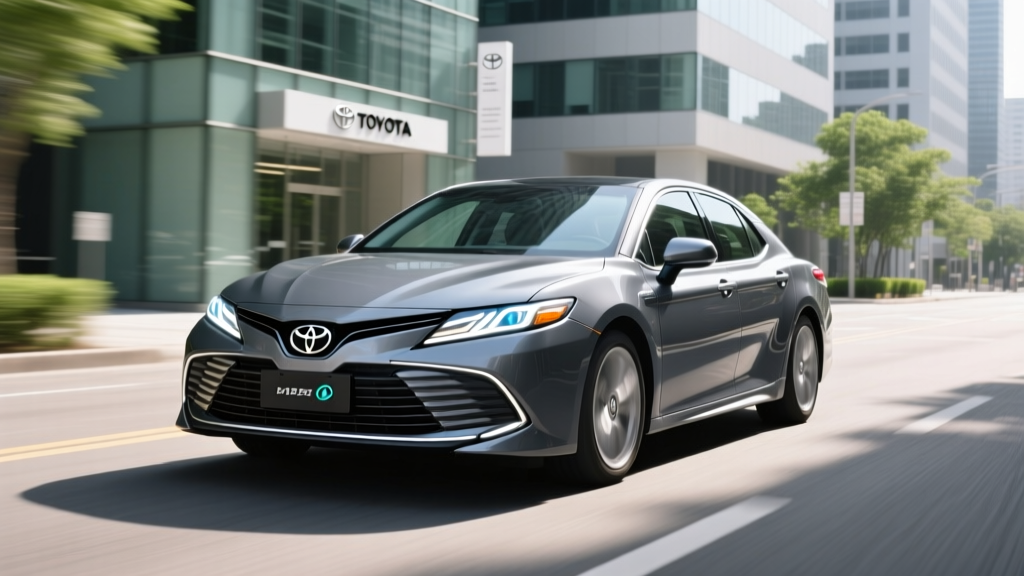
The Toyota Camry Hybrid has been the benchmark midsize hybrid sedan for years, and the ninth-generation model (introduced for 2025 and carried into 2026) is the most efficient version Toyota has ever built. If you're researching the gas mileage for the Toyota Camry Hybrid, you'll find that the numbers are genuinely impressive — and, in real-world city driving, often even better than the EPA sticker suggests.
This guide covers the 2026 Toyota Camry Hybrid's official EPA fuel economy, real-world MPG expectations, powertrain specs, battery warranty, pricing, and how it stacks up against plug-in hybrid and full EV alternatives. No marketing fluff — just the numbers and ownership realities that matter.
Toyota Camry Hybrid MPG: EPA Ratings by Trim
For the current generation, Toyota offers the Camry Hybrid across multiple trims. Fuel economy varies slightly depending on wheel size, drivetrain (FWD vs. AWD), and weight. Here's the full EPA breakdown:
| Trim / Drivetrain | City MPG | Highway MPG | Combined MPG |
|---|---|---|---|
| LE (FWD) | 51 | 44 | 47 |
| LE (AWD) | 49 | 42 | 45 |
| SE / XLE (FWD) | 48 | 43 | 45 |
| SE / XLE (AWD) | 46 | 41 | 43 |
Source: fueleconomy.gov (EPA official estimates)
The LE FWD trim delivers the highest efficiency at 47 MPG combined — a figure that positions the Camry Hybrid ahead of nearly every non-plug-in midsize sedan on the market. The AWD penalty is modest: you lose roughly 2 MPG combined for the added traction of an independent rear electric motor.
The Camry Hybrid's EPA city rating (51 MPG on the LE) is not just achievable — many owners exceed it in stop-and-go traffic. Hybrids recapture energy through regenerative braking, so city driving actually favors the powertrain. On the highway at 75+ mph, expect 38–42 MPG as aerodynamic drag dominates and the electric motor assists less. In cold weather (below 35°F), expect a 5–10% MPG reduction due to engine warm-up cycles and reduced battery efficiency. Over a mixed-driving year of 15,000 miles, the LE FWD will use roughly 319 gallons of fuel.
Camry Hybrid Powertrain: What's Under the Hood
The current-generation Camry Hybrid uses Toyota's fifth-generation hybrid system. It pairs a 2.5-liter four-cylinder engine (running the Atkinson cycle for efficiency) with one or two electric motors depending on drivetrain.
| Specification | Detail |
|---|---|
| Engine | 2.5L 4-cylinder Atkinson cycle |
| Combined System Horsepower | 225 hp (FWD) / 232 hp (AWD) |
| Front Electric Motor | 100 kW (134 hp) |
| Rear Electric Motor (AWD only) | 30 kW (40 hp) |
| Transmission | eCVT (planetary gearset, no belt) |
| Hybrid Battery | ~1.1 kWh lithium-ion (sealed NiMH on prior gens) |
| 0–60 mph | ~7.0 seconds (FWD) |
| Drivetrain | FWD or electronic AWD |
| Fuel Tank | 13.2 gallons |
| Total Driving Range (est.) | ~620 miles (LE FWD at combined MPG) |
The shift to a lithium-ion hybrid battery pack (from the nickel-metal hydride used in earlier generations) reduces weight and improves charge/discharge efficiency. The battery is small — roughly 1.1 kWh — because a conventional hybrid (HEV) doesn't need to store much energy. It buffers regenerated braking energy and assists the gas engine during acceleration, then recharges continuously through the engine and regen. You never plug it in.
HEV vs. PHEV vs. EV: Which Camry (or Toyota) Fits You?
Toyota does not currently offer a Camry plug-in hybrid in the U.S. market. If you want a Toyota PHEV sedan, the closest option is the Toyota Prius Prime. Here's how the three electrification paths compare for a midsize-sedan buyer:
| Factor | Camry Hybrid (HEV) | Prius Prime (PHEV) | bZ4X (Full EV) |
|---|---|---|---|
| Plug-in Required? | No | Yes (Level 1/2) | Yes (Level 2 / DC) |
| EPA Combined MPG / MPGe | 47 MPG (LE) | 127 MPGe (elec) / 52 MPG (gas) | 114 MPGe |
| Electric-Only Range | N/A (EV mode ~1 mi) | 44 miles | 236–252 miles |
| Total Range | ~620 miles | ~440 miles | 236–252 miles |
| Battery Size | ~1.1 kWh | 13.6 kWh | 71.4 kWh |
| Home Charging Needed? | No | Recommended | Essential |
| Starting MSRP (approx.) | $29,495 | $33,445 | $37,070 |
| Federal Tax Credit (§30D) | Not eligible | Up to $3,750* | Up to $7,500* |
*Tax credit amounts depend on battery sourcing, critical mineral requirements, buyer income caps, and MSRP limits under IRS §30D. Verify current eligibility at irs.gov. The Camry Hybrid (HEV) does not qualify for the federal new clean vehicle credit because it lacks a plug.
- You want maximum MPG without changing your fueling habits
- You lack access to home or workplace charging
- You regularly drive 500+ mile road trips and don't want to plan charging stops
- You want a proven, low-complexity powertrain with a long reliability track record
- You have reliable Level 2 home charging and a short commute (PHEV covers most daily miles on electricity)
- You want to minimize or eliminate gasoline use and qualify for tax credits
- You live in a state with high gas prices and low electricity rates
Pricing, Trims, and Tax Credit Eligibility
The 2026 Toyota Camry Hybrid is available across four primary trims. Pricing below reflects MSRP before destination charges:
| Trim | MSRP (FWD) | MSRP (AWD) | Key Features |
|---|---|---|---|
| LE | $29,495 | $30,895 | 8" touchscreen, TSS 3.0, wireless CarPlay/Android Auto |
| SE | $31,095 | $32,495 | Sport-tuned suspension, 18" wheels, paddle shifters |
| XLE | $34,495 | $35,895 | Leather, 12.3" display, heated/ventilated front seats |
| XSE | $35,595 | $36,995 | Sport + luxury, panoramic roof option, JBL audio |
Federal tax credit note: The Camry Hybrid is a conventional HEV — it does not have a plug and therefore does not qualify for the IRS §30D New Clean Vehicle Credit. This credit is reserved for plug-in vehicles (PHEVs and BEVs) meeting battery sourcing, critical mineral, MSRP, and buyer income requirements. Some states may offer their own incentives for hybrids, but these vary widely. Check your state energy office or the AFDC state law database for local programs.
Battery Warranty, Lifespan, and Replacement Cost
Battery longevity is consistently the top concern among hybrid buyers. Toyota addresses this with one of the strongest hybrid battery warranties in the industry.
- Coverage: 10 years / 150,000 miles (whichever comes first)
- Applies in: All 50 states (previously 10/150k was CARB states only; Toyota expanded it nationwide starting with 2020 models)
- Covered components: Hybrid battery pack, hybrid control module, inverter with converter
- Capacity threshold: Toyota covers defects and abnormal capacity loss; gradual degradation is normal and expected
How long does a Camry Hybrid battery actually last? Real-world data from fleet operators, taxi services, and high-mileage owners consistently shows Toyota hybrid batteries lasting 150,000–200,000+ miles before significant degradation. The lithium-ion pack in the current generation is expected to outperform the older NiMH packs in longevity due to better thermal management and more conservative state-of-charge windowing (the battery never fully charges or fully discharges during normal operation).
Replacement cost if out of warranty: A new OEM hybrid battery for the Camry Hybrid typically runs between $2,500 and $4,000 including labor. Third-party refurbished packs are available for $1,500–$2,500. For context, this is a fraction of a full EV battery replacement ($8,000–$20,000+), and the hybrid battery is far smaller and simpler to replace.
Reliability and Ownership Costs
The Camry nameplate has decades of reliability data behind it, and the hybrid powertrain has been in production since 2007. Toyota's eCVT (which uses a planetary gearset rather than a traditional belt-and-pulley CVT) has proven exceptionally durable — there are no belts to wear, no clutches to replace, and no fixed gear ratios to fail.
The current Camry Hybrid comes standard with Toyota Safety Sense 3.0, which includes:
- Pre-Collision System with Pedestrian Detection
- Lane Departure Alert with Steering Assist
- Full-Speed Range Dynamic Radar Cruise Control
- Lane Tracing Assist
- Road Sign Assist
- Automatic High Beams
- Proactive Driving Assist (gentle braking/deceleration support)
Important clarification: Toyota Safety Sense is a Level 2 driver-assistance system per SAE classification. The driver must remain fully engaged, hands on or near the wheel, and eyes on the road at all times. This is not autonomous or self-driving capability.
| Cost Factor (5-Year / 75,000 Miles) | Camry Hybrid LE | Camry Gas (2.5L, ~30 MPG comb.) |
|---|---|---|
| Fuel Cost (at $3.50/gal avg) | ~$5,580 (1,596 gal) | ~$8,750 (2,500 gal) |
| Estimated Maintenance | ~$2,200 | ~$2,800 |
| Insurance (avg.) | ~$7,500 | ~$7,200 |
| Depreciation (est.) | ~$11,000 | ~$12,500 |
| 5-Year Total (approx.) | ~$26,280 | ~$31,250 |
Fuel savings of roughly $3,170 over five years offset the Camry Hybrid's modest price premium over the gas-only Camry. Hybrids also tend to hold resale value better, as demand for fuel-efficient vehicles remains strong.
Pros and Cons at a Glance
✅ Pros
- Best-in-class midsize sedan MPG (47 combined, LE)
- Real-world city MPG often exceeds EPA estimate
- No plug-in required — zero behavior change
- 620+ mile total range per tank
- 10-year / 150,000-mile hybrid battery warranty
- 225 hp is adequate for confident merging
- Standard TSS 3.0 safety suite
- Strong resale value
❌ Cons
- No federal tax credit (HEV, not a plug-in)
- Highway MPG drops to 38–42 at 75+ mph
- AWD reduces combined MPG by ~2 MPG
- eCVT drone under hard acceleration
- No PHEV variant available in the U.S.
- Rear seat doesn't fold flat in all trims (battery placement)
- Higher trims push past $37,000
Frequently Asked Questions
How many MPG does the Toyota Camry Hybrid actually get?
The EPA rates the Camry Hybrid LE FWD at 51 city / 44 highway / 47 combined MPG. In real-world city driving with frequent stops, many owners report 48–55 MPG thanks to regenerative braking. Highway driving at 75+ mph typically yields 38–42 MPG. Cold weather reduces these figures by roughly 5–10%.
Do I need to plug in the Camry Hybrid to charge it?
No. The Camry Hybrid is a conventional hybrid (HEV), not a plug-in hybrid (PHEV). The small lithium-ion battery charges itself through regenerative braking and the gasoline engine. You fuel it exactly like a regular car — just at the gas pump, less often.
Does the Camry Hybrid qualify for any tax credits?
The federal IRS §30D New Clean Vehicle Credit requires a plug-in vehicle with a minimum battery capacity. The Camry Hybrid does not qualify because it is an HEV without a plug. Some states or utilities may offer rebates for hybrid purchases — check the Alternative Fuels Data Center for state-specific incentives.
How long will the Camry Hybrid battery last?
Toyota covers the hybrid battery for 10 years or 150,000 miles. Real-world data from high-mileage owners and fleet operators shows Toyota hybrid batteries commonly lasting 150,000–200,000+ miles. The lithium-ion pack in the current generation uses conservative charge/discharge windowing to minimize degradation.
What does it cost to replace the hybrid battery?
An OEM replacement hybrid battery for the Camry Hybrid costs approximately $2,500–$4,000 including labor. Refurbished aftermarket options range from $1,500–$2,500. This is significantly less than a full EV battery replacement.
Is the Camry Hybrid available with AWD?
Yes. The Camry Hybrid AWD adds an independent rear electric motor (30 kW / 40 hp) for all-wheel traction. AWD trims lose roughly 2 MPG combined compared to FWD equivalents. AWD is available across LE, SE, XLE, and XSE trims.
Camry Hybrid vs. Prius Prime — which is better?
The Camry Hybrid wins on interior space, ride comfort, highway manners, and simplicity (no plug needed). The Prius Prime wins on electric-only commuting (44 miles EV range), lower fuel cost if you charge daily, and potential federal tax credit eligibility. If you can charge at home and commute under 40 miles round-trip, the Prius Prime may save more. For road trips, apartment dwellers without charging, or buyers who want a midsize sedan, the Camry Hybrid is the stronger pick.
Is the Camry Hybrid's eCVT reliable?
Toyota's eCVT is a planetary gearset, not a belt-driven CVT. It has no belts, pulleys, or friction clutches to wear out. It is widely regarded as one of the most durable transmissions in the industry, with hundreds of thousands of units in service across Toyota and Lexus hybrids globally.
Final Assessment: Who Should Buy the Camry Hybrid?
The Toyota Camry Hybrid is the right choice for drivers who want sedan efficiency without the infrastructure demands of a plug-in vehicle. At 47 MPG combined (LE FWD), it delivers roughly 620 miles per tank — enough to drive from Los Angeles to San Francisco and back on a single fill-up. The 225-hp powertrain is genuinely adequate for daily driving, and Toyota's 10-year hybrid battery warranty removes the biggest ownership concern.
It's not the right pick if you want electric-only commuting (look at the Prius Prime or a full EV), if you need the federal tax credit, or if you primarily drive highway miles at high speed (where the hybrid advantage diminishes). But for the majority of American drivers — mixed city/highway commutes, no home charging, and a preference for proven reliability — the Camry Hybrid's gas mileage and total ownership cost are hard to beat in the midsize sedan segment.