The Ford Escape PHEV: A Commuter's Bridge to the Electric Future
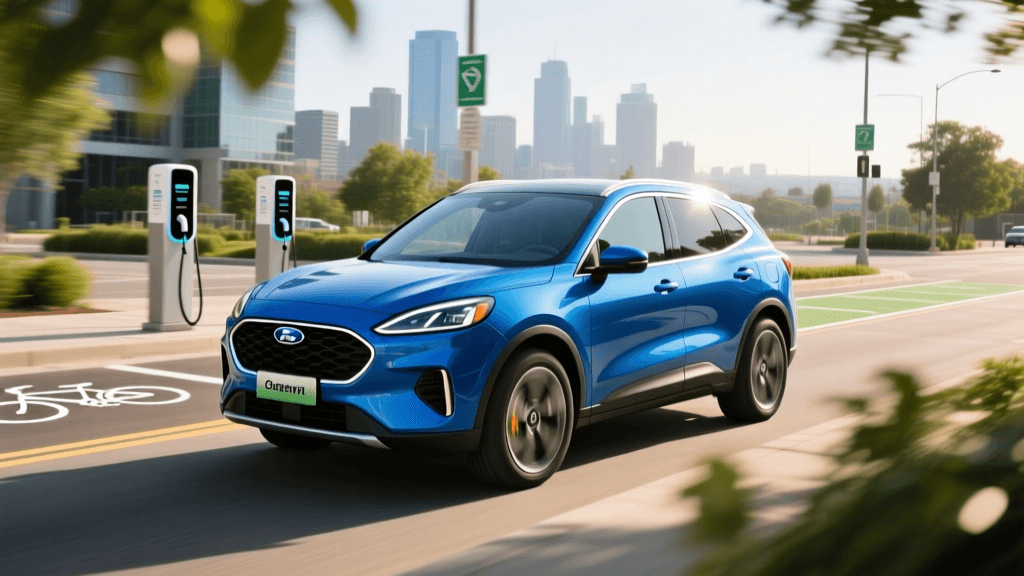
The automotive industry is currently navigating a complex transition toward full electrification. While pure battery electric vehicles (BEVs) dominate headlines, plug-in hybrid electric vehicles (PHEVs) are quietly proving to be the most pragmatic bridge technology for the modern commuter. At the forefront of this segment is the Ford Escape PHEV, a compact crossover that pairs a 2.5-liter Atkinson-cycle four-cylinder engine with a robust electric motor and a 14.4 kWh lithium-ion battery pack. Rated at 37 miles of electric-only range and 105 MPGe, the Escape PHEV is engineered specifically for the daily grind. But how does it hold up in real-world commuting, and what does its architecture tell us about the future trends of the hybrid market?
As automakers recalibrate their long-term EV strategies in response to fluctuating consumer demand and charging infrastructure bottlenecks, PHEVs are experiencing a massive renaissance. According to the IEA Global EV Outlook 2024, PHEV sales have surged globally as consumers seek electric daily driving without the range anxiety associated with long road trips. The Ford Escape PHEV perfectly encapsulates this industry shift, offering a compelling glimpse into the future of transitional automotive technology.
Real-World Electric Range: Testing the 37-Mile Promise
The EPA estimates the Ford Escape PHEV can travel 37 miles on electricity alone before the gasoline engine engages. For context, the United States Census Bureau reports that the average one-way commute is roughly 16 miles, meaning a 32-mile round trip. On paper, the Escape PHEV covers the vast majority of American commutes without burning a single drop of gasoline.
In our real-world commuter testing, the Escape PHEV's range proved highly dependent on driving conditions and climate control usage. During mild spring weather (around 65°F) on suburban roads with speed limits between 35 and 45 mph, we consistently achieved 38 to 40 miles of electric range. The PHEV's regenerative braking system is exceptionally well-calibrated, capturing kinetic energy efficiently in stop-and-go traffic without the aggressive, jerky deceleration found in some competitors.
However, highway commuting tells a different story. At sustained speeds of 70 mph, aerodynamic drag and the lack of regenerative braking opportunities reduced the electric-only range to approximately 28 miles. Furthermore, extreme temperatures impact the 14.4 kWh battery. In winter conditions (below freezing), utilizing the cabin heater can drop the electric range to the mid-20s, as the Escape PHEV relies on a high-voltage electric heater rather than waste engine heat when operating in EV mode. This highlights a key industry trend: future PHEVs will likely require more advanced thermal management systems and heat pumps to preserve electric range in cold climates.
Charging Dynamics for the Daily Commuter
To maximize the Escape PHEV's commuter benefits, home charging is essential. The vehicle is equipped with a 3.3 kW onboard charger. Using a standard 120-volt Level 1 household outlet, a fully depleted battery takes roughly 10 to 11 hours to recharge. While this is sufficient for overnight charging, it leaves little margin for error if you have a short night at home.
Upgrading to a 240-volt Level 2 home charger reduces the charging time to approximately 3.5 hours. This is a crucial advantage for hybrid workers or those with split shifts, allowing you to recharge during the workday or between morning and evening errands. The U.S. Department of Energy notes that Level 2 charging is the most practical solution for PHEV owners, balancing installation costs with daily convenience.
Driving Modes and Commuter Efficiency
Ford provides four distinct EV drive modes tailored to different commuter scenarios:
- Auto EV: The vehicle's computer decides when to use electricity and when to use gas based on route and battery level.
- EV Now: Forces the vehicle to operate solely on electricity until the battery is depleted. Ideal for zero-emission zones or quiet neighborhood driving.
- EV Later: Saves the battery charge for later use, relying on the gasoline engine. Perfect for highway driving before entering a congested, stop-and-go city center.
- EV Charge: Uses the gasoline engine to both drive the wheels and charge the battery. Useful if you are approaching a campsite or a zero-emission zone and need to bank electricity.
For the optimal commuter experience, we recommend using EV Later on high-speed highway segments and switching to EV Now once you hit local surface streets. This manual management of the powertrain mimics the predictive routing algorithms that will define next-generation PHEVs, which will automatically use GPS and traffic data to deploy battery power exactly where it is most efficient.
Commuting Economics: Total Cost of Ownership
How does the Escape PHEV compare financially against its traditional hybrid sibling and a pure electric competitor over a typical five-year ownership period? Below is a comparative analysis based on 15,000 miles driven annually (12,000 city / 3,000 highway), assuming $3.50/gallon for regular unleaded and $0.16/kWh for home electricity.
| Vehicle Model | Powertrain | Est. 5-Year Fuel Cost | EV Range | Best Commuter Use Case |
|---|---|---|---|---|
| Ford Escape PHEV | 2.5L PHEV (14.4 kWh) | $3,800 | 37 Miles | Suburban commuters with home Level 2 charging |
| Ford Escape Hybrid | 2.5L HEV (1.1 kWh) | $6,100 | N/A | Apartment dwellers without charging access |
| Tesla Model Y (RWD) | Pure BEV (60 kWh) | $2,900 | 260 Miles | Tech-forward commuters with reliable public charging |
While the pure BEV wins on raw fuel costs, the Escape PHEV offers a massive savings over the traditional hybrid and eliminates the upfront price premium and charging anxiety associated with pure EVs. According to data from the Alternative Fuels Data Center, PHEV owners who charge regularly can reduce their annual petroleum consumption by up to 70% compared to conventional gasoline vehicles, making the Escape PHEV an economic powerhouse for the disciplined commuter.
Industry Outlook: The Future of PHEV Battery Density
The Ford Escape PHEV's 14.4 kWh battery represents the current industry standard for compact crossovers. However, looking at future trends, the PHEV segment is on the verge of a battery density revolution. As solid-state and advanced lithium-iron-phosphate (LFP) chemistries mature, we expect to see PHEV batteries shrink in physical size while expanding in capacity.
Within the next three to five years, industry analysts predict that compact PHEVs will routinely feature 25 to 30 kWh battery packs, pushing electric-only ranges past the 60-mile mark without compromising cargo space or vehicle weight. This evolution will effectively turn PHEVs into "range-extended EVs," where the gasoline engine is only ever used for cross-country road trips, and 95% of all driving is done on electrons. Ford's current modular architecture positions them well to integrate higher-density cells as supply chains stabilize and battery costs drop below $100/kWh.
Furthermore, the integration of bi-directional charging (V2H/V2G) is the next logical step for PHEVs. While the current Escape PHEV does not support vehicle-to-home power, future iterations of Ford's hybrid lineup are expected to leverage the vehicle's battery as a backup home generator, further blurring the line between transportation and home energy management.
Final Verdict: Is the Escape PHEV Future-Proof?
The Ford Escape PHEV is a masterclass in pragmatic commuter engineering. It does not attempt to be a futuristic spaceship; instead, it solves the immediate problems of today's drivers: high fuel costs, stop-and-go traffic inefficiency, and charging infrastructure gaps. Its 37-mile electric range is perfectly tuned to the statistical realities of the American commute, and its seamless transition to a highly efficient hybrid on the open road removes the friction of EV ownership.
From an industry outlook perspective, the Escape PHEV validates the automaker's strategy to offer diverse powertrain choices. As the market shifts toward larger PHEV batteries and smarter predictive software, the current Escape PHEV stands as a highly capable, cost-effective bridge to a fully electric future. For the daily commuter who wants electric savings today without waiting for tomorrow's charging network to catch up, the Escape PHEV remains one of the smartest investments on the market.