Introduction to the Jeep Wrangler 4xe
The Jeep Wrangler 4xe represents a fascinating intersection of rugged, trail-rated heritage and modern electrification. For beginners entering the world of plug-in hybrid electric vehicles (PHEVs), the 4xe can seem like a complex beast. It pairs a traditional internal combustion engine with electric motors and a battery pack, offering the promise of silent, emission-free daily commuting alongside the legendary off-road prowess of a Wrangler. But how does this technology actually perform when you leave the dealership lot? In this complete beginner's guide, we will break down the real-world electric range, off-road capabilities, and daily driving manners of the Jeep Wrangler 4xe, helping you decide if this electrified icon is the right fit for your driveway.
Understanding the Powertrain and Battery Specs
Before diving into real-world numbers, it is essential to understand what powers the 4xe. The vehicle utilizes a 2.0-liter turbocharged inline-four gasoline engine combined with two electric motors and a 17-kWh lithium-ion battery pack mounted safely beneath the rear seats. This setup generates a combined output of 375 horsepower and a massive 470 lb-ft of torque. According to the official Jeep Wrangler 4xe specifications, this powertrain is designed to provide seamless transitions between gas and electric power, ensuring you never experience range anxiety on long road trips while still offering a purely electric mode for short trips.
Specs at a Glance: EPA vs. Real-World Expectations
When evaluating any PHEV, it is crucial to understand that government estimates do not always reflect the reality of daily driving, especially in a vehicle shaped like a brick. Below is a comparison of official estimates versus what you can expect in real-world scenarios.
| Metric | EPA Estimate | Real-World Expectation |
|---|---|---|
| Electric-Only Range | 21 Miles | 14 - 20 Miles |
| MPGe (Electric Mode) | 49 MPGe | 35 - 45 MPGe |
| MPG (Gas Only / Depleted) | 20 MPG Combined | 17 - 22 MPG |
| 0-60 MPH Acceleration | 6.0 Seconds | 6.2 - 6.5 Seconds |
| Level 2 Charging Time | ~2 Hours | 2 - 2.5 Hours |
Real-World Electric Range: EPA vs. Reality
The EPA rates the Wrangler 4xe at 21 miles of pure electric range. However, real-world testing consistently shows that achieving this number requires specific conditions. The Wrangler's boxy aerodynamics, heavy curb weight (the 4xe is roughly 800 pounds heavier than its gas-only counterpart), and aggressive off-road tires all work against electric efficiency. If you are driving on the highway at speeds over 65 mph, expect your electric range to drop closer to 14 or 15 miles. The EPA's guide to PHEV fuel economy notes that plug-in hybrids are highly sensitive to driving styles and environmental factors, and the 4xe is a perfect example of this rule.
Conversely, if you are driving through suburban neighborhoods at speeds between 25 and 45 mph, utilizing regenerative braking, and operating in mild weather, you can easily squeeze out 19 to 20 miles of electric range. For the average American, whose daily round-trip commute is under 30 miles, the 4xe can still serve as a part-time EV, significantly reducing your weekly visits to the gas station.
Off-Roading in Electric Mode: A Beginner's Guide
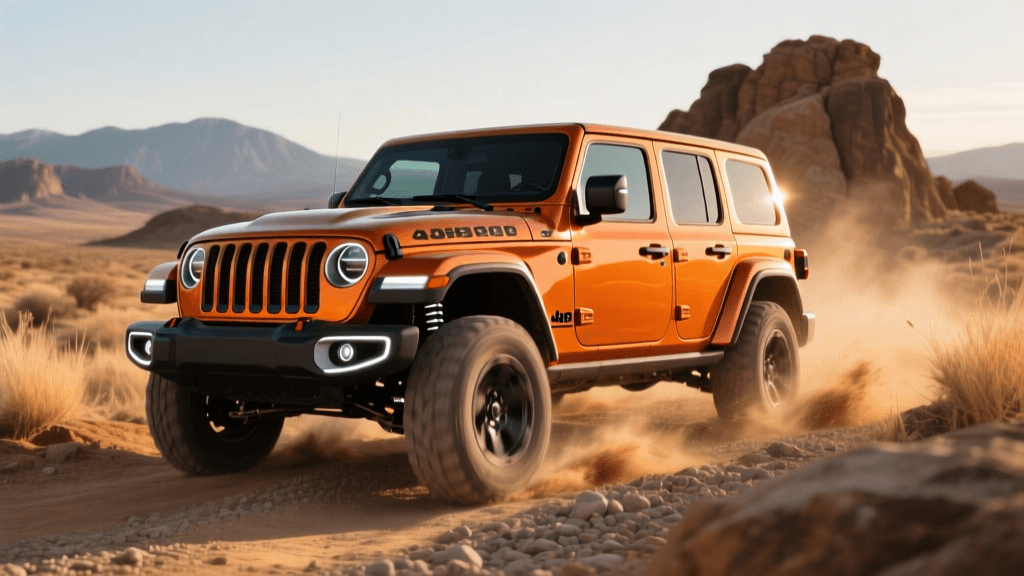
Where the Wrangler 4xe truly shines is off the pavement. For beginners, the concept of taking an electrified vehicle into the mud or over rocks might seem daunting, but the 4xe is engineered specifically for this environment. The battery pack is completely sealed and waterproof, allowing the 4xe to ford up to 30 inches of water without risking electrical damage.
The Magic of Instant Torque
Electric motors provide 100% of their torque at 0 RPM. When you are rock crawling or navigating steep, technical inclines, this instant torque delivery is a game-changer. You no longer need to rev the gas engine and slip the clutch to inch over an obstacle; a gentle tap of the accelerator in Electric mode provides smooth, immediate, and controllable power. This makes the 4xe incredibly capable in low-speed off-road scenarios, often feeling more refined than its gas-powered siblings.
Managing Your Battery on the Trail
The 4xe features three primary E-Modes: Hybrid, Electric, and E-Save. For off-roading, beginners should master the E-Save mode. If your trailhead is 20 miles away on the highway, you can engage E-Save to force the gas engine to do the heavy lifting, preserving your battery's charge. Once you arrive at the trail, you can switch to Electric mode, allowing you to tackle the obstacles silently and with maximum torque, while also reducing your environmental footprint in nature.
Daily Driving and Highway Manners
Driving the Wrangler 4xe on paved roads requires some compromises, which is true for any Wrangler. The solid front and rear axles, combined with the heavy battery, result in a ride that is noticeably stiffer and more truck-like than unibody crossover SUVs. Steering can feel vague on the highway, requiring frequent micro-corrections. Furthermore, once the battery is depleted, the 2.0-liter turbo engine has to work hard to move the extra weight, yielding fuel economy in the high teens or low twenties. However, around town, the electric motor masks the turbo engine's lag, providing punchy and responsive acceleration from stoplights.
Charging Your Wrangler 4xe at Home
To get the most out of your 4xe, home charging is mandatory. Relying solely on the gas engine defeats the purpose of the PHEV system and results in poor fuel economy. According to the U.S. Department of Energy's Alternative Fuels Data Center, setting up a proper home charging routine is the key to maximizing a PHEV's efficiency and battery longevity.
- Level 1 Charging (120V): Using the included portable cordset plugged into a standard household outlet will take approximately 12 hours to fully charge the 17-kWh battery. This is only recommended if you drive very few miles daily.
- Level 2 Charging (240V): Installing a dedicated Level 2 home charger (such as a ChargePoint Home Flex or Wallbox Pulsar Plus) will reduce charging time to roughly 2 hours. This allows you to top up the battery during a quick lunch break or overnight, ensuring you always leave home with a full 21-mile electric cushion.
Mastering Max Regen
On the dashboard, you will find a button labeled 'Max Regen'. When pressed, this increases the regenerative braking force. While it won't bring the vehicle to a complete one-pedal stop like a full EV, it significantly slows the Jeep down when you lift off the accelerator, feeding valuable energy back into the battery. Using Max Regen in stop-and-go city traffic is an excellent way for beginners to extend their real-world electric range by an extra mile or two.
Total Cost of Ownership and Final Verdict
The Jeep Wrangler 4xe carries a premium price tag over the standard gas models, but this is often offset by federal and state tax incentives, as well as fuel savings if you charge diligently. Maintenance costs are generally similar to the gas models, though the regenerative braking system can extend the life of your brake pads significantly.
The Final Verdict: The Jeep Wrangler 4xe is not the most efficient PHEV on the market, nor is it the most comfortable daily driver. However, it is entirely unique in its ability to offer silent, torque-rich off-road exploration while functioning as a part-time electric commuter during the week. For beginners willing to install a Level 2 charger and adapt to the Wrangler's on-road quirks, the 4xe offers a brilliant, uncompromising blend of modern green technology and old-school trail-rated adventure.