Quick Verdict: The Audi Q3 PHEV for 2026
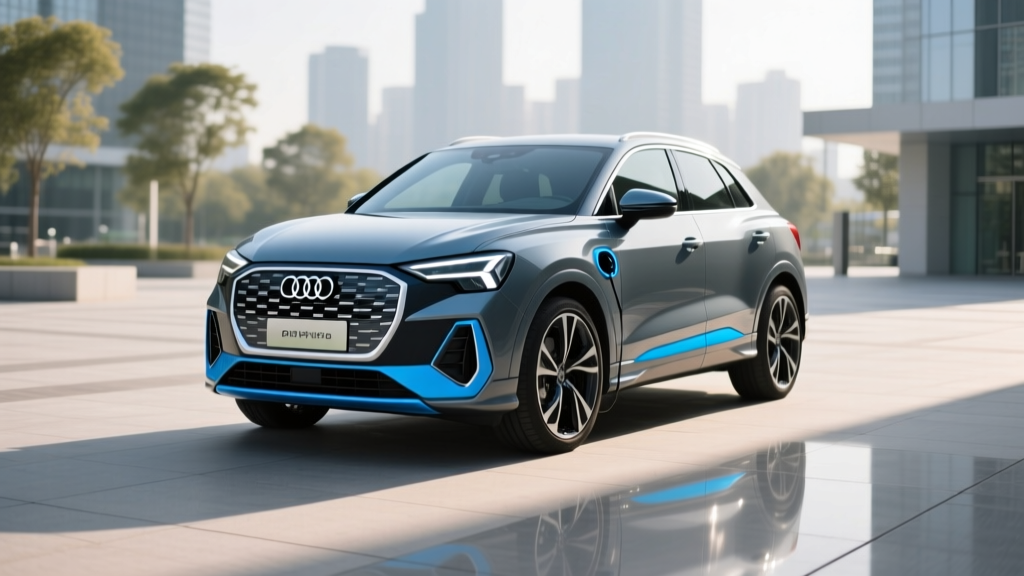
Audi's 2026 Q3 plug-in hybrid (sold globally as the Q3 TFSI e) threads a narrow needle: it's a premium compact SUV that can handle most daily commutes on electricity alone while retaining a gas engine for road trips. With an estimated 33 miles of electric-only range, a combined 268 horsepower, and a starting MSRP near $42,500, the Q3 PHEV targets luxury buyers who want electrification without range anxiety — but who may not be ready to commit to a full battery-electric vehicle like the Audi Q4 e-tron.
The critical caveat: as of early 2026, Audi has confirmed the Q3 TFSI e for European and select global markets, but U.S. availability remains limited. American buyers may need to consider the closely related Audi Q5 PHEV or wait for broader Q3 PHEV stateside rollout. This review covers the latest global specs, which are expected to carry over if and when the model reaches U.S. showrooms.
A conventional hybrid (HEV) like the Toyota RAV4 Hybrid recharges its small battery through regenerative braking and the gas engine — you never plug it in. A plug-in hybrid (PHEV) like the Audi Q3 TFSI e has a larger battery you can charge from a wall outlet or public charger, giving it a meaningful electric-only driving range before the gas engine kicks in. The Q3 hybrid discussed here is a PHEV.
Powertrain and Performance Specs
The 2026 Audi Q3 PHEV pairs a 1.4-liter turbocharged four-cylinder engine with an electric motor integrated into the transmission housing. Combined output lands at an estimated 268 horsepower and 295 lb-ft of torque, routed through a six-speed S tronic dual-clutch automatic to the front wheels (quattro all-wheel drive is available on select trims).
| Specification | Value |
|---|---|
| Gas Engine | 1.4L turbocharged I4 (150 hp / 184 lb-ft) |
| Electric Motor | 115 hp / 243 lb-ft (integrated) |
| Combined System Output | 268 hp / 295 lb-ft |
| Transmission | 6-speed S tronic dual-clutch automatic |
| Drivetrain | FWD standard; quattro AWD available |
| 0–60 mph (est.) | ~7.2 seconds |
| Top Speed (EV mode) | 84 mph |
The powertrain operates in several modes: EV-only (pure electric up to 84 mph), Hybrid (the system blends gas and electric for maximum efficiency), Battery Hold (reserves charge for later), and Battery Charge (uses the engine to recharge the pack while driving). In practice, most owners will default to Hybrid mode and let the car manage energy flow automatically.
Fuel Economy: EPA MPG and Real-World Expectations
As a PHEV, the Q3's efficiency story has two chapters: electric-only efficiency (measured in MPGe) and gas-only efficiency once the battery depletes.
| Metric | City | Highway | Combined |
|---|---|---|---|
| EV-Only (MPGe) | — | — | ~84 MPGe |
| Gas-Only (MPG) | ~33 | ~35 | ~34 MPG |
Real-world MPG vs EPA: PHEVs are notoriously sensitive to driving habits. If you charge nightly and commute under 30 miles round-trip, you may burn almost zero gasoline for weeks, achieving effective triple-digit MPGe. If you never plug in and drive it like a conventional car, expect the gas-only figure of roughly 34 MPG combined — competitive with the gas-only Audi Q3 (which rates around 27 MPG combined) but not class-leading among hybrids. Highway driving at 75+ mph will pull gas-only efficiency down to around 30–31 MPG, while city driving in hybrid mode with frequent regen braking can push it toward 36–37 MPG.
EPA-estimated electric-only range: ~33 miles
Real-world expectation: ~25–30 miles in mixed driving; as low as 20–22 miles in cold weather (below 35°F) or sustained highway speeds above 70 mph. Plan conservatively if your commute is close to the 33-mile threshold.
Battery, Charging, and Electric-Only Range
The 2026 Q3 PHEV uses a 17.9 kWh (gross) lithium-ion battery pack mounted beneath the rear seat. Usable capacity is approximately 14.8 kWh, which delivers the estimated 33-mile electric range. The battery chemistry is NMC (nickel-manganese-cobalt), the standard for PHEV applications where energy density matters more than the extreme cycle life that LFP offers.
| Specification | Value |
|---|---|
| Battery Capacity (gross / usable) | 17.9 kWh / ~14.8 kWh |
| Battery Chemistry | NMC (nickel-manganese-cobalt) |
| Electric-Only Range | ~33 miles (EPA est.) |
| Total Combined Range (EV + gas) | ~380 miles |
| Level 1 Charging (120V, 1.4 kW) | ~10 hours (0–100%) |
| Level 2 Charging (240V, 3.6 kW) | ~3.5 hours (0–100%) |
| DC Fast Charging | Not available |
| Charge Port | J1772 (Type 2 in Europe) |
No DC fast charging: Like nearly all PHEVs, the Q3 TFSI e is limited to AC charging only. The onboard charger maxes out at 3.6 kW, meaning even a 48-amp Level 2 home charger won't charge any faster than a 16-amp unit. For PHEV owners, this is rarely a problem — the battery is small enough that overnight Level 2 charging (or even Level 1 on a standard outlet) is sufficient. Expect to plug in at home or work and wake up to a full battery every morning.
Charging cost reality: At the U.S. average residential electricity rate of roughly $0.17/kWh (per EIA data), a full charge of the Q3's usable 14.8 kWh costs about $2.52 — enough for 25–33 miles of electric driving. That works out to roughly $0.08–$0.10 per mile on electricity, compared to $0.14–$0.17 per mile on premium gasoline at $3.80/gallon and 34 MPG.
Pricing, Tax Credits, and Ownership Costs
The 2026 Audi Q3 PHEV is expected to start at approximately $42,500 MSRP (before destination charges) for the base Premium trim, with the Premium Plus and Prestige trims climbing to roughly $46,000 and $50,000 respectively. This positions the Q3 TFSI e at a $5,000–$7,000 premium over the gas-only Q3 (base MSRP ~$37,000) and roughly $8,000 below the fully electric Audi Q4 e-tron.
Under current IRS rules for 2026, new PHEVs may qualify for up to $7,500 in federal tax credits — but eligibility depends on several conditions:
- MSRP cap: SUVs must be under $80,000 (the Q3 PHEV qualifies)
- Buyer income cap: $150,000 single / $300,000 joint AGI
- Battery sourcing: Critical minerals and battery components must meet phased-in domestic-sourcing thresholds that tighten each year
- Point-of-sale transfer: Eligible buyers can apply the credit as a down-payment reduction at the dealer
| Trim | MSRP | After Max §30D Credit |
|---|---|---|
| Premium | ~$42,500 | ~$35,000 |
| Premium Plus | ~$46,000 | ~$38,500 |
| Prestige | ~$50,000 | ~$42,500 |
Battery Warranty, Reliability, and Replacement Cost
Audi covers the Q3 PHEV's high-voltage battery for 8 years / 100,000 miles (whichever comes first) against defects and excessive capacity loss — typically defined as dropping below 70% of original capacity. The conventional powertrain warranty covers 4 years / 50,000 miles. This is standard for the luxury segment and matches BMW and Mercedes-Benz PHEV coverage.
Reliability outlook: Audi's PHEV powertrains have proven generally reliable, though the brand's overall reliability ratings from sources like Consumer Reports and J.D. Power tend to land in the average-to-below-average range. The hybrid system itself (electric motor, power electronics, battery) adds complexity but has fewer moving parts than a traditional transmission. The 1.4L TSI engine is a well-established Volkswagen Group unit with a long production history.
Battery replacement cost: If the high-voltage battery fails out of warranty, expect a replacement cost between $6,000 and $9,000 including parts and labor at an Audi dealer. However, PHEV batteries are smaller and less stressed than full-EV batteries, and data from similar VW Group PHEV platforms suggests most packs retain 85–90% capacity after 100,000 miles. The 70% warranty threshold provides meaningful protection.
Long-term degradation tip: To maximize battery lifespan, avoid routinely charging to 100% and leaving the car sitting at full charge in hot weather. The Q3 PHEV's battery management system includes a buffer that protects against deep discharge and overcharge, but moderate habits still help. Unlike full EVs, PHEV owners rarely need to worry about DC fast-charging degradation since the car only accepts AC charging.
Who Should Buy the Audi Q3 Hybrid — and Who Shouldn't
✅ Choose the Q3 PHEV if:
- Your daily round-trip commute is under 30 miles and you can charge at home
- You want a premium compact SUV badge without committing to a full EV
- You take 3+ road trips per year where charging infrastructure is uncertain
- You want lower running costs than a gas Q3 but aren't ready for the Q4 e-tron's price
- You value Audi's interior quality, Virtual Cockit, and MMI infotainment
❌ Skip the Q3 PHEV if:
- You can't charge at home or at work (a PHEV you never plug in is just a heavy gas car)
- Your commute exceeds 40+ miles daily — you'll burn gas most of the time anyway
- You want maximum electric range — consider the fully electric Q4 e-tron (265+ mi EPA range)
- You prioritize cargo space — the battery pack slightly reduces rear cargo volume vs. the gas Q3
- You want DC fast charging for public charging convenience
Hybrid vs PHEV vs Full EV: Which Audi Fits You?
| Factor | Q3 Gas | Q3 PHEV | Q4 e-tron (BEV) |
|---|---|---|---|
| Base MSRP | ~$37,000 | ~$42,500 | ~$50,000 |
| Electric Range | 0 mi | ~33 mi | ~265 mi |
| Combined Efficiency | ~27 MPG | ~34 MPG / 84 MPGe | ~107 MPGe |
| Plugs In? | No | Yes (AC only) | Yes (AC + DC) |
| DC Fast Charge | N/A | No | Yes (up to 175 kW) |
| Best For | Budget; no charging access | Short commute + road trips | Home charging; max savings |
The decision framework is straightforward: if you have reliable home charging and your daily driving stays under 30 miles, the Q3 PHEV lets you drive electric most days while eliminating range anxiety on longer trips. If your budget allows and you have home charging, the Q4 e-tron delivers lower per-mile costs, far more electric range, and DC fast charging for road trips. If you lack any charging access, the gas Q3 or a conventional hybrid from another brand is more practical than a PHEV you can never plug in.
Frequently Asked Questions
How many MPG does the Audi Q3 hybrid get?
The 2026 Audi Q3 PHEV returns an estimated 34 MPG combined (33 city / 35 highway) when operating on gasoline after the battery is depleted. In electric-only mode, it achieves approximately 84 MPGe. Real-world results vary significantly based on how often you charge — daily plug-in users may use almost no gasoline for weeks.
How far can the Audi Q3 PHEV go on electric only?
The EPA-estimated electric-only range is approximately 33 miles. In real-world mixed driving, expect 25–30 miles. Cold weather (below 35°F) and sustained highway speeds above 70 mph can reduce this to 20–22 miles. The total combined range (electric plus a full tank of gas) is roughly 380 miles.
Does the Audi Q3 hybrid qualify for a tax credit?
Potentially. Under current IRS §30D rules, new PHEVs with sufficient battery capacity can qualify for up to $7,500 in federal tax credits, subject to buyer income limits ($150K single / $300K joint), the $80,000 SUV MSRP cap, and battery-sourcing requirements that tighten annually. The Q3 PHEV clears the MSRP cap, but battery component and critical-mineral sourcing may limit the credit amount. Verify current status at fueleconomy.gov before purchasing.
Is the Audi Q3 PHEV reliable, and what does battery replacement cost?
The PHEV powertrain is based on proven VW Group components, and Audi covers the high-voltage battery for 8 years / 100,000 miles against defects and capacity loss below 70%. Out-of-warranty battery replacement is estimated at $6,000–$9,000. PHEV batteries generally experience moderate degradation — most similar VW Group packs retain 85–90% capacity at 100,000 miles.
Can the Audi Q3 PHEV use DC fast chargers?
No. Like virtually all plug-in hybrids, the Q3 PHEV only accepts AC charging via its J1772 port, at a maximum rate of 3.6 kW. A full charge takes about 3.5 hours on a Level 2 home charger or roughly 10 hours on a standard 120V outlet. DC fast chargers (CCS, NACS, CHAdeMO) are not compatible.
Is the Audi Q3 hybrid available in the United States?
As of early 2026, Audi has launched the Q3 TFSI e (PHEV) in European and select international markets. U.S. availability has been limited, with Audi focusing American PHEV buyers on the larger Q5 PHEV. Check with your local Audi dealer for the latest U.S. availability status, or consider the Q5 55 TFSI e as an alternative if you need a confirmed U.S.-market Audi PHEV.