The Quick Verdict on Tundra Hybrid MPG
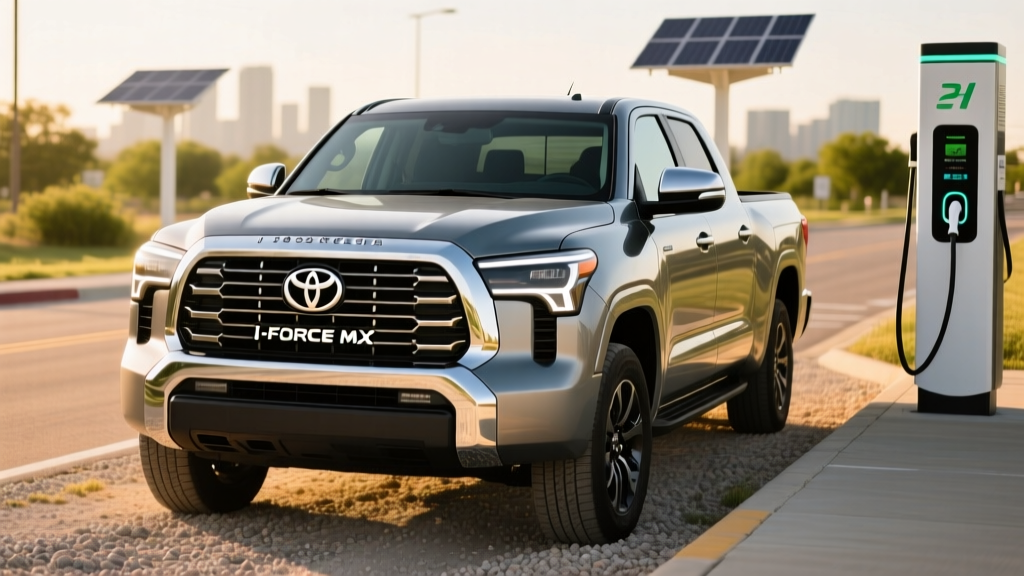
If you're researching Tundra hybrid MPG, here's the headline number: the 2026 Toyota Tundra i-FORCE MAX hybrid is rated by the EPA at 20 mpg city / 24 mpg highway / 22 mpg combined for 4x2 models. That's a meaningful improvement over the non-hybrid i-FORCE V6, which lands at 18/23/20 mpg in equivalent trims. But the Tundra hybrid isn't a plug-in — it's a conventional hybrid (HEV) that recovers energy through regenerative braking and requires no charging cord. You fuel it like any other truck, and the hybrid system works invisibly in the background.
The i-FORCE MAX pairs a twin-turbo 3.4-liter V6 with a 48-hp electric motor integrated into the bell housing between the engine and the 10-speed automatic transmission. Combined output is 437 horsepower and 583 lb-ft of torque, making it not only the most efficient Tundra but also the most powerful. For a full-size body-on-frame truck that can tow over 10,000 pounds, 22 mpg combined is genuinely competitive against the Ford F-150 PowerBoost hybrid (23 combined) and far ahead of the Ram 1500 Hemi V8 (17 combined).
| Spec | 2026 Tundra i-FORCE MAX (4x2) | 2026 Tundra i-FORCE MAX (4x4) |
|---|---|---|
| EPA City / Hwy / Combined | 20 / 24 / 22 mpg | 19 / 22 / 20 mpg |
| Powertrain | 3.4L Twin-Turbo V6 + 48-hp electric motor | |
| Combined Output | 437 hp / 583 lb-ft torque | |
| Transmission | 10-speed automatic | |
| Hybrid Battery | 1.87 kWh NiMH (sealed) | |
| Max Towing Capacity | 10,890 lbs | 10,340 lbs |
| Max Payload | 1,760 lbs | 1,680 lbs |
| 0-60 mph (est.) | ~5.7 seconds | |
| Starting MSRP | ~$59,000 (Limited trim, i-FORCE MAX standard) | |
Understanding the i-FORCE MAX: HEV, Not PHEV
Before going further, it's critical to understand what the Tundra hybrid is not. It is a conventional hybrid electric vehicle (HEV), sometimes called a "self-charging hybrid." It does not have a plug. It cannot drive on electric power alone for meaningful distances. The 1.87 kWh nickel-metal hydride battery is far too small for that — it exists to buffer energy recovered from braking and to assist the gas engine during acceleration, not to propel the truck independently.
This is fundamentally different from a plug-in hybrid (PHEV) like the Toyota RAV4 Prime or the Ford F-150 Lightning-range-extender concept, which carries a much larger battery (typically 15-20+ kWh), can be plugged into a wall outlet or charger, and offers 25-50 miles of electric-only driving before the gas engine kicks in. Toyota does not currently offer a Tundra PHEV, and as of the 2026 model year, no full-size pickup in the U.S. market is sold as a plug-in hybrid.
| Feature | HEV (Tundra i-FORCE MAX) | PHEV (e.g., RAV4 Prime) | BEV (e.g., F-150 Lightning) |
|---|---|---|---|
| Plugs in? | No | Yes (Level 1/2) | Yes (Level 1/2/DC) |
| Battery Size | 1.87 kWh | 18.1 kWh | 98-131 kWh |
| Electric-Only Range | ~0.5 mi (low speed) | 42 mi | 240-320 mi |
| Fuel Economy | 22 mpg combined | 94 MPGe / 38 mpg gas | 70-78 MPGe |
| Federal Tax Credit | Not eligible | Up to $7,500* | Up to $7,500* |
*Subject to IRS §30D income, MSRP, and battery-sourcing requirements. See IRS guidelines.
Tundra Hybrid MPG: EPA Estimates vs. Real-World Results
The EPA rates the 2026 Tundra i-FORCE MAX 4x2 at 20 mpg city, 24 mpg highway, and 22 mpg combined. The 4x4 variants drop slightly to 19/22/20 mpg due to the added weight and drivetrain friction of the front axle. These numbers are published on fueleconomy.gov, the official DOE/EPA source.
| Drivetrain | City | Highway | Combined | Real-World Expectation |
|---|---|---|---|---|
| 4x2 (CrewMax, 5.5' bed) | 20 | 24 | 22 | 20-23 combined |
| 4x4 (CrewMax, 5.5' bed) | 19 | 22 | 20 | 18-21 combined |
| 4x4 TRD Pro | 19 | 22 | 20 | 17-19 combined |
Real-world context matters. Hybrid trucks — like all hybrids — tend to outperform their EPA city rating in stop-and-go traffic because regenerative braking recaptures energy that a gas-only truck wastes as heat. On the highway, however, aerodynamic drag dominates, and the hybrid system contributes less. Expect the Tundra i-FORCE MAX to deliver its best fuel economy in suburban and urban driving, where 22-24 mpg is achievable. On a flat, unloaded highway cruise at 70 mph, 23-25 mpg is realistic for 4x2 models.
Towing and payload hit MPG hard. When towing a 7,000-pound trailer, expect fuel economy to drop to 11-14 mpg regardless of the hybrid system. The electric motor assists with initial acceleration and reduces downshifts, but it cannot meaningfully offset the energy required to pull that much mass at highway speed. This is true of every hybrid truck on the market — the F-150 PowerBoost drops similarly under load.
Cold weather impact: In freezing temperatures (below 32°F), expect a 5-10% reduction in fuel economy. The engine runs richer during warm-up, and the hybrid battery is less efficient at low temperatures. This penalty is modest compared to the 20-30% range loss a full EV experiences in the same conditions.
Powertrain Deep Dive: How the i-FORCE MAX Works
The i-FORCE MAX powertrain is built around Toyota's V35A-FTS engine — a 3.4-liter twin-turbocharged V6 producing 389 hp on its own. Between the engine and the 10-speed automatic transmission sits a motor-generator rated at 48 hp (36 kW). This motor draws from a compact 1.87 kWh NiMH battery pack mounted under the rear seat.
Combined system output is 437 hp and 583 lb-ft of torque. That torque figure is available low in the rev range thanks to the electric motor's instant delivery, which gives the Tundra hybrid a noticeably responsive feel from a stop compared to the non-hybrid i-FORCE (389 hp / 479 lb-ft).
How the hybrid system saves fuel:
- Regenerative braking: During deceleration and braking, the motor-generator acts as a generator, converting kinetic energy into electricity to recharge the NiMH battery. This replaces friction braking in many situations and recovers energy that would otherwise be lost.
- Engine-off coasting: At low speeds and when coasting, the system can shut off the engine entirely and let the truck glide, reducing parasitic losses.
- Electric assist under load: During hard acceleration or climbing grades, the electric motor supplements the V6, reducing the engine's workload and fuel consumption.
- Start/stop: The engine shuts off at idle and restarts seamlessly via the motor-generator, eliminating fuel waste at red lights.
The 1.87 kWh battery is small by EV standards — roughly 1/50th the size of an F-150 Lightning's extended-range pack. That's by design. Toyota engineered the i-FORCE MAX as a performance-and-efficiency hybrid, not an electrification platform. The battery is large enough to buffer regenerative energy and assist the engine, but small enough to avoid the weight, packaging, and cost penalties of a larger pack.
Pricing, Trims, and Tax Credit Eligibility
The i-FORCE MAX hybrid powertrain is standard on the following 2026 Tundra trims:
- Limited: ~$59,000 MSRP (4x2), ~$62,000 (4x4)
- Platinum: ~$65,500 (4x4)
- 1794 Edition: ~$66,000 (4x4)
- TRD Pro: ~$72,000 (4x4)
- Capstone: ~$78,000 (4x4)
It is also available as an option on the SR5 and TRD Off-Road trims (typically a ~$3,500-$4,000 upgrade from the standard i-FORCE V6).
Federal tax credit: Not eligible. Because the Tundra i-FORCE MAX is a conventional hybrid (HEV) and not a plug-in vehicle, it does not qualify for the IRS §30D Clean Vehicle Credit. That credit — up to $7,500 — is reserved for battery electric vehicles (BEVs) and plug-in hybrids (PHEVs) that meet battery-sourcing, MSRP, and buyer income requirements. There is currently no federal tax credit for conventional hybrids.
Some states may offer modest incentives for hybrid vehicles through utility rebates or state-level programs, but these vary by jurisdiction and change frequently. Check your state's energy office or your local utility for current programs.
Hybrid Battery Warranty & Longevity
Toyota covers the Tundra i-FORCE MAX hybrid battery with a 10-year / 150,000-mile warranty (whichever comes first) in all 50 states. This is among the longest hybrid battery warranties in the industry and reflects Toyota's two decades of hybrid powertrain experience dating back to the original Prius in 1997.
Real-world longevity data: Toyota's NiMH hybrid batteries have demonstrated excellent durability across the brand's lineup. Prius taxis routinely exceed 300,000 miles on the original pack. The Tundra's battery is under less stress than a PHEV or EV battery because it operates within a narrow state-of-charge window (typically 40-80%), which minimizes degradation.
Replacement cost if out of warranty: Based on current Toyota hybrid battery pricing and labor, a replacement i-FORCE MAX hybrid battery pack would cost approximately $3,000-$5,000 installed. This is far less than the $15,000-$25,000+ that a full EV traction battery replacement can cost, reflecting the Tundra's much smaller pack size.
Tundra Hybrid vs. Competitors: MPG and Value Compared
| Truck | Powertrain | EPA Combined MPG | HP / Torque | Max Towing | Starting MSRP |
|---|---|---|---|---|---|
| 2026 Toyota Tundra i-FORCE MAX | HEV (V6 TT + motor) | 22 (4x2) / 20 (4x4) | 437 hp / 583 lb-ft | 10,890 lbs | ~$59,000 |
| 2026 Ford F-150 PowerBoost | HEV (V6 TT + motor) | 23 (4x2) / 22 (4x4) | 430 hp / 570 lb-ft | 11,200 lbs | ~$57,000 |
| 2026 Ram 1500 5.7L Hemi V8 | Gas (V8 + eTorque mild hybrid) | 17 (4x4) | 395 hp / 410 lb-ft | 11,340 lbs | ~$52,000 |
| 2026 Chevy Silverado 1500 Duramax | Diesel (I6 turbo) | 24 (4x2) / 22 (4x4) | 305 hp / 495 lb-ft | 13,300 lbs | ~$54,000 |
The Tundra i-FORCE MAX and F-150 PowerBoost are the only two true full-hybrid full-size pickups on the market. The Ford edges ahead by 1-2 mpg in most configurations and offers slightly higher towing capacity, while the Toyota counters with more torque, a longer hybrid battery warranty, and Toyota's hybrid reliability reputation. The Ram's eTorque system is a mild hybrid (48-volt) that provides minimal fuel savings — it cannot drive the truck on electric power or recover meaningful braking energy. The Silverado Duramax diesel matches or beats both hybrids on highway MPG but carries diesel fuel cost and DEF fluid maintenance.
Who Should Choose the Tundra Hybrid (and Who Shouldn't)
Choose the Tundra i-FORCE MAX hybrid if:
- You need a full-size truck for towing, hauling, or off-road work and want to reduce fuel costs without changing your refueling habits.
- You drive a mix of city and highway miles and want the regenerative braking benefits in stop-and-go traffic.
- You value Toyota's hybrid reliability track record and the 10-year/150,000-mile battery warranty.
- You want maximum torque (583 lb-ft) for towing without stepping up to a heavy-duty diesel.
- You don't have access to home or workplace charging, making a PHEV or BEV impractical.
Consider a full EV (like the F-150 Lightning or Silverado EV) if:
- You have reliable Level 2 home charging and most of your daily driving is under 200 miles.
- You want the lowest per-mile "fuel" cost (home electricity at $0.13/kWh ≈ $0.04/mile vs. gasoline at ~$0.18/mile for the Tundra hybrid).
- You qualify for the $7,500 federal tax credit, which significantly reduces the EV's effective price.
- You prioritize instant torque, near-silent operation, and zero tailpipe emissions.
Stick with the gas-only Tundra i-FORCE if:
- You're buying an SR or SR5 base trim where the i-FORCE MAX isn't available or the upgrade cost doesn't justify the 2-mpg improvement for your driving pattern.
- You primarily drive highway miles at steady speed, where the hybrid system provides the smallest fuel economy benefit.
Pros and Cons of the Tundra i-FORCE MAX
Pros
- 22 mpg combined is excellent for a body-on-frame full-size truck
- 583 lb-ft of torque available low in the rev range — strong towing performance
- No plug required — no charging infrastructure dependency
- 10-year / 150,000-mile hybrid battery warranty
- Regenerative braking reduces brake pad wear in city driving
- Toyota's proven hybrid reliability track record
Cons
- Not eligible for any federal tax credit (§30D is for PHEVs/BEVs only)
- MPG gains shrink significantly when towing (11-14 mpg under load)
- i-FORCE MAX is only standard on higher trims (~$59K+ starting MSRP)
- Small 1.87 kWh battery means no meaningful electric-only driving
- 4x4 models drop to 20 mpg combined — less impressive
- TRD Pro and Capstone trims push past $70K-$78K, erasing fuel savings vs. competitors
Frequently Asked Questions
How many MPG does the Tundra hybrid get?
The EPA rates the 2026 Tundra i-FORCE MAX at 20 mpg city / 24 mpg highway / 22 mpg combined (4x2). The 4x4 version is rated at 19/22/20 mpg. In real-world driving, most owners report 20-23 mpg combined in mixed use, with higher numbers possible in city-heavy driving where regenerative braking shines.
Does the Tundra hybrid need to be plugged in?
No. The Tundra i-FORCE MAX is a conventional hybrid (HEV), not a plug-in hybrid (PHEV). It charges its own small battery through regenerative braking and the engine. You never plug it in — you simply fuel it with gasoline as you would any other truck.
Can the Tundra hybrid drive on electric power only?
Only for very short distances at very low speeds (roughly half a mile under 20 mph in parking-lot situations). The 1.87 kWh battery is far too small for meaningful electric-only driving. If you want electric-only range, you need a PHEV or a full BEV.
Is the Tundra hybrid reliable? What about the battery?
Toyota's hybrid systems have an extensive reliability track record spanning over 25 years. The Tundra's hybrid battery is covered by a 10-year / 150,000-mile warranty. NiMH chemistry is well-understood and durable, and the pack operates within a conservative state-of-charge window that minimizes stress. Replacement cost, should it ever be needed out of warranty, is estimated at $3,000-$5,000 — far less than a full EV battery.
Does the Tundra hybrid qualify for a tax credit?
No. The federal §30D Clean Vehicle Credit applies only to plug-in vehicles (BEVs and PHEVs). Because the Tundra i-FORCE MAX is a conventional hybrid with no plug, it is not eligible for the $7,500 federal credit or the point-of-sale transfer. Some state or utility incentives may apply to hybrids, but these vary by location — check with your state energy office.
How does the Tundra hybrid MPG compare to a diesel truck?
The Chevy Silverado 1500 Duramax diesel achieves 24 mpg combined (4x2), slightly better than the Tundra hybrid's 22 mpg. However, diesel fuel is typically more expensive per gallon than regular unleaded, partially offsetting the MPG advantage. The Tundra hybrid also runs on regular 87-octane fuel, while some competitors' turbo engines recommend premium. Diesel trucks also require DEF fluid and have higher maintenance complexity.
Is the Tundra hybrid worth the extra cost over the gas model?
If you're already shopping in the Limited trim or above (where the i-FORCE MAX is standard), there's no extra cost — it's the only engine offered. For SR5 and TRD Off-Road buyers, the hybrid upgrade costs roughly $3,500-$4,000. At a 2-mpg improvement and current fuel prices (~$3.40/gallon), the payback period for average mileage (15,000 miles/year) is approximately 6-8 years. However, the hybrid also delivers 104 additional lb-ft of torque, which has tangible value for towing and acceleration.
Hybrid vs. PHEV vs. EV — which truck is right for me?
It depends on your charging access and driving pattern. If you can charge at home and drive under 250 miles daily, a full EV like the F-150 Lightning offers the lowest operating cost and qualifies for federal credits. If you want some electric-only range but need gas for long trips, a PHEV would be ideal — but no full-size PHEV truck exists yet. If you lack charging access, tow frequently, or simply want a drop-in fuel-economy improvement with zero lifestyle change, the Tundra i-FORCE MAX HEV is the right choice.