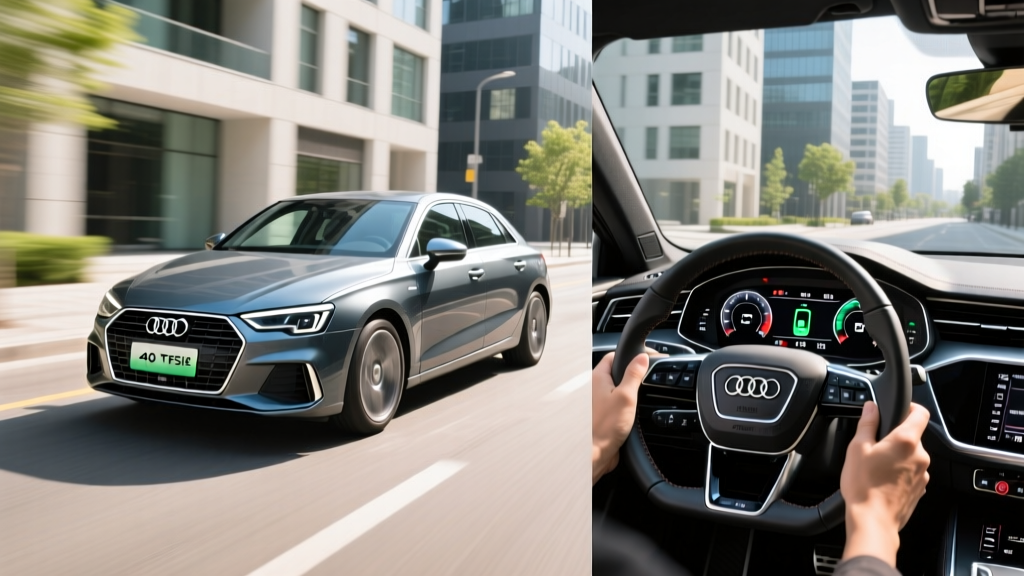
If you've been searching for an Audi hybrid A3, you're likely weighing the compact luxury plug-in hybrid against both full-electric alternatives and conventional gas sedans. The current-generation Audi A3 40 TFSI e (marketed in the U.S. as the A3 Sportback 40 e or similar trim depending on model year) represents Audi's electrified entry into the premium compact segment — pairing a turbocharged 1.5-liter four-cylinder with an electric motor and a modest but usable battery pack.
This guide breaks down every number that matters: EPA fuel economy, real-world MPG, electric-only range, battery size, charging speed, powertrain output, pricing, tax-credit eligibility, and long-term battery reliability. No marketing fluff — just the specs and ownership realities you need before signing a lease or purchase agreement.
HEV vs PHEV: Understanding the Audi Hybrid A3
Before diving into specs, it's essential to clarify what the Audi hybrid A3 actually is. Audi has offered the A3 with two distinct hybrid architectures globally:
Conventional Hybrid (HEV)
- No plug. The battery charges via regenerative braking and the engine.
- Small battery (typically under 2 kWh) — assists acceleration, enables brief engine-off coasting.
- No electric-only range beyond low-speed creeping.
- Does not qualify for the federal §30D EV tax credit.
Plug-in Hybrid (PHEV) — A3 40 TFSI e
- Requires plugging in to access full electric range.
- Larger battery (15.6 kWh gross / ~13 kWh usable) for meaningful electric-only driving.
- EPA-rated electric range: approximately 32–37 miles depending on trim and wheel size.
- May qualify for federal or state PHEV incentives (details below).
The model sold in the U.S. market is the PHEV variant. If you see a "mild hybrid" or "MHEV" badge on certain Audi A3 trims (such as those with a 48-volt system), that is a conventional hybrid assist — not a plug-in. The 40 TFSI e is the true plug-in hybrid worth evaluating if you want electric-only commuting capability.
Powertrain: Engine, Motor, and Combined Output
The Audi A3 40 TFSI e pairs a 1.5-liter turbocharged inline-four with a permanently excited synchronous electric motor integrated into the six-speed S tronic dual-clutch transmission. Here's the full powertrain breakdown:
| Specification | Value |
|---|---|
| Engine | 1.5L turbocharged inline-4 (TFSI) |
| Engine Power | 150 hp (110 kW) / 184 lb-ft torque |
| Electric Motor | 107 hp (80 kW) / 243 lb-ft torque |
| Combined System Output | 204 hp (150 kW) / 258 lb-ft torque |
| Transmission | 6-speed S tronic dual-clutch automatic |
| Drivetrain | Front-wheel drive |
| 0–60 mph | ~7.0 seconds |
| Top Speed (EV mode) | ~87 mph (140 km/h) |
The combined 204 hp is respectable for a compact luxury PHEV. The electric motor delivers its full torque from zero RPM, which makes the A3 40 TFSI e feel notably quicker off the line than the EPA 0–60 figure suggests. In EV mode, the car can sustain highway speeds, though the engine will engage under hard acceleration or when the battery depletes.
Fuel Economy: EPA MPG and MPGe Breakdown
Fuel economy is where PHEVs get complicated — and where the Audi hybrid A3 requires careful interpretation. The EPA provides two separate ratings: one for combined gas-and-electric operation (MPGe) and one for the gasoline engine alone once the battery is depleted (charge-sustaining MPG).
| Mode | City | Highway | Combined |
|---|---|---|---|
| Charge-Depleting (EV + Gas) | — | ~83 MPGe | |
| Charge-Sustaining (Gas Only) | ~36 MPG | ~38 MPG | ~37 MPG |
Real-World MPG vs. EPA
EPA combined (gas only): ~37 MPG
Real-world expectation: Drivers who charge nightly and commute under 35 miles may use little to no gasoline for weeks, effectively achieving 100+ MPGe on a blended basis. On long highway road trips with a depleted battery, expect ~34–36 MPG — slightly below the EPA sticker due to sustained high-speed driving. In city driving with frequent regen braking, some owners report exceeding 40 MPG in charge-sustaining mode.
The critical takeaway: your actual fuel economy depends entirely on your charging habits. Plug in every night, and the 1.5-liter engine is mostly a backup generator. Never plug in, and you're driving a 37 MPG compact sedan — efficient, but not transformative.
Electric-Only Range and Total Driving Range
The A3 40 TFSI e's 15.6 kWh gross battery pack (approximately 13 kWh usable after the buffer reserved for battery longevity) delivers an EPA-estimated 32–37 miles of electric-only range, depending on wheel size, ambient temperature, and driving style. Audi quotes a WLTP range of up to 41 miles for European-spec models, but WLTP is more generous than the EPA cycle — always use EPA figures for U.S. purchasing decisions.
| Range Metric | Value |
|---|---|
| EPA Electric-Only Range | ~32–37 miles |
| Real-World EV Range (moderate temps) | ~28–34 miles |
| Real-World EV Range (cold, below 32°F) | ~22–27 miles |
| Gas Tank Capacity | ~10.6 gallons |
| Total Combined Range (EV + Gas) | ~420–440 miles |
For a 25-mile round-trip commute with home charging, the A3 40 TFSI e can operate almost entirely on electricity Monday through Friday, with the gasoline engine reserved for weekend road trips. This is the ideal PHEV use case — and the reason this vehicle exists.
Charging: Battery Size, Speed, and Connector Details
The Audi hybrid A3 uses a 15.6 kWh gross / ~13 kWh usable lithium-ion (NMC chemistry) battery pack. Charging options are limited to AC — there is no DC fast charging capability, which is typical for compact PHEVs but worth noting if you expected quick top-ups on road trips.
| Charging Level | Power | 0–100% Time | Notes |
|---|---|---|---|
| Level 1 (120V household) | ~1.4 kW | ~9–10 hours | Emergency/trickle; not practical for daily use |
| Level 2 (240V, standard) | ~3.6 kW (onboard charger limit) | ~3.5–4 hours | Standard home charging; sufficient for overnight |
| DC Fast Charge | Not supported | N/A | No CCS DC charging port on PHEV variant |
The onboard AC charger is limited to 3.6 kW, meaning even if you connect to a 7.2 kW or 11.5 kW Level 2 home charger, the A3 will only draw 3.6 kW. A full charge from empty takes roughly 3.5 to 4 hours — plan on plugging in when you get home from work, and the battery will be full by morning.
The charge connector is a standard J1772 (Type 1) AC plug for the U.S. market. No NACS or CCS adapter is needed for Level 2 home or public AC charging.
Pricing, Trims, and Tax Credit Eligibility
The Audi A3 40 TFSI e positions in the upper tier of the compact PHEV segment. Pricing for the current model year starts at approximately:
| Trim | MSRP (approx.) |
|---|---|
| A3 Sportback 40 e (Premium) | ~$41,000 |
| A3 Sportback 40 e (Premium Plus) | ~$45,000 |
| A3 Sportback 40 e (Prestige) | ~$49,000 |
Destination charges and dealer-installed options will add $1,000–$2,500 to these figures.
Federal Tax Credit (§30D)
Here's where PHEV buyers need to pay close attention. Under current IRS §30D rules, the federal plug-in vehicle tax credit for PHEVs depends on battery capacity, critical-mineral sourcing, and buyer income:
- Battery capacity requirement: The A3 40 TFSI e's 15.6 kWh pack exceeds the 7 kWh minimum, making it technically eligible for a partial credit.
- Credit amount: PHEVs with batteries between 7–16 kWh typically qualify for $4,175–$7,500, but the exact figure depends on current-year critical-mineral and battery-component sourcing requirements per the IRS §30D guidelines.
- MSRP cap: Sedans must be under $55,000 MSRP. The Premium and Premium Plus trims fall under this cap; the Prestige trim may exceed it.
- Buyer income cap: Modified AGI must not exceed $150,000 (single), $225,000 (head of household), or $300,000 (joint).
- Point-of-sale transfer: Eligible buyers can transfer the credit to the dealer at purchase for an immediate price reduction.
- Assembly requirement: Final assembly must occur in North America. Verify the specific VIN via the DOE's VIN lookup tool.
Bottom line: Depending on your income, trim selection, and the current sourcing rules, you may qualify for up to $3,750–$7,500 in federal credit. Consult a tax professional and check the IRS and DOE resources before purchasing — these rules change annually.
Battery Warranty, Reliability, and Replacement Cost
Audi PHEV Battery Warranty
Coverage: 8 years / 100,000 miles (whichever comes first)
Capacity threshold: Warranty applies if the battery falls below 70% of original capacity
What's covered: Battery cell defects, excessive degradation, BMS failures
What's not covered: Normal wear below the 70% threshold, damage from accidents or improper charging
Audi's PHEV battery warranty aligns with the federal minimum mandated by the EPA for emissions-related components, which most manufacturers use as their baseline. The 70% retention threshold is industry-standard — identical to what BMW, Mercedes-Benz, and Volvo offer for their PHEV packs.
Reliability Track Record
The 1.5 TFSI engine is one of the Volkswagen Group's most widely deployed powertrains, with millions of units on the road globally. The electric motor and power electronics are carryovers from the MQB evo platform shared with the Volkswagen Golf GTE and Cupra Leon e-Hybrid. Early reliability data from European markets suggests no systemic battery or powertrain issues, though long-term U.S.-specific data is still maturing given the model's relatively recent stateside introduction.
Battery Replacement Cost
Out-of-warranty replacement of the 15.6 kWh PHEV battery pack is estimated at $8,000–$12,000 including labor, based on current Volkswagen Group PHEV parts pricing. This is significantly less than a full BEV battery replacement ($15,000–$25,000+) because the pack is smaller and simpler. However, PHEV batteries rarely require full replacement — individual cell module replacement is sometimes possible, reducing costs further.
Who Should Buy the Audi Hybrid A3?
Decision Framework
Choose the Audi A3 40 TFSI e (PHEV) if:
- Your daily commute is under 35 miles round-trip and you have home/workplace charging
- You want a luxury compact sedan but aren't ready to commit to a full EV
- You take 3+ road trips per year exceeding 200 miles and want gas-engine flexibility
- You want to reduce fuel consumption without range anxiety in cold climates
Choose a full BEV (e.g., Tesla Model 3, BMW i4) if:
- You have reliable home Level 2 charging and rarely drive more than 250 miles in a day
- You want zero tailpipe emissions and lower maintenance (no oil changes, no engine)
- You want access to DC fast charging for road trips (150–250 kW capability)
Choose a conventional HEV (e.g., Toyota Prius) or gas A3 if:
- You cannot charge at home or work (PHEV value proposition collapses without plugging in)
- You want the lowest purchase price and don't need electric-only driving
- Your commute is primarily highway, where PHEV advantages diminish
Pros and Cons at a Glance
Pros
- 32–37 miles of electric-only range covers most daily commutes
- 204 hp combined output provides confident acceleration
- Premium interior quality and Audi Virtual Cockit standard
- 37 MPG gas-only means efficient road trips even with depleted battery
- ~420+ miles total range eliminates range anxiety
- Eligible for partial federal tax credit (trim and income dependent)
Cons
- 3.6 kW onboard charger is slow — no DC fast charging
- Electric range drops to ~22–27 miles in freezing weather
- MSRP exceeds $55K cap on Prestige trim (kills tax credit eligibility)
- FWD only — no quattro AWD option on the PHEV variant
- Cargo space slightly reduced vs. gas A3 due to battery placement
- Higher purchase price than non-luxury compact PHEVs (Prius Prime, RAV4 Prime)
Frequently Asked Questions
How many MPG does the Audi hybrid A3 get?
The Audi A3 40 TFSI e achieves an EPA-estimated ~37 MPG combined (36 city / 38 highway) when operating on gasoline alone with a depleted battery. When factoring in electric-only driving, the combined rating reaches approximately 83 MPGe. Real-world results vary widely based on charging frequency — regular plugging in can yield weeks of near-zero gasoline consumption.
How far can the Audi A3 PHEV go on electric only?
The EPA rates the A3 40 TFSI e at 32–37 miles of electric-only range. In real-world moderate-temperature driving, expect 28–34 miles. In cold weather (below 32°F), plan on 22–27 miles due to reduced battery efficiency and cabin heating demands. The gasoline engine seamlessly engages when the battery depletes, so you're never stranded.
Does the Audi A3 hybrid qualify for a tax credit?
It may qualify for a partial federal §30D plug-in vehicle tax credit, depending on the trim MSRP (must be under $55,000 for sedans), your modified adjusted gross income, and current-year battery-sourcing requirements. The Premium and Premium Plus trims generally fall under the MSRP cap; the Prestige may not. Check the IRS clean vehicle credit page and verify your VIN's assembly location before purchasing. Always consult a tax professional for personalized eligibility.
Is the Audi A3 hybrid reliable, and what does a battery replacement cost?
The A3 40 TFSI e uses the proven MQB evo platform and Volkswagen Group's widely deployed 1.5 TFSI engine. The battery is covered by an 8-year/100,000-mile warranty with a 70% capacity retention threshold. Out-of-warranty battery replacement is estimated at $8,000–$12,000, though full pack replacements are rare — individual module service is often possible.
Hybrid vs PHEV vs EV — which fits my lifestyle?
If you can charge at home and your commute is under 35 miles, the A3 PHEV gives you electric daily driving with gas-engine flexibility for road trips. If you charge at home and rarely exceed 250 miles between stops, a full BEV like the BMW i4 or Tesla Model 3 offers lower running costs and less maintenance. If you can't charge at home at all, a conventional hybrid or efficient gas sedan makes more financial sense — a PHEV you never plug in is just an expensive, slightly heavier gas car.
Can the Audi A3 PHEV DC fast charge?
No. The A3 40 TFSI e supports only AC charging via a J1772 connector at up to 3.6 kW. A full Level 2 charge takes approximately 3.5–4 hours. DC fast charging (CCS/NACS) is not available on this model — this is a common limitation among compact PHEVs due to battery size and cost packaging.
Does the Audi A3 hybrid have quattro all-wheel drive?
No. The A3 40 TFSI e is front-wheel drive only. If AWD is essential, you'll need to look at the gas-only A3 45 TFSI quattro or consider competitors like the Volvo S60 Recharge (AWD PHEV).