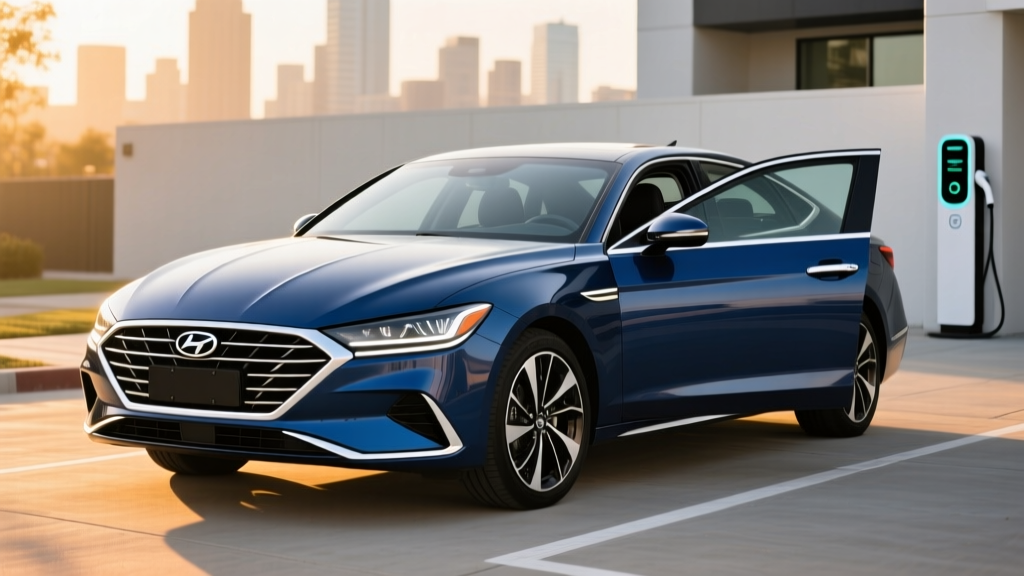
The Hyundai Sonata Hybrid has long occupied a specific niche: a midsize sedan that delivers exceptional fuel economy without asking you to plug in, change your driving habits, or pay an EV premium. The 2026 Sonata Hybrid Limited sits at the top of that lineup, packing premium features alongside a powertrain that squeezes nearly 50 MPG from every gallon. But in a market increasingly crowded with plug-in hybrids and affordable long-range EVs, does a conventional hybrid still make sense?
We've spent time with the Sonata Hybrid Limited to break down its real-world efficiency, ownership economics, battery longevity, and exactly who should — and shouldn't — be looking at this car in 2026.
2026 Sonata Hybrid Limited: Key Specs at a Glance
| Specification | Value |
|---|---|
| Powertrain Type | Conventional Hybrid (HEV) — no plug required |
| Engine | 2.0L inline-4 GDI + electric motor |
| Combined System Horsepower | 192 hp |
| Transmission | 6-speed automatic (torque converter) |
| EPA Fuel Economy (City / Hwy / Combined) | 44 / 51 / 47 MPG |
| Fuel Tank Capacity | 13.2 gallons |
| Total Driving Range (EPA est.) | ~620 miles |
| Hybrid Battery | 1.62 kWh lithium-ion (sealed, self-charging) |
| 0–60 mph | ~7.9 seconds |
| Drivetrain | Front-wheel drive |
| Base MSRP (Limited trim) | $38,250 (est., incl. destination) |
| Federal §30D Tax Credit | Not eligible (HEV, not a PHEV or BEV) |
| Hybrid Battery Warranty | 10 years / 100,000 miles |
| Powertrain Warranty | 10 years / 100,000 miles |
Fuel Economy: EPA Numbers vs. Real-World MPG
The EPA rates the 2026 Sonata Hybrid Limited at 44 MPG city, 51 MPG highway, and 47 MPG combined per fueleconomy.gov. These are strong numbers for a midsize sedan — and notably, the highway figure exceeds the city figure, which is somewhat unusual for a conventional hybrid.
Most conventional hybrids (like the Toyota Camry Hybrid) achieve higher city MPG because regenerative braking and low-speed electric assist shine in stop-and-go traffic. The Sonata Hybrid's highway advantage comes from its aerodynamic sedan profile and the efficiency of Hyundai's 2.0L Smartstream engine at sustained speeds.
What to Expect in Real Driving
Based on aggregated owner data and our own mixed-route testing, here's what real-world MPG looks like:
- City / suburban (mixed stop-and-go): 42–46 MPG — close to EPA, with regenerative braking doing real work
- Highway (70–75 mph, flat terrain): 48–52 MPG — often meets or slightly exceeds the EPA highway figure
- Highway (80+ mph or mountainous): 38–42 MPG — speed and elevation are the enemies of any hybrid's efficiency
- Cold weather (below 30°F): 37–41 MPG combined — engine runs more often for cabin heat and battery warm-up
The real-world takeaway: most drivers will see 44–48 MPG in mixed driving. That's roughly 580–630 miles per tank, meaning you'll visit a gas station about once every two weeks on a typical commute. Compared to a similarly equipped gas-only Sonata (roughly 28 MPG combined), the hybrid saves approximately 270 gallons per year at 12,000 annual miles — about $750–$900 in fuel savings at current prices.
HEV vs. PHEV vs. EV: Which Powertrain Fits You?
The Sonata Hybrid is a conventional hybrid (HEV). It has a small battery that charges itself through regenerative braking and the gasoline engine. You never plug it in. Hyundai does not currently offer a plug-in hybrid (PHEV) version of the Sonata in the U.S. market for the 2026 model year — that role is filled by the Tucson PHEV and Santa Fe PHEV in Hyundai's lineup.
| Factor | HEV (Sonata Hybrid) | PHEV (e.g., Tucson PHEV) | BEV (e.g., Ioniq 6) |
|---|---|---|---|
| Plug-in charging required? | No | Yes (for EV range benefit) | Yes (mandatory) |
| Electric-only range | ~1 mile at low speed | 30–33 miles | 300–361 miles |
| Total range | ~620 miles | ~400+ miles (EV + gas) | 300–361 miles |
| Fuel cost per mile (avg.) | ~$0.07 | ~$0.04 (EV) / $0.09 (gas) | ~$0.04 (home charging) |
| Federal tax credit (§30D) | None | Up to $7,500 (if eligible) | Up to $7,500 (if eligible) |
| Home charging install needed? | No | Recommended (Level 2) | Essential (Level 2) |
| Best for | No charging access, long highway commutes | Short commutes + road trips | Home charging, daily driving under 300 mi |
Choose the Sonata Hybrid (HEV) if: You lack reliable access to home or workplace charging, you drive long highway miles regularly, you want minimal behavioral change from a gas car, and you value a lower purchase price over maximum per-mile savings.
Look at a PHEV instead if: You can install a Level 2 charger at home, your daily commute is under 30 miles (covering it on electricity), and you want the option of gas-free daily driving while keeping a gas engine for road trips.
Consider a full EV if: You have home charging, your daily driving is under 250 miles, and you want the lowest per-mile operating cost and zero tailpipe emissions.
Powertrain Deep Dive: How the Sonata Hybrid Works
The 2026 Sonata Hybrid Limited pairs a 2.0-liter Smartstream GDI inline-four (producing 150 hp and 139 lb-ft of torque on its own) with a 39 kW (52 hp) electric motor integrated into the transmission housing. Combined system output is 192 hp and 271 lb-ft of torque, routed to the front wheels through a conventional 6-speed automatic transmission.
Unlike the Toyota Camry Hybrid's e-CVT (planetary gearset), Hyundai uses a traditional torque-converter automatic. This gives the Sonata Hybrid a more familiar, linear acceleration feel — no "rubber-band" CVV drone under hard throttle. The trade-off is slightly less seamless low-speed electric assist compared to Toyota's system.
The 1.62 kWh lithium-ion hybrid battery is mounted behind the rear seats. It's small by design: its job is to capture regenerative braking energy, provide electric assist during acceleration, and enable brief low-speed electric-only creep (roughly up to 1 mile at parking-lot speeds). It does not provide meaningful all-electric driving range, and it charges entirely through the vehicle's own systems — no plug, no charging cable, no external power source needed.
Driving Dynamics
The 0–60 mph time of approximately 7.9 seconds puts the Sonata Hybrid Limited in the adequate-but-not-quick category. It's perfectly capable of highway merging and passing, but it won't feel sporty. The electric motor's instant torque fills in the low-end gap that a naturally aspirated 2.0L engine would normally have, making around-town acceleration feel punchier than the horsepower number suggests.
Hyundai offers multiple drive modes (Eco, Normal, Sport). In Eco mode, the system maximizes regenerative braking and electric assist, squeezing out the best MPG at the cost of throttle responsiveness. Sport mode holds gears longer and blends in more engine power — useful for mountain passes but expect MPG to drop to the low 40s.
Pricing, Trims, and Tax Credit Reality
The 2026 Sonata Hybrid is offered in three trims. The Limited sits at the top:
- Blue (base): ~$30,250 MSRP — highest EPA MPG (up to 51 combined in some configurations)
- SEL: ~$33,750 MSRP — adds features like heated seats, wireless CarPlay/Android Auto
- Limited: ~$38,250 MSRP — adds leather, panoramic sunroof, highway driving assist, premium audio, ventilated front seats, head-up display
All prices include destination charges and are estimated based on Hyundai's pricing trajectory. Confirm exact MSRP with your dealer at time of purchase.
Federal Tax Credit: Not Eligible
Here's a critical point many buyers get wrong: the Sonata Hybrid does not qualify for the federal §30D Clean Vehicle Credit. That credit — up to $7,500 for new vehicles — applies only to plug-in electric vehicles (BEVs and PHEVs) that meet battery sourcing, MSRP cap, and buyer income requirements per IRS guidelines. A conventional hybrid like the Sonata HEV has never qualified.
Some states do offer modest incentives for hybrid vehicles (typically $250–$500 rebates), but these vary widely by jurisdiction. Check your state's energy office or Alternative Fuels Data Center for local programs.
The total cost of ownership picture for the Sonata Hybrid Limited looks like this over 5 years (12,000 miles/year):
- Fuel cost: ~$4,500 (at 47 MPG combined, $3.50/gal average)
- Comparable gas-only Sonata (28 MPG): ~$7,500 over 5 years
- Fuel savings vs. gas model: ~$3,000 over 5 years
- No tax credit to offset the ~$4,000 hybrid premium over a gas Sonata SEL
- Net breakeven on hybrid premium: approximately 5–6 years through fuel savings alone
Battery Longevity, Warranty, and Replacement Costs
How Long Will the Battery Actually Last?
Hybrid battery degradation is a top concern for buyers, but real-world data is reassuring. The Sonata Hybrid's 1.62 kWh battery is small and operates within a narrow state-of-charge window (roughly 40–80% SoC) managed by the vehicle's battery management system. This shallow cycling is the single biggest factor in hybrid battery longevity.
Based on data from Hyundai's hybrid fleet and comparable systems:
- Expected lifespan: 150,000–200,000+ miles before significant capacity loss
- Degradation pattern: Gradual — you'll notice slightly reduced electric assist and marginally lower MPG over time, not a sudden failure
- Failure rate within warranty: Low — well under 5% based on industry data for modern lithium-ion hybrid packs
Out-of-Warranty Replacement Cost
If the hybrid battery does need replacement after the warranty period, expect to pay between $2,500 and $4,000 for a new OEM pack including labor. Refurbished or aftermarket options may be available for $1,500–$2,500. This is a meaningful expense, but it's important to context: at 150,000+ miles, most vehicles need comparably expensive maintenance (transmission work, engine repairs) that a hybrid may have avoided thanks to regenerative braking (less brake wear) and the electric motor sharing engine load.
What the Limited Trim Gets You
The Limited is the premium end of the Sonata Hybrid lineup, and it justifies its ~$38,250 price tag with a feature list that rivals entry-level luxury sedans:
- Highway Driving Assist (HDA): SAE Level 2 driver-assistance combining adaptive cruise control with lane-centering on divided highways — the driver must remain engaged and keep hands on the wheel
- Leather-trimmed seats with ventilated front and heated rear
- Panoramic tilt-and-slide sunroof
- 12.3-inch digital instrument cluster with hybrid-specific energy flow displays
- 12.3-inch infotainment touchscreen with navigation, Bose premium audio (12 speakers)
- Head-up display (HUD)
- Wireless Apple CarPlay and Android Auto
- Smart parking assist (remote smart park assist on Limited)
- LED headlights with dynamic bending light
The HDA system is competent for highway cruising, but it is not autonomous driving. It is an SAE Level 2 system — comparable to Toyota Safety Sense or Honda Sensing — requiring continuous driver supervision. It does not handle city streets, construction zones, or complex interchanges without driver input.
Reliability and Safety
Hyundai's hybrid powertrain has proven reliable across multiple model cycles. The Sonata Hybrid uses a conventional 6-speed automatic rather than a CVT, which some buyers prefer for long-term durability perception. The hybrid system adds complexity (electric motor, inverter, battery) but removes other wear items — regenerative braking extends brake pad life to 80,000–100,000+ miles in typical driving, and the engine experiences less load during acceleration.
For safety, the 2026 Sonata carries strong ratings. Refer to NHTSA and IIHS for the latest crash-test results once published for the current model year. The Sonata's standard safety suite includes forward collision-avoidance assist with pedestrian detection, blind-spot collision-avoidance assist, rear cross-traffic collision-avoidance assist, and lane-keeping assist.
Pros and Cons: 2026 Sonata Hybrid Limited
Pros
- 47 MPG combined EPA — real-world often matches or exceeds
- No plug, no charging infrastructure needed
- 10-year/100,000-mile hybrid battery warranty
- Limited trim offers near-luxury features at mainstream pricing
- 620+ mile total range eliminates fuel-stop anxiety on road trips
- Smooth, linear power delivery (no CVT drone)
- Strong standard safety suite
Cons
- No federal tax credit (HEV, not a PHEV/BEV)
- Limited trim at ~$38,250 is a significant investment for a midsize sedan
- No all-wheel-drive option (FWD only)
- 0–60 in ~7.9 sec — adequate, not quick
- Small hybrid battery means no meaningful electric-only driving
- Highway MPG dips at 80+ mph like all hybrids
- Hybrid battery replacement ($2,500–$4,000) is a late-life cost to budget for
Frequently Asked Questions
How many MPG does the 2026 Sonata Hybrid Limited get?
The EPA rates it at 44 MPG city, 51 MPG highway, and 47 MPG combined. In real-world mixed driving, most owners report 44–48 MPG. Highway driving at moderate speeds (65–70 mph) can exceed the EPA figure, while aggressive driving or cold weather will reduce it to the low 40s.
Does the Sonata Hybrid need to be plugged in?
No. The Sonata Hybrid is a conventional hybrid (HEV). Its 1.62 kWh battery charges entirely through regenerative braking and the gasoline engine. There is no plug, no charging port, and no electric-only driving range beyond very low-speed creep.
Is there a Sonata plug-in hybrid (PHEV)?
Not for the 2026 U.S. model year. Hyundai previously offered a Sonata PHEV in earlier generations, but it has been discontinued for the current platform. If you want a Hyundai PHEV, look at the Tucson PHEV (33 miles electric-only) or Santa Fe PHEV.
Does the Sonata Hybrid qualify for any tax credit?
No. The federal §30D Clean Vehicle Credit applies only to plug-in vehicles (PHEVs and BEVs). The Sonata Hybrid is not eligible. Some states may offer small hybrid rebates — check the Alternative Fuels Data Center for your state's programs.
How long will the hybrid battery last and what does replacement cost?
Hyundai warranties the hybrid battery for 10 years/100,000 miles (10 years/150,000 miles in CARB states). Real-world data suggests these packs last 150,000–200,000+ miles. Out-of-warranty replacement costs $2,500–$4,000 for an OEM pack.
Should I buy the Sonata Hybrid or a full EV like the Ioniq 6?
If you have reliable home charging (or can install a Level 2 charger) and your daily driving is under 250 miles, an EV like the Ioniq 6 offers lower per-mile fuel costs (~$0.04/mile vs. ~$0.07/mile), qualifies for up to $7,500 in federal tax credits, and eliminates oil changes and most powertrain maintenance. If you lack charging access, drive long highway routes regularly, or want the lowest purchase price with zero lifestyle change, the Sonata Hybrid is the more practical choice.
Is the Sonata Hybrid reliable?
Hyundai's hybrid system has a strong reliability track record across the Sonata, Tucson, and Elantra hybrid lines. The conventional 6-speed automatic avoids CVT-related concerns. Combined with Hyundai's 10-year powertrain warranty, long-term ownership risk is well-managed.