Every 2026 Lexus SUV Hybrid at a Glance
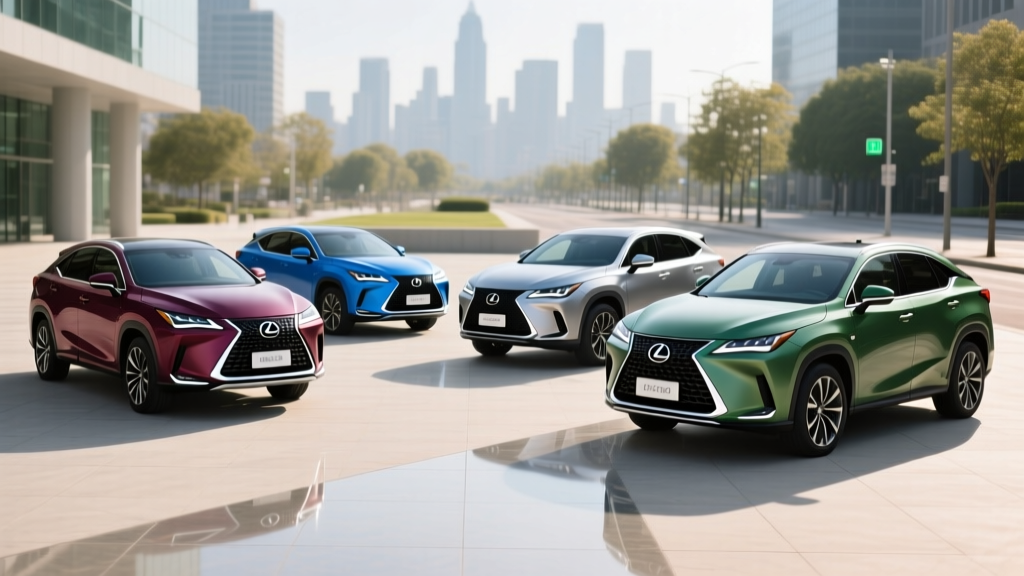
Lexus offers more hybrid and plug-in hybrid SUVs than any other luxury brand in 2026, spanning the compact UX 300h all the way up to the three-row TX 500h. Whether you want a conventional hybrid (HEV) that never needs plugging in or a plug-in hybrid (PHEV) with genuine electric-only commuting range, the lineup covers nearly every use case. Below is the full breakdown of what's available, what each powertrain delivers, and which one actually fits your driving pattern.
| Model | Type | Combined HP | EPA MPG (City/Hwy/Combined) | PHEV EV Range | Battery (kWh) | Starting MSRP |
|---|---|---|---|---|---|---|
| UX 300h | HEV | 198 hp | 43 / 41 / 42 | N/A | ~1.4 (NiMH) | $39,850 |
| NX 350h | HEV | 244 hp | 41 / 37 / 39 | N/A | ~1.6 (NiMH) | $44,350 |
| NX 450h+ | PHEV | 304 hp | 37 combined (gas) / 84 MPGe | 37 mi | 18.1 (Li-ion) | $59,950 |
| RX 350h | HEV | 250 hp | 37 / 34 / 36 | N/A | ~1.6 (NiMH) | $52,800 |
| RX 450h+ | PHEV | 304 hp | 35 combined (gas) / 65 MPGe | 37 mi | 18.1 (Li-ion) | $65,300 |
| RX 500h | HEV (Performance) | 371 hp | 27 / 28 / 28 | N/A | ~1.4 (NiMH) | $64,050 |
| TX 350h | HEV | 371 hp | 35 / 33 / 34 | N/A | ~1.4 (NiMH) | $63,950 |
| TX 500h | HEV (Performance) | 371 hp | 27 / 27 / 27 | N/A | ~1.4 (NiMH) | $72,950 |
| TX 550h+ | PHEV | 406 hp | 30 combined (gas) / 64 MPGe | 33 mi | 18.1 (Li-ion) | $76,950 |
Source: fueleconomy.gov and Lexus USA 2026 model-year specifications. MSRP excludes destination charges.
HEV vs PHEV: Which Lexus Hybrid Architecture Fits You?
Lexus uses two distinct hybrid architectures across its 2026 SUV lineup, and confusing them is the most common buyer mistake we see.
Conventional Hybrid (HEV)
Models: UX 300h, NX 350h, RX 350h, RX 500h, TX 350h, TX 500h
How it works: A small battery (typically 1.4–1.6 kWh) captures energy from regenerative braking and the gasoline engine. You never plug it in. The electric motor assists the gas engine during acceleration and enables electric-only driving at low speeds for short distances (usually under 1 mile).
Best for: Drivers without access to home or workplace charging who still want 35–42 MPG without changing any habits.
Plug-in Hybrid (PHEV)
Models: NX 450h+, RX 450h+, TX 550h+
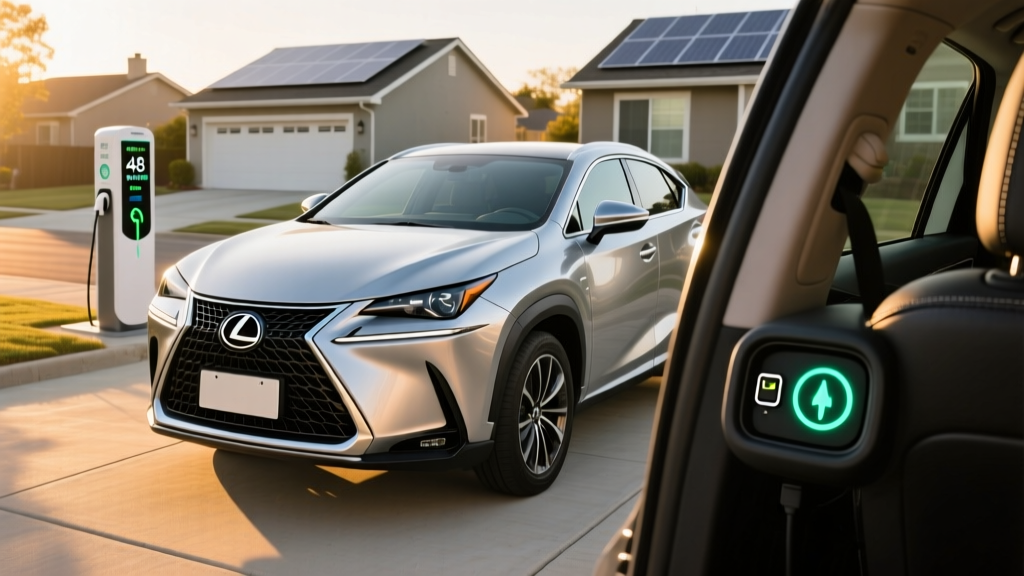
How it works: A much larger lithium-ion battery (18.1 kWh usable) powers full electric driving for 33–37 EPA-rated miles. Once depleted, the vehicle operates as a conventional hybrid. You plug in to recharge — roughly 4 hours on a 240V Level 2 home charger, or about 10 hours on a standard 120V household outlet. These models do not support DC fast charging.
Best for: Drivers with home charging and a commute under 35 miles who want EV-like daily driving with gas-engine backup for road trips.
The critical distinction: HEVs never plug in. If you see a Lexus hybrid without a charge port, that's by design — it self-charges through regenerative braking and the engine. PHEVs have a charge port on the driver-side fender and require plugging in to realize their efficiency and cost advantages.
Fuel Economy Deep Dive: Real-World MPG vs EPA Stickers
Lexus hybrids consistently meet or exceed their EPA ratings in city driving, where regenerative braking recovers the most energy. Highway efficiency is closer to the sticker, and cold weather can reduce MPG by 10–15% in winter months due to increased engine idling for cabin heat and reduced battery efficiency.
| Model | EPA City | EPA Hwy | EPA Combined | Real-World Expectation |
|---|---|---|---|---|
| UX 300h | 43 | 41 | 42 | 38–45 (city-favorable); ~36 hwy-heavy |
| NX 350h | 41 | 37 | 39 | 36–42 (city); ~34–36 hwy |
| RX 350h | 37 | 34 | 36 | 33–38 (city); ~31–33 hwy |
| RX 500h | 27 | 28 | 28 | 25–28 mixed; performance-tuned powertrain |
| TX 350h | 35 | 33 | 34 | 32–36 (city); ~30–32 hwy loaded |
| TX 500h | 27 | 27 | 27 | 24–27 mixed; heaviest model in lineup |
PHEV combined fuel economy: When operating as a hybrid after EV range is depleted, the NX 450h+ and RX 450h+ return roughly 35–37 MPG combined — competitive with their HEV siblings despite carrying a heavier battery. The TX 550h+ manages about 30 MPG combined in hybrid mode, respectable for a 5,000+ lb three-row SUV.
Real-World MPG Insight
In mixed suburban-and-highway testing, the UX 300h regularly achieves 40+ MPG without any special driving technique. The RX 350h, despite being nearly 1,000 lbs heavier, still delivers 34–36 MPG in typical mixed use. However, if your driving is predominantly highway at 75+ mph, expect the lower end of these ranges — hybrid efficiency advantages diminish at sustained high speeds where aerodynamic drag dominates.
PHEV Electric Range and Charging: NX 450h+, RX 450h+, TX 550h+
Lexus's three plug-in hybrid SUVs share a common 18.1 kWh lithium-ion battery pack paired with variations of the 2.5-liter four-cylinder hybrid powertrain (the TX 550h+ uses a 3.5-liter V6). Here's what that means in practice:
| PHEV Model | EPA EV Range | Total Range (EV + Gas) | Level 2 Charge Time (240V) | Level 1 Charge Time (120V) | DC Fast Charge |
|---|---|---|---|---|---|
| NX 450h+ | 37 miles | ~510 miles | ~4 hours | ~10 hours | Not supported |
| RX 450h+ | 37 miles | ~490 miles | ~4 hours | ~10 hours | Not supported |
| TX 550h+ | 33 miles | ~440 miles | ~4 hours | ~10 hours | Not supported |
What 37 miles of EV range actually means: If your round-trip commute is 30–35 miles and you charge nightly at home, you may go weeks without the gasoline engine engaging. The engine will start during hard acceleration or when cabin heating demands exceed what the heat pump and electric heaters can provide. In cold weather (below 30°F), expect EV range to drop to roughly 25–30 miles due to battery chemistry limitations and increased heating loads.
Charging reality: Lexus PHEVs use a J1772 connector for Level 1 and Level 2 AC charging. The onboard charger maxes out at approximately 3.3 kW, meaning even a 48-amp Level 2 home charger won't charge these vehicles faster than the ~4-hour mark. This is a deliberate engineering choice — the smaller battery doesn't need faster charging, but it does mean you can't take advantage of the full speed of high-amperage home chargers.
Powertrain Specifications Across the Lineup
Lexus uses Toyota's fourth-generation hybrid system (and in some models, the DIRECT4 all-wheel-drive system with rear electric motor) across the 2026 SUV range. Here's the mechanical breakdown:
| Model | Engine | Electric Motors | Combined Output | Drivetrain | 0-60 mph |
|---|---|---|---|---|---|
| UX 300h | 2.0L I-4 | Front + rear (e-AWD) | 198 hp | AWD | 8.0 sec |
| NX 350h | 2.5L I-4 | Front + rear (e-AWD) | 244 hp | AWD | 7.2 sec |
| NX 450h+ | 2.5L I-4 | Front + rear (DIRECT4) | 304 hp | AWD | 6.0 sec |
| RX 350h | 2.5L I-4 | Front + rear (e-AWD) | 250 hp | AWD | 7.4 sec |
| RX 450h+ | 2.5L I-4 | Front + rear (DIRECT4) | 304 hp | AWD | 6.2 sec |
| RX 500h | 2.4L Turbo I-4 | Front + rear (DIRECT4) | 371 hp | AWD | 5.7 sec |
| TX 350h | 2.4L Turbo I-4 | Front + rear | 371 hp | AWD | 6.2 sec (est.) |
| TX 500h | 2.4L Turbo I-4 | Front + rear (DIRECT4) | 371 hp | AWD | 5.9 sec |
| TX 550h+ | 3.5L V6 | Front + rear (DIRECT4) | 406 hp | AWD | 5.7 sec |
The DIRECT4 system on performance and PHEV models uses a dedicated rear electric motor that can send up to 80% of torque to the rear axle, providing genuine rear-biased handling dynamics rather than the front-heavy feel of older e-AWD systems. This matters if you care about driving engagement — the RX 500h F Sport and TX 500h feel noticeably more responsive in corners than their non-DIRECT4 counterparts.
Battery Warranty, Lifespan, and Replacement Costs
Lexus Hybrid Battery Warranty (2026 Models)
- Hybrid battery coverage: 10 years / 150,000 miles (whichever comes first)
- Hybrid system components: 8 years / 100,000 miles
- Capacity retention threshold: Lexus does not publish a specific degradation percentage trigger, but warranty covers defects and abnormal capacity loss
- Transferable: Yes, warranty transfers to subsequent owners automatically
How long do Lexus hybrid batteries actually last? Based on long-term data from Toyota/Lexus hybrid vehicles (which share the same hybrid synergy drive architecture), the majority of hybrid battery packs last 150,000–200,000+ miles before requiring replacement. The nickel-metal hydride (NiMH) packs in conventional HEVs have proven exceptionally durable, with failure rates well under 5% within the warranty period. The lithium-ion packs in PHEVs are newer to the lineup but benefit from conservative state-of-charge management — Lexus never lets the battery fully charge or fully discharge, which significantly extends cycle life.
Replacement cost if out of warranty:
- HEV battery (UX, NX 350h, RX 350h, RX 500h, TX): $3,000–$5,000 for a new OEM pack; refurbished options available for $1,500–$2,500
- PHEV battery (NX 450h+, RX 450h+, TX 550h+): $8,000–$12,000 for a new OEM pack (larger lithium-ion pack is significantly more expensive)
These costs are rarely incurred by first owners given the 10-year/150,000-mile warranty, but they matter for second- and third-owner buyers evaluating a used Lexus hybrid SUV.
Pricing, Tax Credits, and Total Cost of Ownership
The 2026 Lexus hybrid SUV lineup spans from roughly $39,850 (UX 300h) to $76,950+ (TX 550h+). Here's where federal incentives fit in:
Federal Tax Credit Eligibility (§30D, 2026 Rules)
- HEV models (UX 300h, NX 350h, RX 350h/500h, TX 350h/500h): Do NOT qualify for the §30D federal EV tax credit. These are conventional hybrids, not plug-in vehicles.
- PHEV models (NX 450h+, RX 450h+, TX 550h+): May qualify for up to $7,500 under §30D, but eligibility depends on: buyer income caps ($150K single / $300K joint), vehicle MSRP caps ($80,000 for SUVs), critical minerals and battery component sourcing requirements, and final assembly in North America. As of 2026, Lexus PHEVs are assembled in Japan, which likely disqualifies them from the full credit under current sourcing rules.
- Point-of-sale transfer: If eligible, the credit can be transferred to the dealer at purchase, reducing the purchase price directly rather than waiting for a tax refund.
- State incentives: Vary by jurisdiction — some states (CA, CO, NY, MA) offer additional rebates for PHEVs. Check your state's energy office for current programs.
Source: IRS Clean Vehicle Tax Credits. Eligibility rules are subject to change — consult a tax professional before relying on credit assumptions.
| Cost Factor | UX 300h (HEV) | NX 450h+ (PHEV) | RX 350h (HEV) | TX 550h+ (PHEV) |
|---|---|---|---|---|
| Base MSRP | $39,850 | $59,950 | $52,800 | $76,950 |
| Est. Federal Tax Credit | $0 | $0–$7,500* | $0 | $0–$7,500* |
| 5-Year Fuel/Energy Cost | ~$5,800 | ~$3,500 (w/ home charging) | ~$6,800 | ~$5,200 (w/ home charging) |
| 5-Year Insurance (est.) | ~$8,500 | ~$9,800 | ~$9,200 | ~$11,500 |
| 5-Year Maintenance (est.) | ~$2,800 | ~$2,800 | ~$3,200 | ~$3,200 |
| Estimated 5-Year Total | ~$56,950 | ~$68,550–$76,050 | ~$72,000 | ~$97,050–$104,550 |
*PHEV tax credit eligibility uncertain due to Japan assembly and battery sourcing rules. Fuel costs assume 15,000 miles/year, $3.50/gal gasoline, and $0.14/kWh electricity for PHEVs. Source: fueleconomy.gov.
Reliability Track Record and Ownership Experience
Lexus has consistently ranked at or near the top of J.D. Power and Consumer Reports reliability surveys, and the hybrid powertrain is a significant contributor to that reputation. The hybrid synergy drive system has fewer wear components than a conventional automatic transmission — there's no traditional starter motor (the hybrid motor starts the engine), no alternator (the hybrid system handles electrical generation), and regenerative braking reduces wear on friction brake pads (expect 80,000–100,000+ miles on original brake pads in typical use).
Known considerations for 2026 models:
- The DIRECT4 rear motor adds complexity but has shown no systemic issues in the RX 500h and NX 450h+ since their introductions.
- PHEV models carry approximately 250–350 lbs more weight than HEV equivalents, which slightly increases tire wear — budget for tire replacement 10,000–15,000 miles earlier than on a comparable HEV.
- The TX 550h+ V6 PHEV is the newest powertrain configuration in the lineup (introduced for the 2025 model year), so long-term reliability data is more limited than the well-proven 2.5L four-cylinder system.
Lexus includes 4 years / 50,000 miles of complimentary scheduled maintenance on all 2026 models, covering oil changes, tire rotations, and multi-point inspections — a meaningful value add that reduces early-ownership costs.
Hybrid vs PHEV vs Full EV: Which Should You Choose?
Choose a Lexus HEV (NX 350h, RX 350h, TX 350h) if:
- You don't have access to home or workplace charging
- You want maximum MPG without changing any habits
- Your daily driving exceeds 40 miles (beyond PHEV electric range)
- You want the lowest purchase price in the hybrid lineup
- You plan to keep the vehicle 8–10+ years and value proven long-term reliability
Choose a Lexus PHEV (NX 450h+, RX 450h+, TX 550h+) if:
- You have Level 2 home charging (or can install it)
- Your daily commute is under 35 miles round-trip
- You want EV-like silent, smooth driving for daily use but need gas-engine range for road trips
- You live in a state with additional PHEV incentives
- You want the strongest acceleration (304–406 hp with instant electric torque)
Consider a Full EV Instead if:
- You have reliable home charging and your daily driving is under 250 miles
- You want to eliminate gasoline costs and engine maintenance entirely
- You qualify for the full $7,500 federal tax credit on a qualifying EV (more EV models qualify than PHEVs under current sourcing rules)
- You're considering the Lexus RZ (the brand's all-electric SUV) with 220–260 miles of EPA range
2026 Lexus SUV Hybrid Pros
- Class-leading reliability and 10-year/150K-mile hybrid battery warranty
- HEVs require zero behavior change — no plugging in, no range planning
- PHEVs offer genuine 33–37 mile EV range for daily commuting
- Strong resale value; Lexus hybrids retain value better than most competitors
- Refined cabin quality and low NVH across the lineup
- Regenerative braking extends brake pad life significantly
2026 Lexus SUV Hybrid Cons
- PHEVs likely ineligible for federal §30D credit due to Japan assembly
- PHEV battery replacement cost ($8K–$12K) is high if out of warranty
- Performance hybrids (RX 500h, TX 500h) sacrifice MPG for power — 27–28 MPG
- Infotainment system improved but still trails German competitors in responsiveness
- PHEV models do not support DC fast charging
- TX 550h+ pricing approaches $80K equipped, where full-EV alternatives offer more range
Frequently Asked Questions
How many MPG does the 2026 Lexus SUV hybrid get?
It depends on the model. The most efficient is the UX 300h at 42 MPG combined (43 city / 41 highway). The NX 350h achieves 39 MPG combined, the RX 350h gets 36 MPG combined, and the three-row TX 350h returns 34 MPG combined. Performance-oriented models (RX 500h, TX 500h) trade efficiency for power, delivering 27–28 MPG combined. In real-world city driving, most Lexus HEVs exceed their EPA city ratings thanks to aggressive regenerative braking.
How far can the Lexus PHEV SUVs go on electric only?
The NX 450h+ and RX 450h+ both achieve 37 miles of EPA-rated electric-only range. The larger TX 550h+ manages 33 miles. In cold weather (below 30°F), expect real-world EV range to drop to approximately 25–30 miles due to battery chemistry limitations and cabin heating demands. For commutes under 30 miles with nightly home charging, you may use little to no gasoline for weeks at a time.
Do Lexus hybrids need to be plugged in?
No — conventional Lexus hybrids (HEV models like the NX 350h, RX 350h, TX 350h) never plug in. They self-charge through regenerative braking and the gasoline engine. Only the plug-in hybrid models (NX 450h+, RX 450h+, TX 550h+) require plugging in to access their electric-only driving range. If you don't plug in a PHEV, it still functions perfectly as a conventional hybrid, but you lose the efficiency and cost benefits of electric driving.
Is the Lexus hybrid battery reliable and what does replacement cost?
Lexus hybrid batteries carry a 10-year / 150,000-mile warranty and historically last 150,000–200,000+ miles based on long-term Toyota/Lexus hybrid data. HEV replacement batteries cost $3,000–$5,000 (new OEM); PHEV batteries cost $8,000–$12,000 due to the larger lithium-ion pack. First owners will almost certainly be covered under warranty, and the hybrid system's proven track record makes battery failure a low-probability event.
Does any 2026 Lexus SUV hybrid qualify for a federal tax credit?
Conventional hybrids (HEV) do not qualify for any federal EV tax credit. Plug-in hybrids (PHEV) are potentially eligible for up to $7,500 under IRS §30D, but current rules require final assembly in North America and specific battery sourcing thresholds. As of 2026, Lexus PHEVs are assembled in Japan, which likely disqualifies them from the federal credit. Always verify current eligibility at fueleconomy.gov and consult a tax professional before making purchase decisions based on incentive assumptions.
How long does it take to charge a Lexus PHEV at home?
On a 240V Level 2 home charger, the NX 450h+, RX 450h+, and TX 550h+ all take approximately 4 hours for a full charge. On a standard 120V household outlet (Level 1), expect about 10 hours. The onboard charger is limited to approximately 3.3 kW, so installing a higher-amperage Level 2 charger (e.g., 48-amp) will not reduce charge time. These PHEVs do not support DC fast charging.
Which 2026 Lexus hybrid SUV is best for a family?
For families needing three rows, the TX 350h offers the best balance of space, efficiency (34 MPG combined), and price at $63,950. If your daily driving is under 33 miles and you have home charging, the TX 550h+ provides electric-only commuting with three-row practicality, though at $76,950 it's a significant premium. For two-row needs, the RX 350h at $52,800 and 36 MPG combined is the volume seller for good reason — it balances space, efficiency, and value effectively.