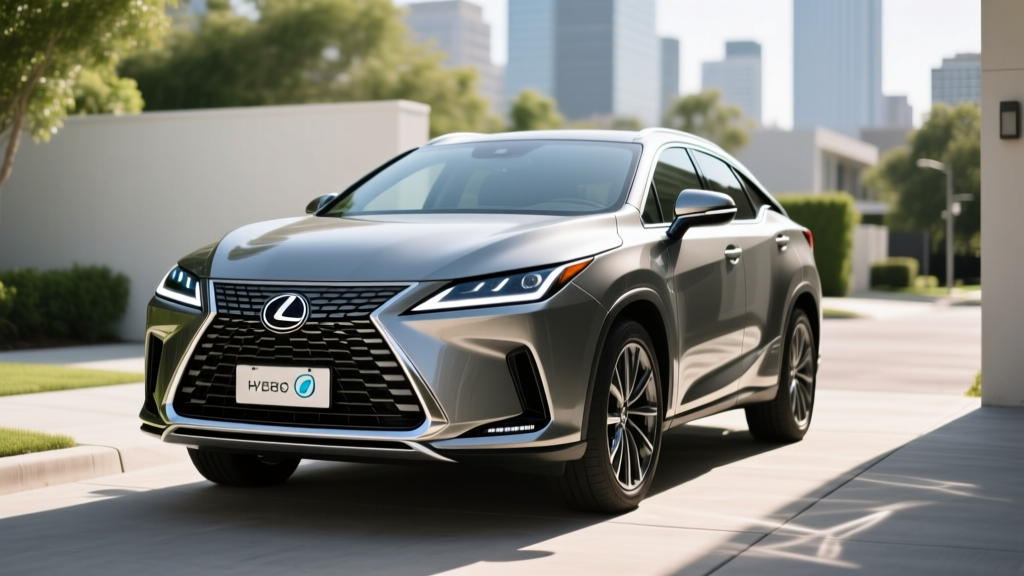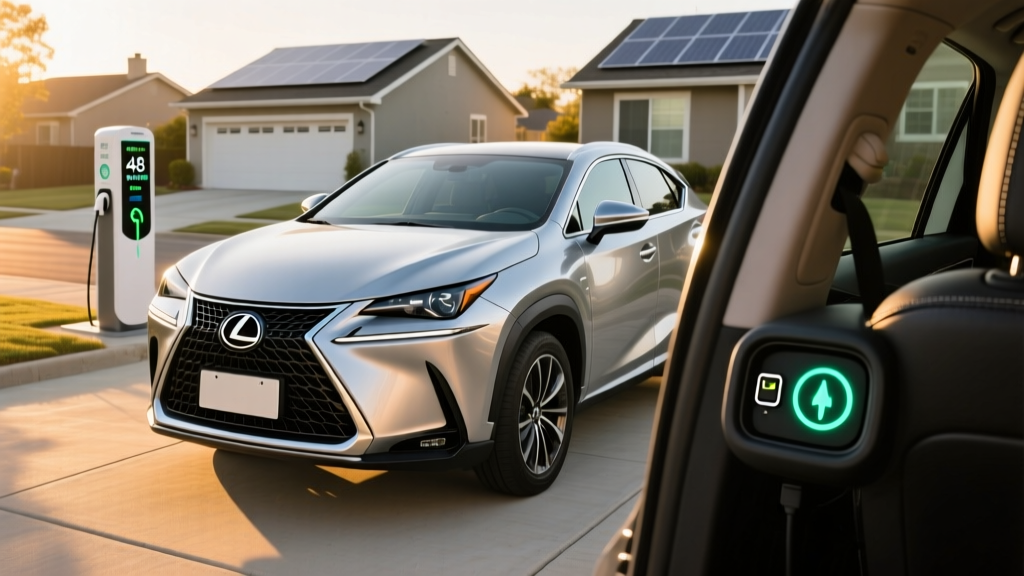
If you are shopping for a luxury compact SUV that sips fuel without requiring a plug, the Lexus NX 350h hybrid sits near the top of a very short list. Built on Toyota's TNGA-K platform and sharing its powertrain DNA with the Toyota RAV4 Hybrid, the NX 350h pairs a 2.5-liter four-cylinder engine with a trio of electric motors to deliver all-wheel drive and an EPA-estimated 39 MPG combined. For 2026, Lexus continues to refine the NX lineup, keeping the 350h as the volume-selling electrified option while the plug-in NX 450h+ serves buyers who want short electric-only commutes.
This guide breaks down everything you need to know about the 2026 Lexus NX 350h: exact fuel economy figures, real-world efficiency, powertrain specs, battery longevity, pricing, and how it stacks up against both the NX 450h+ PHEV and full battery-electric alternatives.
2026 Lexus NX 350h Hybrid: Core Specifications
| Specification | 2026 Lexus NX 350h |
|---|---|
| Powertrain | 2.5L 4-cyl + 3 electric motors (series-parallel hybrid) |
| Combined Horsepower | 240 hp |
| Drivetrain | AWD (E-Four electronic rear motor) |
| Transmission | eCVT (planetary gearset) |
| EPA MPG (City / Hwy / Combined) | 41 / 37 / 39 MPG |
| Fuel Tank Capacity | 14.5 gallons |
| Total Driving Range | ~565 miles |
| 0–60 mph | 7.2 seconds |
| Hybrid Battery | ~1.6 kWh nickel-metal hydride (NiMH) |
| Cargo Volume (behind rear seats) | 22.7 cu ft |
| Starting MSRP | $43,965 (base AWD) |
| Federal Tax Credit (§30D) | Not eligible (conventional HEV) |
| Hybrid Battery Warranty | 10 years / 150,000 miles |
A critical distinction upfront: the NX 350h is a conventional hybrid electric vehicle (HEV). It charges its small battery through regenerative braking and the gasoline engine. You never plug it in. This is fundamentally different from the NX 450h+, which is a plug-in hybrid electric vehicle (PHEV) with a larger battery, external charging capability, and an EPA-rated 37 miles of electric-only range.
Fuel Economy: EPA Ratings vs. Real-World MPG
| Driving Scenario | City | Highway | Combined |
|---|---|---|---|
| EPA Estimate | 41 MPG | 37 MPG | 39 MPG |
| Real-World Expectation | 38–44 MPG | 33–36 MPG | 36–40 MPG |
The Lexus NX 350h's EPA ratings of 41 city / 37 highway / 39 combined MPG reflect the inherent advantage of Toyota's hybrid synergy drive: the electric motor handles low-speed, stop-and-go driving where gasoline engines are least efficient, while the engine takes over at sustained highway speeds.
In real-world driving, many NX 350h owners report exceeding the EPA city figure during warm-weather urban commutes, sometimes seeing 43–44 MPG on routes with frequent stops. The regenerative braking system recovers kinetic energy that would otherwise be lost as heat, feeding it back into the hybrid battery. Highway efficiency, however, tends to fall slightly below the EPA estimate — expect 33–36 MPG at 70–75 mph, particularly with roof racks, cargo, or headwinds. Cold weather reduces efficiency by roughly 5–8% due to increased engine runtime for cabin heating and reduced battery efficiency.
Real-World MPG Tip
The NX 350h's eCVT keeps the engine in its most efficient RPM band. Drivers who use the selectable drive modes — particularly "Eco" mode with gentler throttle mapping and reduced climate-control draw — consistently report the highest city MPG figures. Aggressive acceleration and sustained high-speed driving erode the hybrid advantage.
Powertrain Deep Dive: How the NX 350h Hybrid System Works
The NX 350h uses Toyota's fourth-generation hybrid system, which Lexus has tuned for a more refined, luxury-oriented character. Here is how the components break down:
- 2.5-liter Atkinson-cycle inline-4: Produces approximately 181 hp and 176 lb-ft of torque on its own. The Atkinson cycle delays intake valve closing, improving thermal efficiency at the cost of peak power density — ideal for hybrid duty where the electric motors fill in the low-end torque gap.
- Front electric motor (MG2): The primary drive motor, delivering up to 134 hp and instant torque from zero RPM. This is what gives the NX 350h its smooth, responsive feel in city driving.
- Rear electric motor (E-Four AWD): A 54 hp independent motor on the rear axle provides all-wheel-drive traction without a mechanical driveshaft. It engages on demand — during acceleration, slippery conditions, or when the system detects front-wheel slip.
- Generator motor (MG1): Primarily functions as a generator to charge the hybrid battery and start the gasoline engine. It also acts as a reaction member in the planetary gearset to control power flow.
- NiMH hybrid battery (~1.6 kWh): Small by EV standards, but purpose-built for rapid charge/discharge cycling rather than energy storage. Nickel-metal hydride chemistry is proven for durability in Toyota/Lexus hybrids.
The combined system output of 240 horsepower is managed by the eCVT, which is not a traditional belt-and-pulley CVT. Instead, it uses a planetary gearset to seamlessly blend engine and motor power. The result is linear, vibration-free acceleration with no shift shock — a natural fit for a luxury vehicle.
HEV vs. PHEV: Lexus NX 350h vs. NX 450h+
Lexus offers the NX in two electrified forms. Understanding the difference is essential to choosing the right one.
| Attribute | NX 350h (HEV) | NX 450h+ (PHEV) |
|---|---|---|
| Powertrain Type | Conventional Hybrid | Plug-in Hybrid |
| Combined Horsepower | 240 hp | 304 hp |
| Battery Capacity | ~1.6 kWh (NiMH) | 18.1 kWh (lithium-ion) |
| Electric-Only Range | None (EV mode ~1 mi at low speed) | 37 miles (EPA) |
| Plug-In Charging | No — self-charging | Yes — Level 1/Level 2 |
| DC Fast Charging | N/A | No (Level 2 max, ~6.6 kW onboard charger) |
| Charge Time (0–100%) | N/A | ~4.5 hours at 240V / Level 2 |
| EPA Combined MPG (hybrid mode) | 39 MPG | 36 MPG (gas) / 84 MPGe (combined) |
| Total Range (gas + electric) | ~565 miles | ~550 miles |
| 0–60 mph | 7.2 sec | 6.0 sec |
| Starting MSRP | $43,965 | $60,765 |
| Federal Tax Credit (§30D) | Not eligible | Up to $7,500 (subject to eligibility) |
The core trade-off: The NX 350h costs roughly $17,000 less than the NX 450h+ before any incentives. If your daily commute is under 37 miles and you have reliable home charging access, the 450h+ can operate as a pure EV for most weekday driving, only engaging the engine for longer trips. If you lack home charging or prefer simplicity, the 350h delivers outstanding efficiency with zero lifestyle change — just fill up with gas less often.
Pricing, Trims, and Tax Credit Eligibility
For 2026, the Lexus NX 350h is available in several trims:
- NX 350h Base (AWD): $43,965 — includes Lexus Safety System+ 3.0, 9.8-inch touchscreen, wireless Apple CarPlay/Android Auto, heated front seats.
- NX 350h Premium: ~$47,500 — adds power-folding mirrors, moonroof, leatherette-trimmed seats, power liftgate.
- NX 350h Luxury: ~$52,000 — adds perforated leather, heated/ventilated front seats, heated steering wheel, upgraded 14-inch touchscreen.
- NX 350h F SPORT Handling: ~$50,500 — adds adaptive variable suspension, F SPORT exterior/interior styling, 20-inch wheels.
Federal tax credit status: The NX 350h, as a conventional HEV, does not qualify for the IRS §30D Clean Vehicle Credit. That credit is reserved for battery-electric vehicles (BEVs) and plug-in hybrid electric vehicles (PHEVs) meeting battery-component and critical-mineral sourcing requirements. The NX 450h+ PHEV may qualify for up to $7,500, but eligibility depends on the buyer's modified adjusted gross income (single filers: ≤$150,000; joint filers: ≤$300,000), the vehicle's MSRP (SUVs capped at $80,000), and the battery's sourcing compliance. Always verify current-year rules at IRS.gov and consult a tax professional before purchasing.
Some states offer their own hybrid or efficient-vehicle rebates. These vary widely by jurisdiction and change frequently, so check your state's energy or environmental agency for current programs.
Battery Longevity, Warranty, and Replacement Cost
Hybrid battery anxiety is one of the most common concerns among first-time hybrid buyers. Here is what the data shows for the NX 350h's system:
Lexus Hybrid Battery Warranty
10 years or 150,000 miles (whichever comes first) — covers the hybrid battery and all hybrid system components (inverter, electric motors, eCVT) against defects and capacity loss below a defined threshold. This is one of the longest hybrid warranties in the luxury segment and is transferable to subsequent owners.
The NX 350h uses a nickel-metal hydride (NiMH) battery pack. While lithium-ion batteries dominate EVs and PHEVs for their energy density, NiMH remains the preferred chemistry for conventional Toyota/Lexus hybrids due to its exceptional cycle stability and tolerance to the rapid shallow charge/discharge cycles that hybrids demand. Toyota has deployed this chemistry across millions of Prius, Camry Hybrid, and Lexus hybrid vehicles over two decades.
Real-world longevity data: Based on long-term fleet data from Toyota and Lexus hybrids, the majority of NiMH hybrid battery packs last well beyond 150,000 miles with minimal capacity degradation. The pack in the NX 350h is small (~1.6 kWh), so even a 20% capacity loss would have a marginal impact on fuel economy — the system simply cycles the engine slightly more often. Full battery pack replacement, if needed out of warranty, typically costs between $3,000 and $5,000 including labor at a Lexus dealer, though refurbished packs are often available for $1,500–$2,500. Individual module replacement (the pack contains multiple modules) can reduce costs further if only one or two modules have degraded.
Maximizing battery life: Avoid leaving the NX 350h sitting unused for months at a time. The hybrid system benefits from regular use, which keeps the battery conditioned. There is no need to baby the system — Toyota's battery management software prevents deep discharge and overcharge, which are the primary causes of battery degradation.
Reliability and Ownership Costs
Lexus consistently ranks at or near the top of J.D. Power Vehicle Dependability Studies and Consumer Reports reliability surveys. The NX 350h benefits from a mature, extensively validated powertrain — the 2.5L hybrid system has been in production across multiple Toyota and Lexus models since 2018, giving it a deep track record.
Ownership cost advantages of the NX 350h over a comparable gas-only luxury compact SUV include:
- Fuel savings: At 39 MPG combined vs. roughly 25 MPG for a turbocharged gas competitor (e.g., BMW X3 xDrive30i), the NX 350h saves approximately $600–$800 per year in fuel costs at 12,000 miles/year and $3.50/gallon.
- Reduced brake wear: Regenerative braking handles much of the deceleration load, extending brake pad life. Many hybrid owners report original brake pads lasting 80,000+ miles.
- No plug-in infrastructure needed: Unlike a PHEV or BEV, the NX 350h requires no home charging installation, no public charging app accounts, and no route planning around charging stations.
- Insurance: Hybrid vehicles sometimes carry slightly higher insurance premiums due to repair cost considerations for the hybrid system, though the difference for the NX 350h is typically modest. Get quotes before purchasing.
Who Should Choose the Lexus NX 350h Hybrid?
Choose the NX 350h (HEV) if:
- You want maximum fuel efficiency without changing your refueling habits.
- You live in an apartment or lack access to home or workplace charging.
- Your budget is under $50,000 and you want luxury features plus AWD.
- You regularly take long road trips and want 565+ miles of total range with quick 5-minute gas stops.
- You prioritize proven reliability and a long hybrid battery warranty.
Choose the NX 450h+ (PHEV) if:
- Your daily commute is under 37 miles round-trip and you can charge at home.
- You want to drive mostly on electricity during the week but need gas flexibility for weekends.
- You want more power (304 hp) and quicker acceleration (6.0 sec 0–60).
- You may qualify for the $7,500 federal tax credit, narrowing the price gap.
Choose a full BEV (e.g., Tesla Model Y, Genesis GV60) if:
- You have reliable Level 2 home charging and access to DC fast charging for road trips.
- You want zero tailpipe emissions and the lowest per-mile energy cost.
- You are comfortable with charging logistics and range planning on longer trips.
Pros and Cons at a Glance
Pros
- 39 MPG combined — best-in-class for a luxury compact AWD SUV
- No plug-in charging required — zero lifestyle adjustment
- 565-mile total range eliminates any range anxiety
- Proven, mature hybrid powertrain with excellent reliability record
- 10-year/150,000-mile hybrid battery warranty
- Smooth, quiet eCVT operation suits luxury character
- Standard AWD via E-Four rear motor
- Lexus Safety System+ 3.0 standard on all trims
Cons
- No electric-only driving range (EV mode limited to ~1 mile at very low speed)
- No federal tax credit eligibility (HEV)
- 240 hp is adequate but not sporty — 7.2-sec 0–60 trails turbocharged rivals
- eCVT drones under hard acceleration (no simulated gear shifts)
- Cargo space (22.7 cu ft) is slightly below some competitors
- Premium fuel recommended for optimal performance
- Infotainment learning curve for first-time Lexus users
Frequently Asked Questions
How many MPG does the Lexus NX 350h hybrid get?
The EPA rates the 2026 Lexus NX 350h at 41 MPG city, 37 MPG highway, and 39 MPG combined. In real-world city driving with frequent stops, many owners see 40–44 MPG thanks to regenerative braking. Highway driving at 70+ mph typically yields 33–36 MPG.
Does the Lexus NX 350h need to be plugged in?
No. The NX 350h is a conventional hybrid (HEV). It charges its small battery internally through regenerative braking and the gasoline engine. You simply fill it with gas like any other vehicle. If you want a plug-in Lexus NX, look at the NX 450h+ PHEV.
Is the Lexus NX 350h hybrid reliable?
Yes. Lexus ranks among the most reliable luxury brands in J.D. Power and Consumer Reports surveys, and the 2.5L hybrid powertrain in the NX 350h has been in production across Toyota and Lexus models since 2018 with millions of units on the road. The hybrid battery is warranted for 10 years/150,000 miles, and real-world data shows most packs last well beyond that.
What does it cost to replace the NX 350h hybrid battery?
Out of warranty, a full hybrid battery replacement at a Lexus dealer typically costs $3,000–$5,000 including labor. Refurbished packs are available for $1,500–$2,500. Individual module replacement can cost less if only partial degradation has occurred. However, based on Toyota/Lexus historical data, most hybrid batteries outlast the vehicle itself.
Does the Lexus NX 350h qualify for a federal tax credit?
No. The IRS §30D Clean Vehicle Credit applies only to battery-electric vehicles (BEVs) and plug-in hybrid electric vehicles (PHEVs) that meet battery sourcing and critical mineral requirements. The NX 350h is a conventional HEV and does not qualify. The NX 450h+ PHEV may qualify for up to $7,500 depending on buyer income, MSRP caps, and battery sourcing compliance.
How does the NX 350h compare to the NX 450h+ PHEV?
The NX 450h+ offers 37 miles of electric-only range, 304 hp, and potential federal tax credit eligibility — but starts at $60,765 (roughly $17,000 more than the 350h). If you can charge at home and commute under 37 miles, the 450h+ can operate as an EV on weekdays. If you lack charging access or want a lower purchase price, the 350h delivers excellent efficiency with no plug required.
Can the NX 350h run on electric power alone?
Only in very limited circumstances. The NX 350h has an "EV mode" button that allows electric-only driving for approximately one mile at speeds under 25 mph, provided the battery has sufficient charge. This is useful for creeping through a parking garage or a quiet neighborhood, but it is not a practical electric commute mode. For meaningful electric-only driving, you need the NX 450h+ PHEV.
Is the NX 350h good in snow and ice?
The E-Four electronic AWD system provides a dedicated rear electric motor that engages automatically when front-wheel slip is detected. Combined with standard traction and stability control, the NX 350h performs competently in moderate snow and ice. For severe winter conditions, dedicated winter tires make a significant improvement over the standard all-season tires.