The Toyota RAV4 has been America's best-selling non-truck for years, and its electrified variants now account for a growing share of that volume. For 2026, the RAV4 Hybrid (a conventional self-charging HEV) and the RAV4 Prime (a plug-in hybrid, or PHEV) return with updated packaging and continued strong efficiency numbers. If you're cross-shopping the 2026 Hybrid RAV4 against a full EV, a gas-only crossover, or a rival PHEV, this guide gives you every number you need to make the call.
HEV vs PHEV: The Critical Distinction
The RAV4 Hybrid is a conventional hybrid (HEV). It has no plug—you never charge it externally. A small battery (roughly 1.6 kWh) is recharged by the gasoline engine and regenerative braking. You simply fill it with gas and drive.
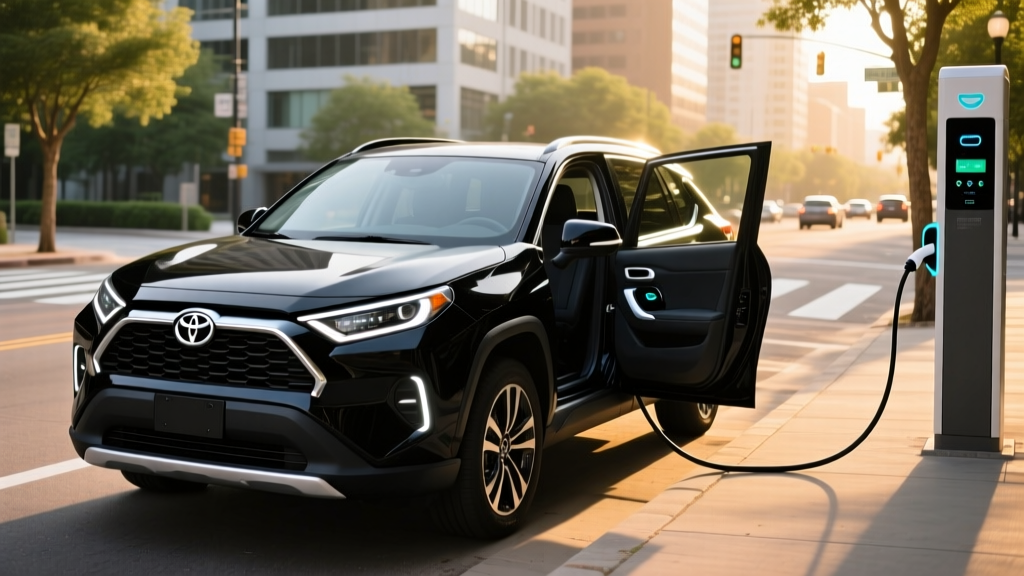
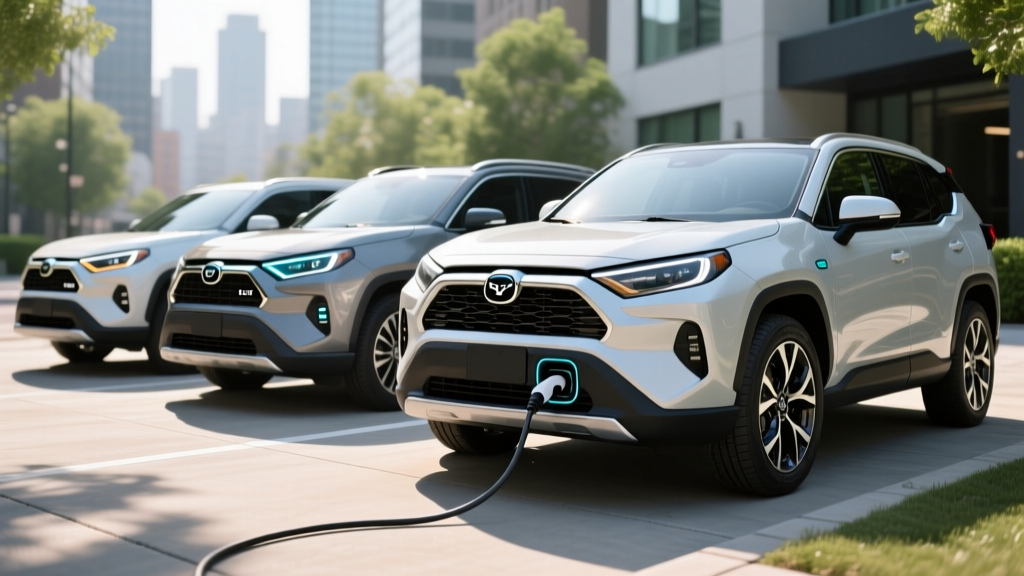
The RAV4 Prime is a plug-in hybrid (PHEV). It carries a much larger 18.1 kWh battery pack that you can charge at home or at public stations, enabling roughly 42 miles of pure electric driving before the gas engine takes over. Think of it as an EV for short commutes and a hybrid for road trips.
2026 RAV4 Hybrid (HEV): Powertrain and Fuel Economy
The 2026 RAV4 Hybrid pairs a 2.5-liter four-cylinder engine with two electric motors (one front, one rear) for standard electronic all-wheel drive (AWD). Combined system output is 219 horsepower. The powertrain routes through an electronically controlled CVT (eCVT) that prioritizes smoothness and efficiency over sportiness.
| Metric | Value |
|---|---|
| City MPG | 41 |
| Highway MPG | 38 |
| Combined MPG | 40 |
| Fuel Tank | 14.5 gal |
| Total Range (est.) | ~580 miles |
Source: EPA Fuel Economy
Real-World MPG: What to Actually Expect
Toyota's hybrid system excels in stop-and-go driving, where the electric motor handles low-speed propulsion and regenerative braking recaptures energy. In real-world city and suburban driving, many owners report 42–45 MPG, exceeding the EPA city estimate. On sustained highway trips at 70+ mph, expect closer to 35–37 MPG—the gas engine carries more of the load and aerodynamic drag rises. In cold weather (below freezing), the engine runs more frequently to heat the cabin and maintain battery temperature, reducing economy by roughly 5–8%.
2026 RAV4 Prime (PHEV): Electric Range, Charging, and Specs
The RAV4 Prime is the performance and efficiency flagship of the RAV4 lineup. It pairs the same 2.5-liter engine with more powerful electric motors and an 18.1 kWh lithium-ion battery pack for a combined 302 horsepower. That makes it the quickest RAV4 Toyota sells, with a 0–60 mph time of approximately 5.7 seconds.
| Specification | Value |
|---|---|
| Battery Capacity | 18.1 kWh (lithium-ion) |
| EPA Electric-Only Range | 42 miles |
| Combined Horsepower | 302 hp |
| 0–60 mph | ~5.7 seconds |
| EPA MPGe (electric mode) | 94 MPGe |
| EPA MPG (hybrid mode, gas) | 38 combined |
| Level 1 Charging (120V) | ~12 hours (full) |
| Level 2 Charging (240V, 3.3 kW) | ~5.5 hours (full) |
| Level 2 Charging (240V, 6.6 kW optional) | ~2.5 hours (full) |
| DC Fast Charging | Not available |
| Total Range (electric + gas) | ~600 miles |
Source: Toyota RAV4 Prime Specifications
Charging the RAV4 Prime at Home
The RAV4 Prime does not support DC fast charging—a common point of confusion. All charging happens via Level 1 (standard 120V outlet) or Level 2 (240V). The base onboard charger is 3.3 kW; a 6.6 kW onboard charger is available on higher trims (XSE and above). On a standard 120V household outlet, a full charge takes overnight—fine if your daily commute falls within the 42-mile electric range. For faster replenishment, a 240V Level 2 home charger is strongly recommended.
Real-World Electric Range
The EPA's 42-mile electric estimate assumes moderate temperatures and mixed driving. In warm weather with gentle acceleration, 44–48 miles is achievable. In freezing temperatures with cabin heat running, expect 32–36 miles of electric range. Highway-speed electric driving (above 65 mph) also drains the pack faster than the EPA cycle suggests.
Pricing, Trims, and Tax Credit Eligibility
The 2026 RAV4 Hybrid starts at approximately $33,500 (LE trim, including destination) and climbs to roughly $42,000 for a fully loaded Limited or Woodland Edition. The RAV4 Prime starts around $44,500 (SE trim) and reaches approximately $48,500 (XSE with premium packages).
Federal Tax Credit: What Qualifies?
Under current IRS §30D rules, the RAV4 Prime (PHEV) may qualify for a federal tax credit, but eligibility depends on several factors:
- MSRP cap: SUVs must be under $80,000 — the RAV4 Prime clears this easily.
- Buyer income cap: Modified AGI must not exceed $150,000 (single) or $300,000 (joint).
- Battery sourcing: Critical minerals and battery component requirements phase in progressively. Toyota's supply chain for the RAV4 Prime battery has historically not met full domestic-sourcing thresholds, which may reduce or eliminate the credit. Check the latest list at fueleconomy.gov.
- Point-of-sale transfer: If eligible, the credit can be applied at purchase to reduce your out-of-pocket cost.
The RAV4 Hybrid (HEV) does not qualify for the §30D federal EV credit, as it is not a plug-in vehicle. Some states offer separate hybrid incentives—check your local energy office.
Tax rules change frequently. Consult a tax professional and verify current eligibility at IRS.gov before purchasing.
Hybrid vs PHEV vs Full EV: Which RAV4 Is Right for You?
Choose the RAV4 Hybrid (HEV) if:
- You don't have access to home or workplace charging
- You want maximum simplicity — no plugs, no apps, no charging planning
- Your budget is under $38,000
- You drive 30+ miles daily but mostly in mixed city/suburban conditions
- You want proven long-term reliability with minimal new-technology risk
Choose the RAV4 Prime (PHEV) if:
- You can charge at home (garage or driveway with 120V/240V access)
- Your daily round-trip commute is under 42 miles (most gas-free driving)
- You want 302 hp and the quickest acceleration in the RAV4 lineup
- You take frequent road trips and don't want to rely on public DC charging
- You want to reduce fuel consumption dramatically without full EV commitment
Consider a full EV (like the bZ4X or a competitor) if:
- You have reliable Level 2 home charging
- Your daily driving is predictable and within ~250 miles
- You want zero tailpipe emissions and minimal maintenance
- You're eligible for the full $7,500 federal tax credit on a qualifying EV
Battery Warranty, Reliability, and Replacement Cost
Toyota Hybrid Battery Warranty
Both the RAV4 Hybrid and RAV4 Prime come with Toyota's hybrid battery warranty:
- Coverage: 10 years or 150,000 miles (whichever comes first)
- What's covered: Defects and capacity loss below a specified threshold (typically ~60–70% of original capacity)
- Transferable: Yes, to subsequent owners
Longevity in Practice
Toyota's hybrid battery technology is among the most proven in the industry. The nickel-metal hydride (HEV) and lithium-ion (PHEV) packs in the RAV4 are designed to last the life of the vehicle under normal use. Data from fleet operators and long-term owners consistently shows Toyota hybrid batteries lasting 150,000–200,000+ miles before significant degradation. The RAV4 Hybrid's battery is relatively small (~1.6 kWh), so it cycles less aggressively than a full EV pack.
Replacement Cost If Needed
Out-of-warranty hybrid battery replacement for the RAV4 Hybrid typically runs $3,000–$5,000 (parts and labor) at a dealership, with refurbished options available for $1,500–$3,000. The RAV4 Prime's larger 18.1 kWh pack would cost more—estimated at $6,000–$9,000—though failures within the warranty period are covered. These costs are expected to decline as supply improves.
Pros and Cons at a Glance
Pros
- Class-leading fuel economy for a compact AWD SUV (40 MPG combined, HEV)
- RAV4 Prime offers 42 miles EV range + 302 hp — best of both worlds
- Standard AWD across all hybrid trims
- 10-year / 150,000-mile hybrid battery warranty
- Strong resale value and proven reliability track record
- Spacious cargo area (37.5 cu ft behind rear seats)
- No home charging required for the HEV
Cons
- RAV4 Prime has limited availability; dealer markups are common
- No DC fast charging on the PHEV — Level 2 only
- CVT drone under hard acceleration (HEV especially)
- RAV4 Hybrid does not qualify for the federal §30D tax credit
- Infotainment system is functional but lags behind competitors in responsiveness
- PHEV battery pack slightly reduces cargo floor height
Frequently Asked Questions
How many MPG does the 2026 Hybrid RAV4 get?
The EPA rates the 2026 RAV4 Hybrid at 41 city / 38 highway / 40 combined MPG. In real-world city driving, many owners see 42–45 MPG. Highway cruising at 75+ mph drops that to roughly 35–37 MPG.
How far can the RAV4 Prime go on electric only?
The EPA rates the RAV4 Prime at 42 miles of electric-only range. Real-world results vary from about 32 miles in freezing weather to 48 miles in ideal warm-weather, low-speed conditions. Once the battery is depleted, it operates as a conventional hybrid at roughly 38 MPG combined.
Do I need to plug in the RAV4 Hybrid?
No. The RAV4 Hybrid (HEV) charges its own small battery through regenerative braking and the gasoline engine. You never plug it in—just fill up at a gas station. Only the RAV4 Prime (PHEV) requires plugging in to access its electric-only range.
Is the 2026 Hybrid RAV4 reliable?
Toyota's hybrid powertrains have a two-decade track record of strong reliability. The hybrid battery is warrantied for 10 years or 150,000 miles. Independent reliability surveys from Consumer Reports and J.D. Power consistently rate the RAV4 Hybrid at or near the top of its segment.
What does hybrid battery replacement cost?
For the RAV4 Hybrid, expect $3,000–$5,000 out of warranty (refurbished options from $1,500). The RAV4 Prime's larger pack is estimated at $6,000–$9,000. However, most Toyota hybrid batteries outlast 150,000 miles without needing replacement.
Does the 2026 RAV4 Hybrid qualify for a tax credit?
The RAV4 Hybrid (HEV) does not qualify for the federal §30D clean vehicle credit—it's not a plug-in. The RAV4 Prime (PHEV) may qualify for up to $7,500, but eligibility depends on buyer income, battery sourcing requirements, and current IRS rules. Verify at fueleconomy.gov and consult a tax professional.
RAV4 Hybrid vs RAV4 Prime: which saves more money?
If you can charge at home and your commute is under 42 miles, the RAV4 Prime will use dramatically less gasoline—potentially zero for daily driving. However, the Prime costs roughly $11,000 more upfront. At current fuel prices, the HEV's lower purchase price means a shorter payback period for most buyers unless you drive mostly on electricity and keep the vehicle for 7+ years.