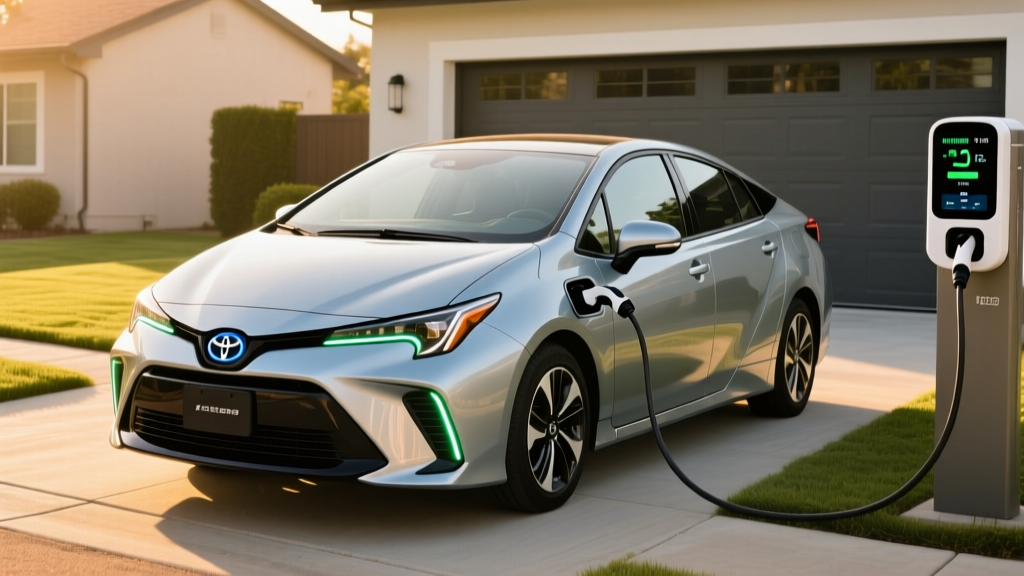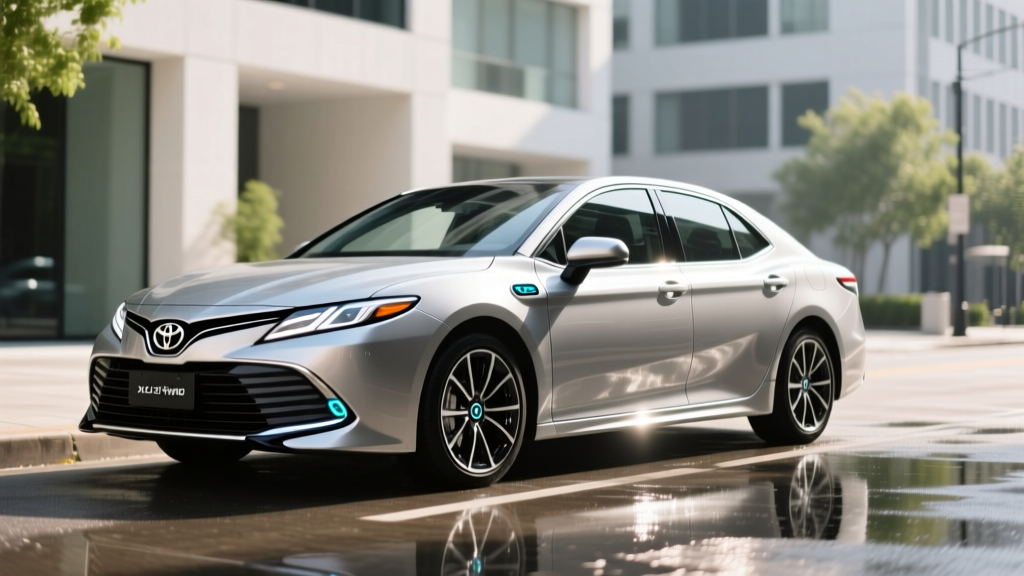
The 2026 Toyota Camry XLE Hybrid sits at an inflection point in the midsize sedan market. With Toyota's fifth-generation hybrid system now standard across the entire Camry lineup, the XLE Hybrid delivers the luxury-leaning comfort buyers expect from the top non-sport trim while achieving fuel economy numbers that make fully electric ownership look less urgent for many households. If you've been searching for the 2026 Camry XLE Hybrid and wondering whether its real-world efficiency lives up to the EPA sticker — or whether you should be looking at a plug-in hybrid or full EV instead — this guide breaks down every number that matters.
2026 Camry XLE Hybrid Powertrain and Performance Specs
Toyota equips the 2026 Camry XLE Hybrid with its latest THS V (Toyota Hybrid System) pairing a 2.5-liter Dynamic Force four-cylinder engine with two front-mounted electric motors. The result is a combined system output of 225 horsepower — a meaningful bump over the previous generation's 208 hp and enough to make highway merging and passing feel confident rather than merely adequate.
| Specification | Value |
|---|---|
| Powertrain | 2.5L inline-4 + 2 electric motors (THS V) |
| Combined Horsepower | 225 hp |
| Drivetrain | Front-wheel drive (AWD available) |
| Transmission | eCVT (planetary gearset) |
| Hybrid Battery | 1.6 kWh lithium-ion (sealed, self-charging) |
| 0–60 mph | ~7.2 seconds (FWD) |
| EPA Fuel Economy (FWD) | 51 city / 49 highway / 51 combined MPG |
| EPA Fuel Economy (AWD) | 49 city / 47 highway / 48 combined MPG |
| Fuel Tank Capacity | 13.2 gallons |
| Total Driving Range (FWD) | ~673 miles |
| Base MSRP (XLE Hybrid) | $35,495 (est.) |
Unlike a plug-in hybrid, the Camry XLE Hybrid's 1.6 kWh battery is never plugged in. It recharges through regenerative braking and the gasoline engine. This is a conventional hybrid (HEV), meaning you fuel it exactly like a gas car and never think about charging infrastructure. The small battery serves as an energy buffer that allows the electric motors to assist during acceleration, capture braking energy, and enable brief low-speed electric-only creeping — but not sustained electric-only driving.
Fuel Economy: EPA Ratings vs. Real-World MPG
The EPA rates the front-wheel-drive 2026 Camry XLE Hybrid at 51 MPG city, 49 MPG highway, and 51 MPG combined according to fueleconomy.gov. The AWD variant drops slightly to 49/47/48 MPG. These numbers are exceptional for a midsize sedan with this much interior space and feature content.
| Drivetrain | City | Highway | Combined |
|---|---|---|---|
| FWD | 51 MPG | 49 MPG | 51 MPG |
| AWD | 49 MPG | 47 MPG | 48 MPG |
Real-world expectations: Toyota's hybrid system is one of the few powertrains where real-world city driving often exceeds the EPA city rating. The EPA city cycle includes substantial idling and low-speed operation where the hybrid system shuts off the engine entirely and runs on battery. In stop-and-go urban traffic, owners routinely report 52–55 MPG. Highway efficiency is more variable — at sustained 75–80 mph speeds, expect closer to 44–47 MPG as aerodynamic drag dominates and the engine runs continuously. Cold weather (below 35°F) typically reduces efficiency by 8–12% as the engine runs longer to heat the cabin and bring the catalytic converter to operating temperature.
With a 13.2-gallon tank, the FWD model delivers a theoretical range of roughly 673 miles at the combined rating. In mixed real-world driving, plan for 580–640 miles between fill-ups — enough to make most road trips a single-tank affair.
HEV vs. PHEV vs. EV: Which Powertrain Fits You?
Toyota does not offer the 2026 Camry as a plug-in hybrid. If you want PHEV capability from Toyota, you'd look at the RAV4 Prime or Prius Prime. Here's how the Camry XLE Hybrid (HEV) compares to those alternatives and full EVs:
| Factor | HEV (Camry Hybrid) | PHEV (e.g., Prius Prime) | BEV (e.g., Tesla Model 3) |
|---|---|---|---|
| Plug-in Required? | No | Yes (for EV range) | Yes (always) |
| Electric-Only Range | ~0.5 mi at low speed | 35–44 mi | 250–350+ mi |
| Home Charging Needed? | No | Recommended (Level 2) | Essential (Level 2) |
| Fuel Cost per Mile | ~$0.08–0.10 | ~$0.04 electric / $0.09 gas | ~$0.03–0.05 |
| Upfront Price Premium | Low (~$1,500 over gas) | Moderate ($4,000–$7,000) | Higher ($5,000–$15,000+) |
| Federal Tax Credit | None (§30D excludes HEVs) | Up to $7,500 (if eligible) | Up to $7,500 (if eligible) |
| Best For | No home charging access; high-mileage commuters; simplicity seekers | Short commutes + home charging; weekend road trips | Home charging available; daily driving under 250 mi |
Choose the Camry XLE Hybrid if you lack reliable home or workplace charging, drive more than 15,000 miles per year, want minimal powertrain complexity, and value the ability to refuel in five minutes anywhere. Consider a PHEV instead if your daily commute is under 40 miles round-trip and you can install a Level 2 charger at home — you'd run mostly on electricity with a gas backup. Look at a full EV if you have home charging, your daily drives are predictable, and you want the lowest per-mile operating cost and zero tailpipe emissions.
Pricing, Trims, and Tax Credit Eligibility
The 2026 Camry XLE Hybrid is expected to start at approximately $35,495 including destination, placing it roughly $1,500–$2,000 above the equivalent gas-only XLE of prior years (though Toyota has moved to hybrid-only for most Camry trims). The XSE Hybrid, the sportier counterpart, starts around $36,095. Adding AWD typically costs $1,600.
Key XLE Hybrid standard features include a 12.3-inch touchscreen with wireless Apple CarPlay and Android Auto, heated front seats, dual-zone automatic climate control, Toyota Safety Sense 3.0 (pre-collision, lane tracing, adaptive cruise, blind-spot monitoring), and 17-inch alloy wheels.
Federal Tax Credit: Does the Camry Hybrid Qualify?
No. Under current IRS §30D rules, the federal clean vehicle credit of up to $7,500 applies only to plug-in electric vehicles (BEVs and PHEVs) that meet battery capacity, critical mineral sourcing, and MSRP/income thresholds. Conventional hybrids like the Camry XLE Hybrid — which cannot be plugged in — are not eligible for the §30D credit. Some states offer modest rebates for hybrids (check your state energy office), but there is no federal incentive. See IRS.gov §30D guidelines for current eligibility rules.
The absence of a tax credit stings, but the math still works: at 51 MPG combined versus a comparable gas-only midsize sedan at 30 MPG, a driver covering 15,000 miles annually at $3.40/gallon saves roughly $780 per year in fuel. Over a typical 7-year ownership period, that's approximately $5,460 in fuel savings — partially offsetting the hybrid premium without any government incentive.
Battery Warranty, Reliability, and Replacement Costs
Hybrid battery longevity remains the single most common concern among first-time hybrid buyers. Toyota addresses this with one of the strongest warranties in the segment.
2026 Camry Hybrid Battery Warranty
- Hybrid Battery: 10 years / 150,000 miles (whichever comes first)
- Hybrid System Components: 8 years / 100,000 miles (inverter, transaxle, control modules)
- Basic Vehicle: 3 years / 36,000 miles
- Powertrain: 5 years / 60,000 miles
Toyota's fifth-generation hybrid system uses a lithium-ion battery pack that is smaller, lighter, and more energy-dense than the nickel-metal hydride packs in earlier Camry Hybrids. Based on historical data from millions of Toyota hybrids on the road, the battery typically retains 85–90% of its original capacity after 150,000 miles. Because the battery in a conventional hybrid is relatively small (1.6 kWh) and the system never fully depletes or fully charges it — maintaining a state-of-charge window between roughly 40% and 80% — the cells experience far less stress than those in a full EV.
Replacement cost if out of warranty: A new OEM hybrid battery for the Camry currently runs between $2,500 and $3,800 including labor at a Toyota dealer. Refurbished or aftermarket options are available for $1,200–$2,000. Given the 10-year/150,000-mile warranty coverage and the demonstrated longevity of Toyota hybrid batteries, most original owners will never face this expense. According to NHTSA and IIHS data, the Camry continues to earn top safety ratings, and Toyota's hybrid powertrain has among the lowest warranty-claim rates in the industry.
Driving Impressions and Daily Livability
The 2026 Camry XLE Hybrid prioritizes comfort over sportiness, and that's by design. The XLE trim rides on a tuned suspension that absorbs highway expansion joints and potholes with composure. Cabin noise levels are notably lower than the previous generation, with acoustic glass and additional sound deadening making the XLE the quietest Camry variant.
The eCVT transmission — technically a planetary gearset rather than a belt-driven CVT — delivers seamless acceleration without the rubber-band effect that older CVTs exhibit. At full throttle, the 2.5-liter engine is audible but not coarse. The transition between electric-only creeping and engine engagement is nearly imperceptible in normal driving, a hallmark of Toyota's decades of hybrid refinement.
Regenerative braking in the Camry Hybrid offers a natural pedal feel that doesn't require the adaptation period common in full EVs with aggressive one-pedal modes. A "B" gear position increases regen for downhill mountain driving or stop-and-go traffic, but Toyota has deliberately kept the default braking feel familiar to drivers transitioning from conventional vehicles.
Pros
- 51 MPG combined EPA — class-leading for a midsize sedan
- No charging infrastructure needed; fuel anywhere in 5 minutes
- 10-year / 150,000-mile hybrid battery warranty
- Smooth, quiet ride befitting the XLE luxury trim
- 670+ mile total range per tank
- Toyota Safety Sense 3.0 standard (adaptive cruise, lane tracing)
- Strong resale value — Camry Hybrids hold value well
Cons
- No federal tax credit eligibility (HEV exclusion under §30D)
- No electric-only driving range to speak of
- AWD reduces MPG slightly (48 combined)
- eCVT limits sporty driving engagement
- Higher upfront cost than prior gas-only Camry trims
- No DC fast charging capability (not applicable — HEV)
Who Should Buy the 2026 Camry XLE Hybrid?
The 2026 Camry XLE Hybrid is the right choice for a specific and large segment of buyers: those who want exceptional fuel economy without altering their refueling habits. If you live in an apartment without charging access, regularly drive 400+ miles between stops, or simply don't want to think about kilowatt-hours and charging curves, this car delivers EV-adjacent efficiency with gas-car convenience.
It's particularly compelling for high-mileage commuters (15,000+ miles/year), rideshare drivers who need low operating costs without range limitations, and households in regions with extreme cold where EV range loss is a genuine concern. The 51 MPG combined rating means annual fuel costs of approximately $1,000–$1,200 for average drivers — roughly half what a comparable 28 MPG gas sedan costs.
It is not the right choice if your priority is zero-emission driving, if you want to run errands on electricity alone, or if you have home charging and want to maximize your use of grid electricity (especially if your utility offers cheap overnight rates). In those cases, a PHEV like the Prius Prime or a full EV like the Hyundai Ioniq 6 or Tesla Model 3 may serve you better.
Frequently Asked Questions
How many MPG does the 2026 Camry XLE Hybrid get?
The EPA rates the FWD model at 51 city / 49 highway / 51 combined MPG. The AWD model rates 49/47/48. In real-world city driving, many owners report 52–55 MPG thanks to the hybrid system's efficiency at low speeds. Highway driving at 75+ mph typically yields 44–47 MPG.
Does the 2026 Camry XLE Hybrid need to be plugged in?
No. This is a conventional hybrid (HEV), not a plug-in hybrid (PHEV). The battery charges through regenerative braking and the gasoline engine. You refuel at any gas station exactly as you would with a conventional car.
Does the Camry Hybrid qualify for a federal tax credit?
No. Under IRS §30D rules, only plug-in electric vehicles (BEVs and PHEVs) with sufficient battery capacity qualify for the federal clean vehicle credit. Conventional hybrids are excluded. Some states may offer separate hybrid incentives — check your state energy office.
How long will the hybrid battery last and what does replacement cost?
Toyota warranties the hybrid battery for 10 years or 150,000 miles. Based on historical data, Toyota hybrid batteries routinely last 200,000+ miles with normal use. If replacement is needed out of warranty, expect $2,500–$3,800 for a new OEM battery at a dealer, or $1,200–$2,000 for a refurbished unit.
Is the 2026 Camry XLE Hybrid available with AWD?
Yes. Toyota offers an electronic AWD system on the Camry Hybrid that uses a separate rear-mounted electric motor to power the rear wheels when slip is detected. AWD reduces fuel economy slightly to 48 MPG combined and adds approximately $1,600 to the price.
Hybrid vs. PHEV vs. EV — which should I choose?
Choose the Camry HEV if you lack home charging or drive long distances frequently. Choose a PHEV if your daily commute is under 40 miles and you can charge at home — you'll drive mostly electric with gas backup. Choose a full EV if you have reliable home charging, want the lowest per-mile cost, and your daily driving is under 250 miles. The Camry Hybrid is the lowest-risk entry point into electrified driving.