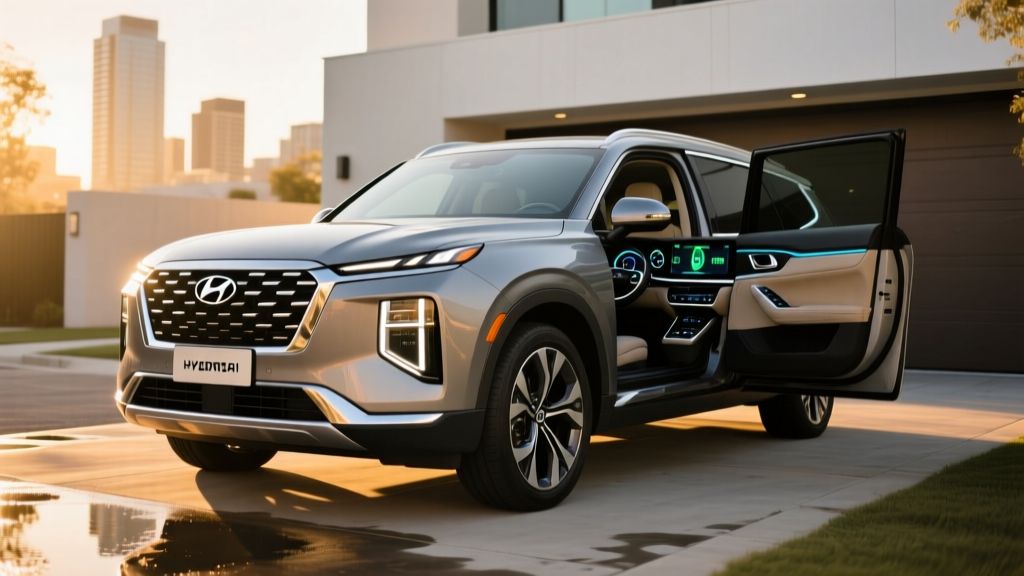
The 2026 Hyundai Palisade hybrid powertrain arrives at a pivotal moment for three-row SUV buyers who want electrified efficiency without the range limitations of a full battery-electric vehicle. Hyundai has expanded the Palisade lineup to include both a conventional hybrid (HEV) and a plug-in hybrid (PHEV) variant, giving families two distinct paths to better fuel economy. This guide breaks down every critical specification — from EPA MPG ratings and battery chemistry to tax credit eligibility and long-term reliability — so you can make an informed purchase decision.
HEV vs PHEV: Understanding the Two Palisade Hybrid Options
Before diving into specifications, it's essential to understand the fundamental difference between the two electrified Palisade models, because they serve very different ownership patterns.
Conventional Hybrid (HEV)
The Palisade HEV pairs a turbocharged gasoline engine with a small electric motor and a compact battery pack. It never needs to be plugged in — the battery recharges through regenerative braking and the engine. You fuel it exactly like a gas car and get better MPG, especially in city driving where the electric motor handles low-speed propulsion.
Plug-In Hybrid (PHEV)
The Palisade PHEV uses a larger battery pack and a more powerful electric motor, giving it a meaningful electric-only driving range (typically 30+ miles). You plug it in at home or at public chargers to replenish the battery. Once the electric range is depleted, it operates as a conventional hybrid. Ideal for commuters with short daily drives and home charging access.
The choice between them comes down to one question: Can you charge at home, and is your daily commute under 35 miles? If yes, the PHEV lets you drive most weekdays on electricity alone. If you lack reliable charging access or regularly drive long distances, the HEV delivers strong efficiency with zero lifestyle changes.
2026 Palisade Hybrid Powertrain Specs: Engine, Motor, and Horsepower
Hyundai has equipped the 2026 Palisade hybrid lineup with a turbocharged 1.6-liter four-cylinder engine paired with an electric motor integrated into the transmission housing. Here's how the two variants compare on paper:
| Specification | Palisade HEV | Palisade PHEV |
|---|---|---|
| Engine | 1.6L Turbo I4 | 1.6L Turbo I4 |
| Electric Motor | 47.7 kW (64 hp) | 72 kW (97 hp) |
| Combined System Output | ~232 hp / 271 lb-ft | ~268 hp / 271 lb-ft |
| Transmission | 6-speed automatic | 6-speed automatic |
| Drivetrain | AWD (HTRAC) | AWD (HTRAC) |
| Battery Capacity | 1.49 kWh (nominal) | 13.8 kWh usable (NMC) |
| Battery Chemistry | Lithium-ion (small buffer) | NMC (Nickel Manganese Cobalt) |
| 0–60 mph (est.) | ~7.8 sec | ~7.2 sec |
| Towing Capacity | 4,000 lbs | 4,000 lbs |
The PHEV's larger motor provides noticeably stronger electric-only acceleration and smoother transitions between electric and hybrid modes. Both variants use Hyundai's HTRAC all-wheel-drive system, which can route torque between the front and rear axles based on traction needs — a meaningful advantage over FWD-only hybrid competitors in snow and rain.
Fuel Economy: EPA MPG Ratings and Real-World Expectations
Fuel economy is the primary reason buyers cross-shop hybrid SUVs. Here's how the 2026 Palisade hybrid models rate according to the EPA, along with what you should expect in real-world driving:
| Model | City MPG | Highway MPG | Combined MPG | MPGe (PHEV Elec. Mode) |
|---|---|---|---|---|
| Palisade HEV | 27 | 28 | 27 | N/A |
| Palisade PHEV | 25 (hybrid mode) | 27 (hybrid mode) | 26 (hybrid mode) | 79 MPGe |
Real-World MPG vs. EPA Sticker
HEV: Expect 28–31 MPG in city driving, where regenerative braking and electric motor assist are most effective. Highway cruising at 75+ mph typically yields 24–26 MPG due to the Palisade's boxy aerodynamics and 4,500+ lb curb weight. Overall real-world combined: ~26–28 MPG.
PHEV (hybrid mode after battery depletion): Expect 24–26 MPG combined once the battery is exhausted. However, if your daily commute falls within the electric-only range and you charge nightly, your effective gasoline consumption could drop to near zero on weekdays.
Cold weather note: Both variants lose 10–15% efficiency below freezing as the engine runs more frequently for cabin heat and the battery's chemical reactions slow. The PHEV's electric-only range may drop from 33 miles to roughly 25–27 miles in winter conditions.
PHEV Electric-Only Range and Charging Details
For PHEV buyers, electric-only range is the headline number. The 2026 Palisade PHEV delivers an EPA-estimated 33 miles of electric-only driving on a full charge. That covers the average American's one-way commute of 16 miles (per U.S. Census Bureau data) with margin to spare for errands.
Total combined range — electric plus a full tank of gasoline — reaches approximately 460 miles, eliminating range anxiety entirely for road trips.
| Charging Level | Power (kW) | Time (0–100%) | Miles Added per Hour |
|---|---|---|---|
| Level 1 (120V household outlet) | 1.4 kW | ~10 hours | ~3 miles/hr |
| Level 2 (240V home/public charger) | 7.2 kW | ~2 hours | ~16 miles/hr |
| DC Fast Charging | Not supported | N/A | N/A |
A critical detail many buyers miss: the Palisade PHEV does not support DC fast charging. This is standard for most PHEVs in this class — the battery is small enough that Level 2 charging replenishes it quickly, and adding DC fast-charge hardware would increase cost, weight, and packaging complexity. Overnight Level 2 charging at home is the intended use case.
If you don't yet have a Level 2 charger at home, a standard 120V outlet will work, but the 10-hour charge time means you'll need to plug in every evening to wake up with a full battery. For a detailed breakdown of Level 2 installation costs and electrical requirements, see our PHEV charging guide.
Pricing, Trim Levels, and Tax Credit Eligibility
The 2026 Palisade hybrid lineup spans multiple trim levels. Here are the key pricing figures (MSRP before destination):
| Trim | HEV MSRP | PHEV MSRP |
|---|---|---|
| SEL Premium | $47,950 | $52,450 |
| Limited | $52,100 | $56,600 |
| Calligraphy | $55,850 | $60,350 |
Destination charges add approximately $1,395 to all trims.
Federal Tax Credit Eligibility (§30D)
Palisade HEV: Conventional hybrids do not qualify for the federal §30D new clean vehicle credit. That credit applies only to BEVs and PHEVs meeting battery sourcing and MSRP requirements.
Palisade PHEV: The PHEV may qualify for up to $7,500 under §30D, but eligibility depends on several conditions that change frequently:
- MSRP cap: SUVs must have an MSRP at or below $80,000 (all Palisade PHEV trims clear this).
- Buyer income cap: Modified AGI must not exceed $150,000 (single), $225,000 (head of household), or $300,000 (joint).
- Battery sourcing: Critical minerals and battery components must meet phased-in domestic content requirements per IRS guidelines. Hyundai's battery supply chain has been evolving — confirm current-year eligibility with your dealer and a tax professional before purchase.
- Point-of-sale transfer: As of 2024+, eligible buyers can transfer the credit to the dealer for an immediate price reduction at purchase rather than waiting to claim it on their tax return.
Always verify eligibility on the IRS website and with a qualified tax advisor, as battery sourcing rules tighten annually.
Some states offer additional rebates or HOV lane access for PHEVs (California, Colorado, New York, among others). Check your state's energy office or DMV for current programs.
Battery Warranty, Reliability, and Replacement Cost
Hybrid battery longevity is consistently the top concern among first-time hybrid buyers. Here's what Hyundai provides:
Hyundai Hybrid Battery Warranty
- HEV: 10 years / 100,000 miles (whichever comes first) — covers battery capacity loss below a defined threshold and defects.
- PHEV: 10 years / 100,000 miles — same coverage terms, applied to the larger traction battery.
- Hybrid system components: 10 years / 100,000 miles (inverter, motor, control unit).
- Bumper-to-bumper: 5 years / 60,000 miles.
- Powertrain: 10 years / 100,000 miles.
Hyundai's warranty is among the strongest in the industry, matching or exceeding Toyota, Kia, and Honda hybrid coverage. In CARB-adopting states (California, New York, Massachusetts, and others), the hybrid battery warranty extends to 10 years / 150,000 miles under PZEV regulations.
Real-world degradation data: Hyundai's hybrid battery packs are designed with conservative charge buffers — the HEV uses only a fraction of its 1.49 kWh nominal capacity, and the PHEV's 13.8 kWh usable capacity sits within a larger gross pack. This buffer strategy significantly reduces calendar and cycle degradation. Based on data from Hyundai's Tucson and Santa Fe hybrid platforms (which share architecture), expect less than 10% capacity loss over 10 years / 100,000 miles under normal use.
Battery replacement cost (out of warranty):
- HEV battery pack: $2,000–$3,500 (small pack, relatively affordable)
- PHEV battery pack: $5,500–$8,000 (larger NMC pack; pricing varies by dealer and market)
For context, most Hyundai hybrid batteries outlast the vehicle's useful life. Reports of premature hybrid battery failure in Hyundai's current-generation systems are rare, and IIHS and NHTSA have issued no battery-related recalls for the Palisade hybrid platform as of early 2026.
Who Should Choose the Palisade Hybrid — and Who Shouldn't
The Palisade hybrid powertrain isn't the right fit for every three-row SUV buyer. Here's a decision framework based on real ownership patterns:
Choose the Palisade HEV if:
- You lack home charging access (apartment, street parking, no garage)
- Your daily driving exceeds 50 miles and you don't want to think about plugging in
- You tow frequently (hybrid efficiency drops when towing, but the HEV avoids the PHEV's heavier battery penalty)
- You want hybrid efficiency at the lowest possible upfront cost
- You plan to own the vehicle 8+ years and value the simplicity of no charging routine
Choose the Palisade PHEV if:
- You have Level 2 charging at home or can install it
- Your weekday commute is under 33 miles round-trip (you'll rarely use gasoline on weekdays)
- You qualify for the §30D tax credit, reducing effective purchase price by up to $7,500
- You want to reduce fuel costs significantly without committing to a full EV
- You frequently take road trips where EV charging infrastructure is sparse
Choose a full EV (e.g., Hyundai Ioniq 9, Kia EV9) if:
- You have reliable home charging and your daily driving is under 250 miles
- You want the lowest per-mile fuel cost and zero tailpipe emissions
- You want to eliminate oil changes, spark plugs, and transmission fluid service entirely
- You're eligible for the full §30D credit and your state offers additional EV incentives
Palisade Hybrid vs. Three-Row Competitors
The 2026 Palisade hybrid competes against a growing field of electrified three-row SUVs. Here's how it stacks up on the metrics that matter:
| Vehicle | Type | Combined MPG | EV Range (PHEV) | Starting MSRP |
|---|---|---|---|---|
| Hyundai Palisade HEV | HEV | 27 MPG | N/A | $47,950 |
| Hyundai Palisade PHEV | PHEV | 26 MPG / 79 MPGe | 33 mi | $52,450 |
| Toyota Grand Highlander Hybrid | HEV | 34 MPG | N/A | $45,200 |
| Kia EV9 | BEV | 88 MPGe | 300 mi | $54,900 |
| Mazda CX-90 PHEV | PHEV | 25 MPG / 56 MPGe | 26 mi | $49,945 |
The Toyota Grand Highlander Hybrid leads on pure fuel economy, but the Palisade counters with a more premium interior, stronger towing capacity (4,000 lbs vs. 3,500 lbs), and Hyundai's longer warranty coverage. The Mazda CX-90 PHEV offers sportier driving dynamics but less electric range and a tighter third row. If you need maximum interior space and a proven hybrid system, the Palisade occupies a strong middle ground.
Pros
- Strong 33-mile electric range on PHEV covers most commutes
- Class-leading 10yr/100k mi hybrid battery warranty
- AWD standard on all hybrid trims
- PHEV may qualify for $7,500 federal tax credit
- 4,000-lb towing capacity (hybrid and PHEV)
- Spacious third row and cargo area
Cons
- HEV MPG trails Toyota Grand Highlander Hybrid by ~7 MPG combined
- PHEV does not support DC fast charging
- Higher starting price than gas-only Palisade (~$6,000 premium)
- Real-world highway MPG drops noticeably above 75 mph
- PHEV tax credit eligibility depends on evolving battery sourcing rules
Frequently Asked Questions
How many MPG does the 2026 Hyundai Palisade hybrid get?
The Palisade HEV achieves an EPA-estimated 27 city / 28 highway / 27 combined MPG. The PHEV rates at 25/27/26 MPG in hybrid mode (after the battery is depleted) and 79 MPGe when operating on electricity. Real-world city driving in the HEV often exceeds 28 MPG thanks to regenerative braking, while highway driving at 75+ mph typically yields 24–26 MPG.
How far can the Palisade PHEV go on electric only?
The EPA-estimated electric-only range is 33 miles on a full charge. In real-world conditions, expect 28–33 miles depending on temperature, terrain, and driving style. Cold weather (below 32°F) can reduce this to approximately 25–27 miles due to cabin heating demands and reduced battery efficiency.
Does the Palisade hybrid qualify for any tax credits?
The conventional HEV does not qualify for the federal §30D clean vehicle credit. The PHEV may qualify for up to $7,500, subject to buyer income limits ($150K single / $300K joint), the $80,000 SUV MSRP cap, and current battery sourcing requirements. Always verify eligibility at irs.gov and consult a tax professional before purchasing.
Is the Palisade hybrid reliable, and what does battery replacement cost?
Hyundai's hybrid powertrain has demonstrated strong reliability across the Tucson, Santa Fe, and now Palisade platforms. The hybrid battery is covered by a 10-year / 100,000-mile warranty. Out-of-warranty replacement costs range from $2,000–$3,500 for the HEV pack and $5,500–$8,000 for the PHEV pack. Most hybrid batteries last the vehicle's lifetime under normal use.
Do I need to plug in the Palisade HEV?
No. The conventional Palisade HEV charges its small battery entirely through regenerative braking and the gasoline engine. You fuel it like any other car. Only the PHEV variant benefits from plug-in charging.
Can the Palisade PHEV DC fast charge?
No. The Palisade PHEV supports Level 1 (120V) and Level 2 (240V) AC charging only. A full charge on Level 2 takes approximately 2 hours. This is typical for PHEVs in this class — the battery is small enough that overnight Level 2 charging is sufficient.
Hybrid vs PHEV vs EV — which is right for my family?
Choose the HEV if you can't charge at home and want simple, reliable efficiency. Choose the PHEV if you have home charging, a short commute, and want to drive on electricity most weekdays while retaining gasoline flexibility for road trips. Choose a full EV (like the Kia EV9 or Hyundai Ioniq 9) if you have home charging, drive under 250 miles daily, and want the lowest operating costs with zero tailpipe emissions.